History · Burkina Faso
Burkina Faso: The Land of Upright People
The Mossi kingdoms that held off empires, a French colony assembled and dissolved, Thomas Sankara's four-year revolution, and a country now fighting for its own territory
By Worldlore Editorial · 30 September 2026
A country named on purpose
Burkina Faso is a landlocked country in the West African Sahel — dry, drought-prone savanna, about 23 million people, no coastline, few minerals until recently, and a long history as a supplier of migrant labour to richer neighbours. Its name is deliberate. Until 1984 it was Upper Volta, a French colonial label taken from the rivers that rise there. The revolutionary government of Thomas Sankara replaced it with a phrase stitched from the country's main languages: Burkina from Mooré, "upright" or "honest", and Faso from Dioula, "homeland" — the land of upright people. The through-lines of its history are the Mossi kingdoms of the central plateau, decades of political instability since independence, and, since 2015, a war for control of its own north.
A short history
- c. 1000 CE
Loropéni
Stone-walled forts guard the gold trade in the south-west.
- 11th–15th c.
The Mossi kingdoms
Cavalry states form on the central plateau and resist the Sahelian empires.
- 1896–1901
French conquest
France drives out the Mogho Naba and takes the Mossi country.
- 1919 / 1932 / 1947
Upper Volta made, unmade, remade
The colony is created, dissolved into its neighbours, then restored.
- 5 August 1960
Independence
The Republic of Upper Volta.
- 1966 onward
The coups
The first of many military takeovers.
- 1983–1987
The Sankara revolution
Four years of radical reform, ended by his assassination.
- 1987–2014
Blaise Compaoré
27 years in power, ended by a popular uprising.
- 2015 onward
The Sahel war
A jihadist insurgency displaces around two million people.
The Mossi kingdoms
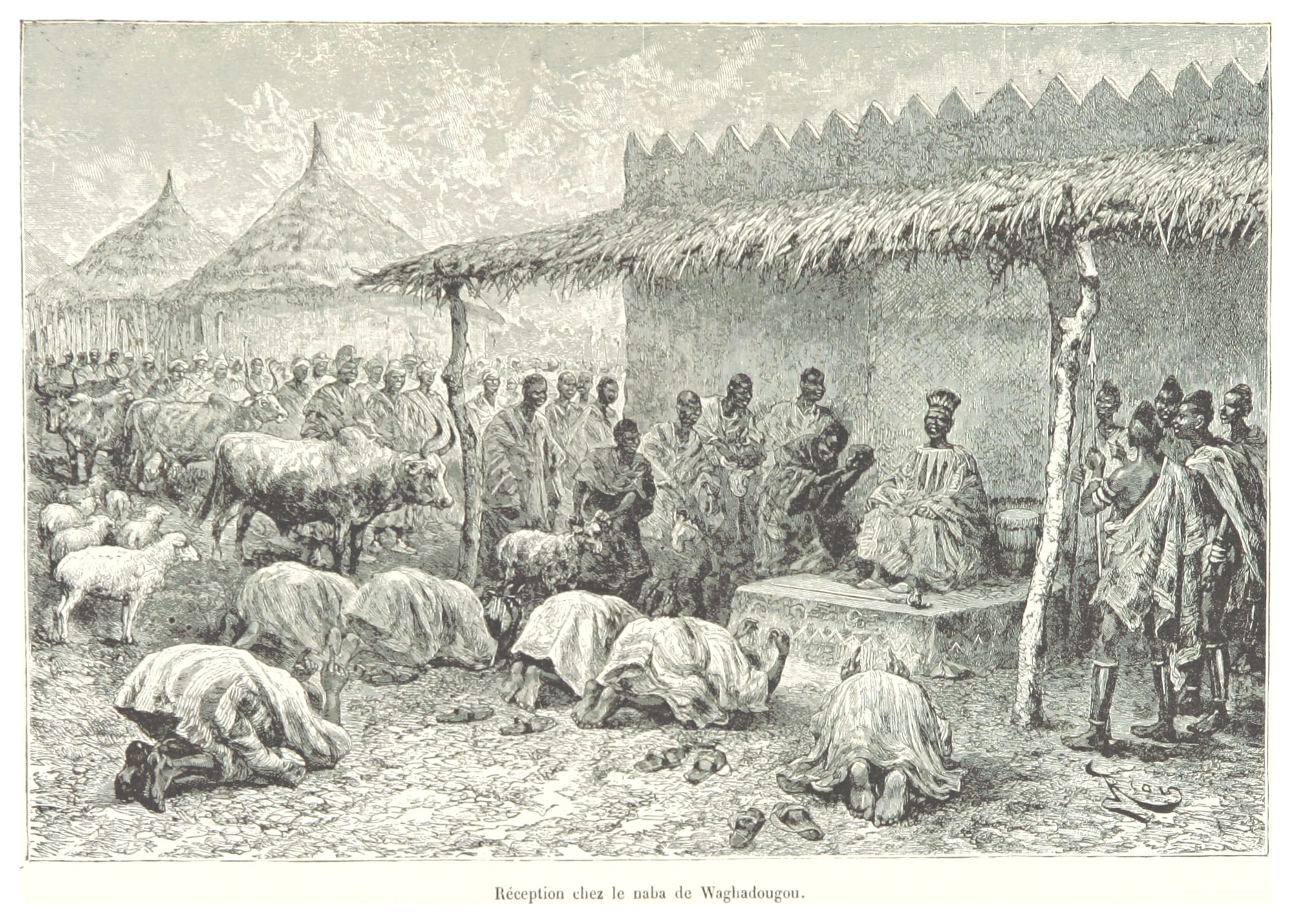
The land was settled for thousands of years — the stone forts of Loropéni, linked to the gold trade of the Lobi country, go back around a millennium. But the states that shaped the region were the Mossi kingdoms, founded from roughly the 11th to 15th centuries by horse-riding conquerors whose founding legend runs through a warrior princess, Yennenga, and her son. The most powerful was Ouagadougou, ruled by the Mogho Naba, alongside Yatenga, Tenkodogo and others — centralised, cavalry-based kingdoms with elaborate courts.
Their defining achievement was survival. For centuries the Mossi held off incorporation into the great empires of the Sahel, Mali and Songhai. Mossi raiders struck as far as Timbuktu in the 15th century, and although Songhai's holy war of 1497 defeated them, they resisted the imposition of Islam. The Mossi kingdoms largely kept their own religious traditions, which set them apart from the Muslim trading towns to the west.
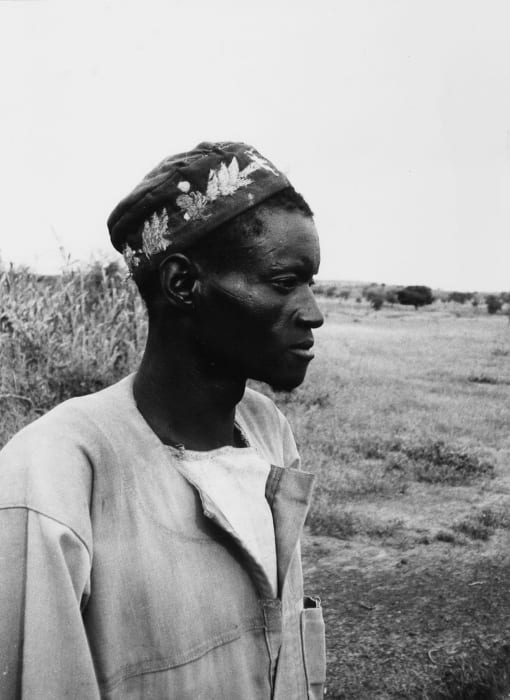
The Mogho Naba still exists today, without formal power but with real moral authority — during the 2014 uprising the army's new leaders came to the reigning Naba to promise that power would be handed back to civilians.
Conquest, and a colony carved up
France reached the Mossi in the 1890s. A mission arrived at Ouagadougou in 1896, drove out the Mogho Naba, and backed a successor who allied with the French; the conquest took several more years to complete. Resistance did not end — the Volta-Bani war of 1915–17, in the west, was a major anti-colonial revolt, and was eventually crushed.
The colony of Upper Volta was created in 1919 — and then, in 1932, France dissolved it, splitting the territory among Côte d'Ivoire, French Sudan and Niger, officially to save money. The Mossi elite campaigned for years to have the colony put back together, and it was, in 1947. Upper Volta stayed one of the poorest colonies in the empire, its main export the men who went south to work in the Gold Coast and Côte d'Ivoire.
Independence and instability
Upper Volta became independent on 5 August 1960. Its first president's corrupt one-party rule was swept away by a popular uprising and an army takeover in 1966, and the country then entered decades of chronic instability, with one of the highest tallies of military coups in Africa. In August 1983, after a run of short-lived governments, a 33-year-old army captain named Thomas Sankara seized power.
The Sankara revolution
Sankara's four years in office were unlike anything else in the region. He renamed the country Burkina Faso; cut the salaries and perks of officials, including his own; sold the government's fleet of Mercedes; and launched mass campaigns — vaccinating some two million people in two years, planting trees against the encroaching desert, building schools and clinics and wells by mobilised labour, and pushing land reform that brought the country close to feeding itself. He championed women's rights forcefully, banning female genital cutting and forced marriage and putting women in government, and he rejected loans from the IMF, campaigning across Africa against the burden of foreign debt. He was also authoritarian: revolutionary tribunals, neighbourhood committees, arrests of trade unionists, and executions of opponents.
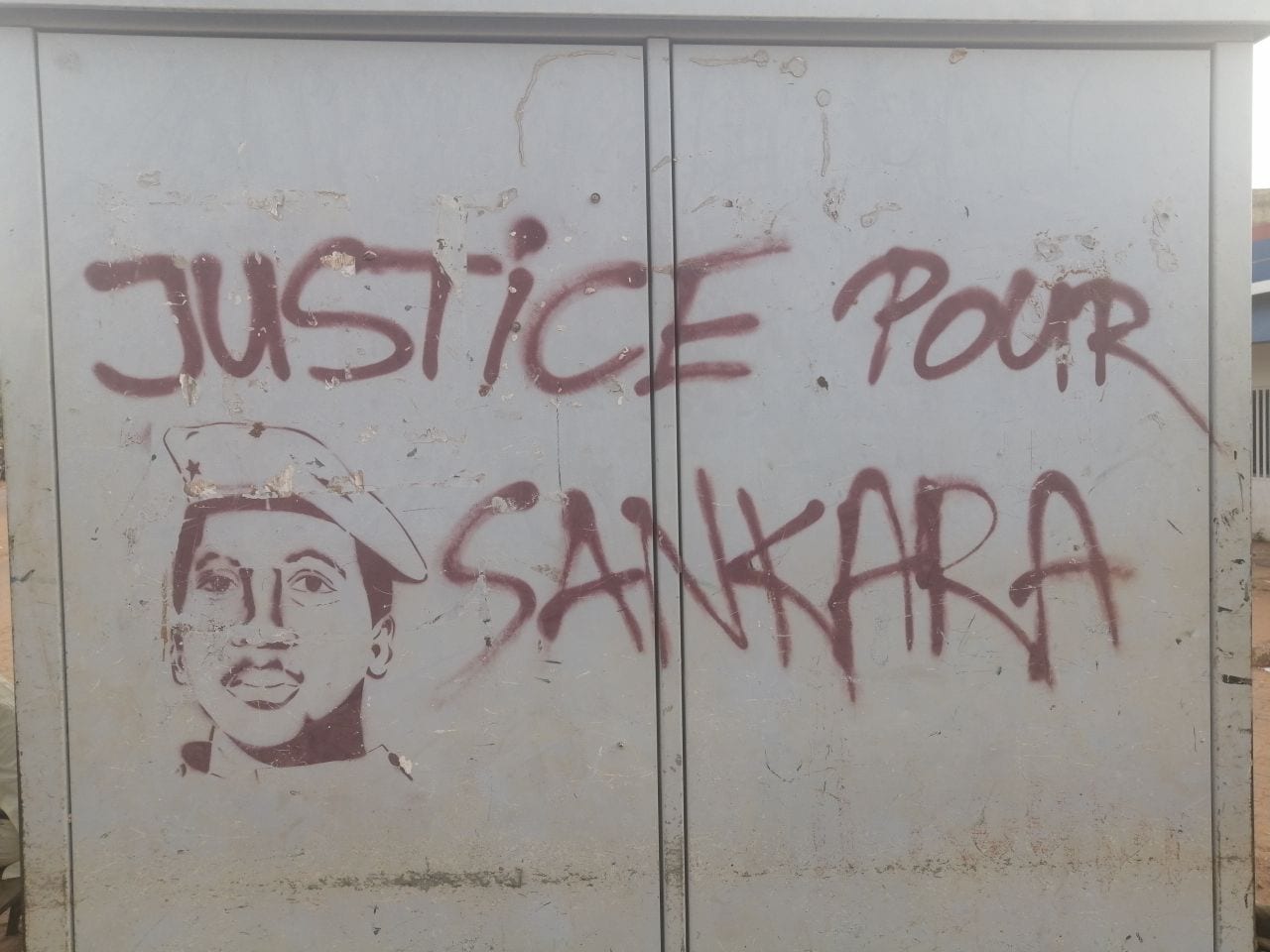
On 15 October 1987 Sankara was killed in a coup led by his closest comrade, Blaise Compaoré — a murder whose full circumstances are still debated. Compaoré then ruled for 27 years, reversing most of Sankara's policies, making peace with France and the international lenders, winning a string of elections, backing rebels in Sierra Leone's civil war and acting as a power-broker in the conflicts of Liberia and Côte d'Ivoire. A mass uprising finally drove him out in October 2014, when he tried to lift the constitution's term limits and protesters burned the parliament.
The Sahel war
The transition after Compaoré coincided with disaster. From around 2015, the collapse of Libya and the spread of Mali's conflict pushed jihadist groups — some tied to al-Qaeda, some to the Islamic State — into northern and eastern Burkina Faso. The insurgency has since killed at least 20,000 people, displaced roughly two million people, closed hundreds of schools, and put whole regions beyond government control. The army's failure to stop it triggered two more coups in 2022, the second bringing to power a 34-year-old captain, Ibrahim Traoré.
Traoré's government broke with France, expelling its troops, turned to Russia for military support, and joined the juntas of Mali and Niger in a new Alliance of Sahel States, whose members left the regional bloc ECOWAS in 2025. Promised elections were postponed, and in 2024 Traoré's mandate was extended by five years. His nationalist, Sankara-invoking, anti-Western message is genuinely popular among many young Burkinabè and across Africa, even as the war grinds on, civilian massacres by security forces and state-backed militias mount, and criticism of the government is increasingly dangerous.
What Burkina Faso carries
Burkina Faso's history has a recurring theme of being pulled apart and put back together — the colony dissolved and restored, a national identity always weaker than regional and ethnic loyalties, a state that has changed hands by force again and again. Two things stand against that: the deep continuity of the Mossi institutions on the central plateau, and the memory of Sankara, whose four years are still the reference point every Burkinabè government, including the current one, measures itself against.