Food · China
China: Food and the National Dish
A whole country too large for one cuisine, a lacquered duck served as its most famous single dish, and a grain liquor consumed in quantities most of the world has never heard of
By Worldlore Editorial · 30 September 2026
A country too large for one cuisine
China is roughly the size of Europe, and treating it as having a single cuisine makes about as much sense as treating France and Poland as culinarily identical. Chinese food is commonly divided into eight great regional traditions — Sichuan, Cantonese, Shandong, Jiangsu, Zhejiang, Fujian, Hunan and Anhui, in the grouping most cited since 1980 — each with its own defining flavours, from Sichuan's numbing chilli heat to Cantonese cooking's lighter, ingredient-forward style. Rice dominates the south; wheat, in the form of noodles and steamed buns, dominates the north.
China's best-known dish: Peking duck
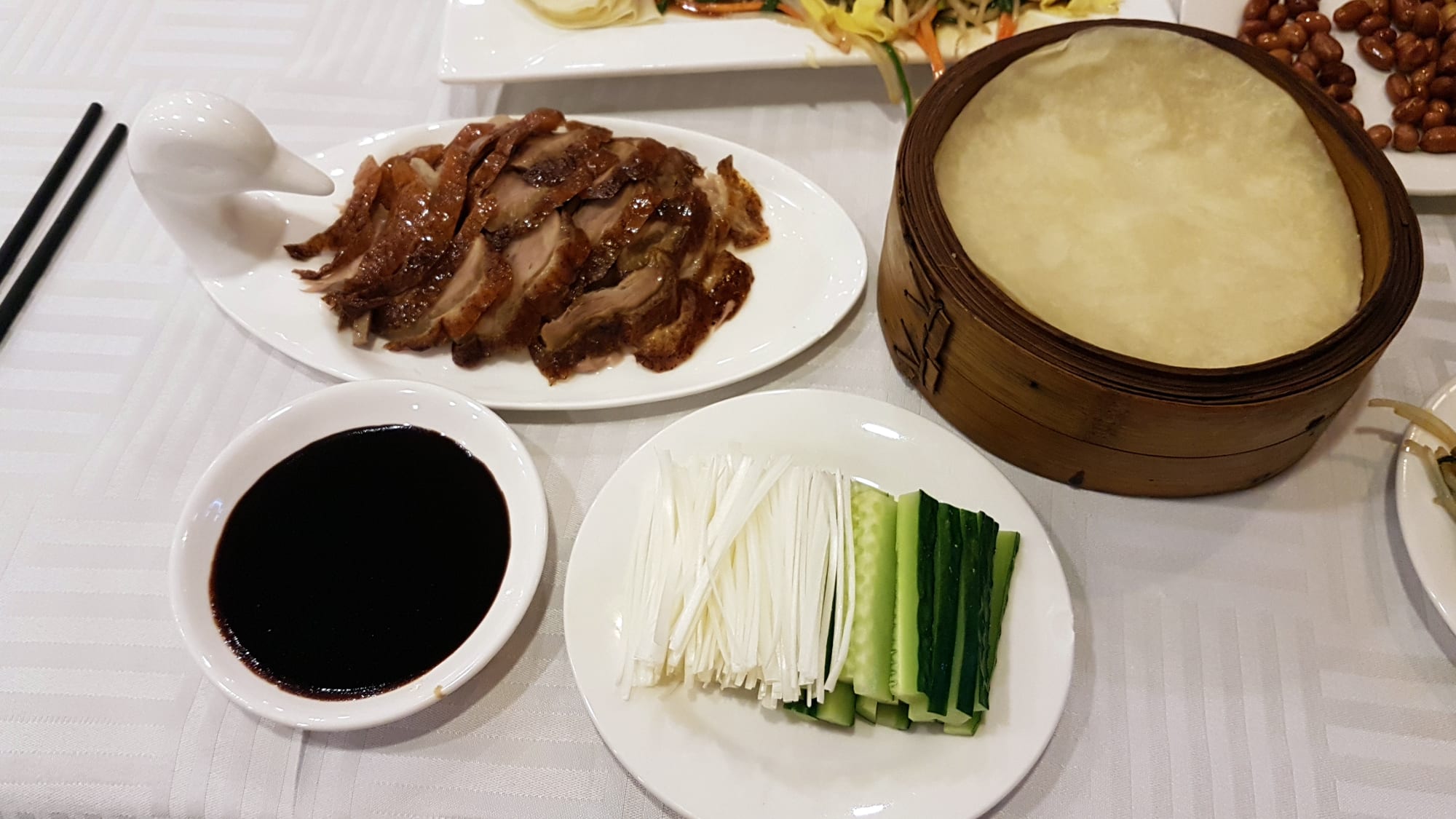
If one dish stands in for Chinese food internationally, it is Peking duck: a whole duck seasoned, then roasted in a closed or hung oven until the skin turns a deep, glossy mahogany and shatters crisp under the knife. It is carved at the table and wrapped, skin and meat together, in thin pancakes with spring onion, cucumber and a sweet fermented bean sauce. The dish is specifically tied to Beijing rather than the country as a whole, but it has become the single Chinese dish most people outside China would name first.
Regional flavours worth knowing
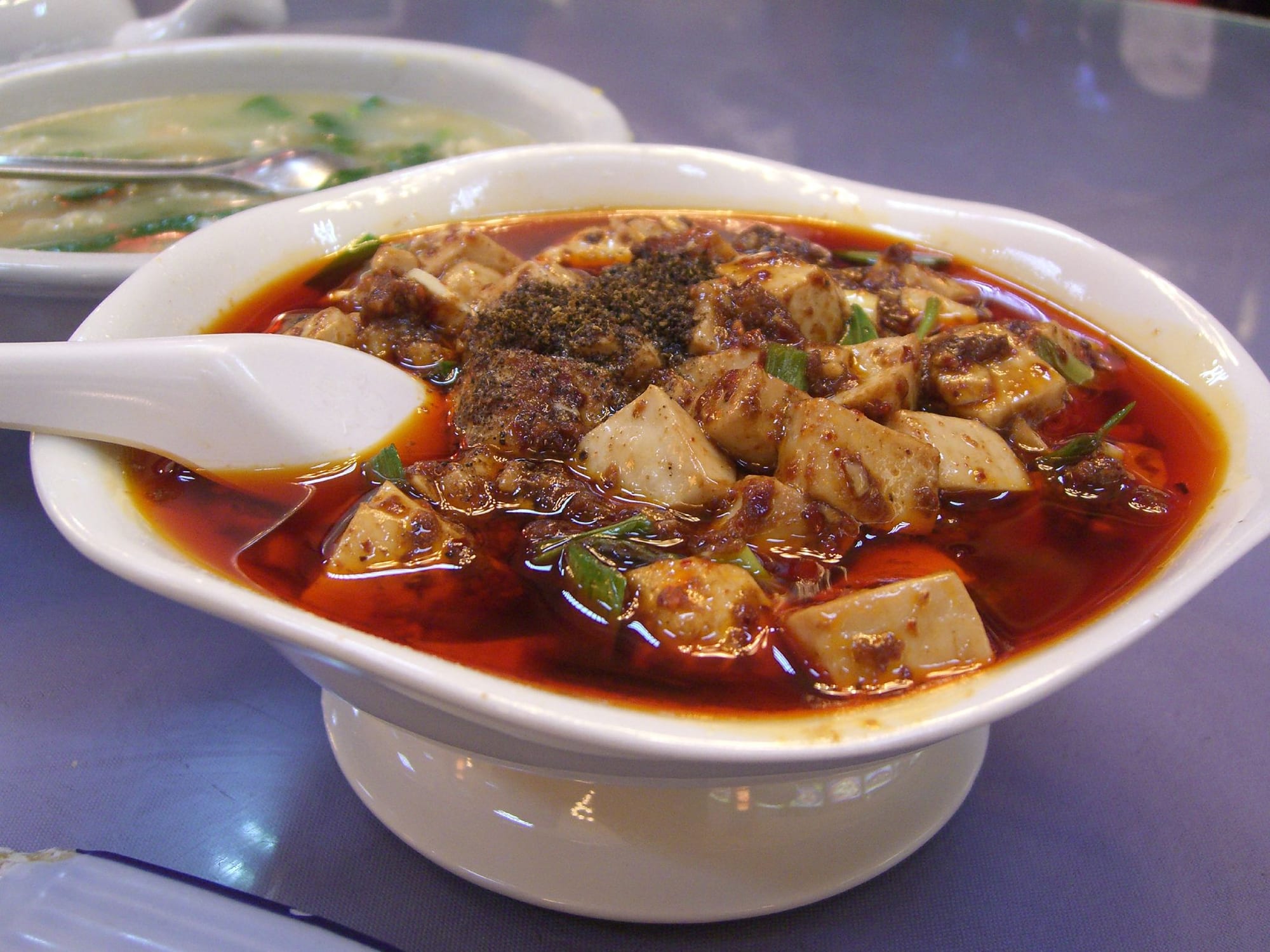
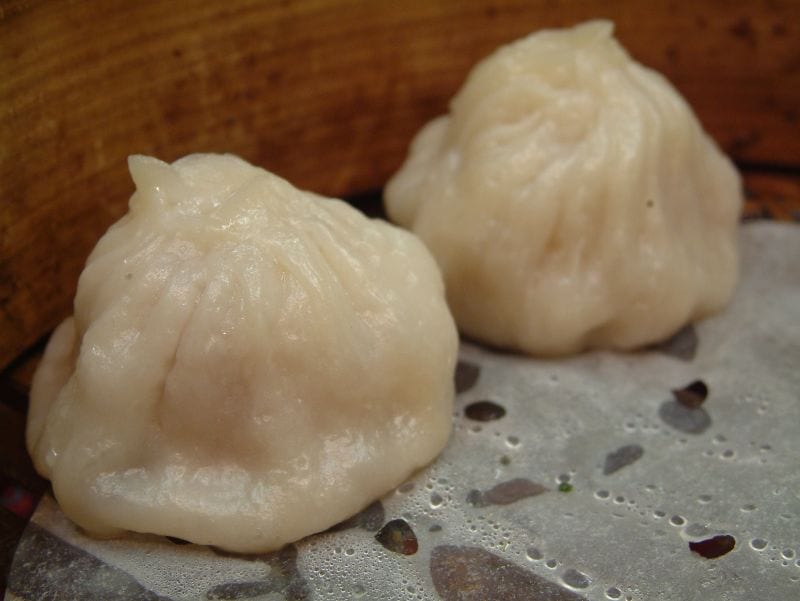
Sichuan cuisine is built on the "mala" combination of chilli heat and the tongue-numbing tingle of Sichuan peppercorn, found in dishes like mapo tofu — soft tofu in a fiery, fermented bean and chilli sauce. Cantonese cooking, from Guangdong province and Hong Kong, favours lighter, fresher flavours and gave the world dim sum, a tradition of small steamed and fried dishes eaten over tea. Shanghai and the surrounding Jiangnan region are known for a more delicate, slightly sweet style, seen in xiaolongbao, soup-filled dumplings eaten with real technique — a careful bite, a sip of the scalding broth inside, then the rest.
Dishes to know
Five more to recognise across China's regions:
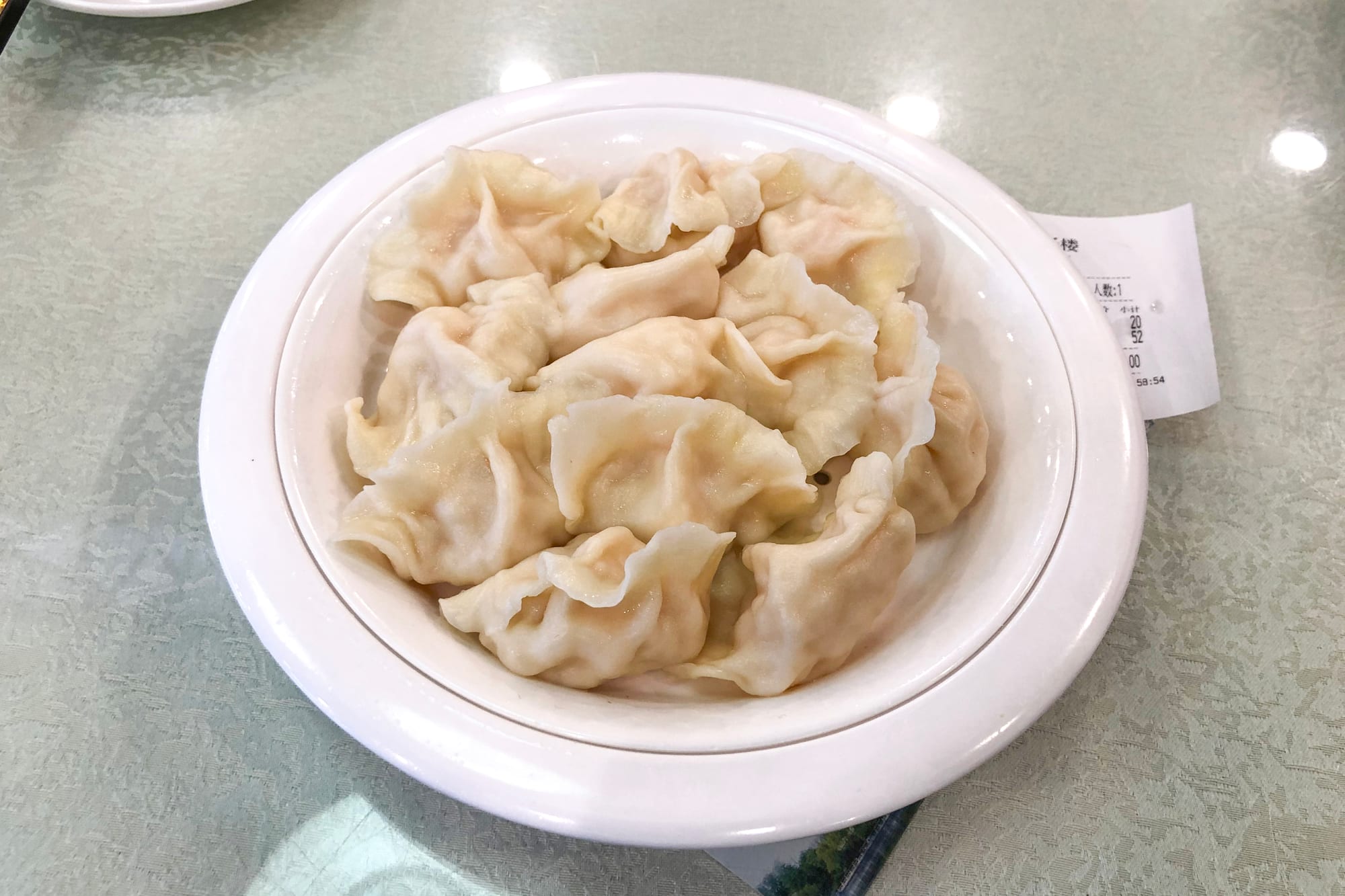
- Jiaozi — boiled, steamed or pan-fried dumplings whose shape recalls
the gold and silver ingots of imperial China, eaten across northern China at Lunar New Year for good fortune.
- Xiaolongbao — small dumplings filled with pork and a pocket of hot broth,
a Jiangnan speciality best known abroad in its Shanghai form.
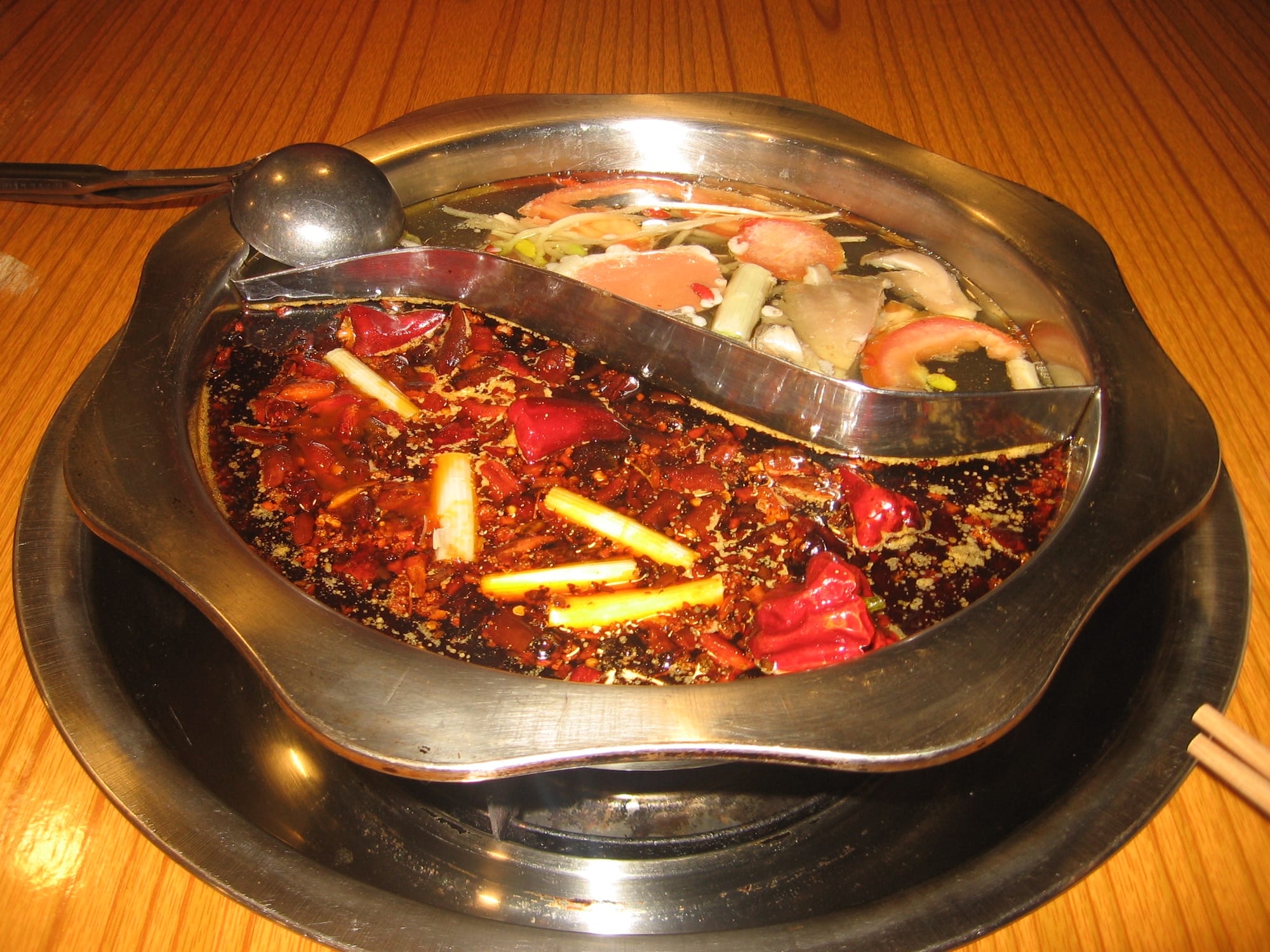
- Hot pot (huoguo) — a simmering pot of broth kept at the table, into which
diners cook their own meat, vegetables and noodles; the fiery version associated with Chongqing and Sichuan is one of the most famous.
- Dim sum — an assortment of small Cantonese dishes, traditionally eaten
with tea at a morning or midday meal known in Cantonese as yum cha.
- Zongzi — glutinous rice wrapped and steamed in bamboo leaves, eaten for
the Dragon Boat Festival.
Tea and a spirit most of the world has never heard of
China is also where tea drinking began, and its regional varieties — green, black, oolong, pu-erh — carry their own elaborate brewing customs, from everyday cups to the meticulous gongfu style of brewing. Baijiu, by contrast, is mainly a banquet and toasting drink, central to business and family celebrations alike.
Eating as a traveller
Vegetarians can eat well in most regions thanks to a long Buddhist vegetarian tradition, though it is worth specifying "no meat, no meat stock" clearly, since broths are often built on pork or chicken. Tap water should be boiled or avoided; bottled water is standard. One small but important piece of etiquette: never leave chopsticks standing upright in a bowl of rice, since the gesture resembles the incense burned as an offering to the dead and is considered a serious faux pas.
What to take from the table
Peking duck is the dish to try in Beijing, but treating any single dish as "Chinese food" misses the point — a hot pot in Chongqing, dim sum in Guangzhou and a bowl of xiaolongbao in Shanghai are three different cuisines that happen to share a border.