History · Costa Rica
Costa Rica: The Country Without an Army
A poor, remote Spanish backwater that became Central America's exceptional democracy — coffee, a 1948 civil war, and the abolition of the military
By Worldlore Editorial · 30 September 2026
The exception in the isthmus
Costa Rica is a small country between Nicaragua and Panama, with coasts on both the Caribbean and the Pacific and most of its 5 million people in a temperate highland valley around the capital, San José. By almost every measure — democratic stability, education, life expectancy, press freedom, protected wilderness — it stands apart from the rest of Central America, a region better known in the 20th century for coups, dictators and civil wars. It has had no army since 1948. The usual explanations reach back to the colonial period, when Costa Rica was simply too poor and too empty to build the landed aristocracy and the coercive state that weighed on its neighbours.
A short history
- 300–1500 CE
Chiefdoms
Gold- and jade-working societies; the stone spheres of the Diquís delta.
- 1502
Columbus
He reaches the Caribbean coast on his final voyage.
- 1563
Cartago
The first lasting Spanish town; the colony stays a poor backwater.
- 1821
Independence
Central America breaks from Spain; Costa Rica later leaves the federation.
- 1830s onward
Coffee
Coffee exports transform the economy and build San José.
- 1870s–1900s
Bananas
An American company builds the Atlantic railway and a Caribbean enclave.
- 1948
Civil war
A six-week war after a disputed election kills around 2,000 people.
- 1 December 1948
The army abolished
The victorious junta dissolves the military.
- 1987
Nobel Peace Prize
President Óscar Arias for the Central American peace plan.
Before Spain, and a poor colony
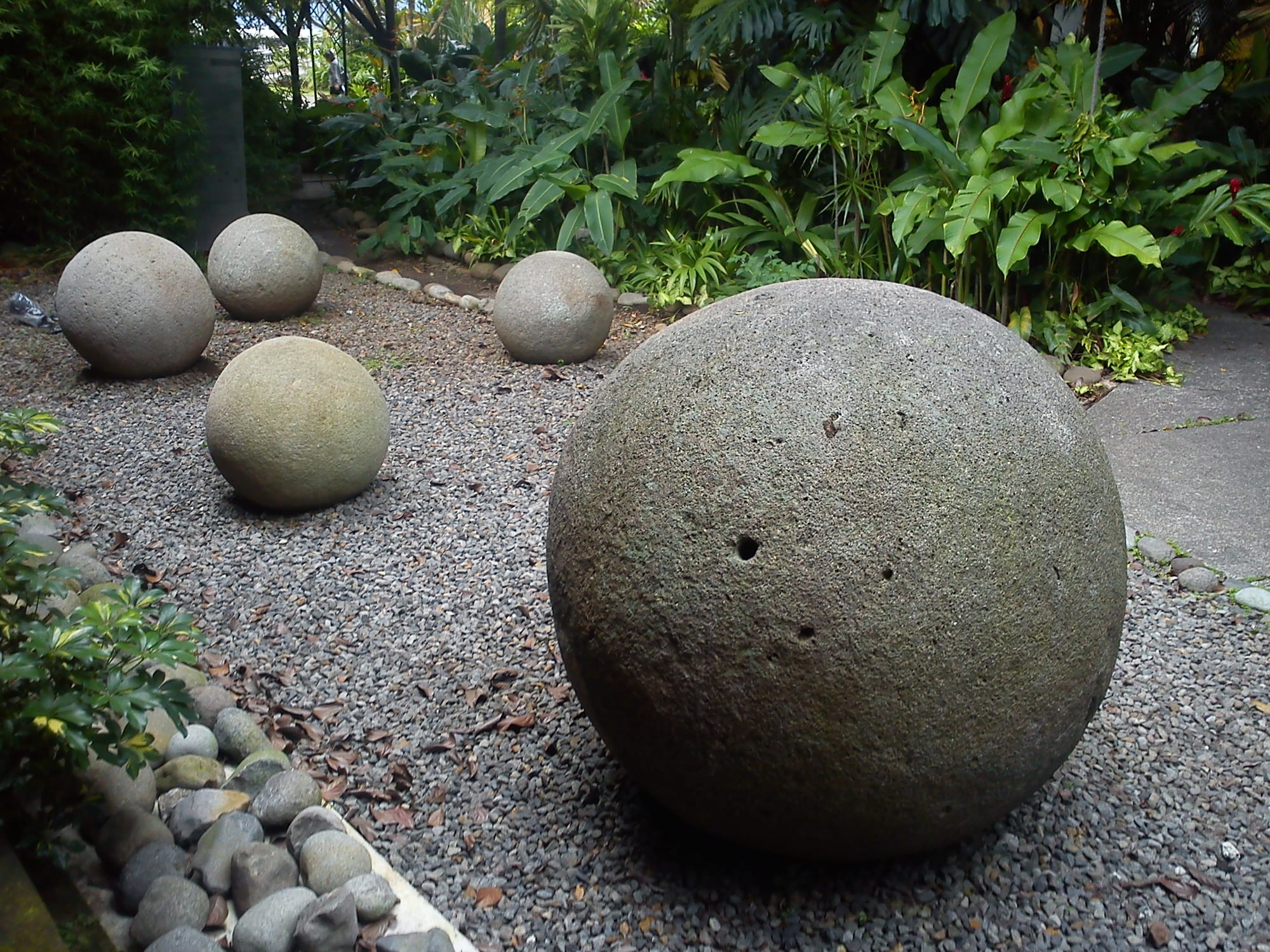
Costa Rica sat on the frontier between the Mesoamerican world to the north and the gold-working Chibchan world of Colombia to the south, and it belonged fully to neither. Its peoples lived in many chiefdoms, worked gold and jade, built the stone settlement of Guayabo, and — in the Diquís delta — carved more than 300 stone spheres to near-perfect roundness, for reasons still unknown.
Columbus, on his final voyage in 1502, reached the Caribbean shore; in some accounts he was the first to call it the "Rich Coast", after the gold jewellery he saw. There was little to mine. Conquest was slow, and the colony that formed after Cartago's founding in 1563 was one of the poorest in the Spanish empire: off the trade routes, with no minerals, no large Indigenous labour force after disease had done its work, and no plantation economy. Most Costa Rican settlers were small farmers working their own land — not the equal republic of national legend, but genuinely flatter and less hierarchical than the rest of the isthmus, because there was too little wealth to build a planter class.
Coffee and bananas
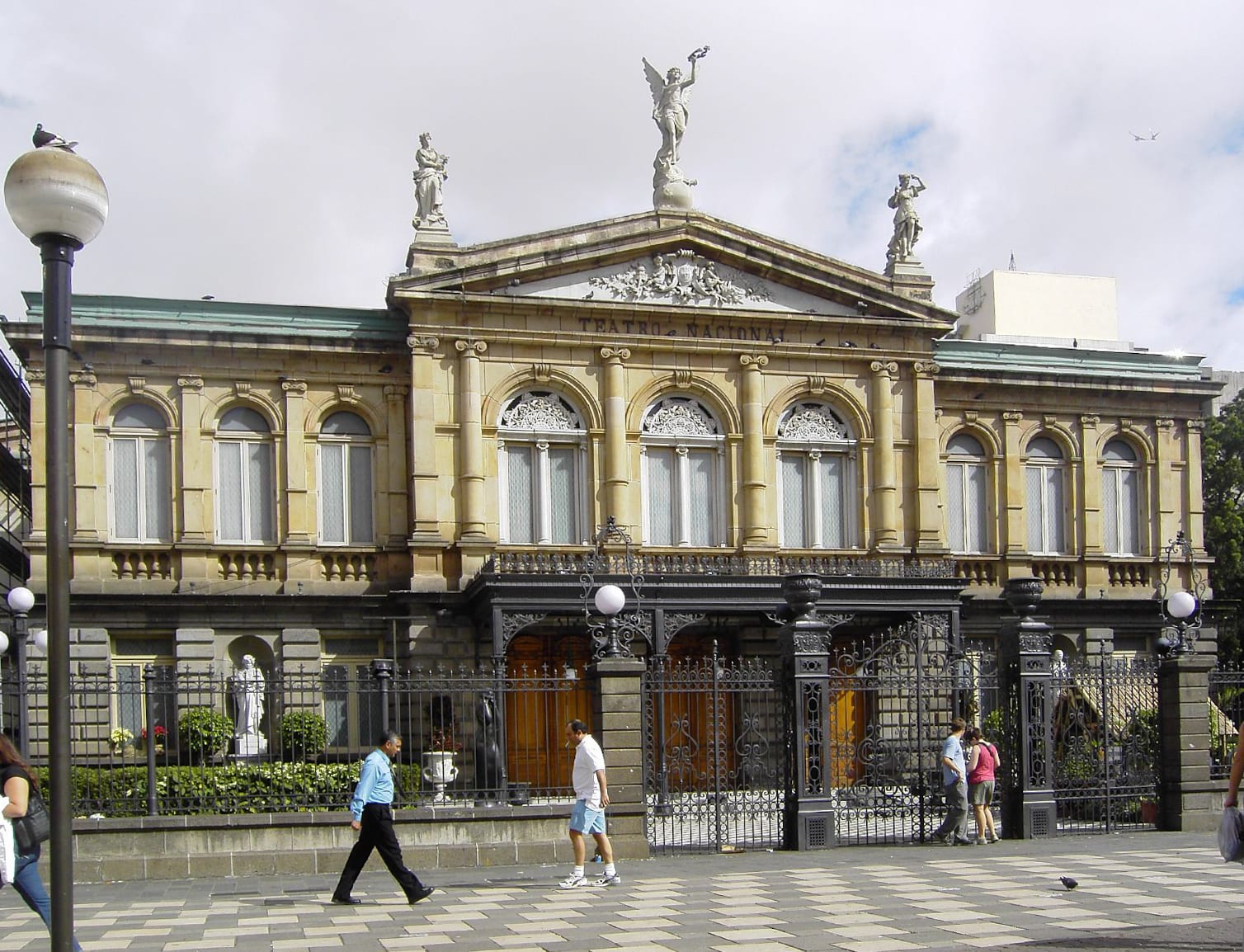
Central America broke from Spain in 1821, and after a spell in a short-lived federation, Costa Rica became fully independent in 1838. What made it a country was coffee. Introduced early in the century and exported from the 1830s, coffee was often grown on small and medium farms, though the wealth and power concentrated in the merchants who processed and shipped it. This coffee elite ran the country, built San José and its National Theatre, laid railways, and — unusually early — made primary schooling free and compulsory and abolished the death penalty.
Bananas came next. From the 1870s an American entrepreneur, Minor Keith, built the railway to the Caribbean — at the cost of as many as 4,000 lives, among them imported Jamaican and Chinese labourers — and his banana business, begun to pay for it, was absorbed into the United Fruit Company in 1899. Its plantations created an enclave economy on the Caribbean coast and a large Afro-Costa Rican population around Limón, which was confined by segregation laws to the Caribbean province until 1949.
1948, and the end of the army
Costa Rica's politics through the early 20th century were mostly electoral. In the 1940s a reforming conservative president, backed by the Church and the Communists, pushed through a labour code, social security and a minimum wage — alienating both the old coffee elite and a rising middle-class reform movement. When the 1948 presidential election, won by the opposition, was annulled by congress, a coffee farmer named José Figueres led an armed uprising. The six-week civil war that followed, with around 2,000 dead, was the bloodiest event in the country's modern history.
Figueres won, and his junta did something remarkable. Instead of undoing the social reforms, it kept and extended them; it nationalised the banks; it secured the vote for women and nationality rights for Afro-Costa Ricans; and on 1 December 1948 it abolished the armed forces, a decision written into the 1949 Constitution. Figueres then handed power to the man who had actually won the 1948 election, as he had promised.
The peace dividend
With no army to fund or fear, Costa Rica built a stable two-party democracy with clean elections and peaceful transfers of power, and poured resources into education, health and, from the 1970s, conservation — building one of the world's best-known networks of national parks and protected areas. It kept out of the Central American civil wars of the 1980s as far as it could, and President Óscar Arias won the Nobel Peace Prize in 1987 for the plan that helped end them.
The economy has moved well beyond coffee and bananas, into electronics, medical devices, services and a huge ecotourism industry, and the country joined the OECD in 2021. Its recent strains are more ordinary than its neighbours': public debt, a large informal economy, and a sharp rise in cocaine-trafficking violence that has pushed homicide rates to record highs. In February 2026 voters elected Laura Fernández of the Sovereign People's Party outright in the first round; she took office in May 2026 as the second woman elected president, with a majority in the Legislative Assembly.
What Costa Rica keeps
Costa Rica's exceptionalism is partly luck — a colony too poor to be brutal, spared the minerals and the plantation labour system that shaped the isthmus — and partly choice: the decision in 1948 to abolish the army rather than use it. The country has spent the more than 75 years since spending on citizens what it did not spend on soldiers, and it has stayed, by regional standards, remarkably calm.