Culture & Customs · El Salvador
El Salvador: Carpets of Sawdust, Crosses of Fruit
A country named after the Saviour, where Catholic and evangelical faith run side by side, respect is shown through titles and greetings, and the religious year is marked with fruit, flowers and pictures laid in the street
By Globeway Editorial · 30 September 2026
On the third of May, a cross of jiote wood stands in a front yard, hung with chains of coloured tissue paper and loaded with mangoes, jocotes, coyoles and whatever other fruit the season has brought. Neighbours drift in to look. Anyone who wants to take a piece of fruit from this small altar follows a set order: first a bow, then the sign of the cross, and only then the choice of fruit. Older relatives explain the custom to the children as they go. The Day of the Cross joins a Christian symbol to a far older celebration of the rains that arrive at this time of year, and it captures a great deal about El Salvador: a deep and visible faith, a respect for doing things properly, and a habit of turning devotion into something colourful, shared and eaten together.
Faith, identity and values
Religion is woven through Salvadoran life, but its shape has changed. A December 2022 survey by the Institute of Public Opinion at the Central American University, cited by the US State Department, found that 42.2 per cent of the population identified as Catholic, 36.6 per cent as evangelical Christian and 17 per cent with no religious affiliation, with small numbers of other faiths. The constitution grants the Catholic Church automatic official recognition, while other groups must register to obtain it. The State Department also notes a small segment of the population that follows Indigenous beliefs, sometimes mixed with Christianity. The growth of evangelical churches has been one of the great shifts of recent decades, and ethnographers have noted their appeal as close-knit communities in which ordinary members can take on leadership roles.
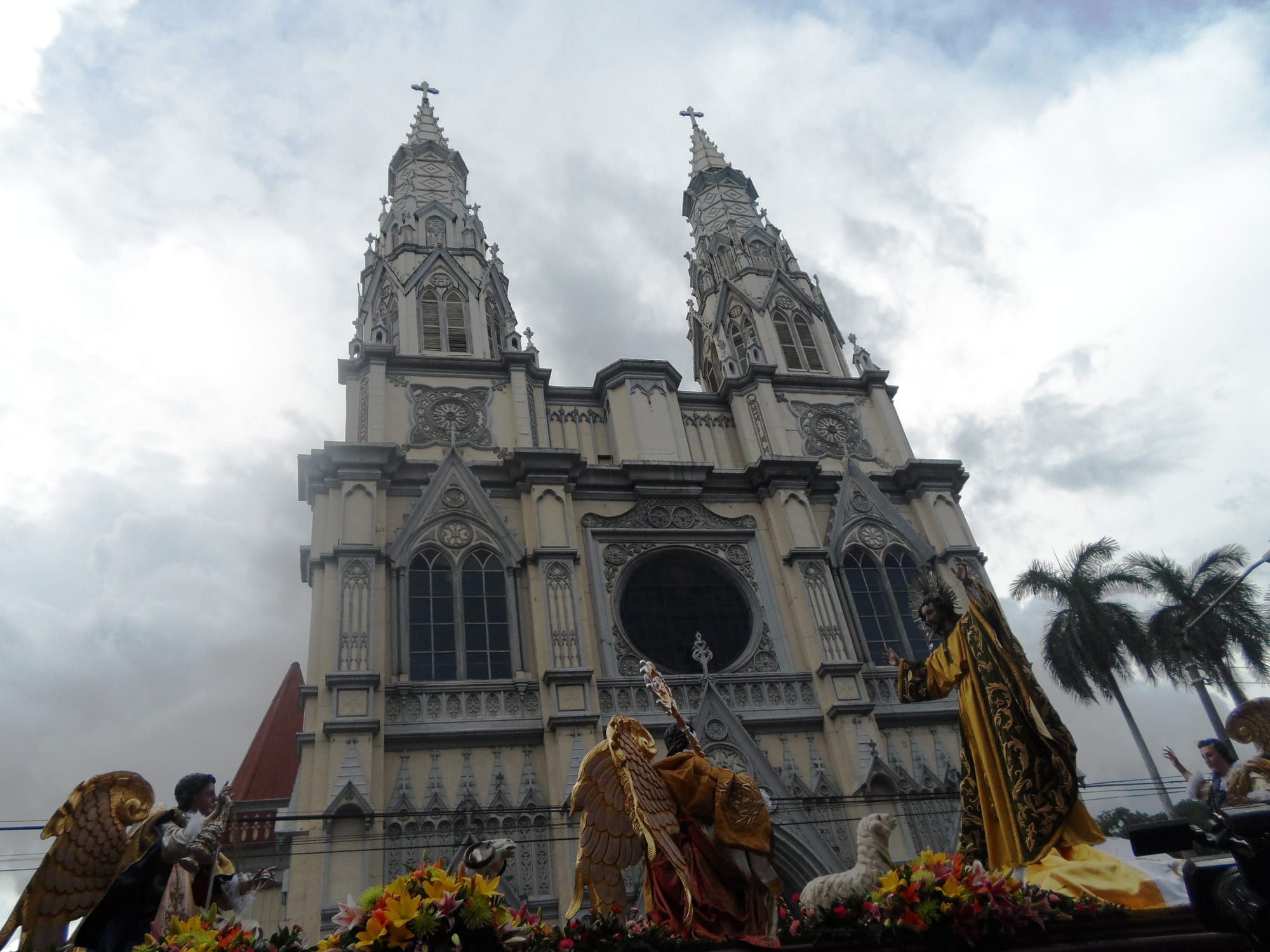
The country's very name is religious. El Salvador means "the Saviour", and its great patronal feast honours the Divino Salvador del Mundo, the Divine Saviour of the World. Its best-loved modern religious figure is Óscar Romero, the Archbishop of San Salvador who spoke out against violence, torture and poverty and appealed to soldiers not to shoot their fellow citizens. He was shot dead while celebrating Mass on 24 March 1980, was beatified in San Salvador in 2015 and was declared a saint by Pope Francis in Rome on 14 October 2018. Long before that, many Salvadorans already honoured him as a saint and martyr of their own.
Beneath the religious calendar lie values that shape everyday behaviour. Family comes first, and the extended family is expected to help its members with food, housing, health and schooling. Respect, or respeto, is owed by the young to the old and by those of lower standing to those of higher standing, and it is shown in the way people speak: with titles, polite greetings and the formal "usted" rather than the familiar forms of "you". Communication tends to be warm but careful. Guides to Salvadoran business culture note that messages are often softened to avoid causing offence, that humility and consideration for others are prized, and that a "sí" may sometimes mean "I have heard you" rather than a firm commitment.
Greetings and meeting people
Greeting properly is not optional. The standard greeting on meeting someone is a handshake with a warm smile and direct eye contact, and a "buenos días", "buenas tardes" or "buenas noches" comes before anything else is said. In smaller communities, it is expected that people greet one another when passing in the street and when walking into a shop. Children are taught early to use respectful greetings and terms of address with their elders.
Titles matter. People are addressed as Señor or Señora, or by a professional title, with the surname, until they invite a move to first names. The formal "usted" is the safe choice with anyone older, with officials and with new acquaintances. In professional life, relationships come before business: meetings usually open with light conversation and personal questions, and trust built over time counts for more than a polished pitch. Business dress is formal and conservative, and it is considered better to be slightly overdressed than too casual, particularly at a first meeting.
Hospitality and being a guest
Salvadoran hospitality is centred on the family and the shared meal, and meals are as much about company as food. Guides to local etiquette note that people tend to stay and talk after eating rather than leaving as soon as the plates are cleared, and that in business a meeting may continue over coffee or lunch, with serious matters raised only gradually.
Gifts are welcome rather than obligatory. A small, thoughtful present is appropriate once a relationship has been established, and something from the visitor's own country is a good choice; the gesture matters more than the price. In more traditional households, ethnographers have described older expectations in which women serve the food and the respect shown to elders is visible in who is served and addressed first; a guest who follows the host's lead on where to sit and when to begin shows the respect that Salvadorans value. Special occasions call for special dishes, with tamales and chumpe, turkey stewed in a sauce, among the foods associated with celebrations.
In restaurants, tipping is a commercial custom rather than a legal duty. A charge of 10 per cent is commonly added or suggested, but the national press has pointed out that no law makes it compulsory, and it is left to the customer to decide according to the service received.
Festivals and life's big moments
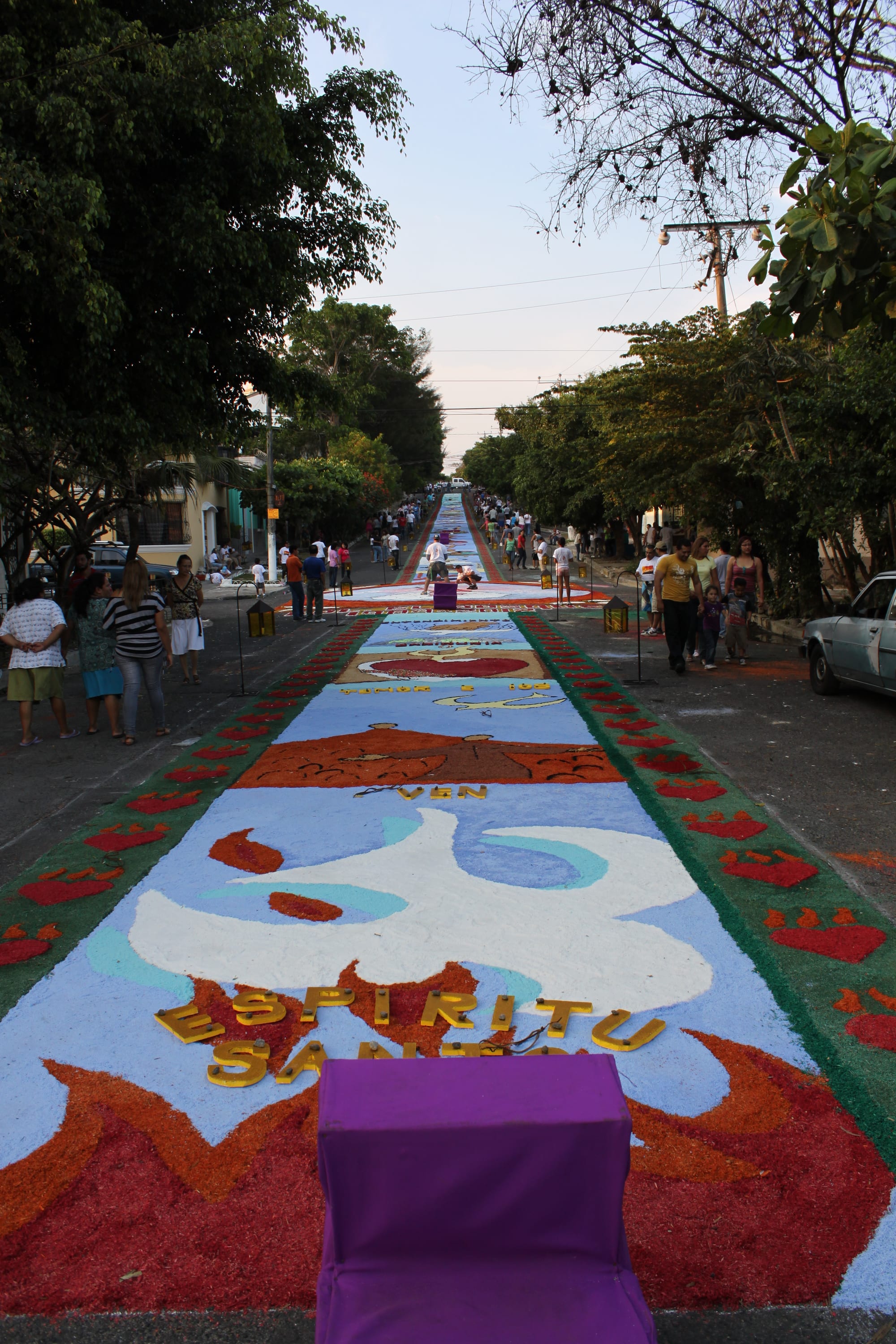
The religious year is full, and much of it takes place in the street. Holy Week is the most solemn stretch. For the Good Friday procession of the Holy Burial, usually held at night, families and neighbours spend hours laying carpets of coloured sawdust, salt, ash and flowers along the route, often with religious images or messages worked into the design. The procession then walks straight over them, and the pictures that took all day to make are gone within minutes, a reminder, for many who make them, of the passing nature of life and of work offered freely.
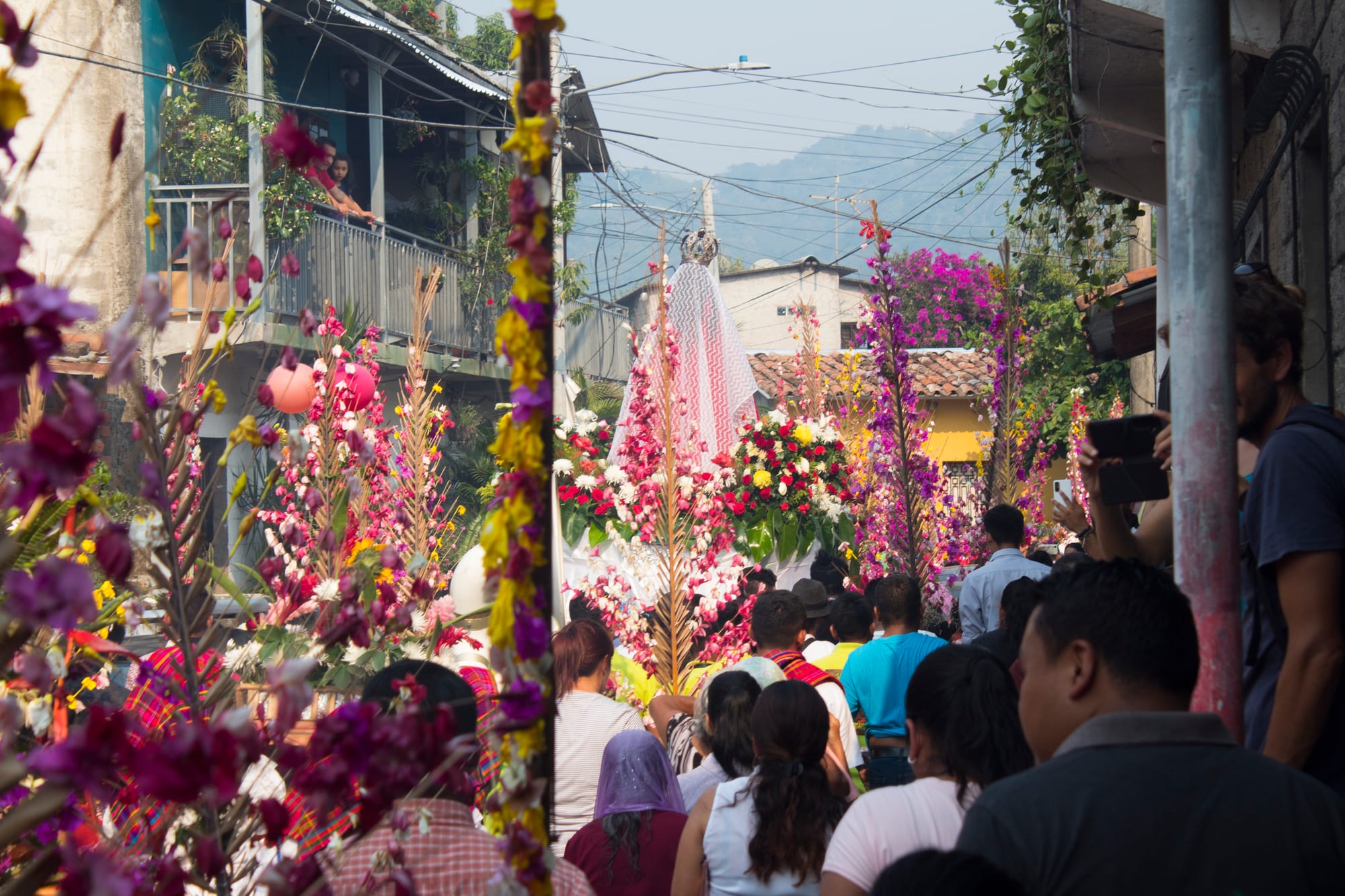
Early May brings the Day of the Cross, when fruit-laden crosses go up in yards, patios and plazas to give thanks for the fruits of the earth and to welcome the rainy season that the maize crop depends on. The same season gives the country its first entry on UNESCO's list of the intangible heritage of humanity, inscribed in December 2025: the Confraternity of flowers and palms, a celebration that fuses Catholic devotion to the Virgin Mary with Indigenous practices tied to the coming of the rains. Palms are decorated with seasonal flowers and carried in procession with images of the Virgin, accompanied by traditional dancers, bands and prayers, while households linked to the confraternity cook tamales, atol, bread and tortillas for those taking part.
August belongs to the Divine Saviour of the World. The August festivities, the Fiestas Agostinas, bring fairs, food and folk performances, and their high point is the procession known as the Bajada on 5 August, followed by a solemn Mass on 6 August attended by the archbishop and state officials. Independence Day, 15 September, is marked with parades. On top of these national dates, every town keeps its own patron saint's festival.
The dead are remembered with care. After a death, Catholic families keep the novenario, nine nights of prayer offered so that the soul may be purified and rise to heaven. On 2 November, the Day of the Faithful Departed, families go to the cemeteries early to decorate graves with flowers, pray and share food such as tamales and hojuelas, thin fried pastries. Many homes also set up small altars with photographs of those who have died, alongside candles, crosses and rosaries. Marriage customs vary widely by circumstance: ethnographers have noted that among poorer families informal unions have long been common, with a church wedding, regarded as binding for life, sometimes held only years later.
Arts, crafts and music
El Salvador's best-known visual style was born in a small mountain town in the 1970s. The artist Fernando Llort settled in La Palma, opened a workshop called La Semilla de Dios, "the seed of God", and began teaching local people to paint. His style of birds, trees, houses and bright human figures, often on a white background, spread through the town and then the country. He first painted miniatures on the hard seeds of the copinol tree, and his pupils went on to paint wood, ceramics and much else, turning a farming town into a centre of craft. Llort, who died in 2018, also designed a large mural on the façade of the Metropolitan Cathedral in San Salvador, which was removed in 2011.
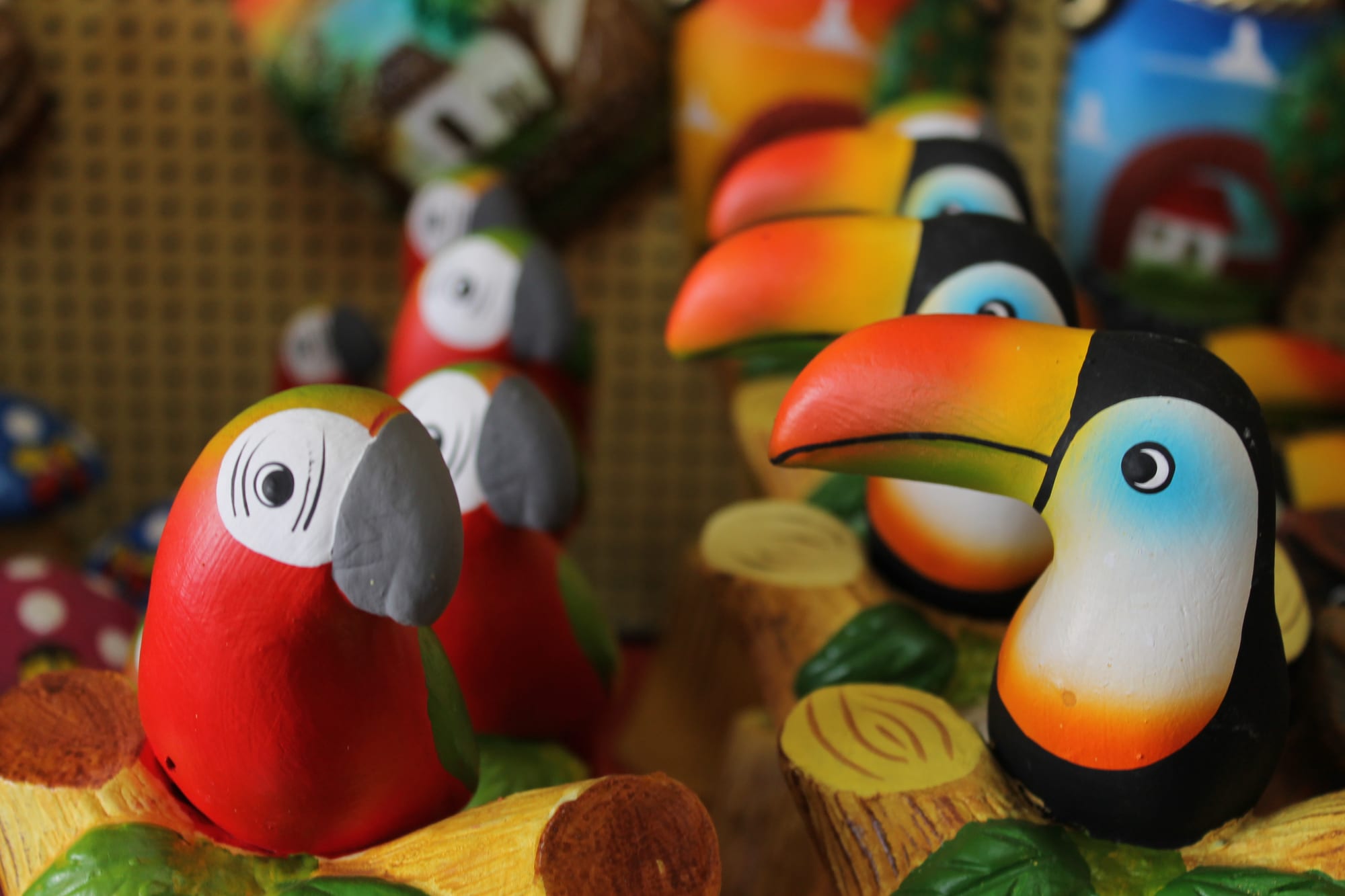
Other crafts are tied to particular towns. Ilobasco is known for its ceramics, from painted clay birds and figurines to miniature scenes of everyday life, and San Sebastián for its woven textiles.
One of the oldest living performance traditions is the dance-drama of the historiantes, better known as Moros y Cristianos, Moors and Christians. Brought by Franciscan missionaries in the colonial period, it re-enacts the wars between Christian and Muslim kingdoms in medieval Spain, and was used to help teach the Christian story to Indigenous communities, who made it their own. Dancers wear velvet capes decorated with embroidery and mirrors, elaborate hats and carved masks, and speak scripted dialogues to the sound of a flute, the pito, and a drum. Troupes still perform at patron saint festivals and religious celebrations across the country, and the historiantes are among the traditional dancers who accompany the procession of flowers and palms. In literature, the novelist Manlio Argueta is among the writers whose work has carried Salvadoran rural life to readers abroad.
Dos and don'ts for visitors
- Do say "buenos días" or "buenas tardes" when entering a shop or passing people in a small town.
- Do shake hands with a smile and eye contact, and use Señor or Señora with the surname until invited to use first names.
- Do use the formal "usted" with older people, officials and anyone met for the first time.
- Do allow time for conversation before business, and linger at the table after a meal rather than rushing off.
- Do bow and make the sign of the cross before taking fruit from a Day of the Cross altar, as local people do.
- Do dress neatly and conservatively for meetings; slightly overdressed is better than too casual.
- Don't take a polite "sí" as a firm promise; follow up gently.
- Don't assume the 10 per cent restaurant tip is compulsory; it is customary but voluntary.
What to take away
El Salvador expresses its faith and its courtesy in the open — in a greeting on the street, a cross hung with fruit, a carpet laid for a procession — and visitors who greet people properly and take part with respect will find themselves warmly drawn in.