Daily Life · El Salvador
Why did El Salvador make Bitcoin legal money, and what happened next?
Bukele promised cheaper remittances and banking for the unbanked. Few Salvadorans took it up, and in 2025, under an IMF deal, the law was largely undone.
By Globeway Editorial · 2 November 2026
The short answer
In June 2021 President Nayib Bukele pushed a law through El Salvador's Legislative Assembly making the cryptocurrency bitcoin legal tender alongside the US dollar, and on 7 September 2021 it became the first country in the world to do so. Bukele argued it would make it cheaper for Salvadorans abroad to send money home, bring banking to the roughly 70 per cent of people without a bank account, and attract foreign investment and jobs. It also turned a small Central American country, and its young president, into global headlines.
What happened next was mostly disappointment. Despite a free $30 in bitcoin for everyone who signed up to the government's Chivo wallet, few people kept using it, few businesses took it, and only a tiny share of remittances arrived that way. In December 2024, in return for a $1.4 billion loan from the International Monetary Fund, the government agreed to make accepting bitcoin voluntary and wind down Chivo, and in January 2025 the Assembly passed the reform that substantially rescinded the law. By then a rise in bitcoin's price had put the government's own bitcoin purchases into profit on paper.
A country without its own money
El Salvador had already given up its own currency once. In 2001 the colón, used since 1892, was replaced by the US dollar, with the aim of financial stability, foreign investment and cheaper trade. The price was that the country lost control of its own monetary policy, which was now set in effect by the US Federal Reserve.
The other great fact of Salvadoran economic life is money sent home by relatives working abroad, mostly in the United States. Remittances made up 23 per cent of the economy in 2020, and they were delivered by money-transfer companies that operated in person and charged fees. Bukele presented bitcoin as a cheaper digital channel for remittances and a way into the financial system for people without banks.
The idea had a local test case. From 2019, an American bitcoin advocate living in the coastal village of El Zonte distributed an anonymous donation of $100,000 in bitcoin on condition that the community build a circular economy around it, where workers could be paid and shops paid in bitcoin. The village became known as "Bitcoin Beach". Bukele had shown interest in bitcoin since at least 2017, when he was mayor of San Salvador, and in June 2021 he announced the plan in an English-language video at a bitcoin conference in Miami.
Launch day and the Chivo wallet
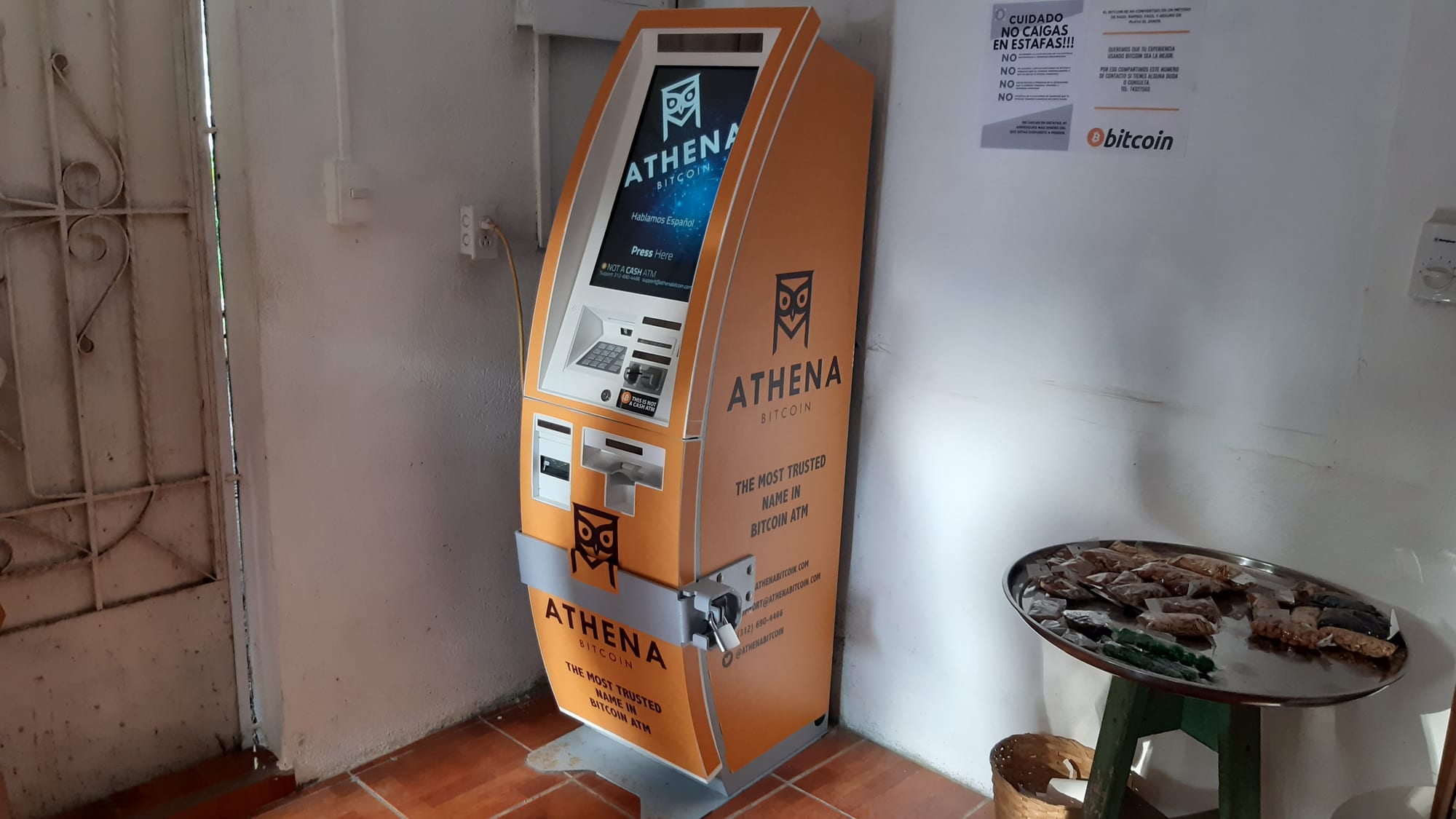
The Legislative Assembly passed the Bitcoin Law in June 2021 by 62 votes out of 84. Under it, businesses were required to accept bitcoin, bitcoin transactions were free of capital-gains tax, and foreign investors putting in more than three bitcoin could gain permanent residence. The World Bank turned down a request to help, citing transparency and the environmental impact of bitcoin mining.
The launch on 7 September 2021 was rocky. The government's Chivo wallet went offline within hours because of excessive demand, identity thieves stole some of the sign-up bonuses, and the price of bitcoin fell sharply that day. Over a thousand protesters gathered outside the Supreme Court, and thousands marched in San Salvador over the lack of transparency and the use of public money to buy bitcoin. Polls found most Salvadorans opposed the law; a September 2021 survey by the Central American University found nine in ten did not clearly understand what bitcoin was.
Within a month, Chivo had been downloaded by three million people, about 46 per cent of the population, more than the 29 per cent with bank accounts in
- But many signed up only for the $30. One national study found that
61 per cent of Chivo users stopped using it once they had spent their bonus.
- 2001
El Salvador replaces the colón with the US dollar.
- 2019
The El Zonte "Bitcoin Beach" experiment begins.
- June 2021
Bukele announces the plan in Miami; the Legislative Assembly passes the Bitcoin Law.
- 7 September 2021
Bitcoin becomes legal tender alongside the dollar.
- January 2022
The IMF urges El Salvador to drop bitcoin as legal tender.
- March 2022
The "Volcano Bonds" to fund a Bitcoin City are postponed.
- December 2024
A $1.4 billion IMF loan deal commits the government to scale bitcoin back.
- 29 January 2025
The Assembly approves the reform by 55 votes to 2.
What the numbers showed
The everyday currency never caught on. By 2022 only about a fifth of businesses accepted bitcoin, and the Chamber of Commerce found just 14 per cent had made any bitcoin transaction in the law's first ten months. Between September 2021 and April 2022, bitcoin carried 1.9 per cent of remittances to El Salvador, and only 1.3 per cent in 2023. Surveys by the Central American University found the share of Salvadorans who had used bitcoin to pay for something fell every year, from 25.7 per cent in 2021 to 8.1 per cent in 2024.
Nor did it reach the people it was meant for. A study based on a survey of 1,800 households found that Salvadorans aware of Chivo were disproportionately likely to be banked, educated, young and male. For remittances, the magazine Fortune reported in 2022 that bitcoin fees were often several times higher than traditional transfers.
Meanwhile the government had been buying bitcoin for its reserves. As the price crashed in 2022, it lost around 70 per cent of its value from its peak, and the country's holdings were worth about half what had been paid. Bukele answered by announcing on social media that he was "buying the dip". Plans for a tax-free Bitcoin City at the foot of the Conchagua volcano, powered by geothermal energy and partly funded by $1 billion of "Volcano Bonds", were postponed in March 2022.
The IMF steps in
The International Monetary Fund had urged El Salvador as early as January 2022 to stop treating bitcoin as legal tender, citing risks to financial stability and consumers, and warned that it would hurt the chances of a loan. The government kept buying, under a policy run by its Bitcoin Office of purchasing about one bitcoin a day, and it announced that geothermal power from the country's volcanoes would be used to mine more.
When bitcoin's price recovered, so did the investment's paper value: by December 2024 the government held roughly 6,000 bitcoins worth close to $600 million. But the country needed money from the IMF. Under the December 2024 deal, private businesses were no longer obliged to take bitcoin, taxes had to be paid in dollars, public-sector bitcoin activity was limited and Chivo was to be wound down. The Assembly approved the reform on 29 January 2025 by 55 votes to 2, and in March 2025 The Economist judged the experiment a failure that had cost the economy more than it gained.
In daily life, the dollar is the money Salvadorans use for almost everything, and bitcoin acceptance is limited. One visible legacy is in El Zonte, where the average price of land per square metre more than doubled between 2015 and
- For most people, though, bitcoin never replaced the dollar.