History · French Polynesia
French Polynesia: The Scattered Islands
121 islands and atolls spread across more than 2,000 kilometres of ocean — a heartland of Polynesian voyaging, the Pōmare kingdom, a French protectorate turned colony, and thirty years of nuclear testing
By Worldlore Editorial · 30 September 2026
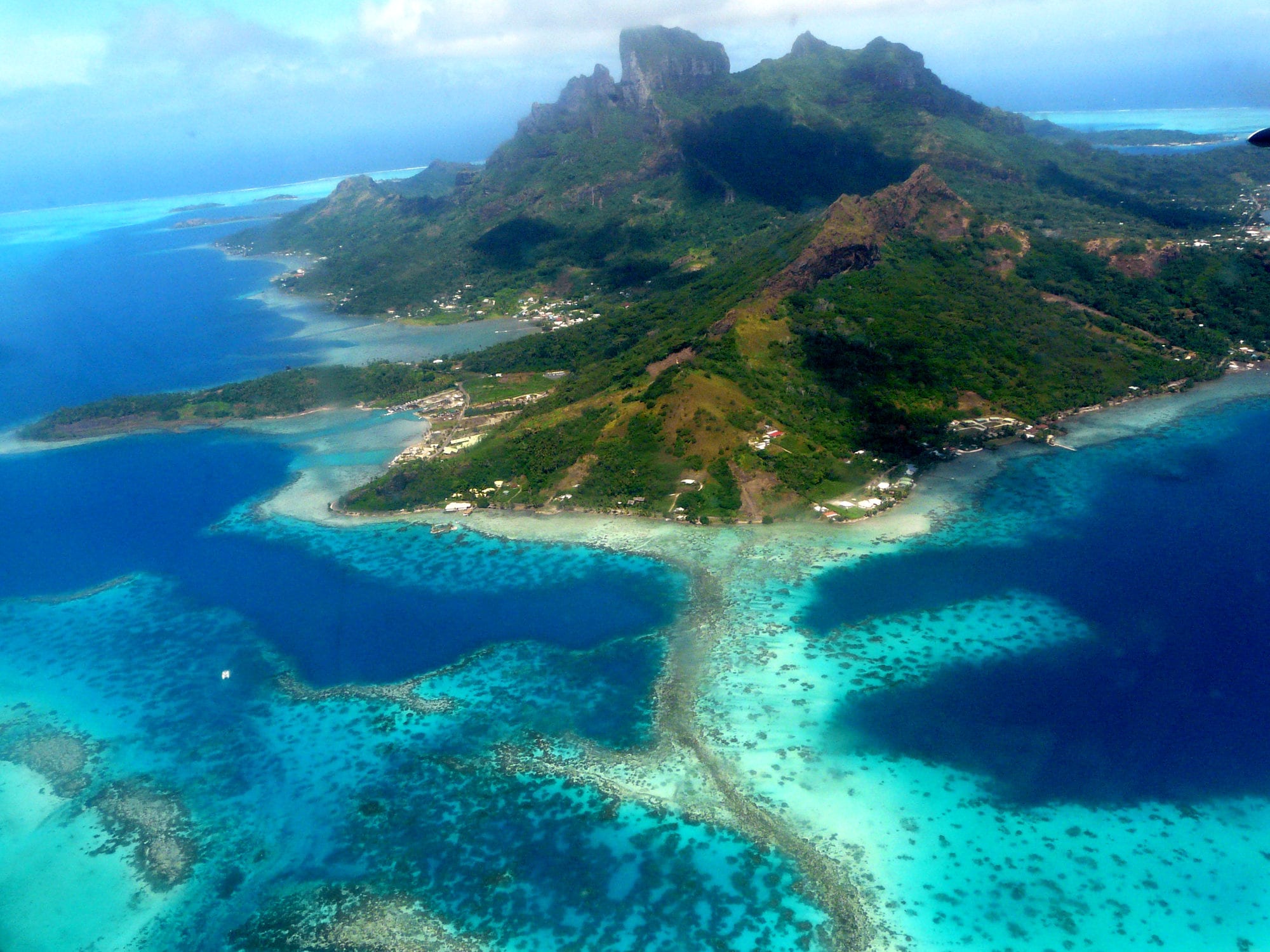
An ocean with islands in it
French Polynesia is mostly sea. Its 121 islands and atolls — the Society Islands including Tahiti and Bora Bora, the Tuamotu atolls, the Marquesas, the Australs and the Gambiers — are scattered across more than 2,000 kilometres of the Pacific, though the land adds up to only about 3,500 square kilometres. Around 280,000 people live there, most on Tahiti. It is an overseas collectivity of France with wide internal autonomy, and its recent history is dominated by one fact: for thirty years, France tested nuclear weapons here.
A short history
- c. 200 BCE–1000 CE
Settlement
Polynesian voyagers reach the Marquesas and the Societies; the dates are debated.
- 1767–1769
European contact
Wallis, Bougainville and Cook reach Tahiti.
- 1797
Missionaries
The London Missionary Society arrives.
- 1815
The Pōmare kingdom
Pōmare II wins the Battle of Te Feipī and proclaims himself King of Tahiti.
- 1842
French protectorate
Admiral Dupetit-Thouars forces the treaty on Queen Pōmare IV.
- 1880
Colony
Pōmare V cedes full sovereignty to France.
- 1958
Pouvanaa a Oopa
The independence leader is jailed and exiled.
- 1966–1996
Nuclear testing
France conducts 193 tests at Moruroa and Fangataufa.
- 2004
Overseas country
French Polynesia is designated an "overseas country" with wider autonomy.
The voyagers
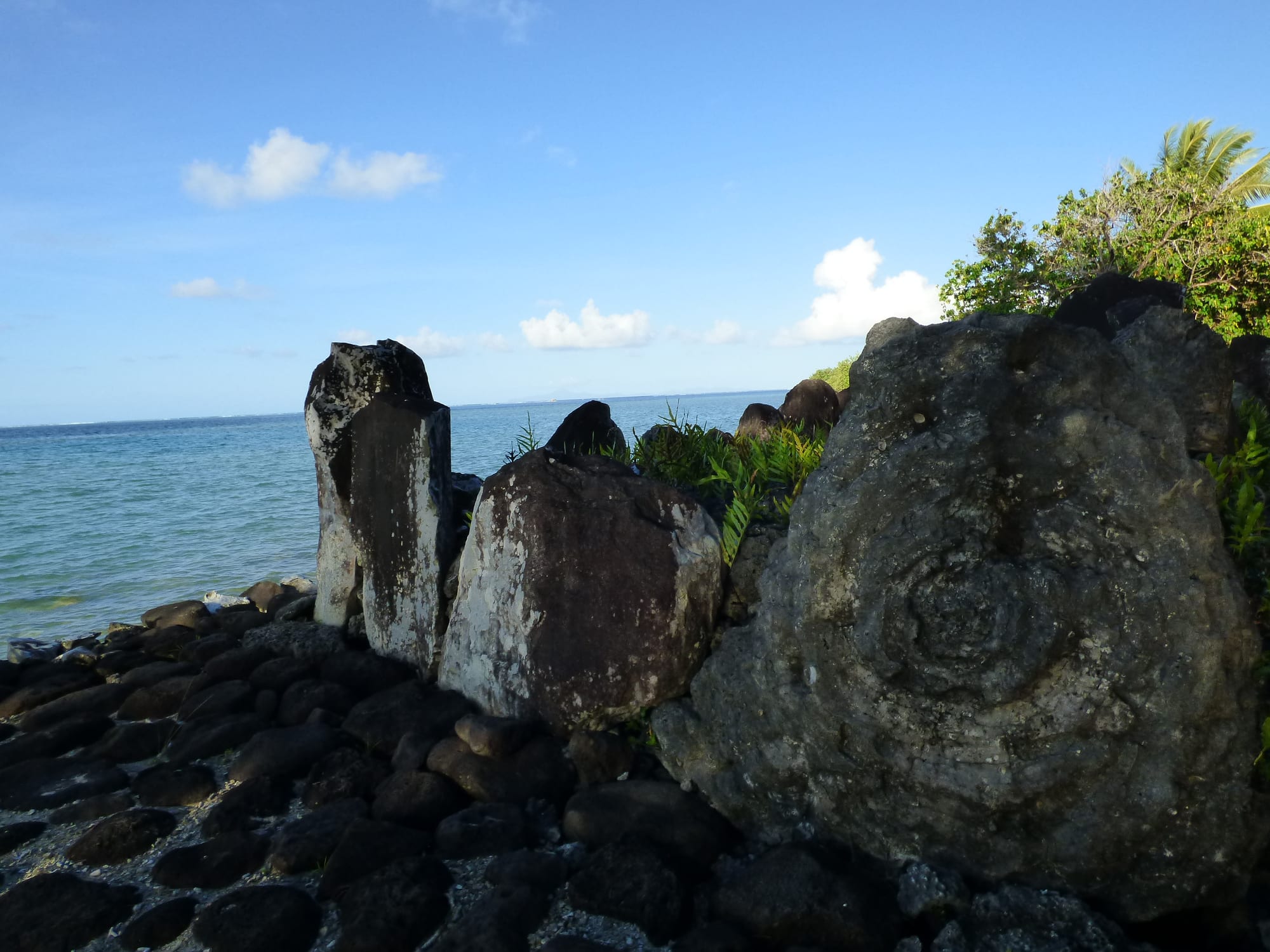
Austronesian voyagers reached these islands at a date still debated — estimates run from around 200 BCE to around 1000 CE — sailing from western Polynesia in double-hulled canoes. The Society Islands and the Marquesas then became launch points for the settlement of the rest of the Polynesian triangle — Hawaii, Rapa Nui, New Zealand. This was a world of ranked chiefdoms, breadfruit and taro cultivation, tattooing (the word tatau is Polynesian), and open-ocean navigation without instruments.
Contact and the Pōmare kingdom
Europeans came in a rush: Samuel Wallis in 1767, Bougainville in 1768 — who sold Europe the myth of an island paradise — and James Cook repeatedly from 1769. The Bounty came for breadfruit in 1788. Contact brought firearms and epidemic disease, and the Tahitian population collapsed: a French census in 1854 counted just under 6,000 people. It also brought Protestant missionaries from 1797.
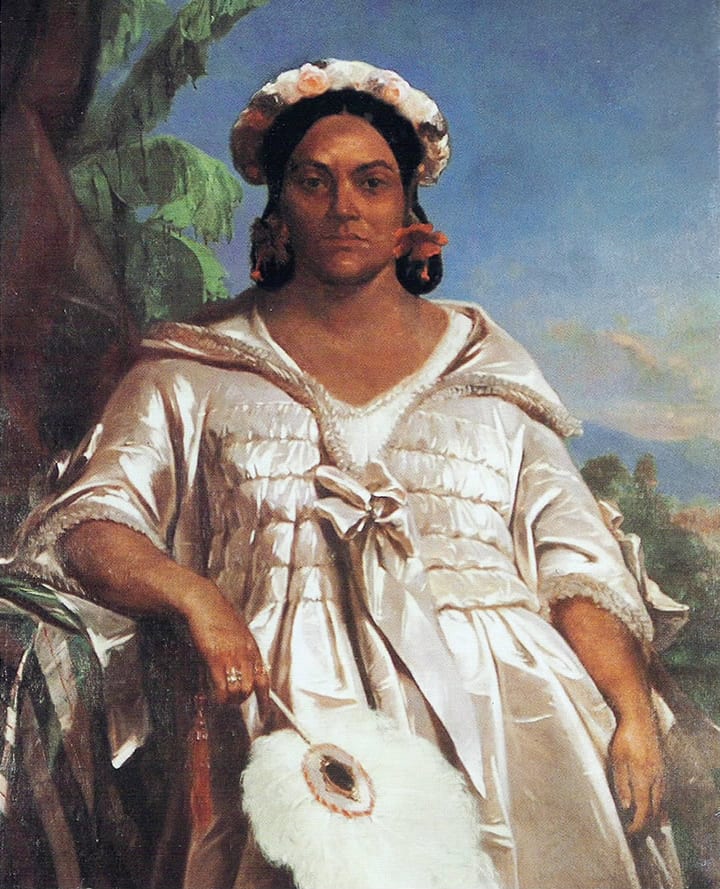
With missionary support, British backing and European muskets, Pōmare II, who had embraced Christianity in 1812, conquered Tahiti in 1815 and imposed the faith across the island. His dynasty ruled a unified Kingdom of Tahiti; his daughter, Pōmare IV, reigned for half a century.
Protectorate and colony
Using the expulsion of French Catholic priests as a pretext, Admiral Dupetit-Thouars sailed warships into Papeete in 1842 and compelled Pōmare IV to accept a French protectorate; France annexed the Marquesas the same year. Tahitian fighters resisted in the interior for three years. After Pōmare IV's death, her son Pōmare V was pressured into ceding full sovereignty in 1880, and Tahiti became a French colony. The Leeward Islands held out until France conquered them in the 1890s.
Colonial Polynesia lived on copra, vanilla and phosphate. Paul Gauguin arrived in 1891 and died in the Marquesas in 1903. In both world wars Tahitians volunteered for France; in 1942 the United States built a major military supply base on Bora Bora.
Pouvanaa, and the bomb
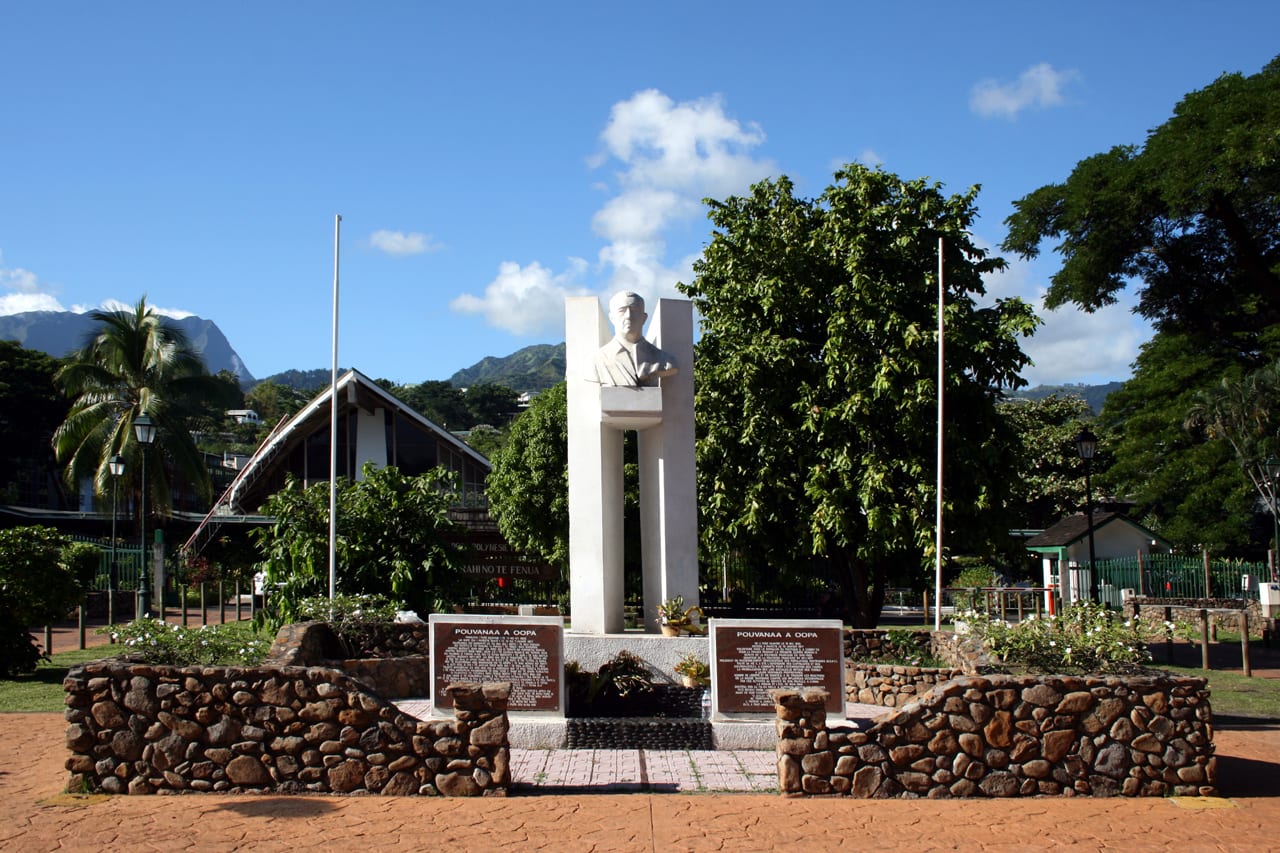
After the Second World War, a First World War veteran named Pouvanaa a Oopa became the islands' first deputy in the French National Assembly, campaigning for autonomy, and in 1958 led the local government. That year he was arrested on arson charges widely regarded as fabricated, convicted, and exiled to France — removing the independence movement's leader just as France's plans for the islands changed.
Having lost its Saharan test sites to Algerian independence, France moved its nuclear testing to the atolls of Moruroa and Fangataufa. Between 1966 and 1996 it carried out 193 tests there — 46 of them in the atmosphere until 1974, the rest underground. The programme flooded the territory with money and jobs, pulled people to Papeete, and created a lasting economic dependence, along with contamination and health claims that France only began to acknowledge decades later. Declassified documents in 2013 showed the fallout had reached far more of the population, including Tahiti, than officials had admitted. Testing ended in 1996 after Pacific-wide protest and riots in Papeete.
French Polynesia now
Autonomy widened in stages, and in 2004 French Polynesia became an "overseas country" with wider self-government. Politics have swung between autonomist parties tied to Paris and the pro-independence movement, which won the territorial assembly in 2023; the United Nations put French Polynesia back on its list of territories to be decolonised in 2013, over French objections. The economy now runs on tourism, black pearls, and continued transfers from France.
What French Polynesia carries
French Polynesia holds two histories at once: it is a cradle of the greatest seafaring expansion in human history, and it is the place France chose, twice over, for things it wanted done far from home — first the paradise of the European imagination, then the nuclear test. The islands are still working out how much of their future they control.