Attractions & Natural Wonders · Hong Kong
Hong Kong: Ten Attractions and Natural Wonders
One of the world's great skylines across a working harbour — and, a short ride away, hiking trails, fishing villages on stilts, and a coast of six-sided volcanic columns
By Worldlore Editorial · 30 September 2026
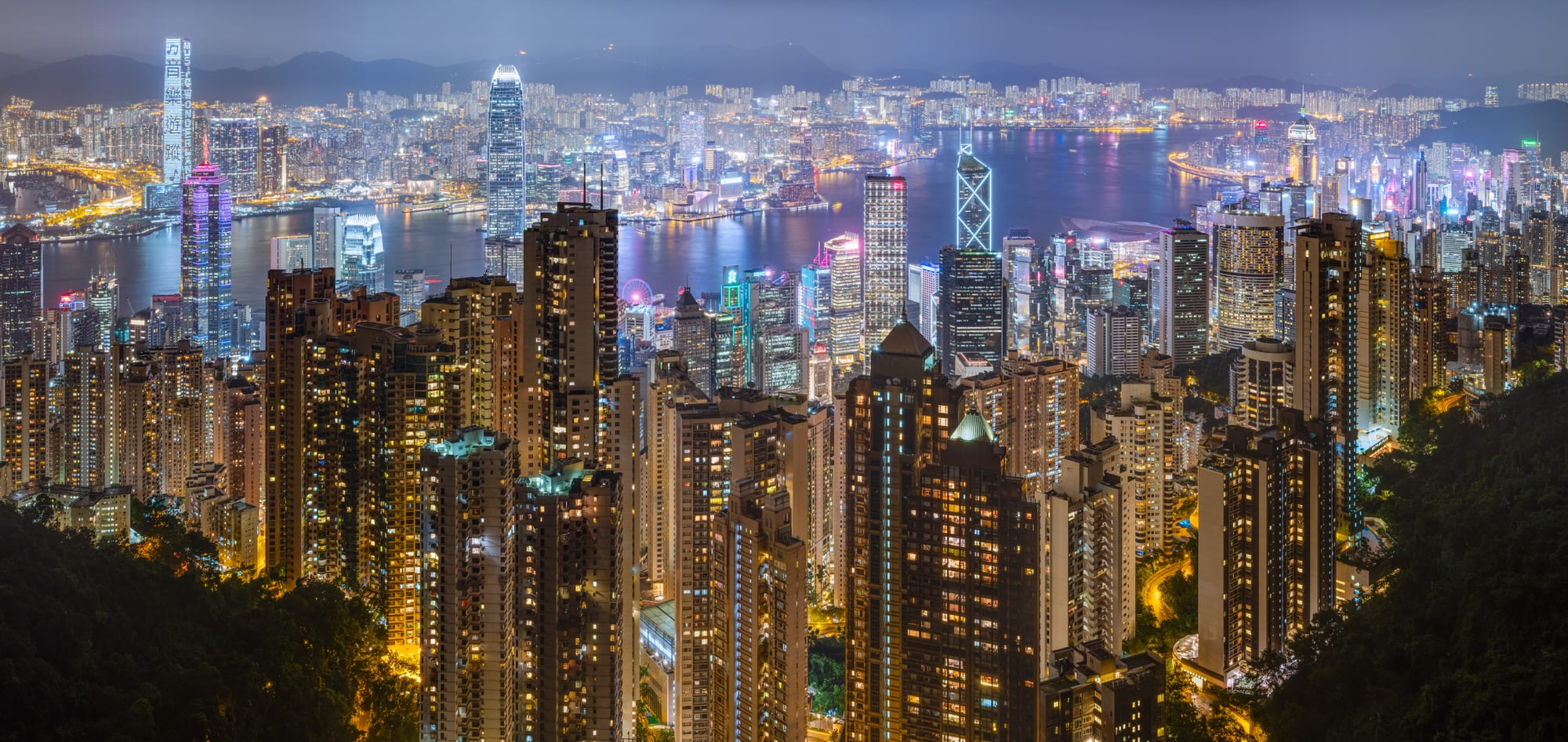
A city on a harbour, with mountains behind
Hong Kong is a special administrative region of China — British-ruled from 1842 until 1997, and run since then under a "one country, two systems" arrangement that has narrowed considerably since 2020. It packs about 7.5 million people onto a subtropical territory of steep hills and islands at the mouth of the Pearl River, which is why it builds so tall. Less well known: roughly three-quarters of the land is undeveloped, and about 40 percent is country park, so serious hiking starts a short bus ride from the towers.
The ten below balance the urban icons with the greener, older side of the territory. Autumn (October to early December) has the clearest, driest weather; summer is hot, humid, and prone to typhoons, and spring can be foggy.
1. Victoria Harbour and the Star Ferry
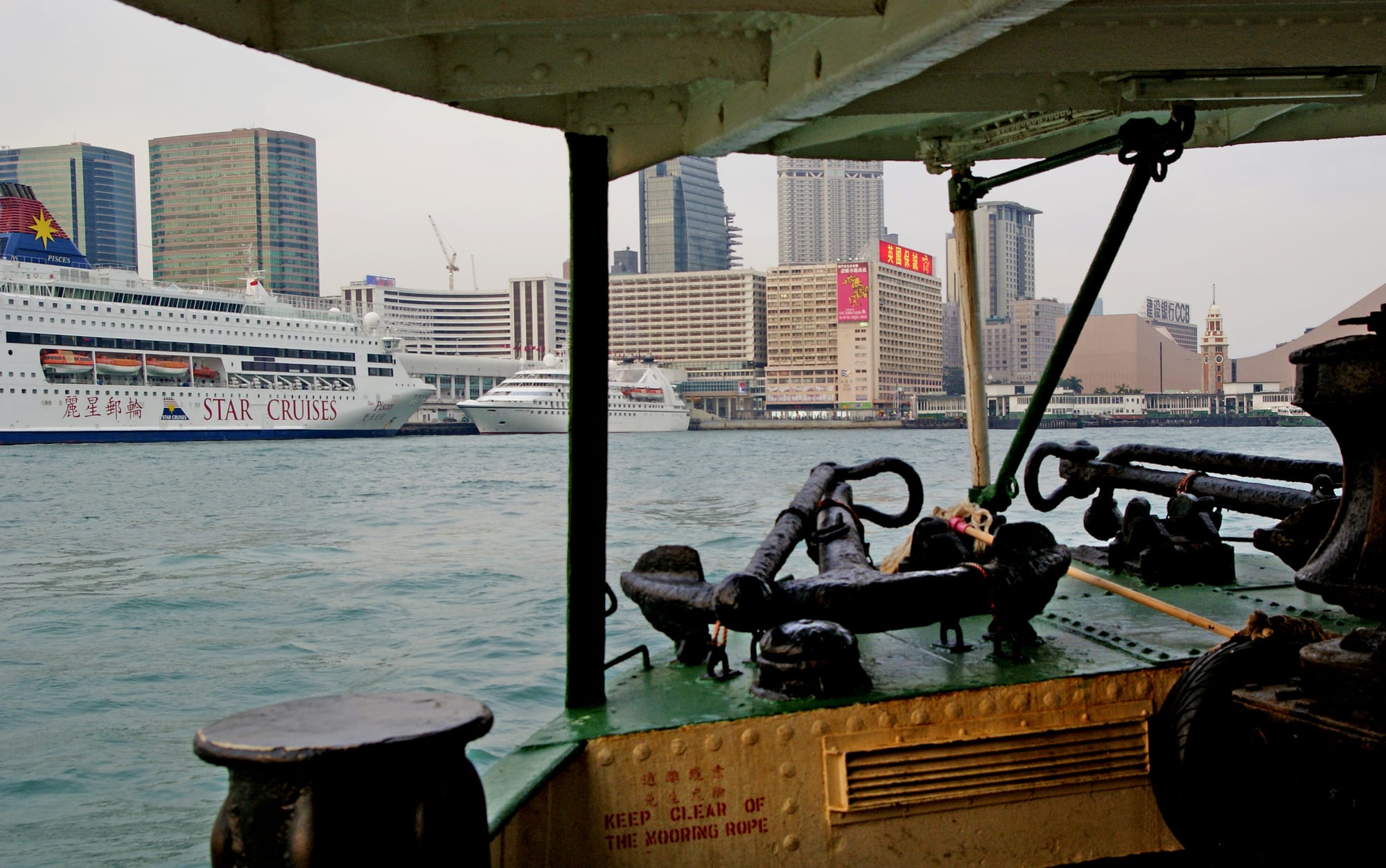
The harbour between Hong Kong Island and Kowloon is the city's centrepiece. Cross it on the green Star Ferry; walk the Kowloon waterfront promenade past the Avenue of Stars; and watch "A Symphony of Lights", the nightly light-and-sound show off the skyline, listed by Guinness World Records as the largest permanent one in the world. Harbour cruises on the red-sailed junk Aqua Luna run through the evening.
The Tsim Sha Tsui side gives the classic postcard view back at the island.
2. Victoria Peak
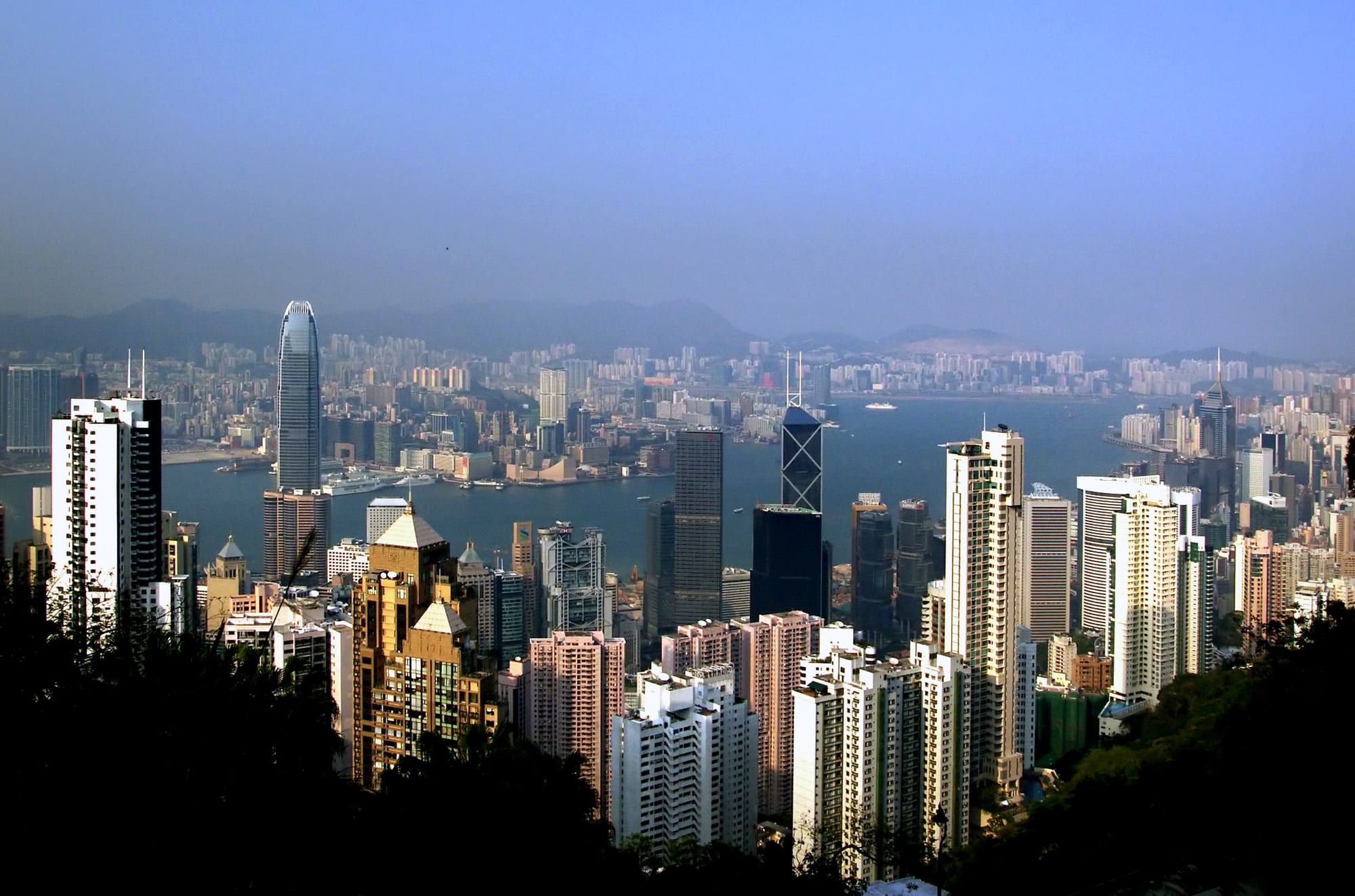
Victoria Peak, at 552 metres the tallest hill on Hong Kong Island, gives the definitive view of the skyline and harbour — best in late afternoon into dusk. The Peak Tram, running since 1888 and reopened after an upgrade in 2022, climbs there through the forested hillside; at the top are viewing terraces, and a level loop walk along Lugard and Harlech Roads circles the summit with views on all sides.
Clear days are the exception; check the forecast and go when visibility is good.
3. Central and the Mid-Levels
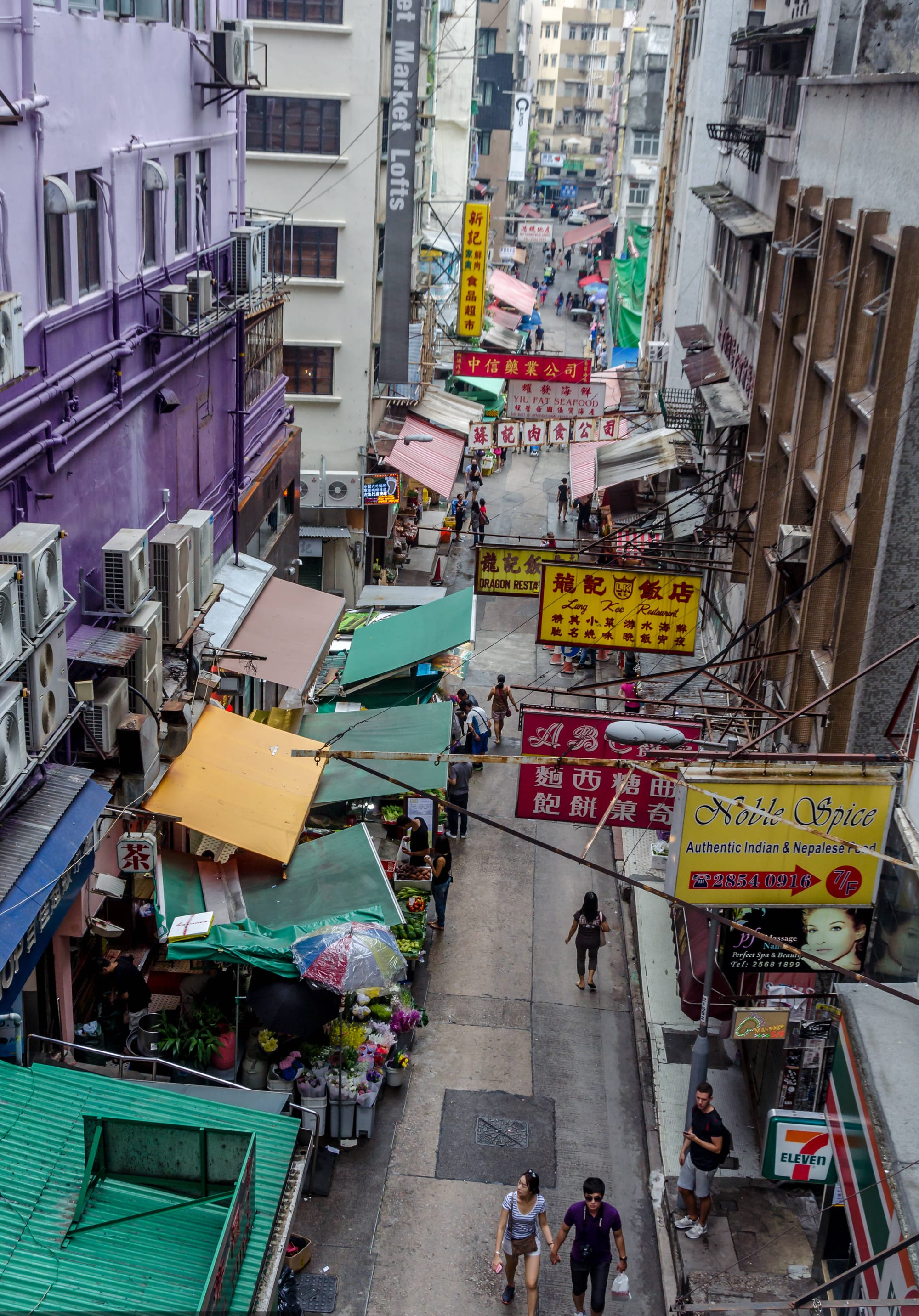
Central, the financial district, is a canyon of banks and malls threaded by the 800-metre Central–Mid-Levels Escalator, the second-longest outdoor covered escalator system in the world, which runs uphill past the bars and restaurants of SoHo. Nearby are the incense-filled Man Mo Temple, the antiques street of Upper Lascar Row (Cat Street), the restored Tai Kwun police-station-and-prison arts complex, and the PMQ design centre.
It is walkable and links straight to the Peak Tram lower station and the Star Ferry pier.
4. The Tian Tan Buddha and Lantau
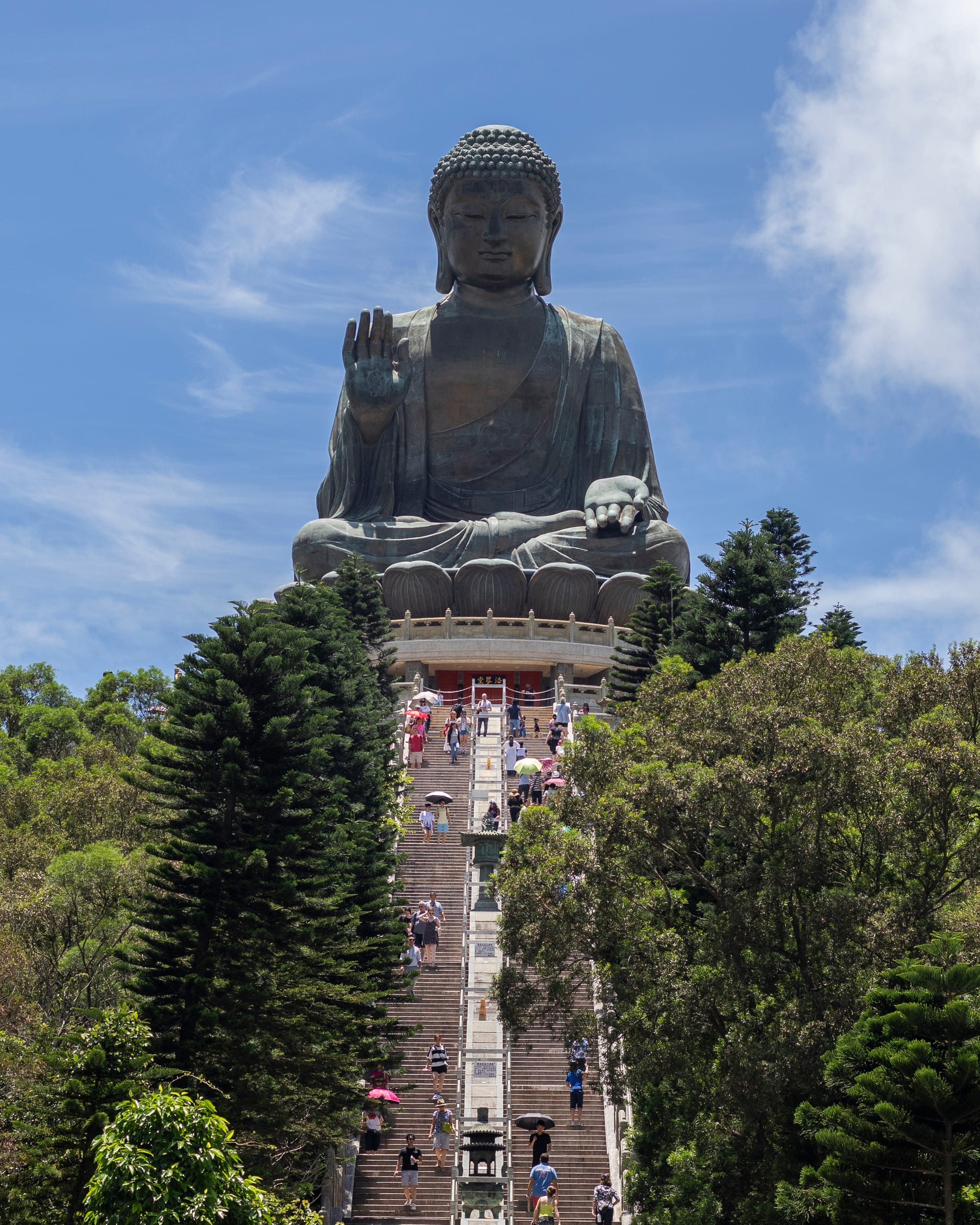
On Lantau, Hong Kong's largest island, the 34-metre bronze Tian Tan Buddha sits above the Po Lin Monastery, reached by 268 steps, with the Ngong Ping 360 cable car climbing from Tung Chung. The wider island has the fishing village of Tai O, Cheung Sha, its longest beach, the Trappist monastery, and long ridge trails — as well as Hong Kong Disneyland and the airport on its reclaimed north shore.
The cable car and monastery make a good half-day; hikers can climb Lantau Peak, at 934 metres the island's highest point.
5. Temple Street and the Kowloon markets
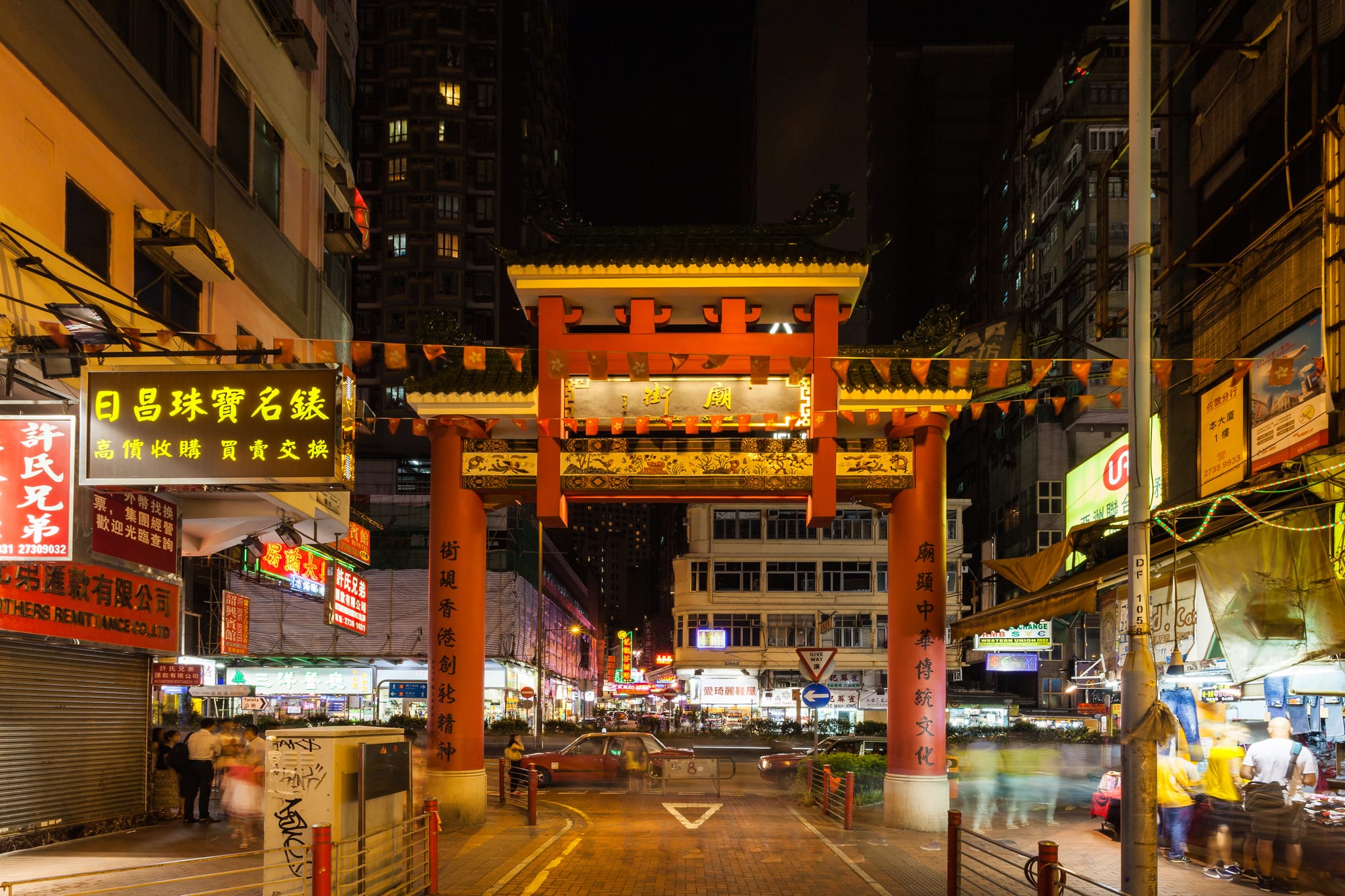
Kowloon's markets are a night out in themselves. Temple Street, in Yau Ma Tei, has stalls of clothes and gadgets and many seafood restaurants; nearby are the Ladies' Market in Mong Kok, the jade market, the goldfish market, and the flower market. Mong Kok is one of the most densely populated places on earth and worth seeing for that alone.
The neon and the crowds are at their liveliest after dark.
6. Wong Tai Sin Temple
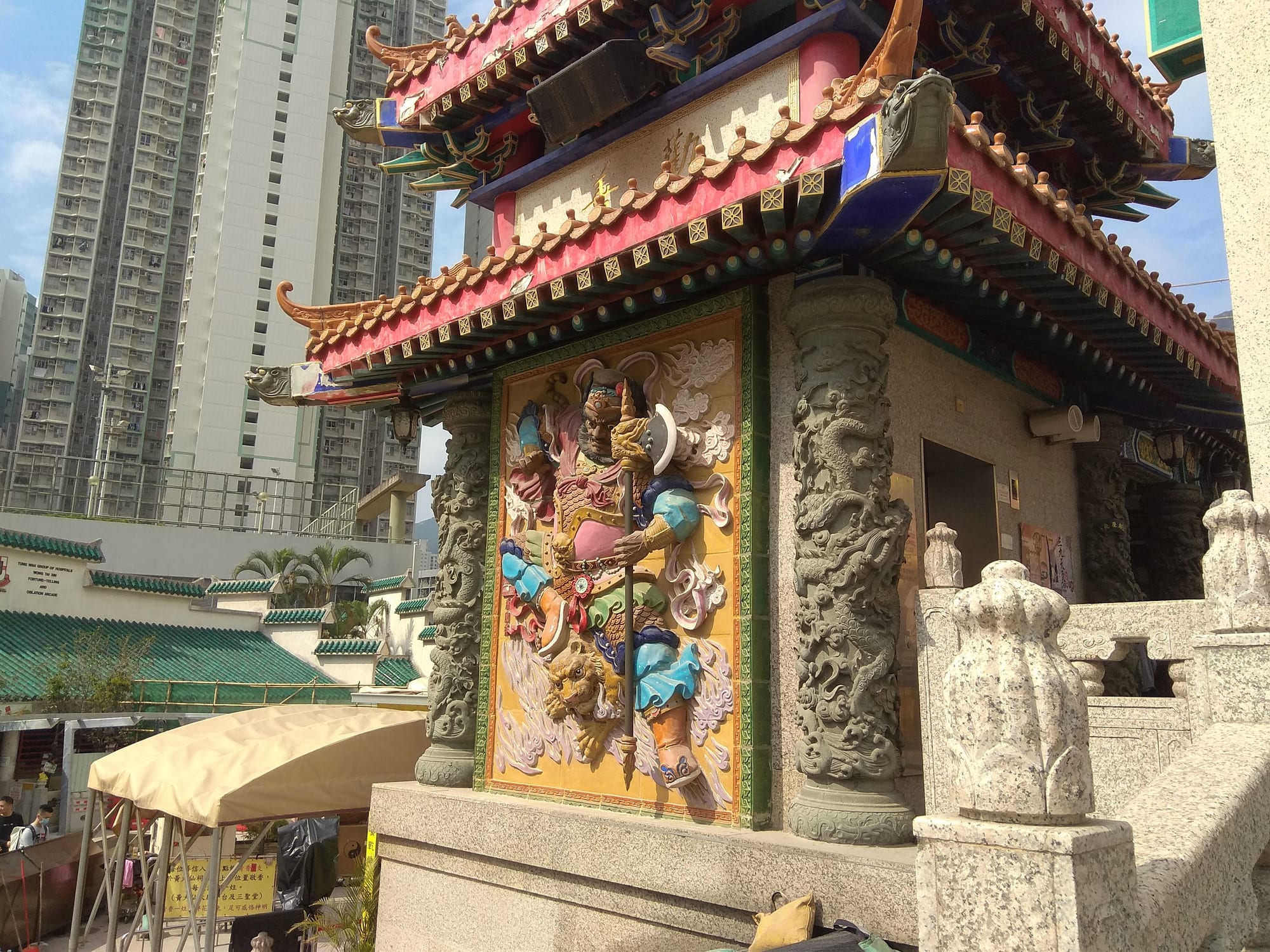
Wong Tai Sin, a busy Taoist temple in central Kowloon, is famous for granting wishes — worshippers kneel with a cylinder of numbered bamboo sticks, shake one out, and take it to a fortune teller in the arcade below. The complex blends Taoism, Buddhism, and Confucianism, with ornate halls and a Nine-Dragon Wall modelled on one in Beijing, and is at its most frenetic around Chinese New Year.
It has its own MTR station.
7. Nan Lian Garden and Chi Lin Nunnery
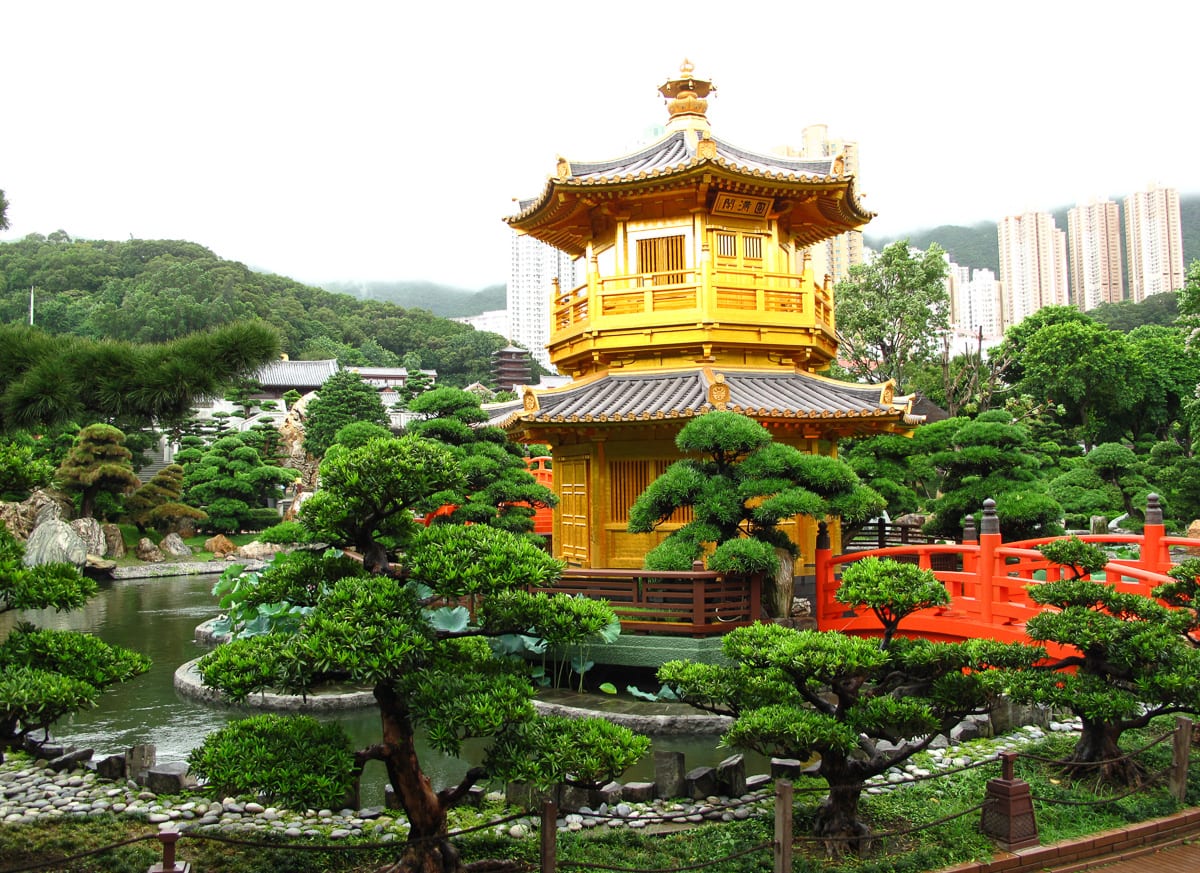
Tucked between the tower blocks of Diamond Hill, the Nan Lian Garden is a meticulously landscaped classical garden built in Tang-dynasty style — pines, rockeries, a lotus pond, and a bright gold pavilion — attached to the Chi Lin Nunnery, a large wooden Buddhist complex built without nails. It is free, quiet, and a striking contrast with the surrounding city.
The garden is maintained by the nunnery and covers some 35,000 square metres.
8. The Dragon's Back and the country parks
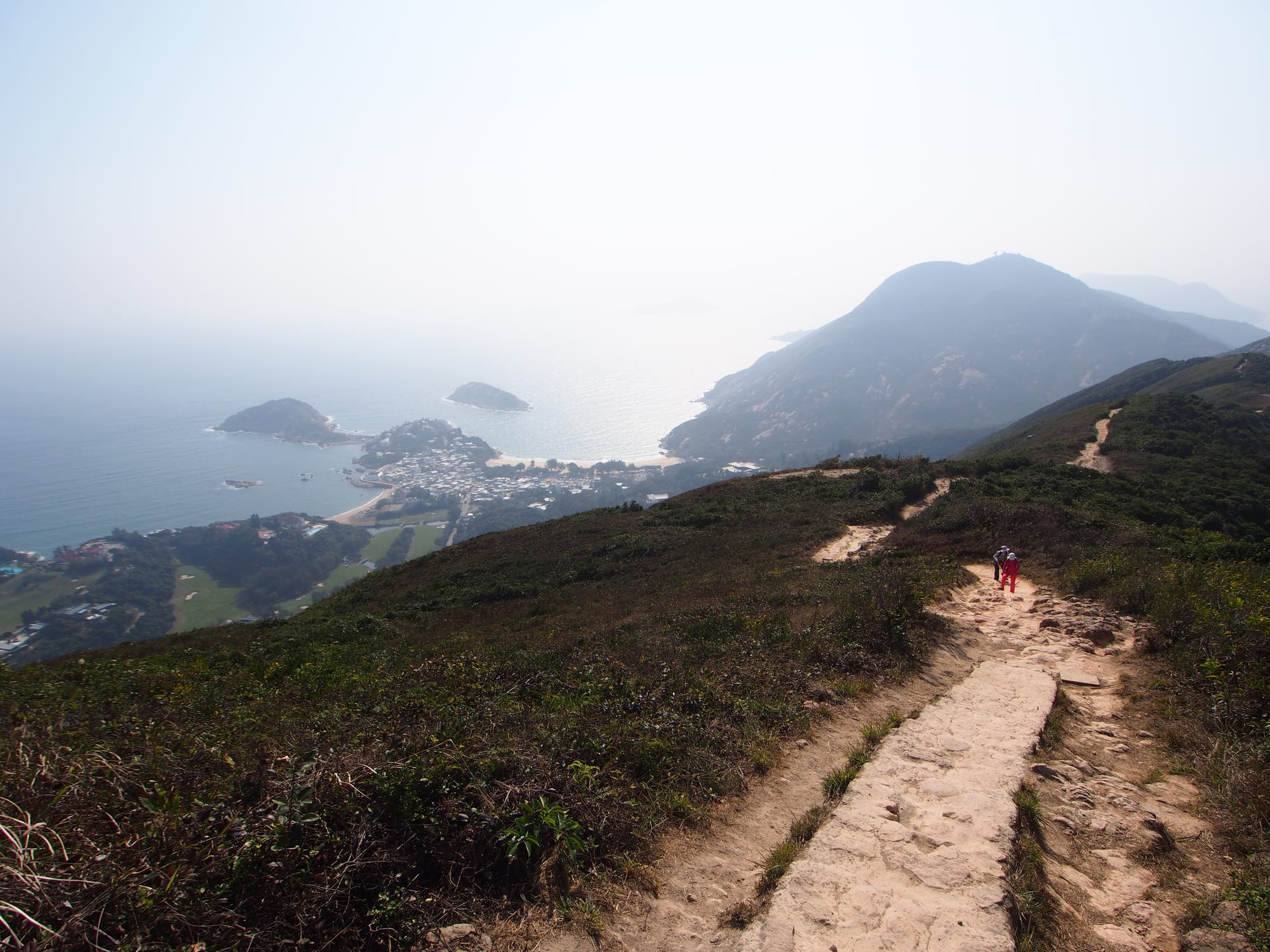
The Dragon's Back, an undulating ridge above Shek O on the island's southeast, is one of Hong Kong's best-known hikes — an airy crest with views over surf beaches and the South China Sea, finishing near Big Wave Bay for a swim. It is part of the eighth and final stage of the 50-kilometre Hong Kong Trail; the territory also has the longer MacLehose and Wilson trails through wild, hilly country parks.
It lies within Shek O Country Park.
9. Sai Kung and the Geopark
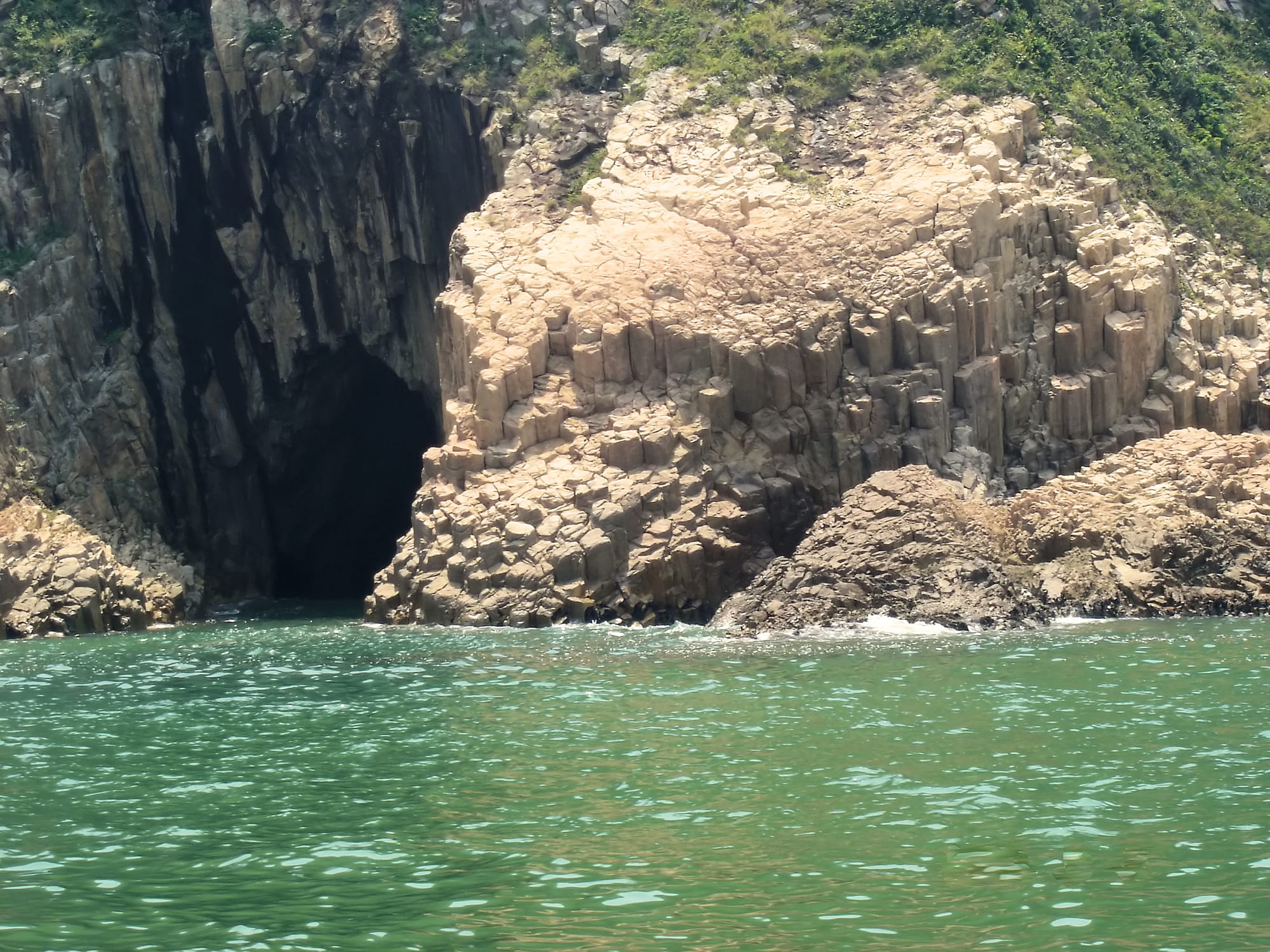
The Sai Kung peninsula in the northeast is Hong Kong's "back garden" — a small seafront town of seafood restaurants, a coast of clear-water beaches (among them the bay of Tai Long Wan, where strong rip currents make swimming unsafe), and offshore islands. Its rugged shoreline forms part of the Hong Kong UNESCO Global Geopark, whose signature feature is a coastline of giant hexagonal columns of volcanic tuff, best seen by boat around the High Island Reservoir.
Junk-boat day trips and kayak tours run from Sai Kung pier.
10. Tai O and the outlying islands
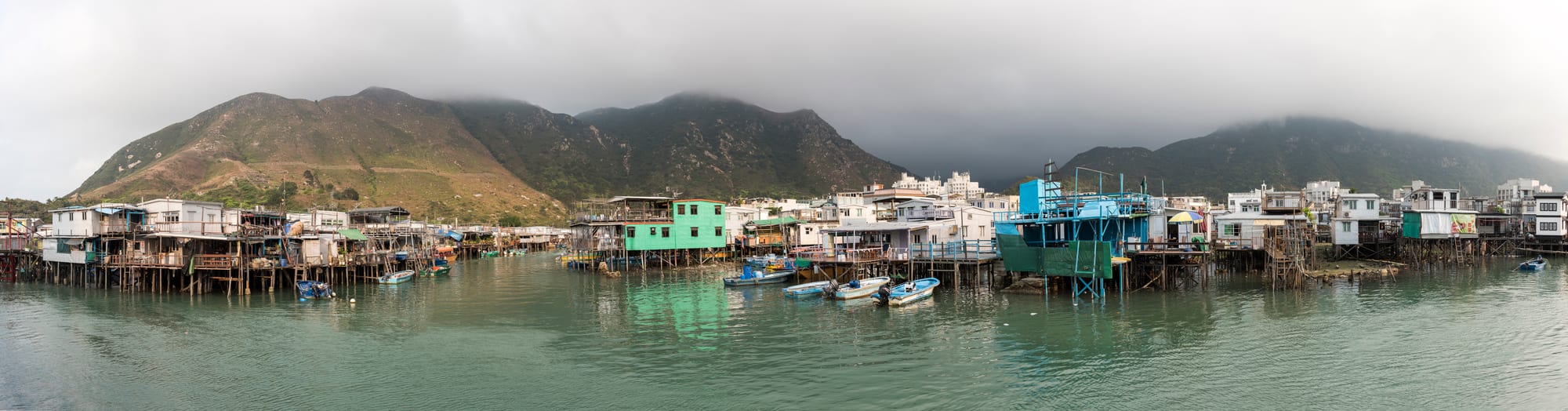
Tai O, on Lantau, is a centuries-old Tanka fishing village — narrow lanes, dried-seafood shops, and homes on posts over the tidal channels, with boat trips out to look for pink Chinese white dolphins. The other outlying islands each have a character: Cheung Chau, with no private cars, its bun festival and beaches, Lamma with its seafood and easy hikes, and Peng Chau.
All are reached by ferry from Central, making a cheap and scenic half-day.
Hong Kong is compact and superbly connected by the MTR and ferries. Three or four days covers the harbour, the Peak, Central, Kowloon's markets, and one green half-day (Lantau, Dragon's Back, or Sai Kung); a week allows a slower pace and the outlying islands.