History · Saint Kitts and Nevis
How did a boy from tiny Nevis become Alexander Hamilton?
Abandoned, orphaned and working as a teenage clerk on St Croix, he wrote a hurricane letter so striking that island merchants paid to send him to New York.
By Globeway Editorial · 2 November 2026
The short answer
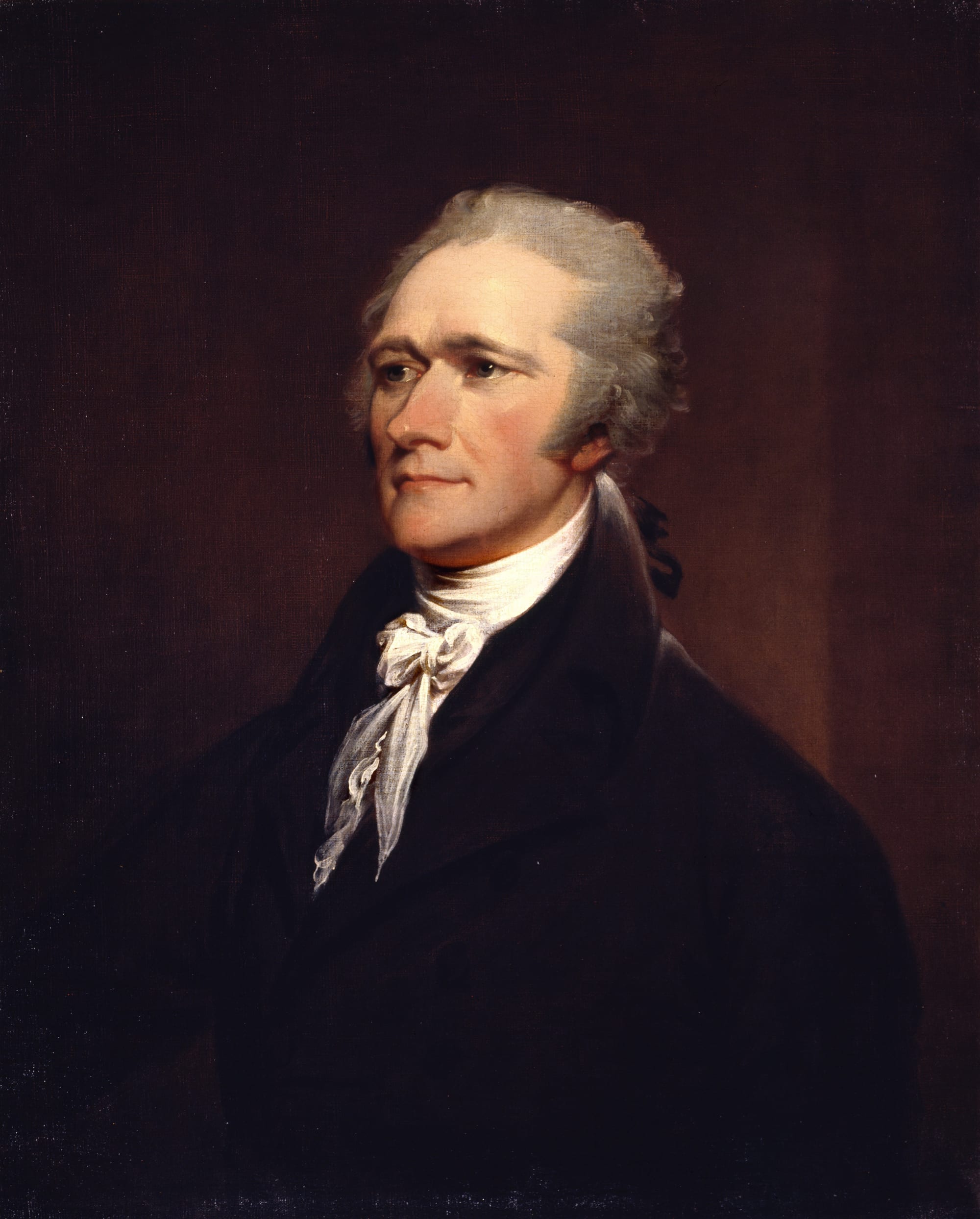
Alexander Hamilton was born in Charlestown, the capital of Nevis, in 1755 or 1757, to unmarried parents. His father walked out, his mother died of yellow fever when he was a boy, and by his early teens he was a penniless orphan on the Danish island of St Croix, working as a clerk for a trading firm. What got him out was talent on paper. In 1772 he wrote a vivid account of a hurricane that wrecked Christiansted, a local minister had it printed in the island newspaper, and the town's leading men were so impressed that they raised a fund to send him to the North American colonies to be educated.
He arrived in New York that autumn, went on to King's College, now Columbia University, and was soon writing pamphlets for the revolutionary cause. The war that followed made him George Washington's chief aide, and the new republic made him one of the authors of The Federalist Papers and the first Secretary of the Treasury. The Caribbean gave him a hard start, a merchant's training and the first readers who believed in him.
A sugar island and an unmarried mother
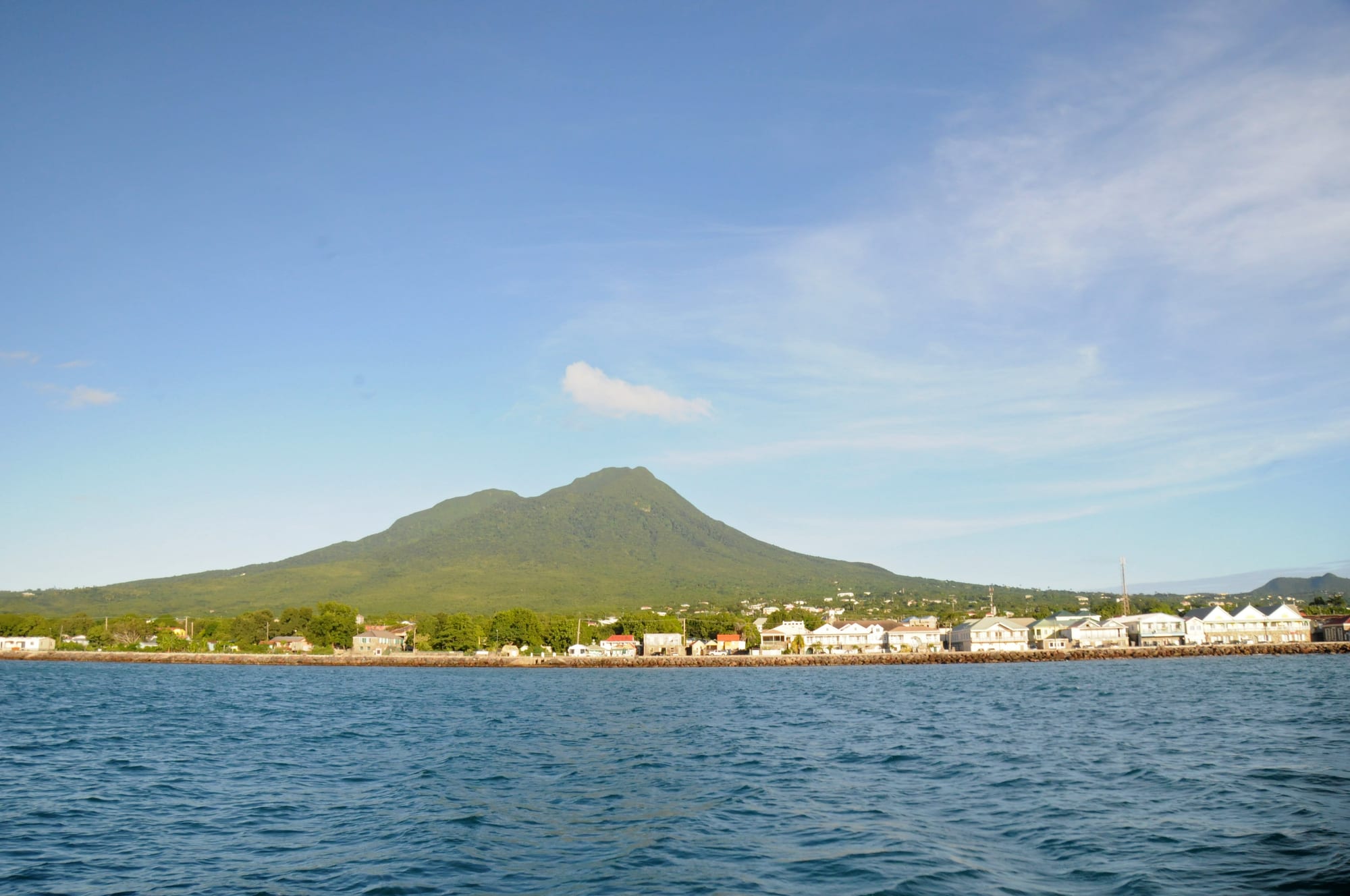
In the 18th century Nevis was nicknamed the "Queen of the Caribbees" for its many sugar plantations. The island covers just 36 square miles, yet in 1700 it produced a fifth of all the sugar in the English colonial empire. Between 1675 and 1730 it was also the headquarters of the slave trade to the Leeward Islands, with some 6,000 to 7,000 enslaved West Africans passing through each year.
Hamilton's mother, Rachel Faucette, was born on Nevis, the daughter of a French Huguenot doctor and planter. She had married a man named Johann Lavien on St Croix in 1745, but left him and their son in 1750. On St Kitts she met James Hamilton, a Scotsman, the fourth son of a laird, or landowner, from Ayrshire. The couple settled on Nevis, where she had inherited a seaside lot in Charlestown, and had two sons, James and Alexander. Because Rachel was still legally married, both boys were born out of wedlock.
Charlestown then had a large Jewish community, and Alexander and his brother had private tutoring and classes at a school run by a Jewish headmistress. He also read his way through the family library of 34 books.
Abandoned and orphaned on St Croix
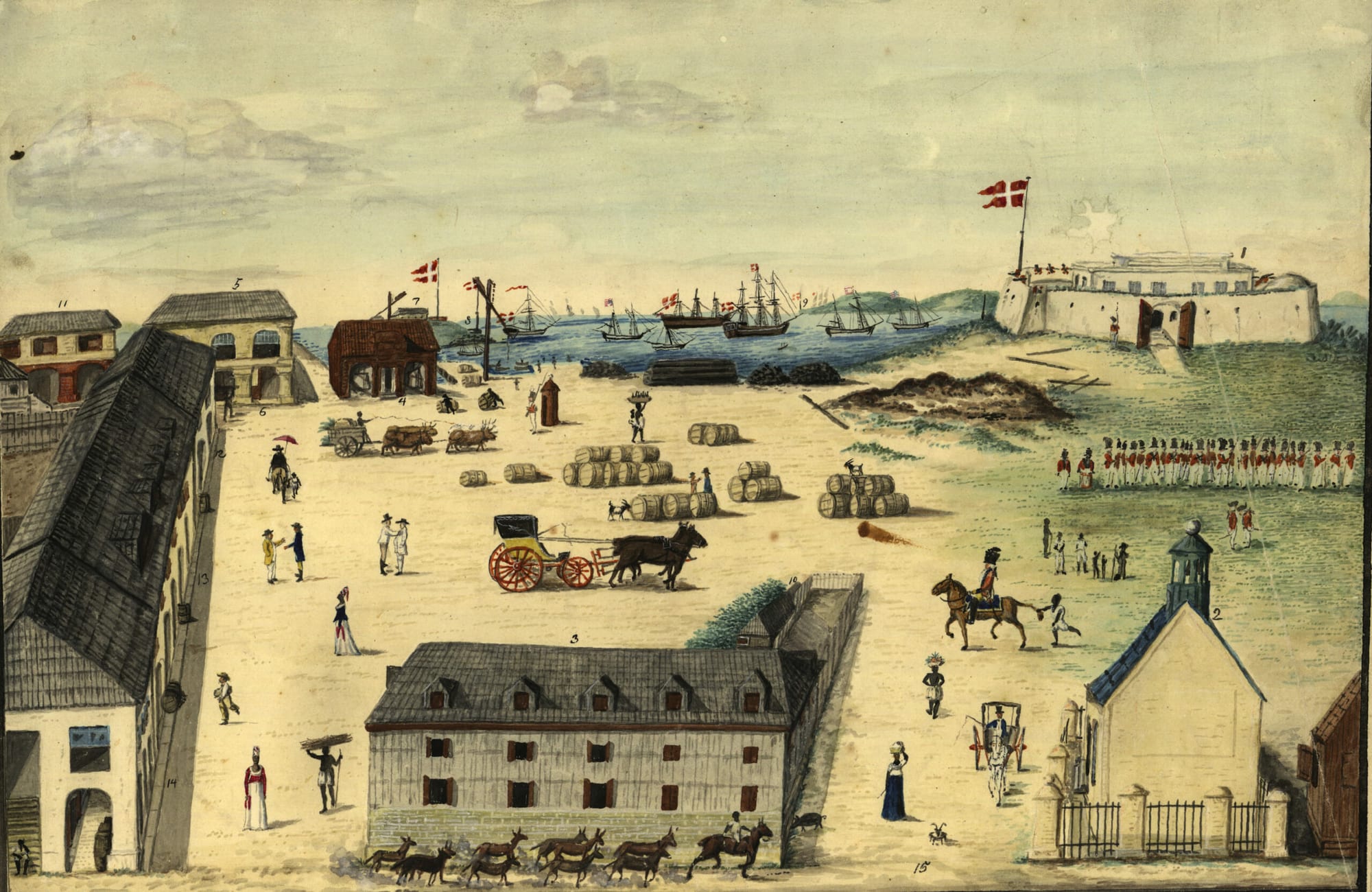
The family's fortunes collapsed. In 1765 the family moved to Christiansted on St Croix, then a Danish colony, and soon afterwards James Hamilton left Rachel and the boys, apparently to spare her a charge of bigamy once her first husband moved to divorce her under Danish law. Rachel supported her sons by running a small store in Christiansted.
Then both mother and son caught yellow fever. Rachel died on 19 February 1768. In the probate court her first husband seized her estate, and because the boys were illegitimate they could inherit nothing, not even the two enslaved people she had left them in her will. A friend bought the family's books at auction and returned them to Alexander. The court testimony gave his age as 13, which points to 1755 rather than 1757 as his birth year.
Worse followed. The brothers were taken in by a cousin, Peter Lytton, who took his own life in July 1769. By then an aunt, an uncle and a grandmother had also died. The two boys were separated: James was apprenticed to a carpenter, and Alexander was given a home by Thomas Stevens, a merchant originally from Nevis.
A clerk with a gift for words
Hamilton went to work as a clerk at Beekman and Cruger, an import-export firm in Christiansted that traded with New York and New England. Its business took in sugar and other staples of the Atlantic economy, and enslaved people too. The teenager proved so capable that in 1771 he was left in charge of the firm for five months while the owner was at sea.
He kept reading and began to write. On 30 August 1772 a hurricane devastated Christiansted, and Hamilton described it in a long letter to his father. His tutor and mentor, the Presbyterian minister Hugh Knox, sent it to the Royal Danish-American Gazette, which published it. The biographer Ron Chernow found it astonishing that a self-educated clerk could write with such energy; the boy had turned the storm into a fiery sermon on human vanity. Community leaders were impressed enough to collect a fund to send him north for an education.
- 1755 or 1757
Alexander Hamilton is born in Charlestown, Nevis.
- 1765
The family moves to Christiansted, St Croix.
- 1768
His mother dies of yellow fever, leaving him an orphan.
- 1771
He runs the trading firm of Beekman and Cruger for five months.
- 1772
His hurricane letter is published; in October he lands in Boston.
- 1774
He enrols at King's College in New York.
- 1789
He becomes the first United States Secretary of the Treasury.
- 1804
He dies after a duel with Aaron Burr.
From immigrant student to Founding Father
In October 1772 Hamilton landed in Boston and went on to New York, where he boarded with Hercules Mulligan, the Irish-born brother of a trader known to his sponsors. Mulligan helped him sell the cargo that was meant to pay for his studies. After a preparatory school in Elizabeth, New Jersey, he entered King's College, enrolling formally in May 1774. That year, still a student, he published A Full Vindication of the Measures of Congress, an anonymous reply to a Loyalist pamphleteer.
When war broke out he joined a student militia, rose to captain of artillery, and then spent four years as Washington's aide-de-camp, drafting orders and letters for the commander-in-chief. At Yorktown in 1781 he led the bayonet assault that took Redoubt No. 10. He wrote 51 of the 85 essays of The Federalist Papers in defence of the new Constitution and, as the first Secretary of the Treasury from 1789 to 1795, built the nation's finances, including the First Bank of the United States. He died on 12 July 1804, the day after his duel with Aaron Burr at Weehawken, New Jersey.
In 1785 he also helped found the New York Manumission Society, which pressed successfully for the gradual abolition of slavery in New York.
Hamilton's birthplace today
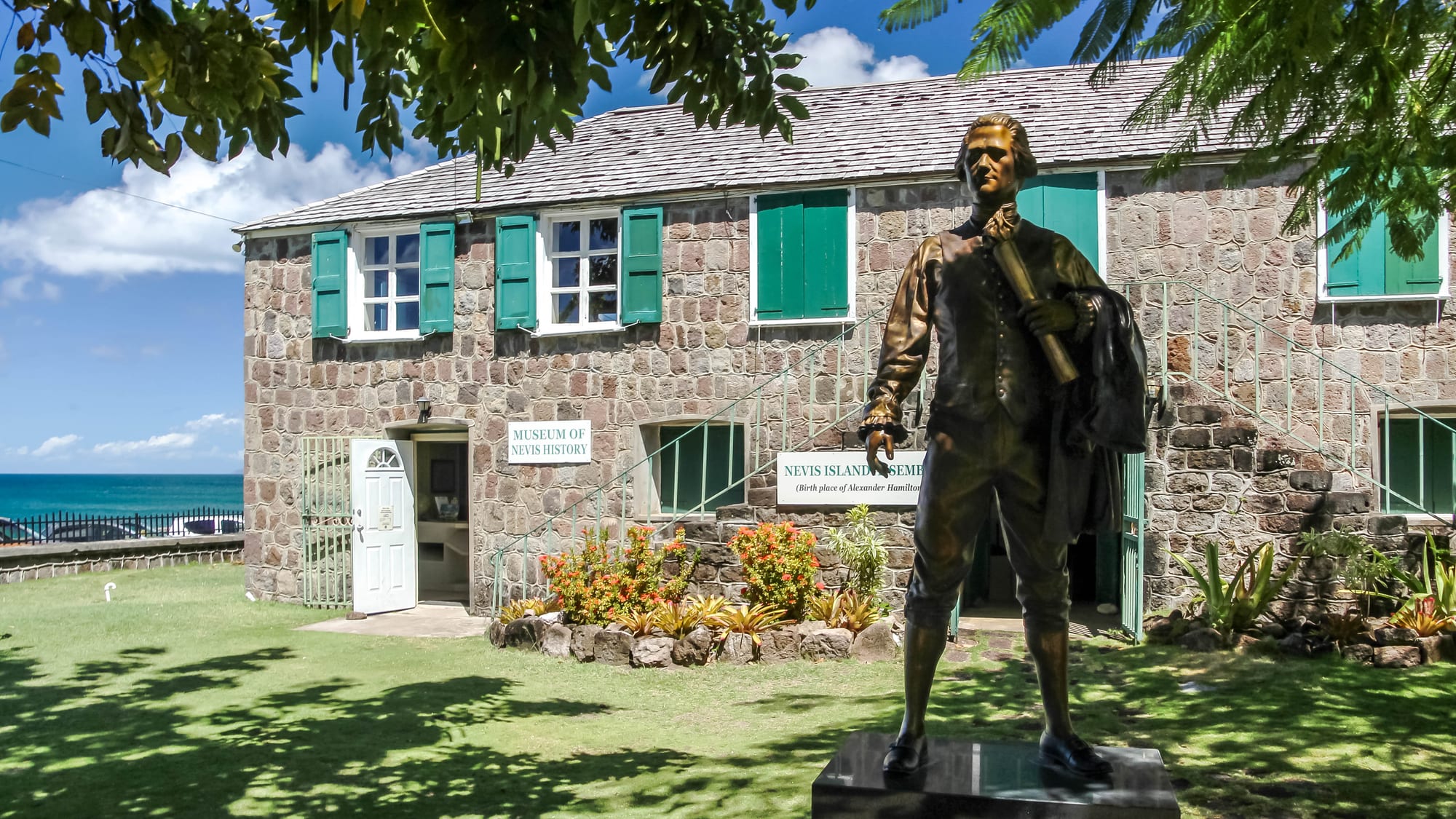
In Charlestown, the stone house traditionally named as his birthplace was first built around 1680 and destroyed in an earthquake in 1840. It was restored in 1983 and now holds the Museum of Nevis History on the ground floor, with the Nevis Island Assembly meeting upstairs. The town of about 1,500 people sits on the island's sheltered west coast near Pinney's Beach, and its port is where the ferries from St Kitts come in.
His fame has grown far beyond Nevis. In 2015 the Broadway musical Hamilton, based on Chernow's biography, retold his life as the story of a self-made immigrant, and it won the Pulitzer Prize for Drama in 2016. A plan to replace him on the ten-dollar bill was shelved, partly because of the show's popularity.