Attractions & Natural Wonders · Cameroon
How did a lake in Cameroon kill 1,700 people in a single night?
In 1986 Lake Nyos released a vast cloud of carbon dioxide that rolled down the valleys and suffocated 1,746 people, many of them in their sleep.
By Globeway Editorial · 2 November 2026
The short answer
Lake Nyos, a deep crater lake in Cameroon's Northwest Region, did not drown anyone or poison its water. It breathed out gas. Over long periods carbon dioxide seeping up from magma far below had been dissolving into its cold bottom water, held there by the weight of the lake above. On 21 August 1986 that deep water suddenly rose and the gas burst out of solution, like a shaken bottle of fizzy drink being opened. Between 100,000 and 300,000 tonnes of carbon dioxide poured out at once.
Carbon dioxide is about 50 per cent denser than air, so the cloud did not drift away. It spilled over the lake's northern lip and flowed down the valleys like an invisible flood, pushing out the breathable air. Within about 25 kilometres of the lake it suffocated 1,746 people and some 3,500 livestock, many of the people in their sleep, in the villages of Nyos, Cha, Kam and Subum. It was the first known large-scale suffocation caused by a natural event.
A lake that holds its breath
Lake Nyos fills a maar, a roughly circular crater blasted out when rising lava met groundwater, probably no more than 12,000 years ago. The crater is about 1,800 metres across and 208 metres deep, and sits on the flank of an extinct volcano in the Oku Volcanic Field, part of the Cameroon Volcanic Line that runs south-west to Mount Cameroon. Although the volcano is extinct, a pool of magma lies around 80 kilometres below the lake and still releases carbon dioxide. The gas works its way up through the rock, dissolves into springs around the lake and enters the water from below.
Most lakes mix from top to bottom as the seasons change, which lets dissolved gas escape. Nyos does not. It is stratified, or layered: the deeper the water, the colder it is and the more carbon dioxide it holds. Cold water under high pressure can dissolve enormous amounts of gas, the same principle that keeps the bubbles in an unopened can of soda. Over time the bottom layer becomes supersaturated, holding more gas than it could at the surface. Nyos is one of only three lakes known to be charged with carbon dioxide in this way; the others are Lake Monoun, also in Cameroon, and Lake Kivu on the border of the Democratic Republic of the Congo and Rwanda.
The night the lake overturned
No one knows for certain what set the eruption off. Most geologists suspect a landslide into the lake. Others have suggested a small volcanic eruption on the lake bed, or cold rain sinking down one side. An earthquake is thought unlikely, because no witnesses felt a tremor. Some scientists argue that no outside push was needed at all: once bubbles begin to form in a saturated layer, they rise, expand and drag deeper water up behind them, and the whole lake can overturn in a runaway chain reaction.
Whatever started it, the result was violent. A column of water and foam about 100 metres high burst from the surface, and a wave at least 25 metres high scoured one shore. About 1.2 cubic kilometres of gas escaped. The cloud first rose at nearly 100 km/h, then sank. About 50 metres thick, it rushed down two valleys to the north at 20 to 50 km/h, and for roughly 23 kilometres it was concentrated enough to kill. Interviews with survivors and medical studies showed that victims lost consciousness quickly and died of carbon dioxide suffocation.
Afterwards the lake looked different. Its usual blue had turned a deep red, because iron-rich water from the bottom had risen and rusted on contact with the air, and the surface had dropped by about a metre. About 4,000 people fled the area, and many survivors suffered breathing problems, sores and paralysis. Some recalled a smell of gunpowder or rotten eggs, though carbon dioxide was the only gas found in the lake water; exposure to it can cause people to imagine sulphurous smells.
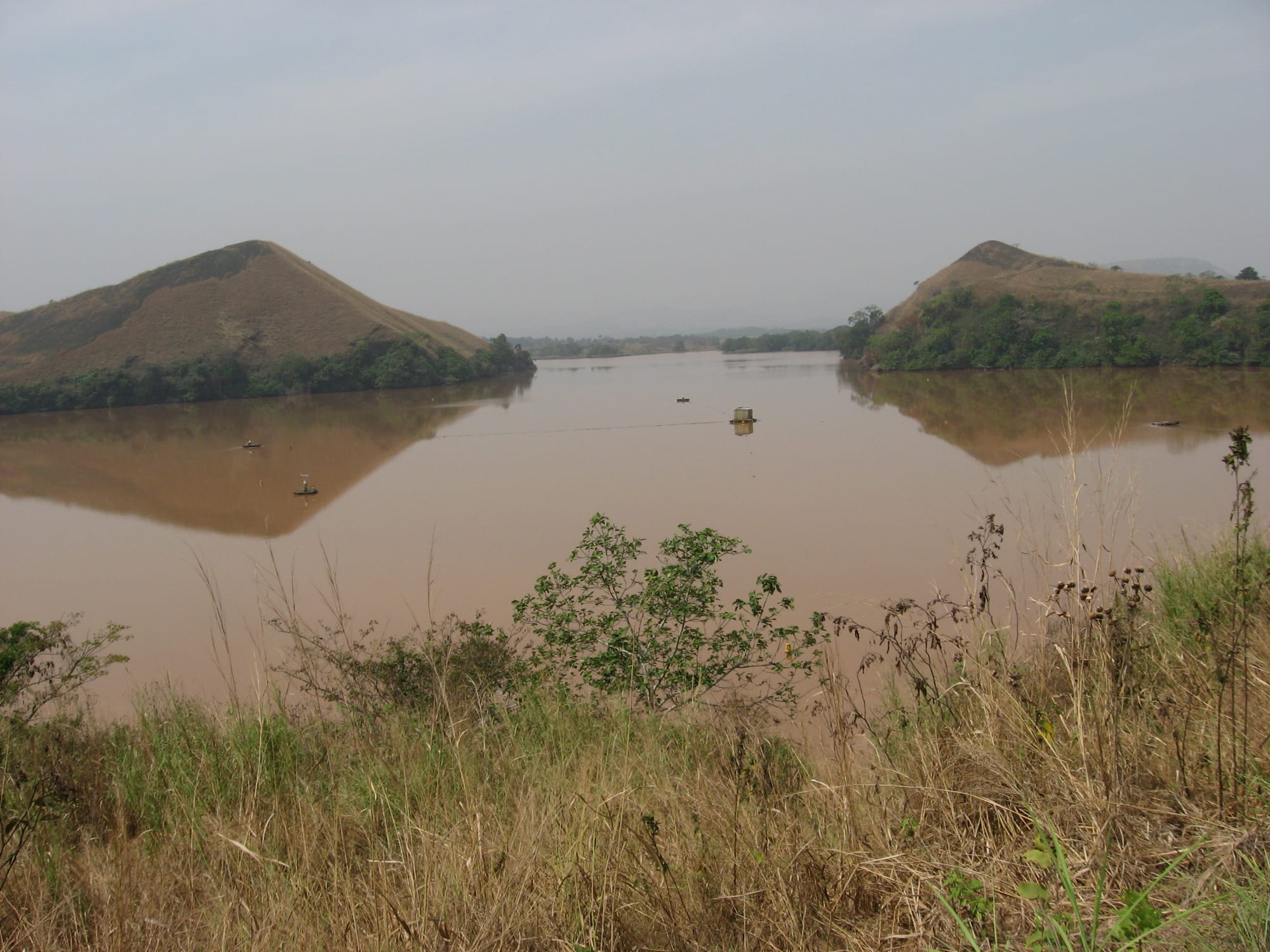
Lake Monoun lies about 100 kilometres south-south-east of Nyos in the same volcanic field. A degassing pipe was installed here too, though scientists say more pumping is needed to stop gas building up again.
A warning that went unread
Nyos was not the first. On 15 August 1984 people near Lake Monoun heard a loud noise late in the evening, and by dawn 37 people in a low-lying area were dead. At first the deaths were a mystery, and some suspected terrorism. Among the victims were riders of a truck whose engine stalled for lack of oxygen; they climbed down into the gas and died, while two people sitting on top of the truck, above the heavy cloud, survived. Investigators concluded that the lake had released carbon dioxide, but no one expected the same thing at Nyos.
Together the two disasters led scientists to recognise a new kind of natural hazard, the limnic eruption, or lake overturn. They remain the only two recorded in modern history. Such events are very rare because three things must come together: a source of gas, a lake that never mixes, and water deep enough to hold the gas under pressure.
Defusing a killer lake
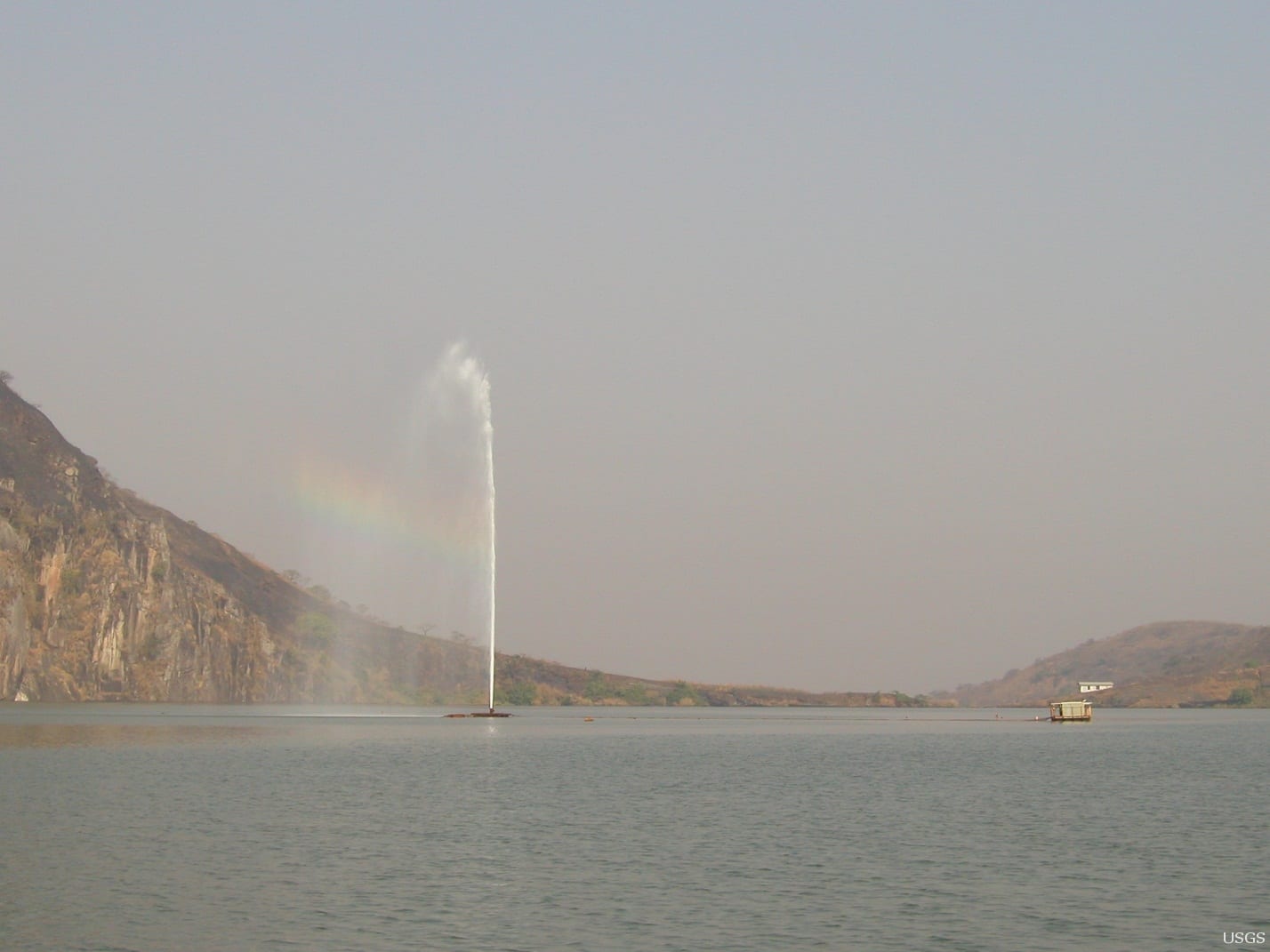
Researchers estimated that gas would build up again and could cause an outburst every 10 to 30 years, so a French team led by Michel Halbwachs set out to drain it away safely. Their method uses the lake's own physics against it. A pipe hangs from a raft down into the deep water. Water is pumped up it at first, but as it rises the dissolved gas starts to bubble, and the bubbles lift the water faster, drawing more in at the bottom. The result is a self-powered fountain that releases gas in small, harmless amounts.
After trials at Monoun in 1992 and at Nyos in 1995, the first permanent pipe went into Lake Nyos in 2001, funded by the US Office of Foreign Disaster Assistance. Two more followed in 2011. By 2019 the degassing had reached a steady state, and scientists judged that one pipe alone could keep the gas at a safe level indefinitely without any outside power.
A weak wall and returning farmers
Gas is not the lake's only danger. Nyos is held in by a natural dam of volcanic rock only 40 metres high and 45 metres wide at its narrowest. In 2005 a Cameroonian geologist warned that erosion had riddled it with holes, and a United Nations team confirmed that it had weakened, with one member predicting a breach within 10 to 20 years. That has not happened, and Cameroon's government has said the wall poses no immediate threat. If it did fail, up to 50 million cubic metres of water could flood downhill into Cameroon's Northwest Region and the Nigerian states of Taraba and Benue.
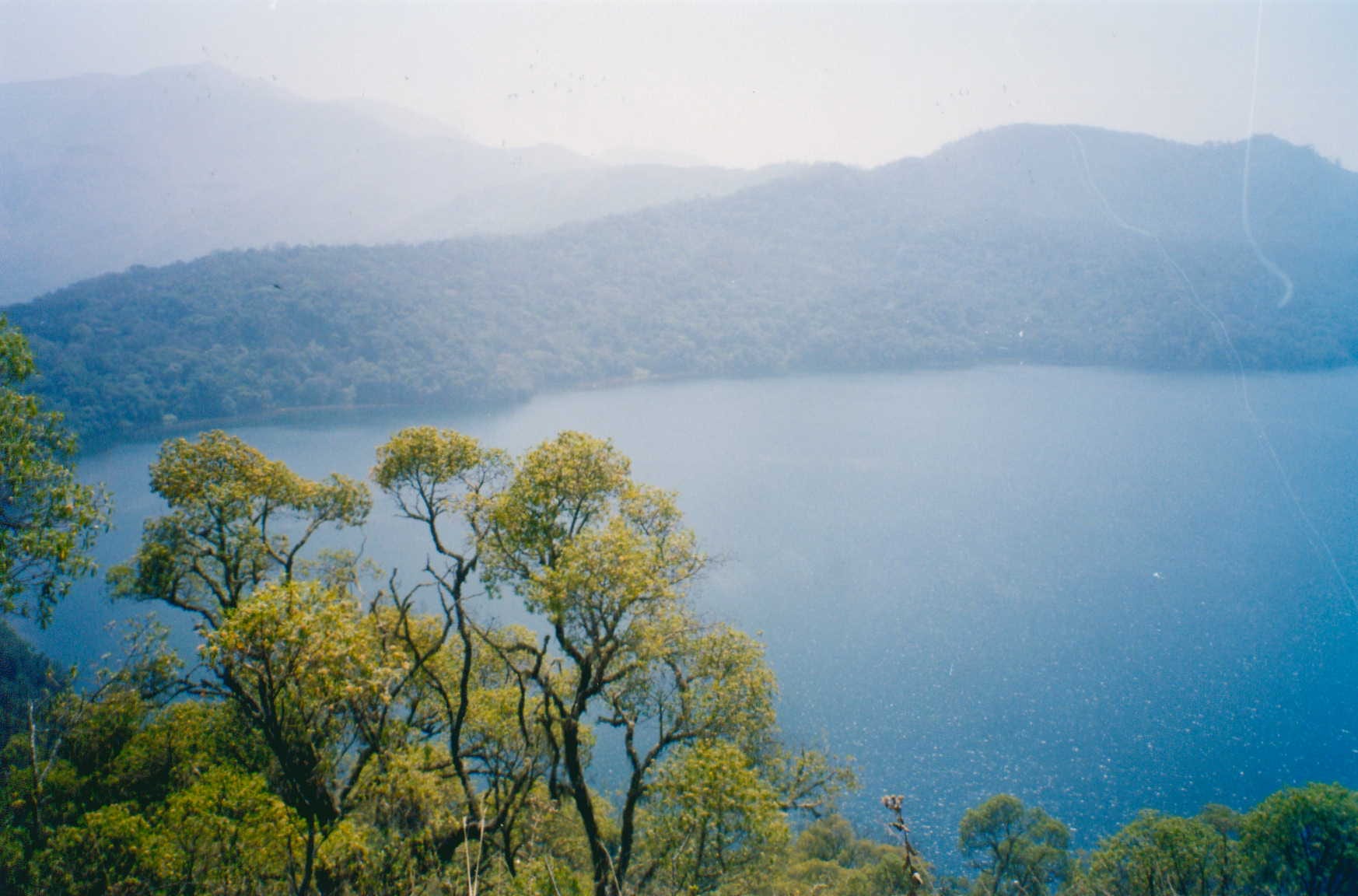
Lake Oku lies in an explosion crater of the Oku Massif, a volcanic field about 100 kilometres across, at 2,227 metres above sea level.
Despite everything, people have moved back. Some villages, Cha among them, were abandoned after the disaster, but the land around the lake is very fertile, and settlers, some of them families returning to ancestral land, have resettled the area. The lake itself is now quiet, its pipes sending up plumes of spray. The Northwest Region, however, has been caught up in a separatist conflict since 2016, and most governments currently advise against all travel there.