History
The highlands were settled by many small Grassfields peoples, organised from at least the 17th century into kingdoms ruled by a fon or a chief with sacred powers, regulatory societies and titled nobles. The largest was the Bamum kingdom, founded in the 14th century according to its own traditions and ruled from Foumban. Its best-known king, Njoya, who reigned from about 1886 to 1933, invented a script for the Bamum language, built a palace and schools, and bargained with the Germans and then the French until he was deposed and exiled to Yaoundé.
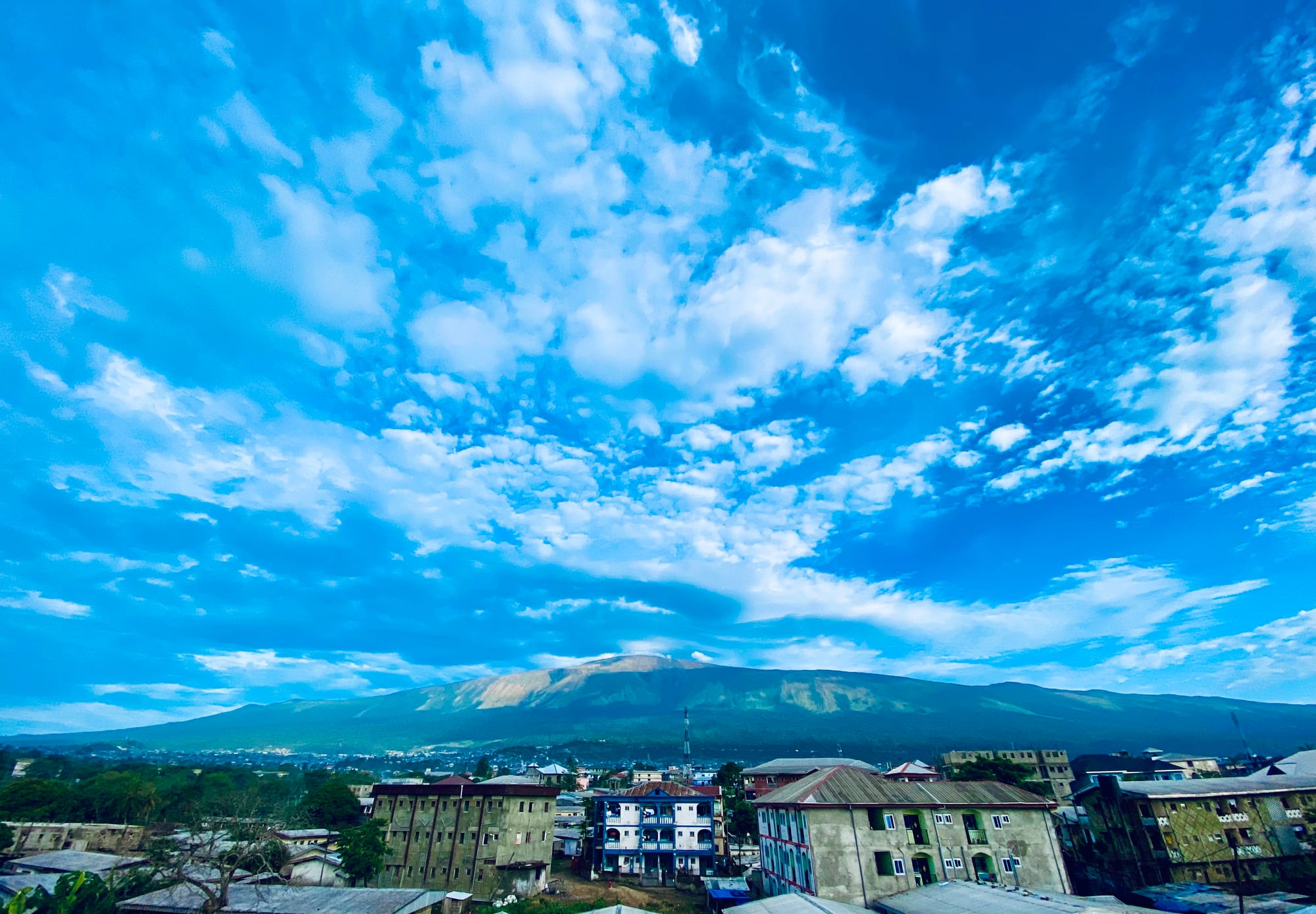
The coast was the first part of the country known to Europeans. The Baptist missionary Alfred Saker founded Victoria, now Limbe, in 1858, and under German rule from 1884 the slopes of Mount Cameroon became plantations of cocoa, bananas and rubber, with the colonial government seated for a time at Buea. After the First World War the Northwest and Southwest were run by Britain as part of Nigeria, while the West region fell under France.
In the late 1950s and 1960s the UPC's armed struggle spread into the Bamiléké country, where it was suppressed with great loss of life. In 1961 British Southern Cameroons voted to join the newly independent Cameroon, with Buea as capital of a federated state; the federation was abolished in 1972. Grievances over the marginalisation of English law, schools and language led to lawyers' and teachers' protests in 2016, and after a government crackdown some separatists declared independence in 2017, beginning the armed conflict that continues today.