💰 Budget
Everyday prices in Buea are low by Cameroonian standards — simple hotels, cheap local food and shared taxis. What changes the arithmetic is the conflict: much of the tourist trade in the Southwest Region has closed, transport is unpredictable, and any movement usually means a private vehicle and a driver rather than the cheapest option.
- Daily Budget Midrange
- USD 70–140 (mid-range hotel, restaurant meals, a hired car with driver)
- Daily Budget Shoestring
- USD 25–50 (basic guesthouse, local food, shared taxis and motorcycle taxis)
Carry cash in Central African CFA francs; cash machines exist in the town but cards are little used outside a few hotels.
📅 Best Time to Visit
The drier months from about November to February are the clearest and the traditional season for the mountain, and the Race of Hope falls in January or February. From about June to September rain on this side of Mount Cameroon is relentless and the paths turn to mud. Cloud sits on the town in most seasons.
⏳ Suggested Number of Days
The town itself is small and a day or two covers it. Longer stays are about the surroundings — the coast below and the mountain above — and a full ascent of the volcano adds two or three days on its own. Weather and road conditions change the number more than anything else.
- First Visit
- 1–2 days
- With Surroundings
- 3–4 days
🚆 Transportation
Shared yellow taxis run up and down the main road between the motor park at Mile 17 and the upper town, and motorcycle taxis, known locally as okada or bendskin, cover the side lanes. Coaches and minibuses to Douala, Limbe and Kumba leave from the motor parks. Roads in the Southwest Region are subject to checkpoints, curfews and separatist-imposed lockdowns, and journeys can be cancelled at short notice.
Travel by day and with established coach companies, and expect frequent police and gendarmerie checkpoints on every road.
🛬 Airport & Station Connections
There is no airport at Buea. Almost everyone arrives by road from Douala, whose international airport is roughly 70 kilometres away and usually one and a half to two and a half hours by coach or shared taxi, traffic and checkpoints permitting. Limbe on the coast is about 25 kilometres below the town.
🚶 Walkability
Buea is strung along one long road climbing the mountain, so walking is steep and distances between quarters are longer than they look on a map — the lower town around Mile 17 is several hundred metres below Buea Town. Within Molyko or the old town walking is easy enough; between them most people take a shared taxi. Rain and broken pavements make evenings awkward.
🛡️ Safety
Buea lies in the Southwest Region, one of the two English-speaking regions where armed separatist groups and Cameroonian security forces have fought since 2017. The conflict has brought kidnappings, attacks on checkpoints, curfews and separatist-imposed lockdowns that empty the streets, and it has closed schools and businesses for long periods. Petty crime is a further concern in the busier quarters.
Most governments advise against all travel to the Far North and to the Northwest and Southwest regions. That includes Buea, Limbe and Mount Cameroon. Avoid photography of officials, soldiers and installations. Check current official travel advice before travelling.
🌦️ Climate
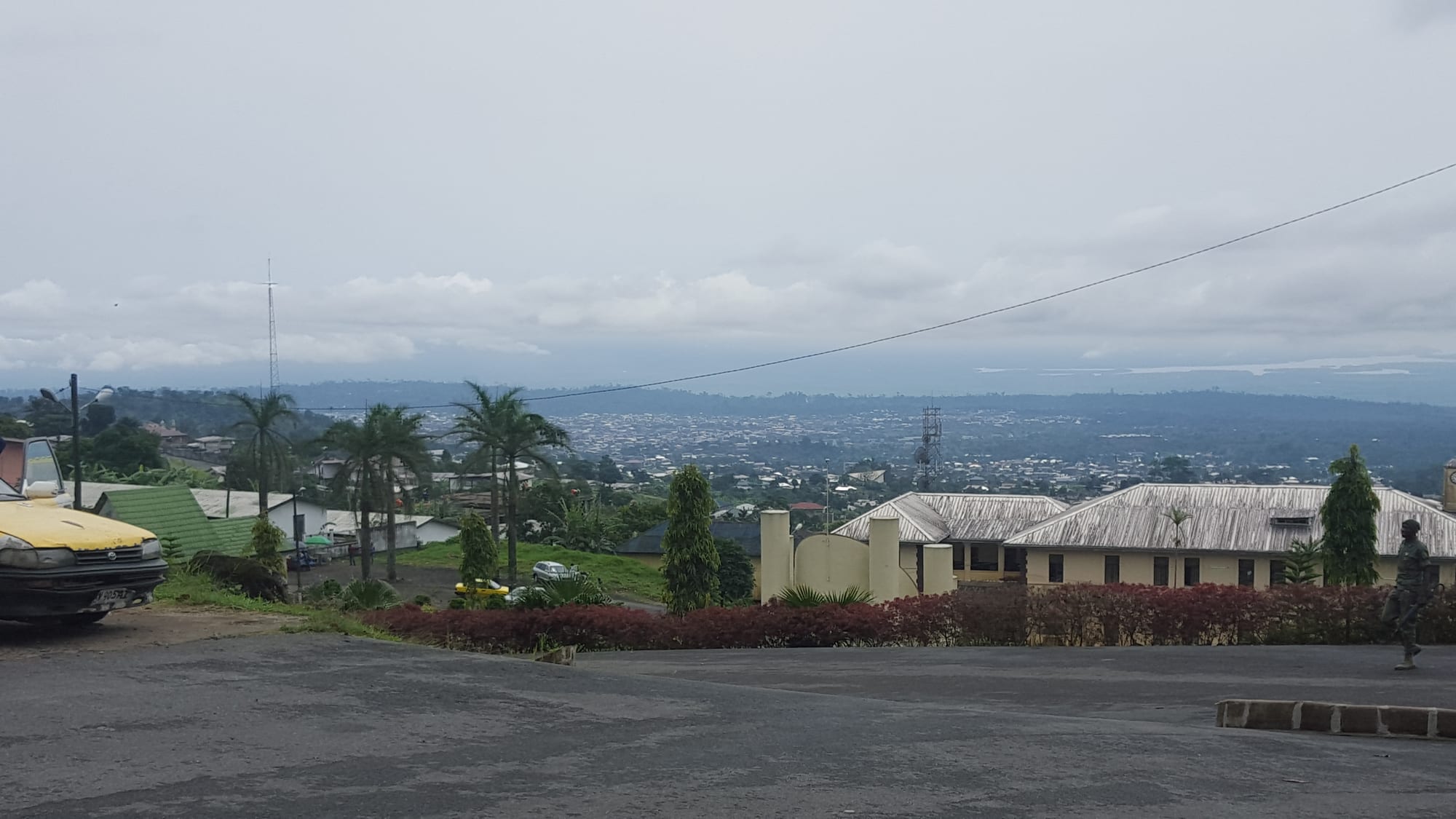
Altitude and the mountain's heavy rainfall make Buea cool and extremely wet. The town sits high on the eastern slopes, so it is milder than Douala on the plain below, with mist, cloud and frequent drizzle for much of the year and cold nights on the upper slopes.
- Summer
- the heart of the rains, grey and very wet, with daytime temperatures usually around 22–27°C
- Winter
- the drier season from about November to February, brighter and dustier under the Harmattan haze, around 20–28°C by day and cool at night
🤝 Local Customs
Buea is Bakweri country and English-speaking, with Cameroonian Pidgin English the everyday language of the street. Greetings matter and are unhurried; elders and chiefs are addressed with formality, and a visit to a chief's compound is arranged through an intermediary. Dress is modest and neat, and churches are well attended on Sundays.
Tipping is not expected but small change is appreciated; ask before photographing people, and never photograph soldiers, police, checkpoints or government buildings.
💳 Common Payment Methods
The currency is the Central African CFA franc, written FCFA and pegged to the euro. Cash is used for almost everything, including transport and markets. Cash machines in the town accept international cards inconsistently, and mobile money transfers are widely used by residents.