Culture & Customs · Jamaica
How did a small island like Jamaica produce the fastest runners on Earth?
A schools championship older than the nation, Olympic heroes since 1948 and coaches who kept talent at home made an island of 2.85 million a sprint power.
By Globeway Editorial · 2 November 2026
The short answer
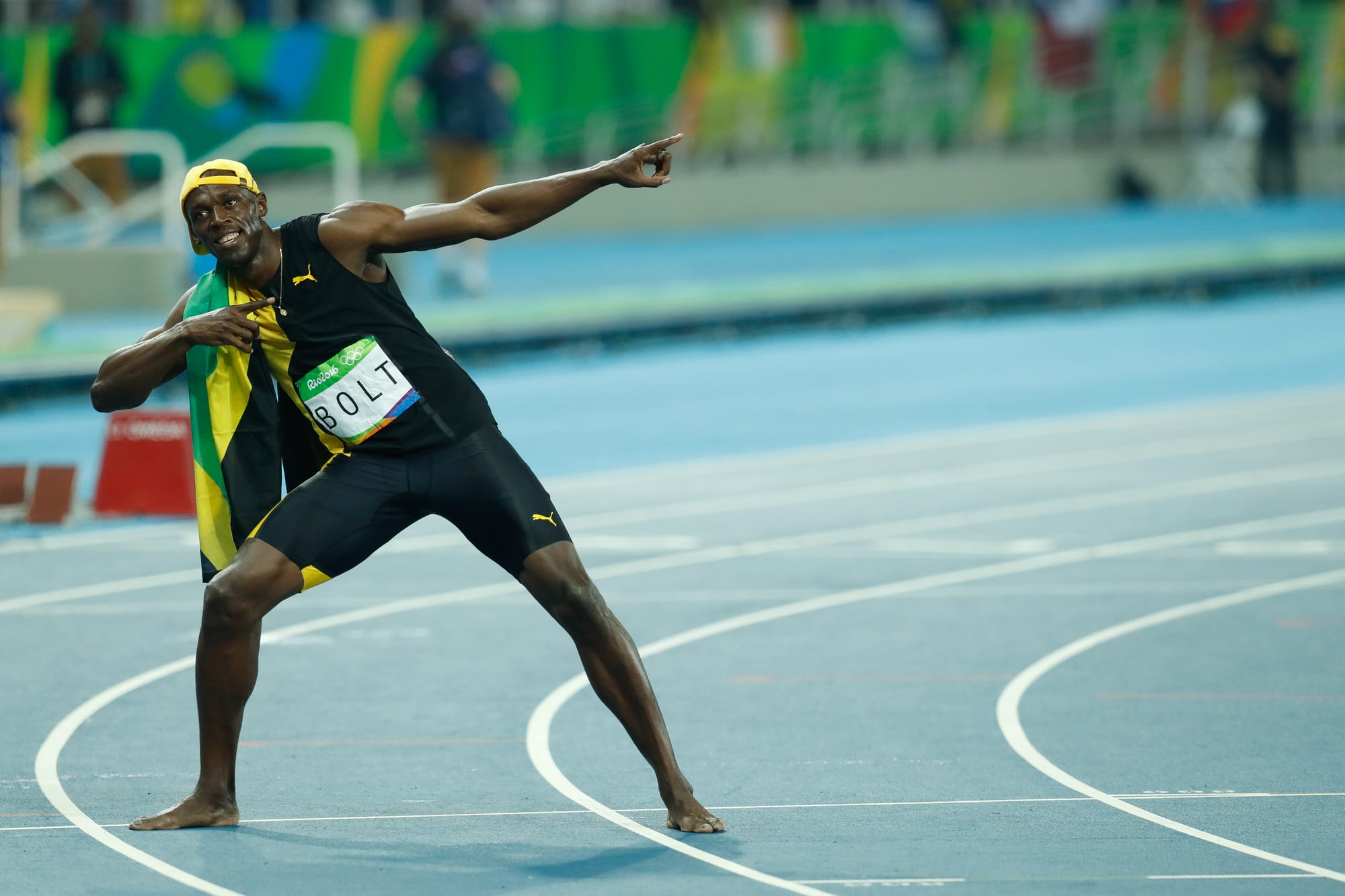
There is no single secret. Jamaica, a country of about 2.85 million people, built a sprinting culture over more than a century. Almost every school teaches athletics, and the national schools championship, known simply as "Champs", has run since 1910 and draws crowds of 20,000 to 25,000. Teenagers become national celebrities there before the rest of the world has heard of them. A line of Olympic heroes since 1948 gave every generation someone to copy, and from 2001 Jamaican coaches built elite training groups in Kingston so that the best athletes could stay and train at home.
Genetics are often raised, and most of the world's fastest sprinters share West African ancestry, as most Jamaicans do. But no gene has been found that explains why one island outruns countries a hundred times its size. The answer lies mostly in what Jamaica does with its talent: finding it young, celebrating it loudly and coaching it at home.
The size of the feat
The numbers are out of all proportion to the island. Jamaica has won 27 Olympic gold medals and 40 world championship titles in athletics alone. Usain Bolt holds the men's world records in the 100 metres, 9.58 seconds, and the 200 metres, 19.19 seconds, both set in 2009, and he ran in the Jamaican team that set the 4 × 100 metres relay record of 36.84 seconds in 2012. At the 2008 Olympics in Beijing, Jamaican women took every medal in the 100 metres, two of them sharing silver, the first clean sweep of that event by any country.
The women's 100 metres world record still belongs to the American Florence Griffith Joyner, who ran 10.49 seconds for 100 metres in 1988. But Elaine Thompson-Herah, with 10.54, is the fastest woman alive over the distance, and Shelly-Ann Fraser-Pryce, at 10.60, is the third fastest woman ever. Fraser-Pryce is also the only sprinter to have won five world titles in the 100 metres.
Champs: where the sprinters are found
Jamaican children meet athletics early, because most schools have it in the curriculum, and promising runners are spotted at primary level by secondary schools with strong track programmes. The pinnacle is Champs, the Boys and Girls Athletics Championships for under-19s, first held in 1910 at Sabina Park in Kingston, a cricket ground. Its huge crowds give young runners a taste of a major championship, and some of its records are of world class. It is not unusual for a Jamaican teenager to be in the newspapers long before reaching an international final.
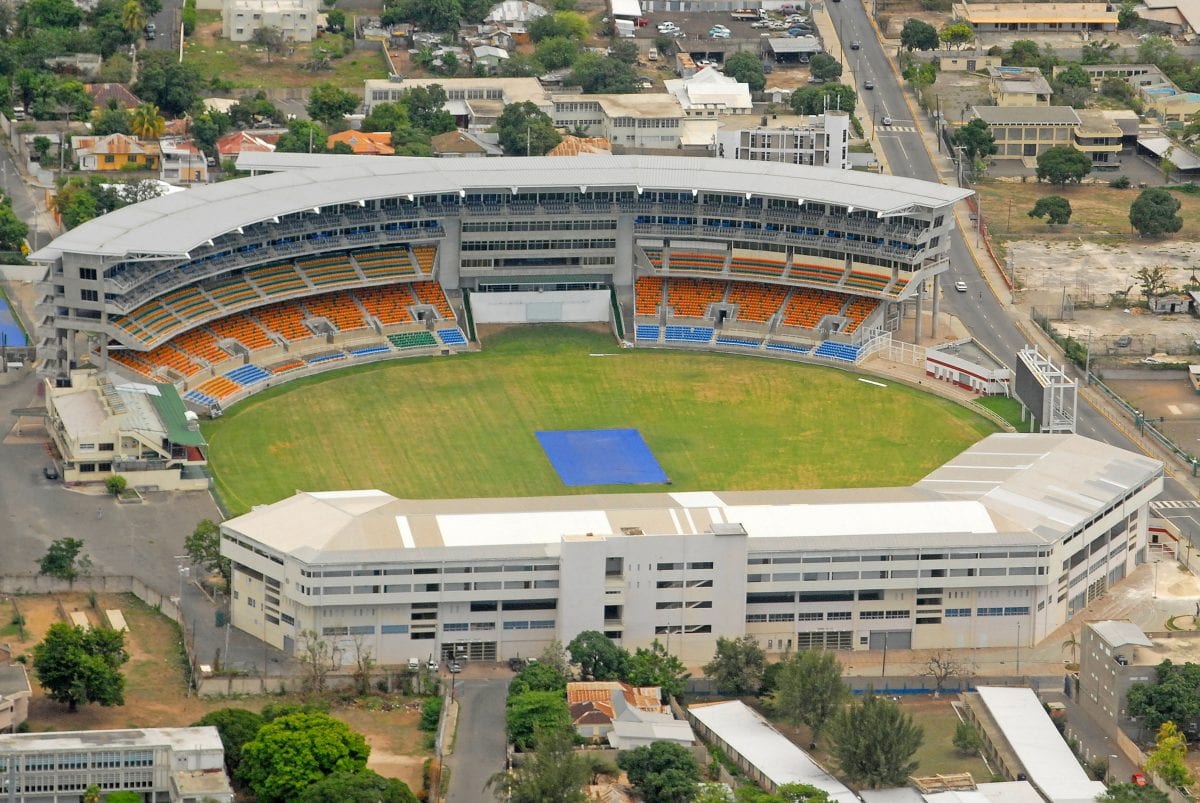
The two greatest sprinters of the modern era came through this system. Fraser-Pryce grew up in Waterhouse, an inner-city community of Kingston, and won a Champs bronze in the 100 metres at 16 while at Wolmer's High School for Girls. Bolt grew up in Sherwood Content, a small town in the rural parish of Trelawny, playing cricket and football in the street; it was his cricket coach at William Knibb Memorial High School who noticed his speed and pushed him towards the track. At the 2002 World Junior Championships, held before a home crowd in Kingston, he was so nervous that he put his shoes on the wrong feet, then won the 200 metres to become the youngest world junior champion ever.
Heroes to copy, since 1948
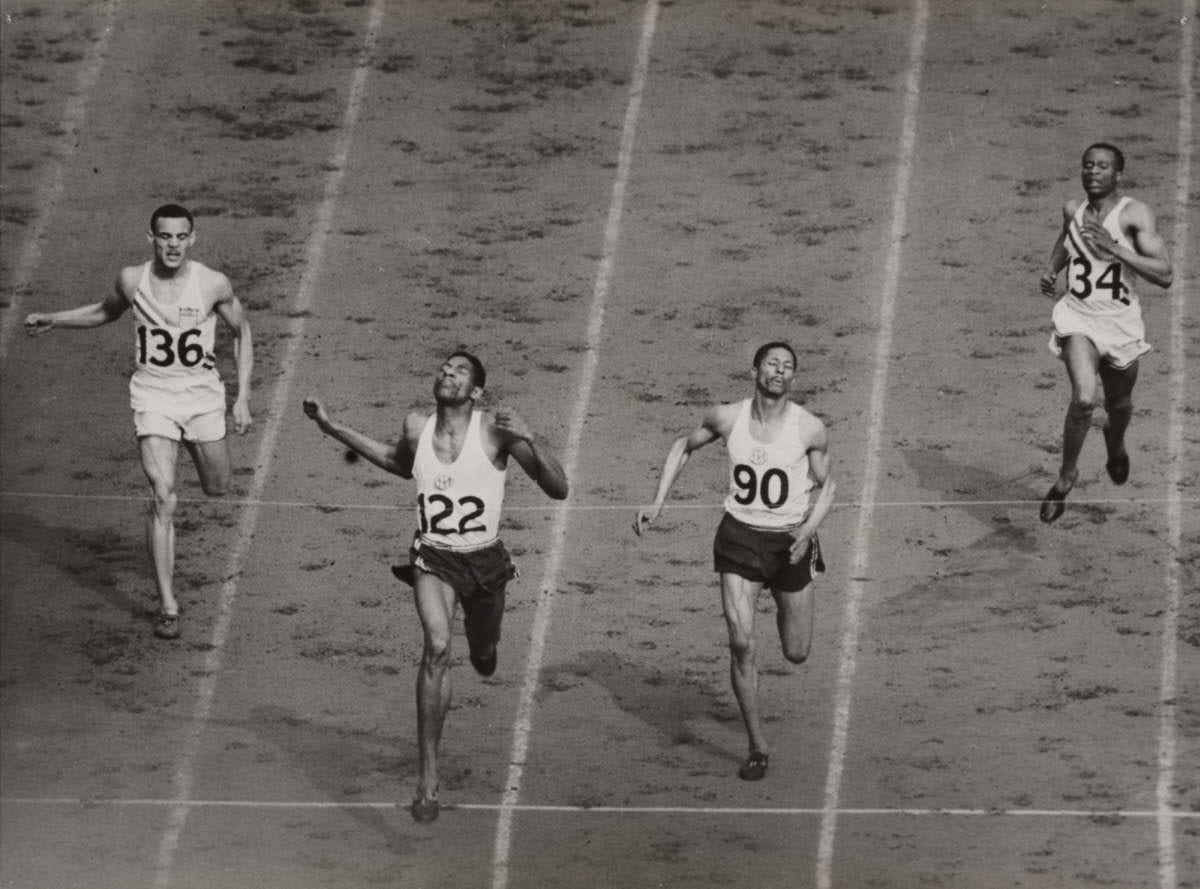
Jamaica's sprinting tradition began at its first Olympic Games, in London in
- Arthur Wint, a former Royal Air Force pilot then studying medicine in
London, won the 400 metres, beating his team-mate Herb McKenley to become Jamaica's first Olympic champion. Four years later in Helsinki, Wint and McKenley joined George Rhoden and Leslie Laing to win the 4 × 400 metres relay in a world record of 3:03.9.
The island honoured them quickly. In 1961 a sculpture called The Runner, by Alvin Marriott, was unveiled at the National Stadium in Kingston in tribute to Wint, McKenley, Laing and Rhoden. Each generation added names: Donald Quarrie, Olympic 200 metres champion in 1976; Merlene Ottey, whose nine Olympic medals and seven Olympic appearances span more than two decades; Asafa Powell, who broke the 100 metres world record twice. A statue of Bolt joined them outside the National Stadium in December 2017. Children at Champs grow up with proof that someone from their own streets can be the best in the world.
Keeping the talent at home
For a long time many of Jamaica's leading athletes trained abroad, above all in the United States. The change came in 2001, when the coach Stephen Francis founded the MVP Track Club, for "Maximising Velocity and Power", at the University of Technology in Kingston, because he felt Jamaican athletes were turning into "Americans" who never came back. In its early days he sold his car to keep it running. Among those who joined late that year was Asafa Powell, then a runner with a best of 10.70 seconds for 100 metres. Francis also coached Fraser-Pryce, the 2008 Olympic 100 metres champion.
The Jamaica athletics association then built a High Performance Training Centre at the same university, and athletes from across the Caribbean came to train there. Glen Mills, who began coaching Bolt when he was 18, later founded the Racers Track Club in Kingston. More and more of Jamaica's sprinters are now developed from schoolyard to Olympic final without leaving the island.
Genes, doubts and the limits of an explanation
Ancestry is part of the wider picture of world sprinting. Most of the fastest 100 metres times ever recorded have been run by sprinters of West African descent, and the slave plantations of the colonial era left most Jamaicans with African roots. Scientists have studied genes such as ACTN3, which helps fast-twitch muscle fibres work; one version of it is associated with elite sprint and power performance. But more than three people in four worldwide carry that version, so it cannot explain why one small island has outpaced the much larger populations that share the same ancestry.
Success has also brought suspicion. In January 2017, the Jamaican men's 4 × 100 metres relay team was stripped of its 2008 Olympic gold after a retest of a sample from Nesta Carter found a banned substance. Mills had earlier defended his sprinters against a World Anti-Doping Agency inquiry, saying they were being targeted because of their dominance. Most explanations still come back to the system itself: early selection, fierce competition among schools, national hero worship and world-class coaching on home soil.