History · Martinique
How did a volcano wipe out Martinique's greatest city in two minutes?
On 8 May 1902 a glowing cloud of gas and ash from Mount Pelée reached Saint-Pierre two minutes after the blast and killed about 28,000 people almost at once.
By Globeway Editorial · 2 November 2026
The short answer
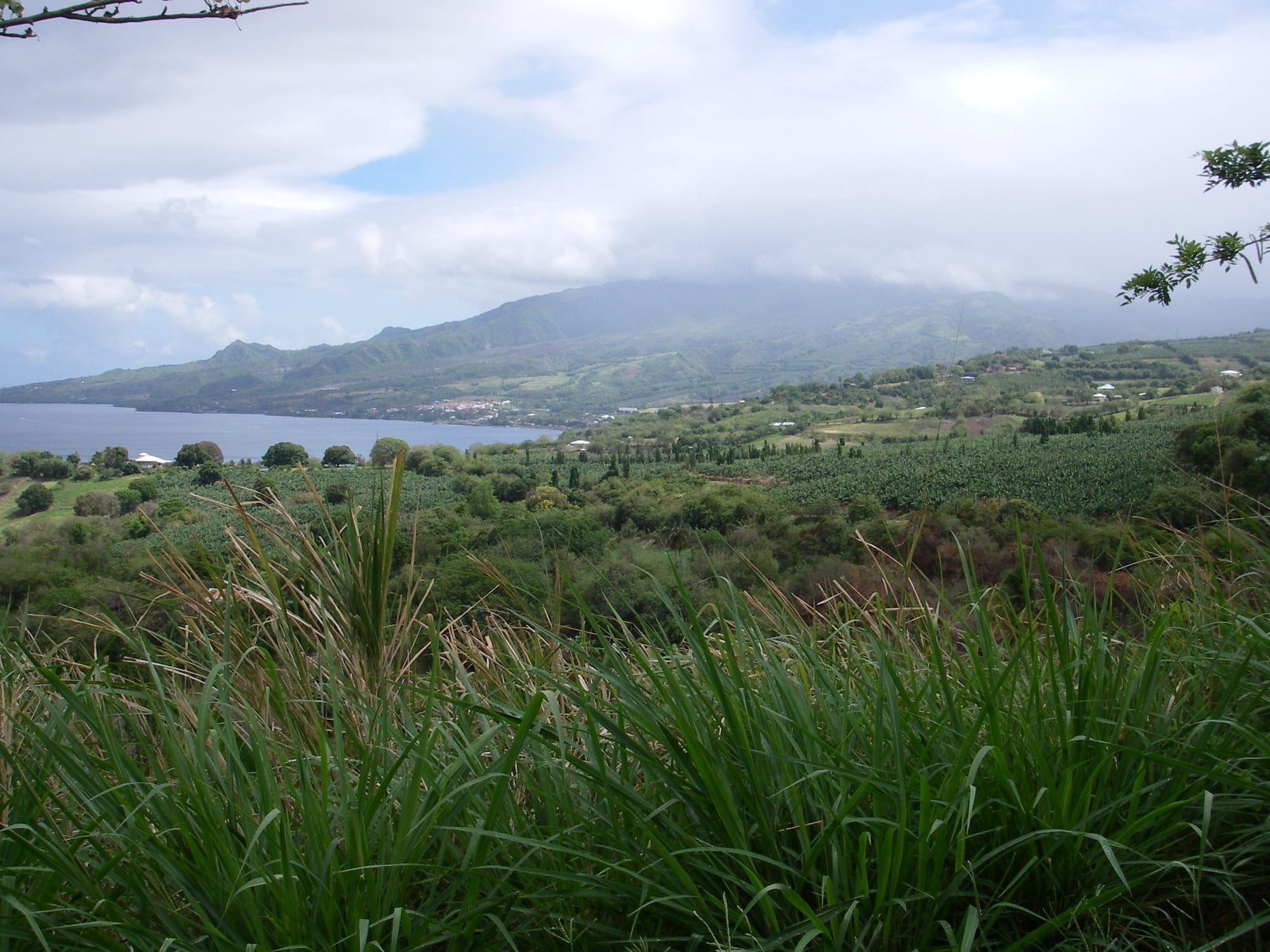
At about eight o'clock on the morning of 8 May 1902, the side of Mount Pelée, a volcano in the north of Martinique, burst open. Instead of lava, it released a pyroclastic surge: a ground-hugging avalanche of superheated steam, volcanic gas and ash, hotter than 1,075 °C and moving at more than 160 kilometres an hour. Saint-Pierre lay about 10 kilometres to the south. The cloud reached the town at 8:02, swept over the whole of it in under a minute and set everything that could burn alight. Almost all of the roughly 28,000 people in the city died, most of them burned or crushed by falling masonry.
One correction to the question: Saint-Pierre was Martinique's greatest city, its commercial and cultural heart, but not its official capital. The seat of government was already at Fort-de-France, which was undamaged and has been the island's main city ever since. Saint-Pierre had simply been, for two centuries, the place that mattered most.
The Paris of the Caribbean
Founded in 1635 by the French adventurer Pierre Belain d'Esnambuc, Saint-Pierre grew around a sheltered bay. In the 18th century it became the colony's main town and its capital in all but name, a port that shipped the sugar and coffee of the surrounding plantations. By the 19th century it was known as "the Paris of the Caribbean", with theatres, cafés, newspapers and a busy harbour full of ships. Wealth, though, stayed concentrated among plantation owners and merchants.
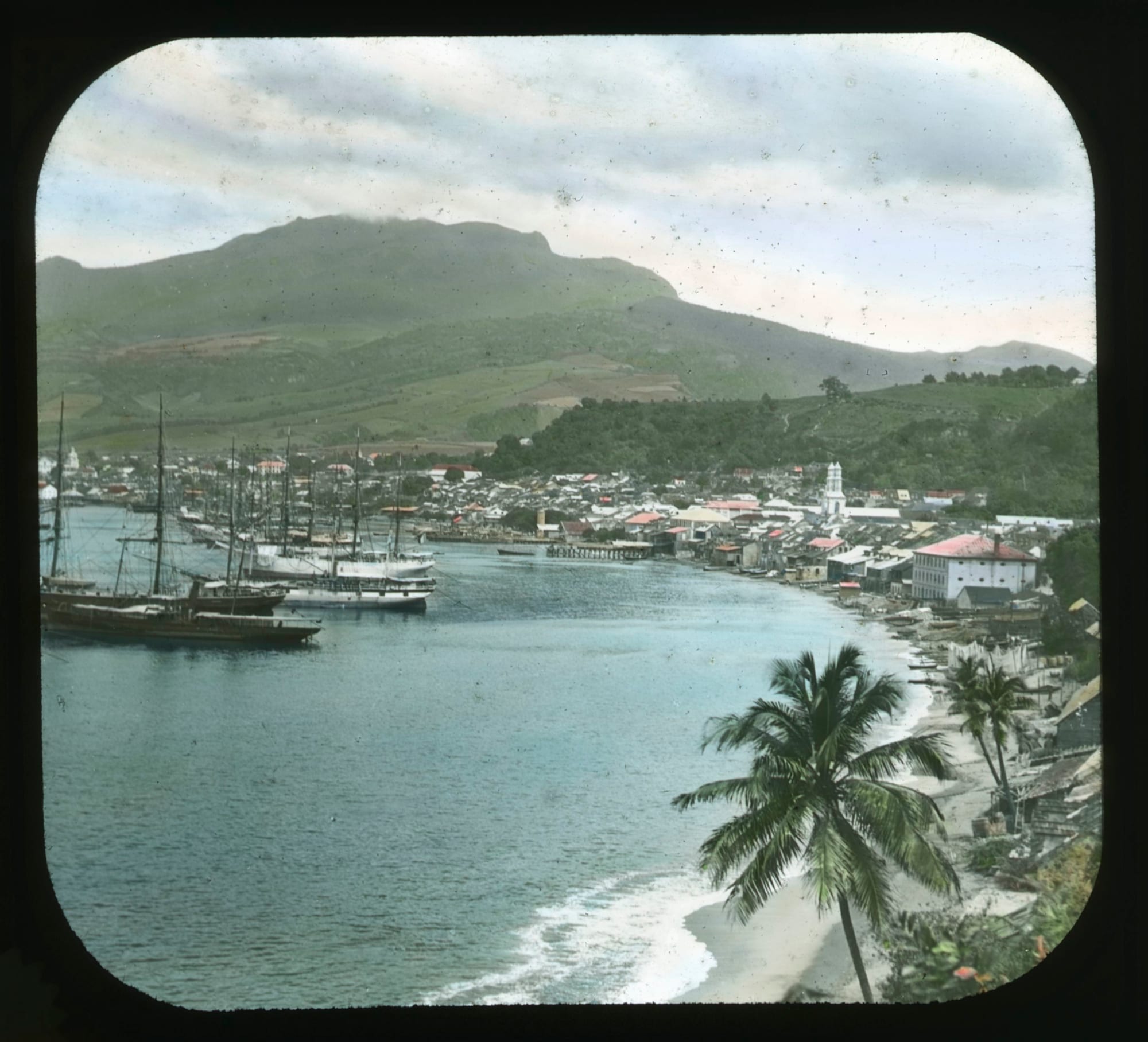
Above it stood Mount Pelée, the "bald mountain", 1,397 metres high. It was known to be active: small steam explosions had occurred in 1792 and 1851. But people in 1902 understood a volcano's danger as lava, and the slopes and valleys between the crater and the town seemed certain to keep any lava flow away. The phenomenon that would destroy Saint-Pierre had not yet been described by science.
Two weeks of warnings
- 23 April 1902: Eruptions begin at the summit; cinders fall on the mountain's southern and western slopes, and earthquakes are felt.
- 27 April: Climbers find the dry Étang Sec crater filled by a lake 180 metres across, fed by boiling water; the smell of sulphur hangs over Saint-Pierre.
- 2 May: Loud explosions, earthquakes and a column of black smoke; ash and pumice cover the northern half of the island.
- 5 May: A crater wall collapses and a torrent of boiling mud buries the Guérin sugar works and about 150 people; the sea recedes and floods part of the town.
- 7 May: Volcanic lightning plays around the summit; refugees from the countryside crowd into Saint-Pierre while newspapers insist the city is safe.
- 8 May, 7:52 a.m.: The telegraph operator in Saint-Pierre hands the line to Fort-de-France; a second later it goes dead.
- 8 May, 8:02 a.m.: The surge reaches the city.
The signs were plentiful, and yet the town filled up rather than emptied. People from the ash-covered villages fled towards the larger town for safety, swelling its population. News that the Soufrière volcano on nearby Saint Vincent had erupted was taken as reassurance, as if Pelée's pressure had found a release next door. Many residents who wanted to leave were refused permission. The governor, Louis Mouttet, and his wife stayed in the city. One exception was the Italian captain of the barque Orsolina, who sailed with only half his cargo of sugar loaded, ignoring protests and the threat of arrest; he reportedly said that if Vesuvius had looked the way Pelée did that morning, he would have left Naples too.
What a pyroclastic surge does
When the mountain opened, two clouds burst out. One rose into a vast mushroom that darkened the sky for 80 kilometres around. The other shot out sideways and poured down the slope towards the town, black, heavy and glowing from within. Because it was denser than the air, it hugged the ground like a liquid rather than drifting away, and it carried its heat with it.
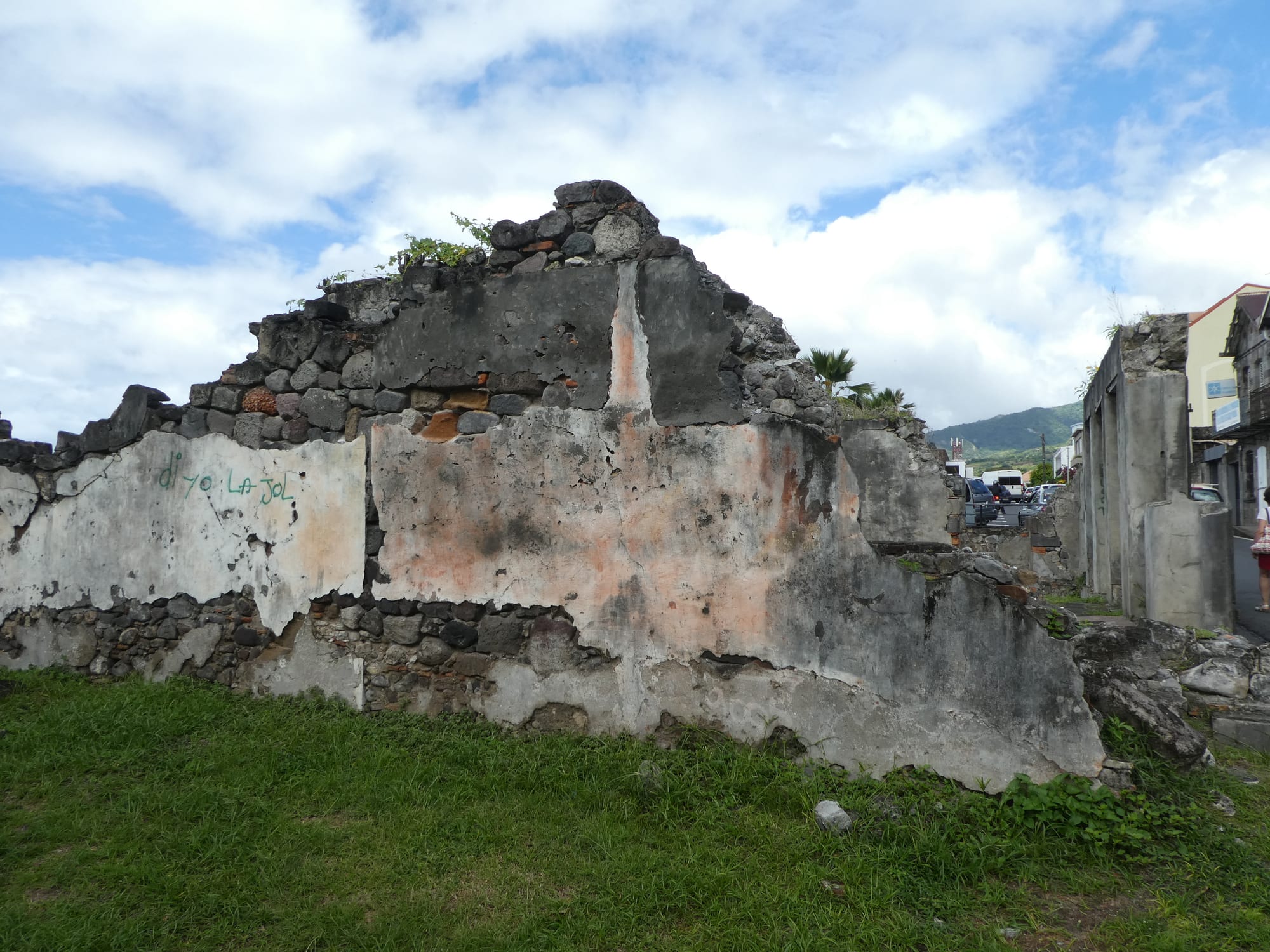
The surge reached Saint-Pierre two minutes after the eruption and covered it in less than one. The heat ignited everything combustible, and a firestorm followed, fed by the smashed buildings and the town's countless casks of rum. In the harbour the cable ship Grappler caught fire and sank with all hands; the liner Roraima became a burning wreck, and only two of its passengers, a young girl and her nurse, survived. Rescuers who came ashore from the cruiser Suchet that afternoon found every tree in the central square uprooted and bare, the streets littered with dead, and a heat so fierce it drove landing parties back for more than two hours. The city burned for days, and an area of about 21 square kilometres was devastated.
The few who lived
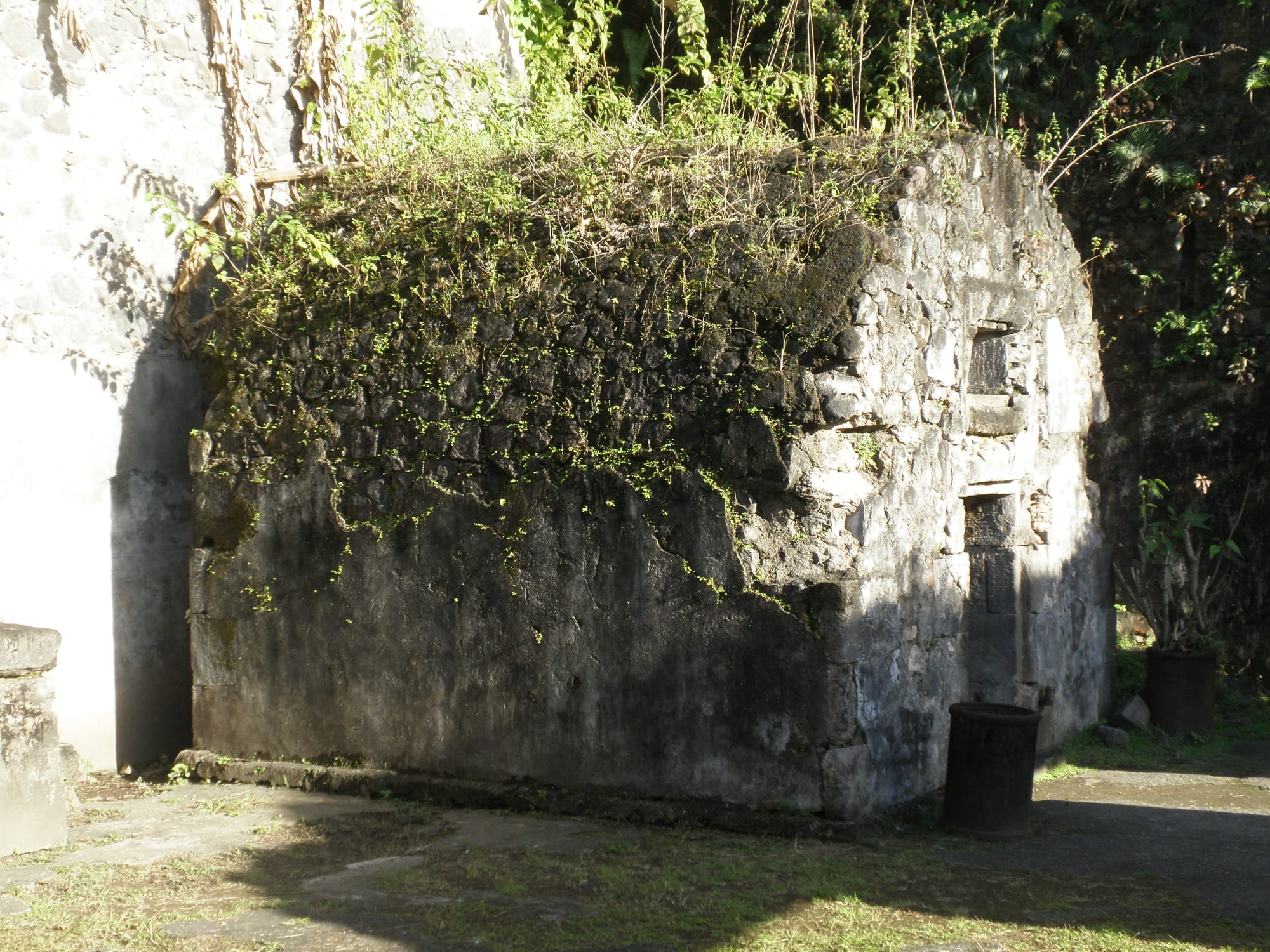
Legend long held that only two people survived. The truth is a little larger. Ludger Sylbaris, a prisoner also known as Louis-Auguste Cyparis, was locked in a single cell built partly underground, with stone walls, no windows and only a narrow grating in a door that faced away from the volcano. Scalding air and ash came through the grating and burned him badly, but the heat passed quickly and he did not breathe it in. Rescuers heard his cries four days later. He went on to tour America with the Barnum & Bailey circus, telling the story of the day the city died.
Léon Compère-Léandre, a shoemaker on the edge of town, felt a terrible wind and his limbs burning, watched others die around him, and then ran, bleeding and burned, to Fonds-Saint-Denis, six kilometres away. A girl named Havivra Da Ifrile survived by rowing to a sea cave. A few tens more lived at the fringes of the cloud, or were pulled from the sea after clinging to wreckage, but many of them died of their burns within hours or days.
A new science, and a town that never came back
The disaster was not over. On 20 May a second eruption of the same kind flattened what was left of Saint-Pierre and killed some 2,000 rescuers, engineers and sailors. On 30 August another surge struck Morne Rouge and neighbouring villages, killing at least 800 there. The eruption finally ended in October 1905.
The French geologist Alfred Lacroix studied the wreckage and became the first to describe the nuée ardente, or "burning cloud", now called a pyroclastic flow and recognised as the deadliest of all volcanic hazards. The disaster is often called the start of modern volcanology, and explosive eruptions of this kind are still known as Peléan eruptions.
Saint-Pierre was never rebuilt as a great city. It is now a quiet town of about 4,000 people, designated a City of Art and History, where the shell of the theatre, the ruined prison with Sylbaris's cell and a volcano museum stand among newer houses, and the wrecks in the bay draw divers. Mount Pelée last erupted between 1929 and 1932. It is under constant watch, and in December 2020 the island's volcano observatory raised its alert level after a rise in small earthquakes beneath it. Since 2023 its volcanoes and forests have been a UNESCO World Heritage Site.