History · Liechtenstein
How did tiny Liechtenstein become one of the richest countries on Earth?
A union with Switzerland, low taxes, a discreet finance industry and world-class factories turned a poor farming principality into an economic giant.
By Globeway Editorial · 2 November 2026
The short answer
Liechtenstein was a mainly agricultural country well into the 20th century, and the First World War left it in economic ruin. It escaped by binding itself to Switzerland, adopting the Swiss franc in 1920 and joining a customs union in 1924, which gave it a stable currency and an open market. After the Second World War, low taxes drew companies and money from abroad. Two engines did the rest: a financial industry of banks, trusts and foundations that for decades made it a famous tax haven, and a group of manufacturers, led by the toolmaker Hilti and the dental firm Ivoclar, that made it one of the most highly industrialised countries in the world.
The statistics look even more extreme because the country is so small. Just over 41,000 people live in an area of about 160 square kilometres, but around half of the people who work there commute in each day from Switzerland, Austria and Germany. The wealth they help produce is counted against a tiny resident population, which is why its output per person, estimated at $184,083 in 2021, ranks among the highest anywhere.
A principality bought, not won
Liechtenstein exists because a rich family needed a piece of land. The princes of Liechtenstein held large estates in Austria, Bohemia and Moravia, but none directly from the Holy Roman Emperor, which they needed for a seat in the imperial parliament. So they bought the lordship of Schellenberg in 1699 and the county of Vaduz in 1712, and in 1719 the emperor united them as the Principality of Liechtenstein. It became fully independent in 1866.
For two centuries the principality itself was not where the money was. The princes drew most of their wealth from their Habsburg estates and spent much of their time in their two palaces in Vienna. Not until 1938 did a ruling prince, Franz Joseph II, settle in the country full-time.
Ruin, and a Swiss lifeline
The First World War hit hard. Lacking natural resources, the country suffered economic devastation and food shortages, smuggling soared, and popular unrest helped bring about a new constitution in 1921. Austria-Hungary, its old partner, had collapsed, so Liechtenstein turned west. It adopted the Swiss franc in 1920, entered a customs union with Switzerland in 1924, and let Switzerland represent it diplomatically in many countries. The border between the two has been open ever since.
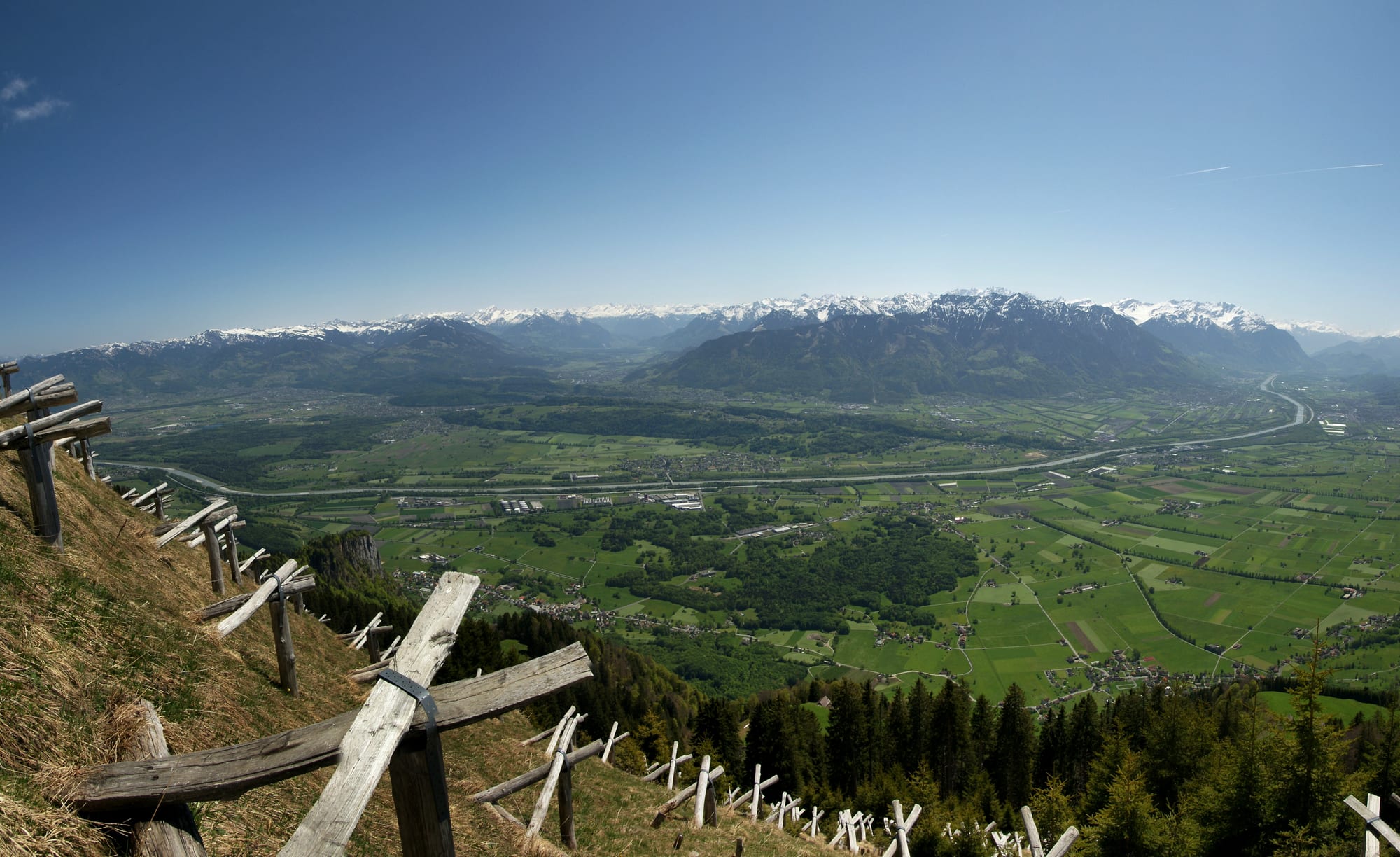
About half of Liechtenstein's territory is mountainous; the principality lies on the upper Rhine between Switzerland and Austria.
The Second World War, in which Liechtenstein stayed neutral, brought a different blow to the ruling family. Czechoslovakia and Poland expropriated all of the dynasty's lands in Bohemia, Moravia and Silesia, more than 1,600 square kilometres of farmland and forest, ten times the size of the principality. In dire financial straits, the family sold treasures from its art collection, including Leonardo da Vinci's portrait Ginevra de' Benci, bought by the National Gallery of Art in the United States in 1967 for US$5 million, then a record price for a painting.
Low taxes and famous secrecy
What saved both country and dynasty was a business model. After the war, Liechtenstein's low taxes spurred strong growth and drew many companies to the country, and it became an increasingly important financial centre. Its corporate tax rate today is 12.5 per cent. Loose incorporation rules and a tradition of strict bank secrecy attracted money from outside its borders, and it became one of the few countries with more registered companies than citizens.
A key product was the Stiftung, or foundation: a financial entity registered in the name of a Liechtensteiner, often a lawyer, that could hide who really owned the assets. For decades this made the principality a popular tax haven for very wealthy people and businesses avoiding or evading taxes at home. The princely family's own bank, founded in 1920 and now called LGT, grew with it; by the end of 2025 it managed assets of CHF 386.1 billion.
The model was blown open in 2008, when the German government paid a former LGT employee for confidential client data and launched its biggest ever set of tax-evasion investigations. The OECD had listed Liechtenstein in 2007 as one of the last uncooperative tax havens, alongside Andorra and Monaco. Under pressure, in March 2009 it pledged to meet the OECD's standards of transparency and exchange of tax information, and it later signed agreements for the automatic exchange of financial information with dozens of partners.
Drills, dentures and the factory floor
Banking is only half the story. In the last half century Liechtenstein has changed from a mainly agricultural state into one of the most highly industrialised countries in the world, and in 2008 industry employed 41 per cent of its workforce.
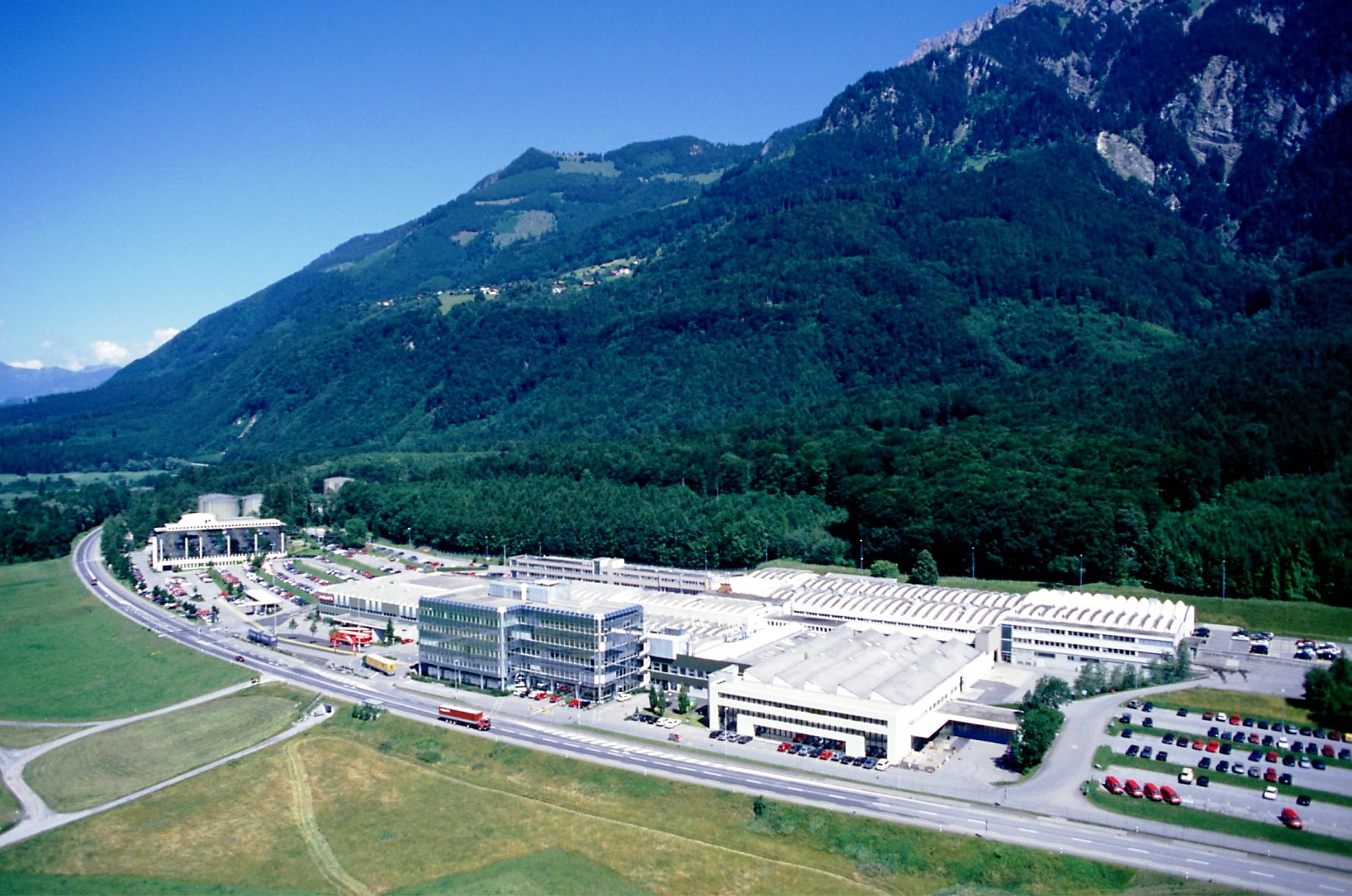
Hilti began in 1941 as a small mechanical workshop in the same town.
The best-known example began in 1941, when the brothers Martin and Eugen Hilti opened a mechanical workshop in Schaan. To make ends meet they made anything from cast-iron parts for Swiss textile machines to pencil sharpeners, until in the late 1940s Martin Hilti acquired a technology for setting nails into concrete. Hilti grew into a global maker of power tools and fastening systems and is the country's largest employer. Ivoclar, a dental company founded in Zurich in 1923, moved to Schaan in 1933 and makes products for dentists worldwide; dental products remain among the country's main exports, along with specialised machinery.
The Swiss customs union gave these firms a home market far bigger than the principality, and membership of the European Economic Area since 1995 opened the European Union's single market as well.
The richest, with a caveat
By the standard measures Liechtenstein is extraordinarily wealthy. It is one of the few countries with no national debt, and unemployment stood at 1.9 per cent at the end of 2020. Its prince, Hans-Adam II, who has reigned since 1989, was estimated by Bloomberg in 2022 to be worth about US$6.2 billion.
The per-person figures, though, need reading with care. In 2008, of a workforce of 35,440, some 17,450 people crossed the border to work each day. Because so much of the country's output is produced by people who live abroad, dividing it by the resident population alone inflates the average. Even allowing for that, a country that faced food shortages a century ago is now among the most prosperous places on Earth.