Food · Kyrgyzstan
Kyrgyzstan: Food and the National Dish
Boiled meat and homemade noodles shared across a mountain nation still shaped by horses, yurts and high-pasture herding
By Worldlore Editorial · 30 September 2026
A living nomadic culture, not a museum piece
Kyrgyzstan's food traditions grew out of the same Central Asian nomadic herding culture shared with Kazakhstan and other steppe and mountain peoples, but here that culture remains very much alive: herding families still take their animals up to high mountain pastures (jailoo) each summer, and horses remain central to national identity, visible today in events like the World Nomad Games.
The national dish: beshbarmak
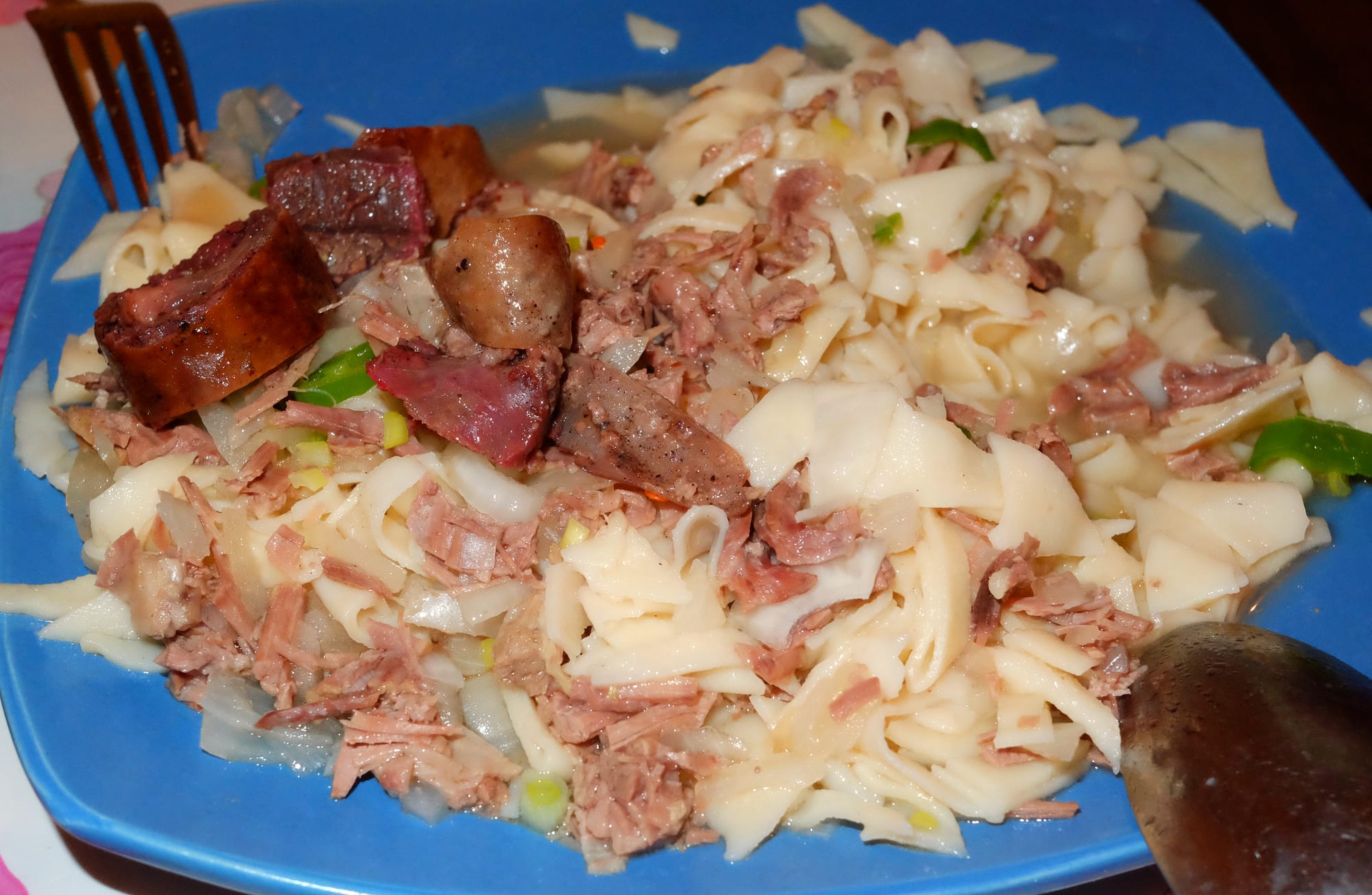
Beshbarmak, meat, traditionally horse or mutton, boiled in its own broth for several hours and served over homemade noodles with an onion sauce, is Kyrgyzstan's national dish, also common in Kazakhstan and in Xinjiang, where it is called naryn. Its name, meaning "five fingers," refers to the traditional way of eating it by hand, and in Kyrgyzstan the dish is most often made for feasts marking a birth or an important birthday and to mourn a death, at a funeral or on its anniversary.
Horse meat, kymyz and the pastoral pantry
Traditional Kyrgyz food revolves around mutton, beef and horse meat, the last used in sausages and many other delicacies, alongside dairy and bread, which is treated as sacred. Kymyz, fermented mare's milk, carries deep cultural roots in Kyrgyzstan, tied closely to the summer pastures, where serving it is an essential part of hospitality and herding families still make it fresh.
History behind the dish
Kyrgyz nomadic culture developed across the high mountain pastures of the Tian Shan range, a mountain setting that contrasts with much of the flatter Kazakh steppe, even though both countries share beshbarmak and much of the same basic pastoral food culture. Soviet-era rule in the 20th century brought its own influence, but Kyrgyzstan's horse-centred food traditions never fully gave way to it, remaining visibly alive in rural life today.
Dishes to know
Five more to recognise across Kyrgyzstan:
- Manty — steamed dumplings filled with minced meat and onions.
- Lagman — thick hand-pulled noodles with meat, peppers and other
vegetables, served everywhere but considered a Dungan or Uyghur dish.
- Paloo — the Kyrgyz version of plov, meat fried in a cauldron with
carrots and rice; Uzgen paloo uses rice grown in the south.
- Kuurdak — fried meat and offal, commonly seasoned with onions and
garlic, a hearty pastoral dish.
- Boorsok — small pieces of fried dough, often eaten with tea or dipped
in honey.
Drinks
Kymyz, tangy and slightly alcoholic, remains Kyrgyzstan's most distinctive traditional drink, available fresh only in summer, from about May until August. Tea, offered with bread to every guest, is a daily social custom, and maksym, a slightly fizzy fermented grain drink sold on street corners and at bazaars by companies such as Shoro, is a distinctly Kyrgyz everyday refreshment.
Eating as a traveller
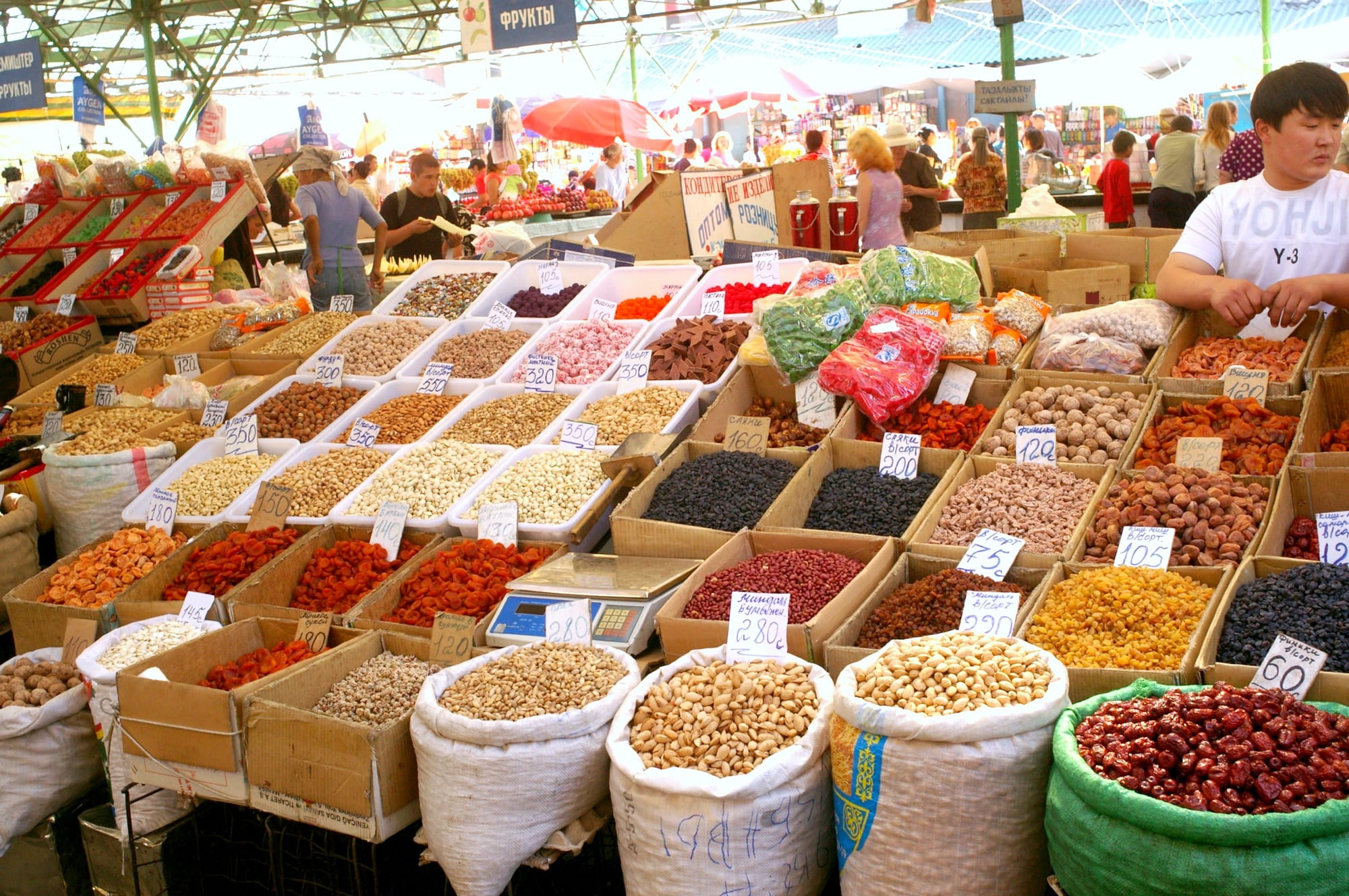
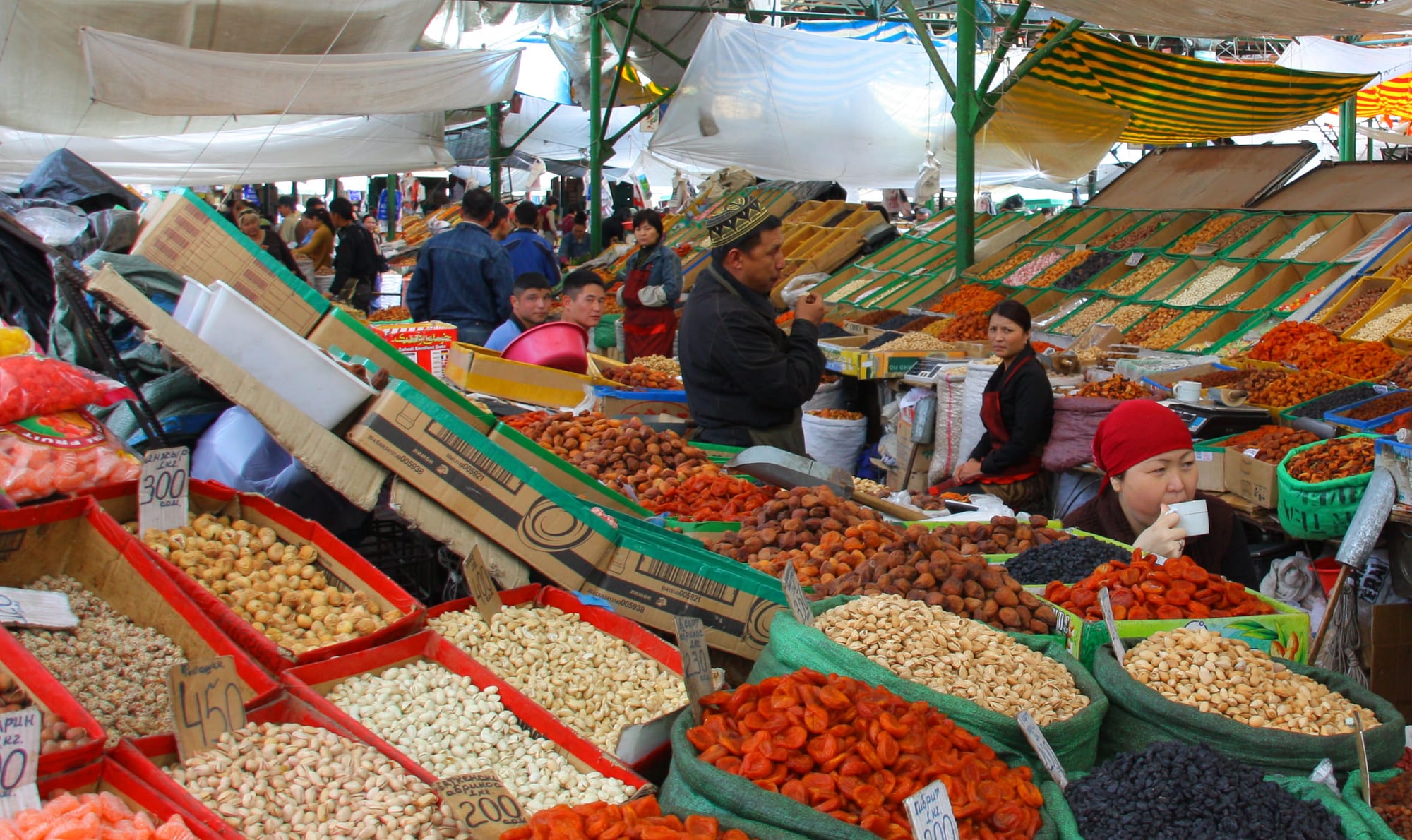
Vegetarians will find options limited given how central meat and dairy are to traditional Kyrgyz cooking, though bread, dairy-based dishes and shirin paloo, a meat-free plov made with dried fruit, are available. Bottled or boiled water is the safer choice. Visiting Bishkek's Osh Bazaar, one of the city's largest markets, or a summer visit to the high pastures, are both good ways to see Kyrgyzstan's living nomadic food culture up close.
What to take from the table
Beshbarmak, shared with Kazakhstan but rooted here in the high pastures of the Tian Shan, is the dish that best represents Kyrgyz food — and a cup of fresh kymyz during the summer herding season is the truest taste of a nomadic culture that is still lived today.