Attractions & Natural Wonders · Libya
Libya: Seven Attractions and Natural Wonders
Some of the best-preserved Roman cities on earth, a mud-brick Saharan oasis town, and prehistoric rock art deep in the desert — a portrait of a country largely closed to tourism since 2011
By Worldlore Editorial · 30 September 2026
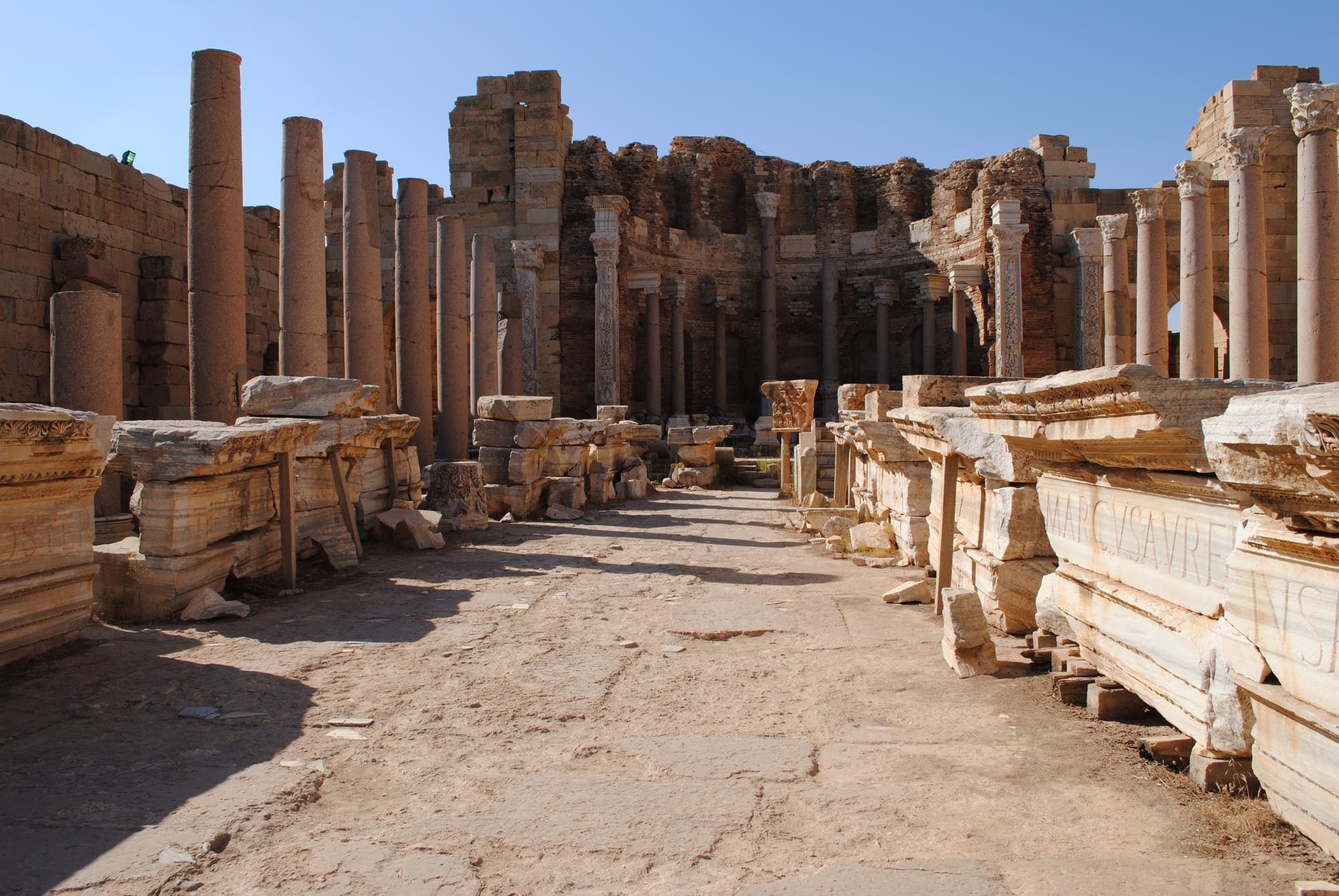
Rome's grandest ruins, in a country closed to travel
Libya, on the Mediterranean coast of North Africa, holds some of the best-preserved Roman cities anywhere — a legacy of the wealth Rome drew from this coast — as well as Saharan oasis towns and rock art many thousands of years old across its enormous desert interior. Since the fall of Muammar Gaddafi in 2011, the country has been fractured by civil conflict between rival governments and armed factions, and it has effectively been closed to tourism for over a decade.
The seven below are Libya's landmark sights, described for reference. Read the note at the end first: at the time of writing, most foreign governments advise against all travel to Libya, and this article does not function as an itinerary.
1. Leptis Magna
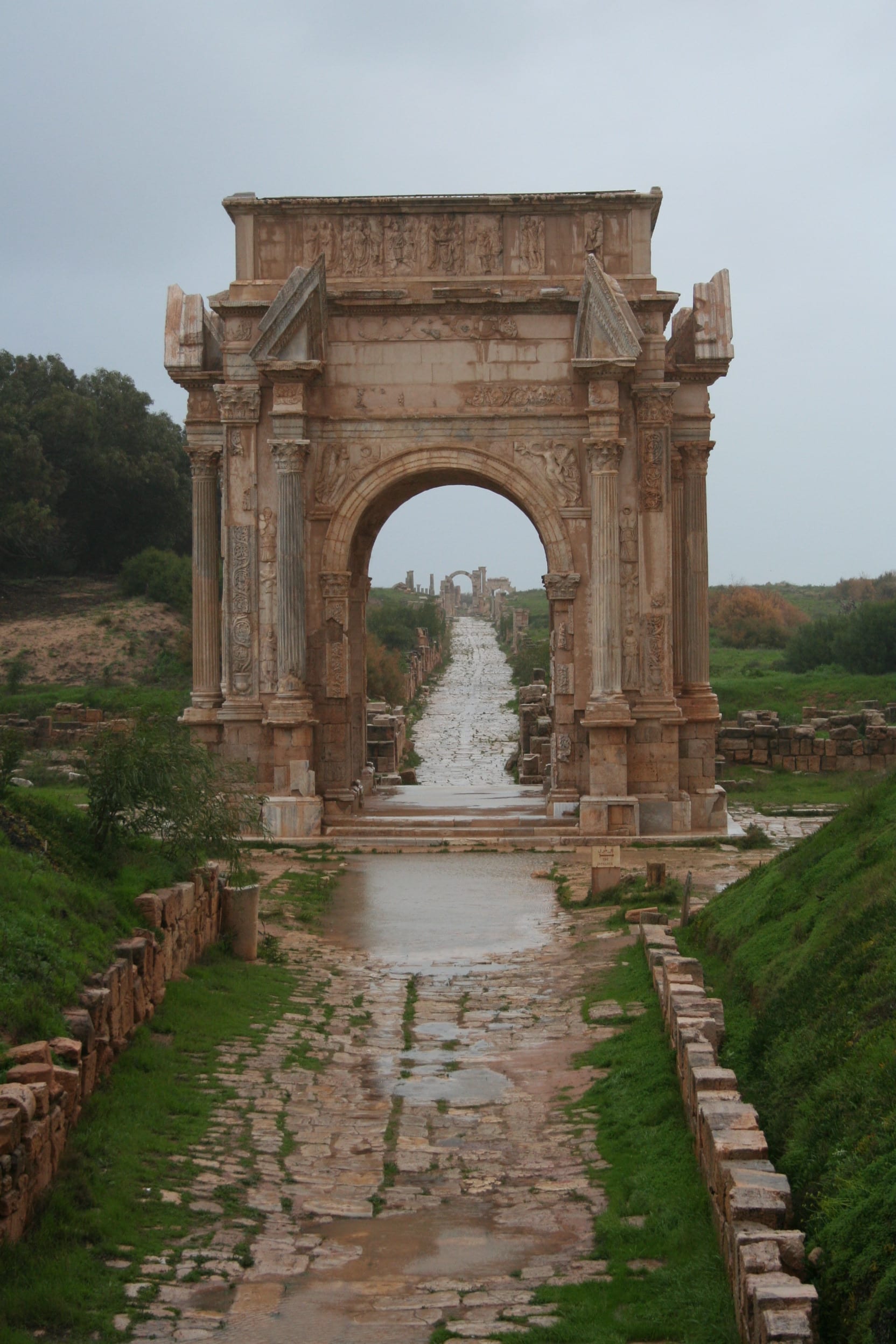
Leptis Magna, 130 km east of Tripoli near Al-Khums, was one of the grandest cities of the Roman Empire — enlarged and beautified by the emperor Septimius Severus, who was born here, with a triumphal arch, a vast basilica, baths, a market, an amphitheatre, and a harbour, much of it buried and preserved by sand until Italian archaeologists uncovered it from the 1920s. It ranks among the best-preserved Roman sites in the Mediterranean. It was inscribed as a UNESCO World Heritage Site in 1982 and has been on the List of World Heritage in Danger since 2016.
2. Sabratha
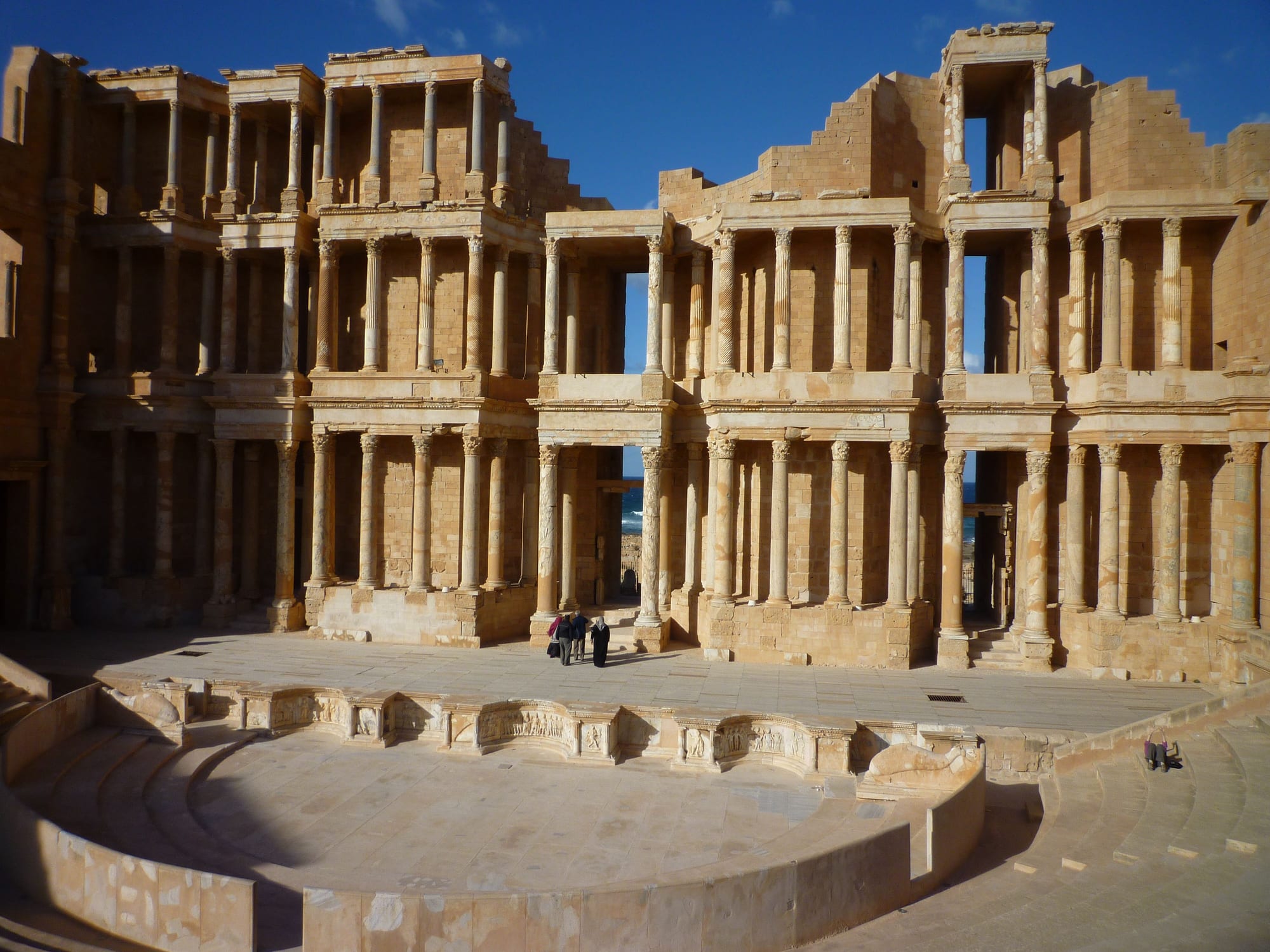
Sabratha, about 70 km west of Tripoli, was a Phoenician trading post that became a wealthy Roman city and, after a Vandal period, saw a small revival under Byzantine rule. Its showpiece is a Roman theatre near the shoreline that keeps its three-storey stage backdrop, alongside temples to Liber Pater, Serapis and Isis, a basilica of Justinian's time, and baths with surviving mosaic floors. It was inscribed as a UNESCO World Heritage Site in 1982 and is also on the danger list.
3. Tripoli and the Red Castle
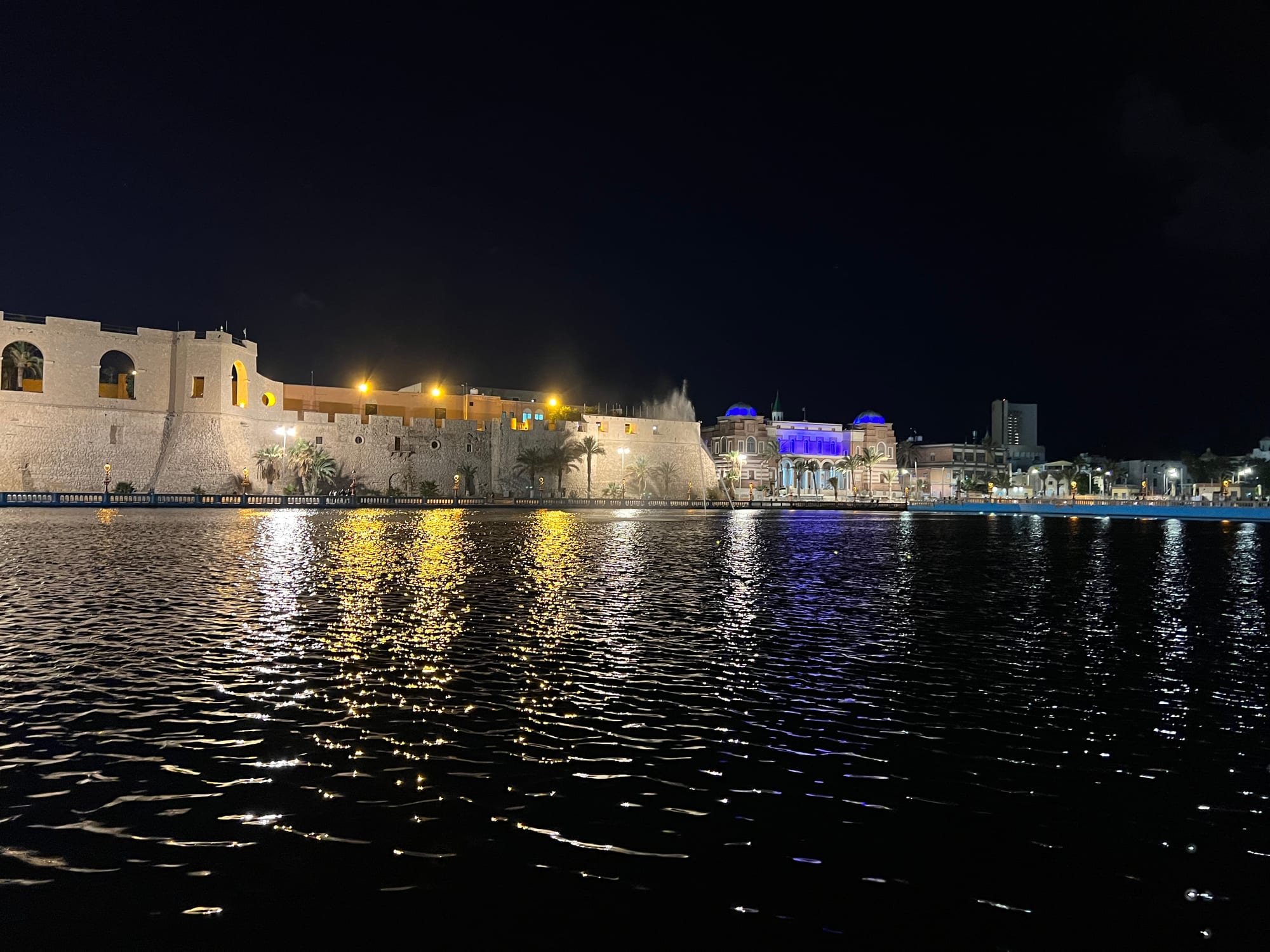
Tripoli, the capital, has a walled Ottoman-era medina of narrow lanes, mosques, and souks, anchored by the Red Castle — a fortress with Roman-era remains, much of it built under Aragonese rule and the Knights Hospitaller and later the Ottoman governors' residence, which has housed the Red Castle Museum since 1919. Near the medina's north-eastern entrance stands the marble Arch of Marcus Aurelius, a Roman triumphal arch erected in AD 165.
The capital has been a centre of factional fighting at various points since 2011.
4. Ghadamès
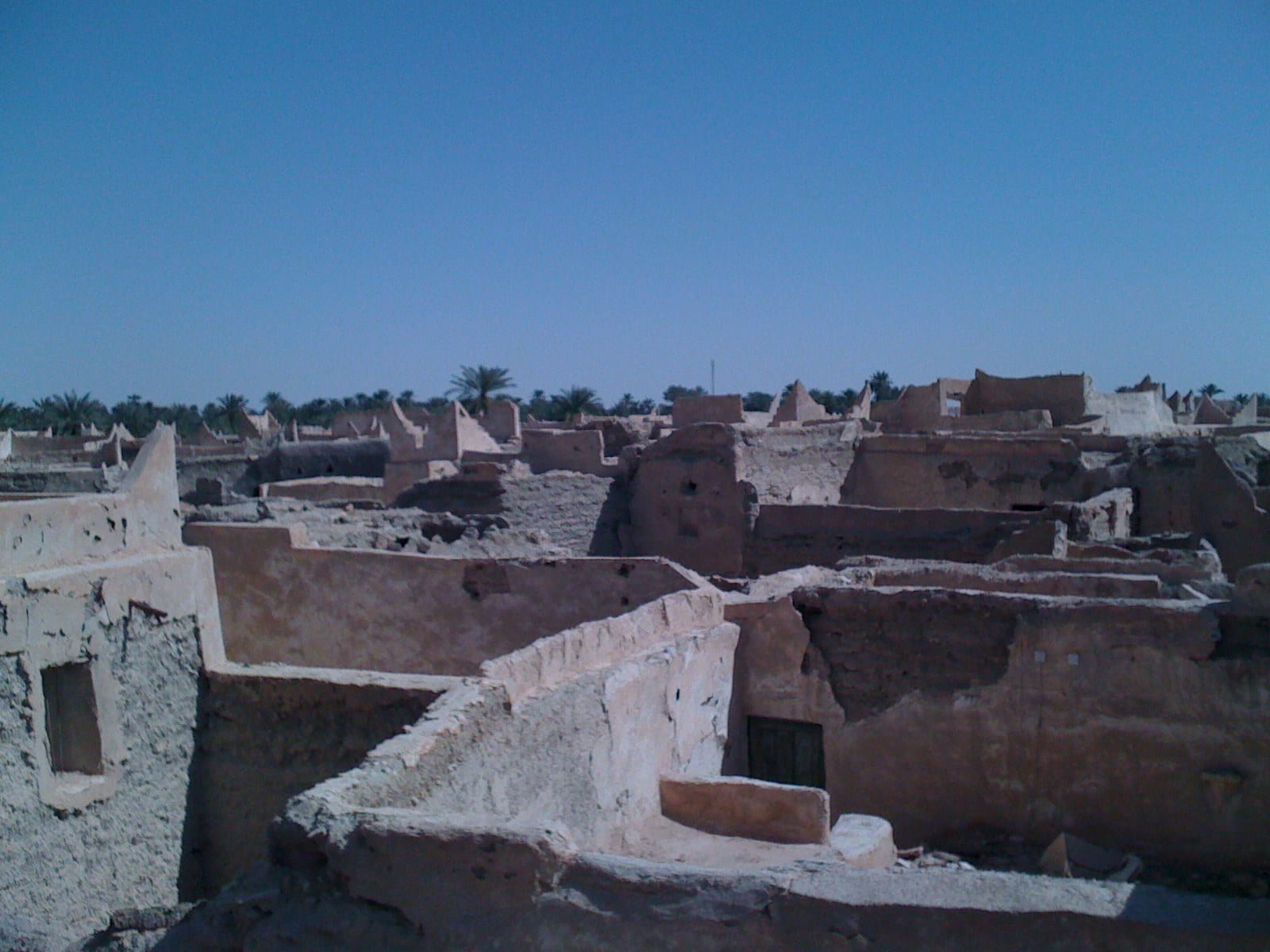
Ghadamès, "the pearl of the desert", is an ancient Saharan oasis town built almost entirely of covered, interconnecting mud-brick passages designed for the extreme heat, with open-air rooftop terraces traditionally reserved for women above the shaded, covered lanes below. Its walled old town, inscribed as a UNESCO World Heritage Site in 1986, was emptied of its residents during the 1990s; after restoration work it was taken off the List of World Heritage in Danger in 2025.
5. Cyrene
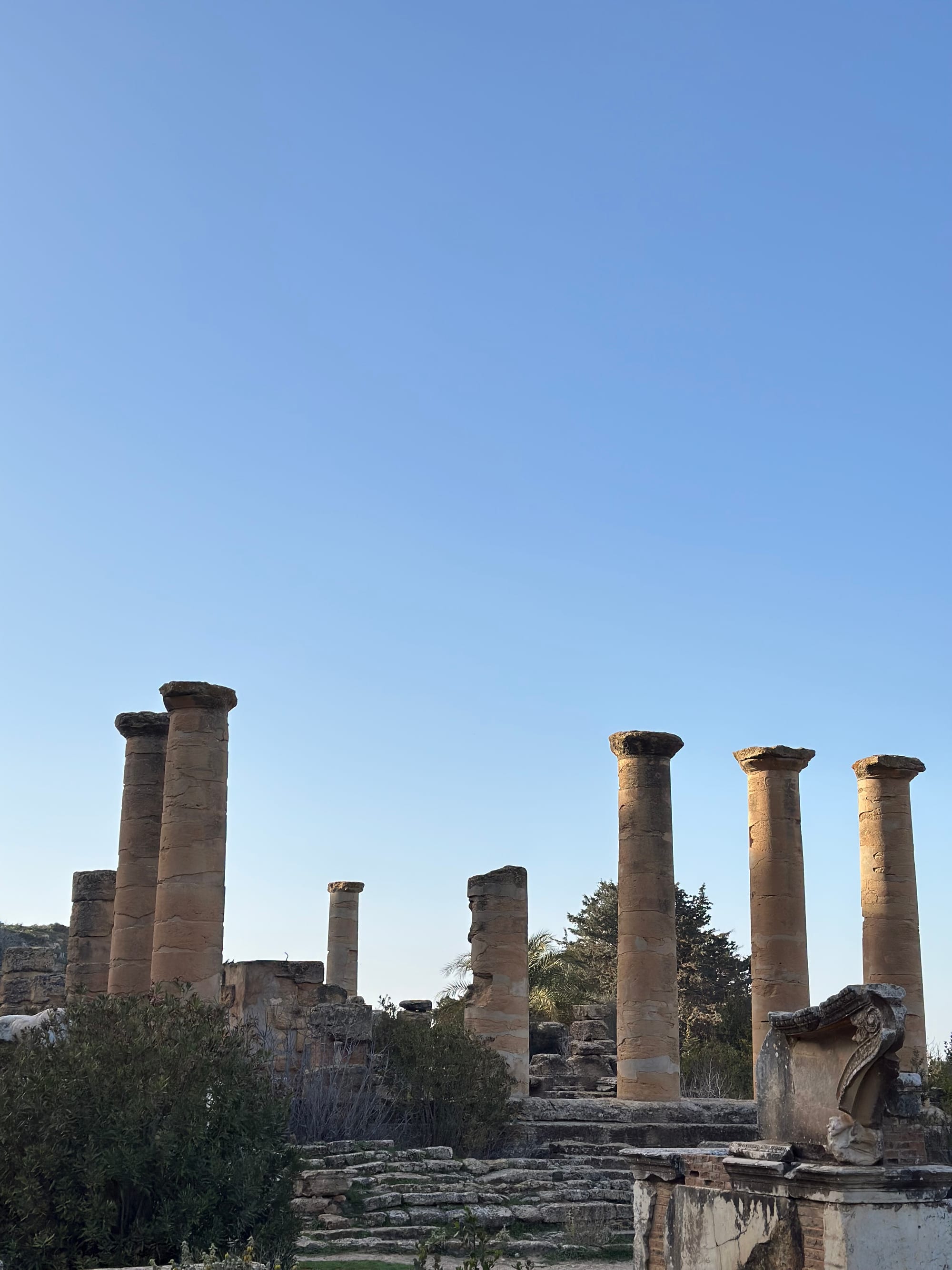
Cyrene, in the green hills of Cyrenaica near modern Shahhat, was the chief city of ancient Greek settlement in Libya and, under Rome, the leading city of Cyrenaica — its Temple of Zeus was roughly the size of the Parthenon, and its necropolis, agora, and gymnasium survive across a large, dramatically sited hillside site. It was inscribed as a UNESCO World Heritage Site in 1982 and is on the List of World Heritage in Danger; the modern town of Shahhat has spread over much of its southern necropolis.
6. The Tadrart Acacus
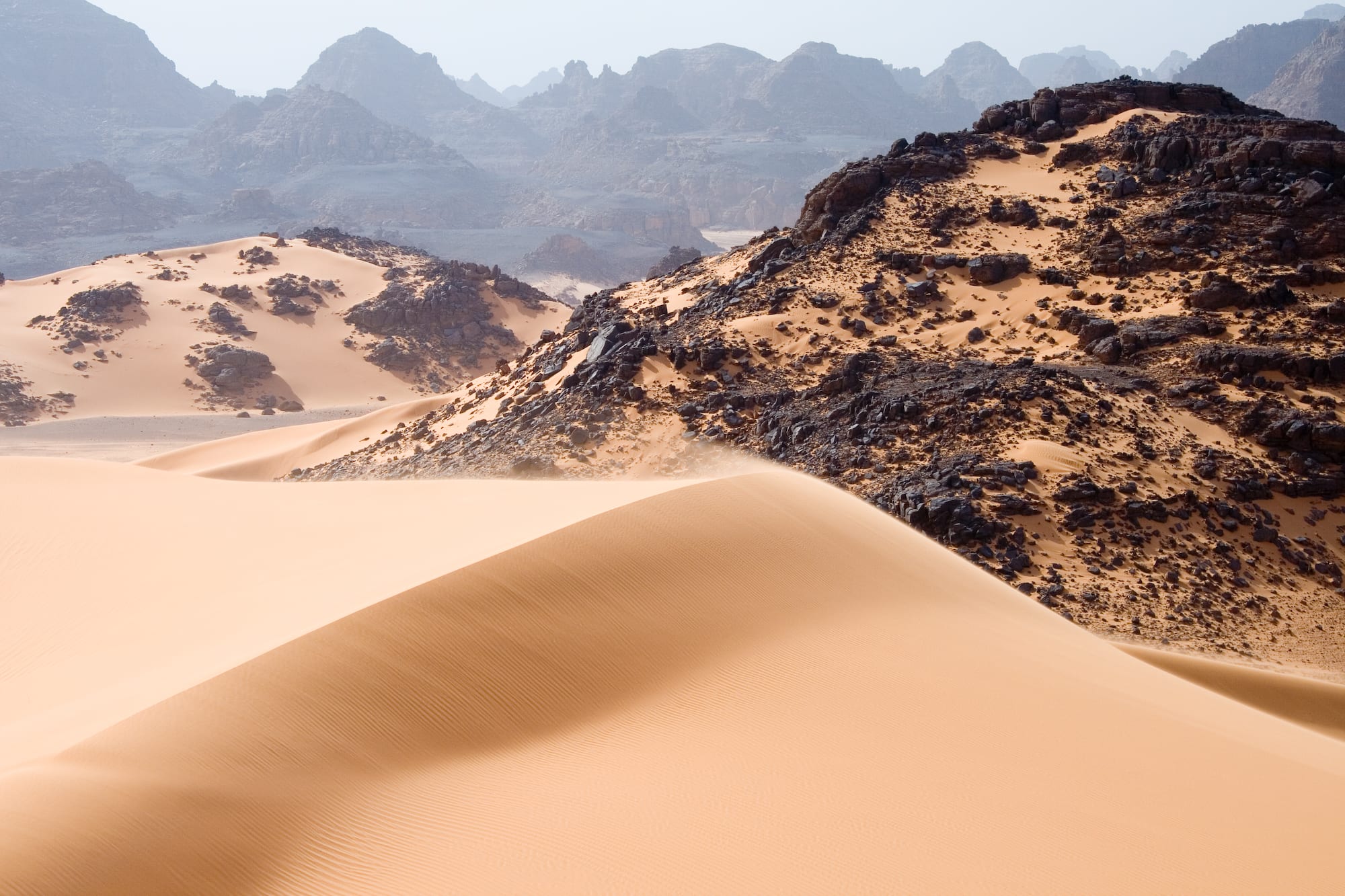
Deep in the south-western Sahara, east of Ghat and along the Algerian border, the Tadrart Acacus mountains hold one of the richest concentrations of prehistoric rock art in the world — paintings and carvings dating from about 12,000 BC to AD 100, showing giraffes, elephants and ostriches from the desert's wetter past through to horses and camels. It was inscribed as a UNESCO World Heritage Site in 1985 and has been on the List of World Heritage in Danger since 2016; some of its rock-art sites have been deliberately vandalised.
7. Benghazi
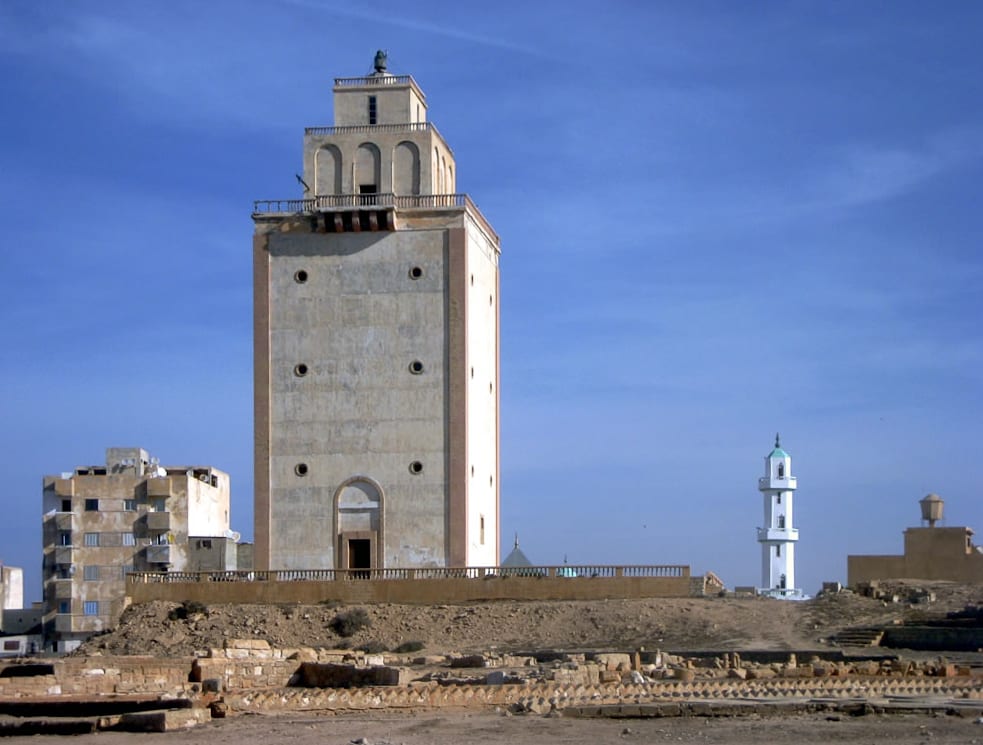
Benghazi, Libya's second city and the main city of the east, has Italian colonial architecture, including a disused twin-domed cathedral, an Italian lighthouse beside the remains of ancient Berenice, and old souks. Its centre was heavily damaged in the 2014–2017 battle for the city against Islamist militants, and rebuilding since has included the controversial razing of part of the historic centre in 2023. It is the gateway to Cyrene and the eastern archaeological sites.
Before you go: a serious note
Libya has had no stable, unified government since 2011, and armed conflict between rival administrations, militias, and, at times, extremist groups has continued in various forms since. At the time of writing, most governments advise against all travel to Libya, citing the risk of armed conflict, kidnapping, terrorism, landmines and unexploded ordnance, and the absence of reliable consular support. Some archaeological sites have also suffered damage or looting amid the instability, and four of the five World Heritage Sites remain on UNESCO's List of World Heritage in Danger.
This article describes what makes Libya's sites significant, for readers following the country or planning far ahead, not as a travel recommendation. Anyone actually considering a visit should treat current government advisories as decisive and understand that the security situation can change abruptly and that assistance if something goes wrong may be very limited.