History · Libya
Why does Libya have some of the best-preserved Roman ruins in the Mediterranean?
An emperor born in Leptis Magna lavished his home town with monuments, and after the city was abandoned, desert sand kept them safe for centuries.
By Globeway Editorial · 2 November 2026
The short answer
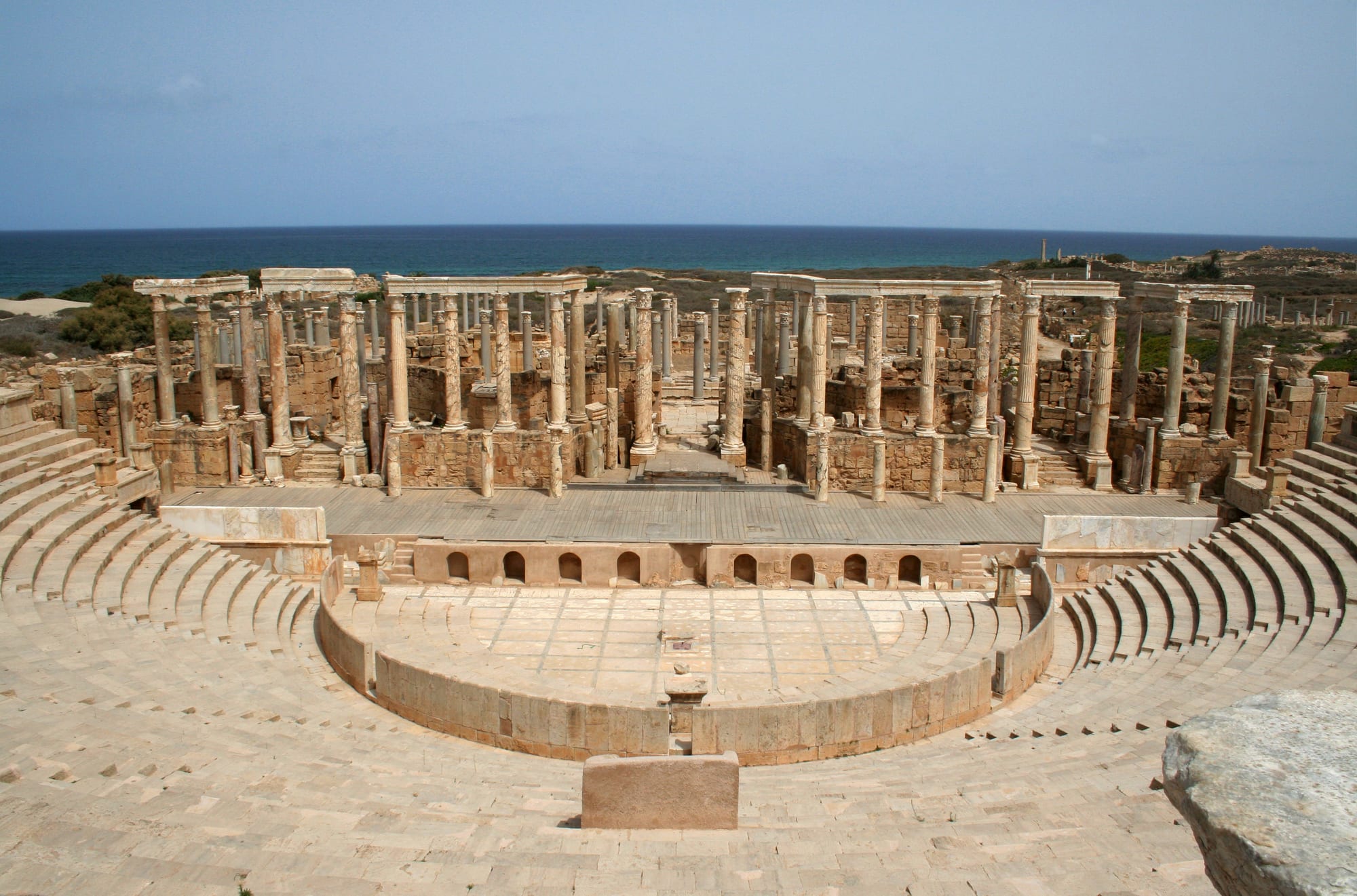
Libya's coast holds some of the finest Roman ruins anywhere for two reasons: wealth and abandonment. The cities of Tripolitania, in the north-west, grew rich on olive oil and trade across the Sahara, and one of them, Leptis Magna, was the birthplace of the emperor Septimius Severus, who lavished it with new monuments around AD 200. Then, as trade shifted and the region declined, the cities emptied, and Leptis lay buried beneath sand dunes for centuries. Italian archaeologists uncovered it in the 1920s and 1930s, and its ruins are among the best-preserved Roman sites in the Mediterranean.
Whether they are "grander than most in Italy" is a judgement rather than a measurable fact. What can be said is that few Roman cities survive as completely as Leptis Magna, and that it was one of the leading cities of Roman Africa at its height. In Libya, a single, short-lived burst of imperial money was frozen in place by the desert.
Three cities and a sea of olive oil
The region's name says where the story begins. Tripolitania comes from the Greek Tripolis, "three cities": Oea, Sabratha and Leptis Magna, all founded by Phoenicians. Leptis was a Punic settlement from the 7th century BC, and like the others it became part of the Carthaginian world before falling under Rome after Carthage's defeat. Under Augustus, Leptis was a free community with very little interference from the Roman governor.
The source of the region's wealth lay in its farmland. Leptis depended on the fertile country around it, where many olive presses have been excavated, and by 46 BC it could pay Julius Caesar three million pounds of olive oil a year in tax. The city also prospered from trade with the interior, handling ivory, gold dust, ebony, ostrich feathers and wild animals bound for the arenas of the empire. Under Rome it gained an amphitheatre in Nero's reign, and Trajan raised it to the rank of colonia.
An emperor's gift to his home town
Septimius Severus was born at Leptis Magna on 11 April 145, into a wealthy family of Libyan-Punic descent on his father's side and Italian descent on his mother's. He grew up speaking Punic, and he spoke Latin and Greek with a slight accent. When he became emperor in 193 he was the first ruler born not only in the provinces but into a provincial family of non-Italian origin.
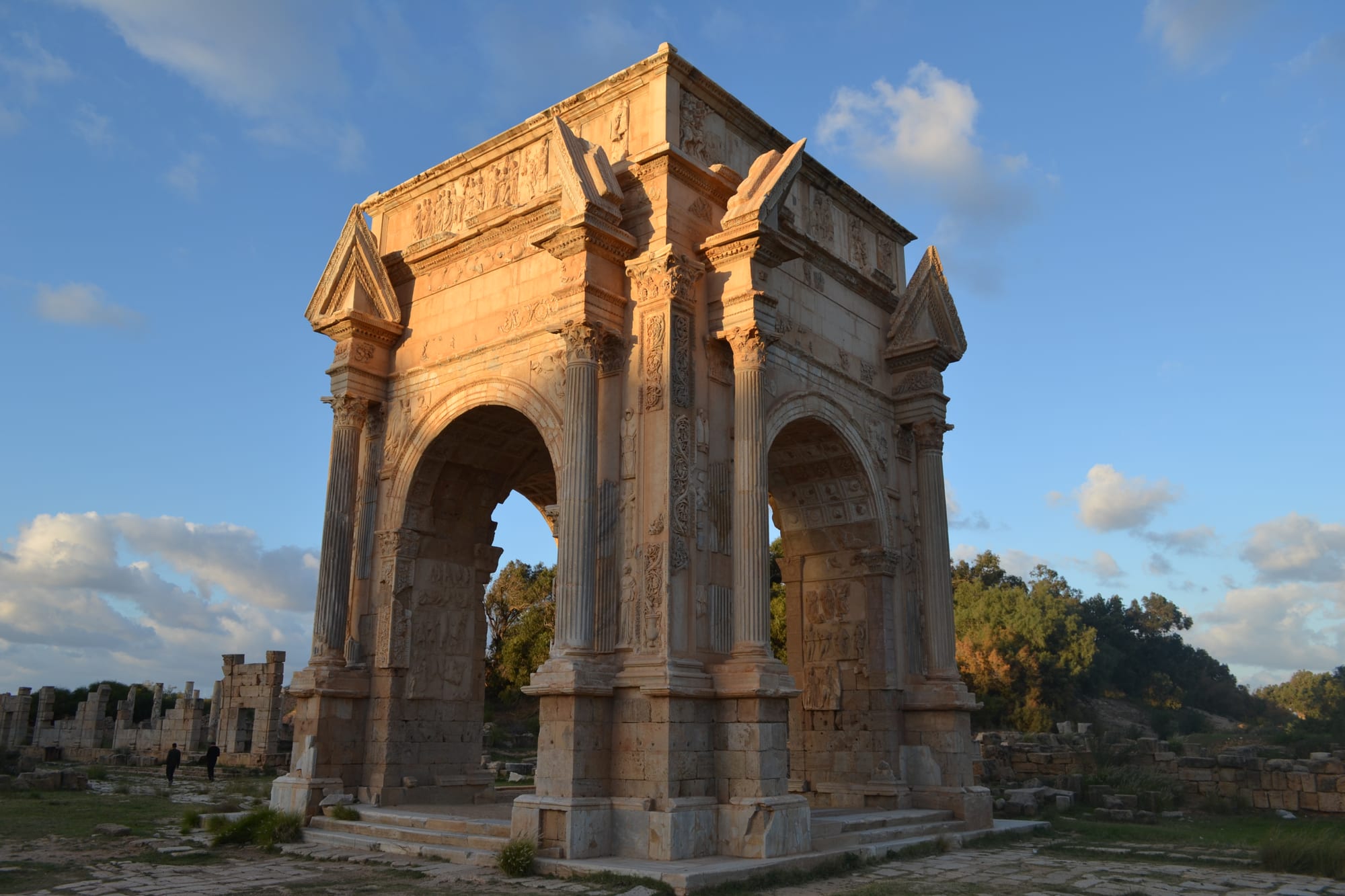
The arch fell into ruin in the 5th century and was pieced back together by archaeologists, a method called anastylosis.
Severus favoured his home town above every other provincial city. He gave it a magnificent new forum, a massive basilica, a rebuilt harbour and a triumphal arch, and he visited with the imperial family in 205. He granted it the ius Italicum, the legal fiction that the city stood on Italian soil, which freed its land from tax and was the highest liberty a provincial city could obtain. In the early 3rd century Leptis reached its greatest splendour, with about 100,000 inhabitants, and it was the third-largest port in the Mediterranean.
Nearby Sabratha shared in the boom. It reached its monumental peak under the Severan dynasty, growing to nearly twice its earlier size, and its theatre still keeps its three-storey stage backdrop.
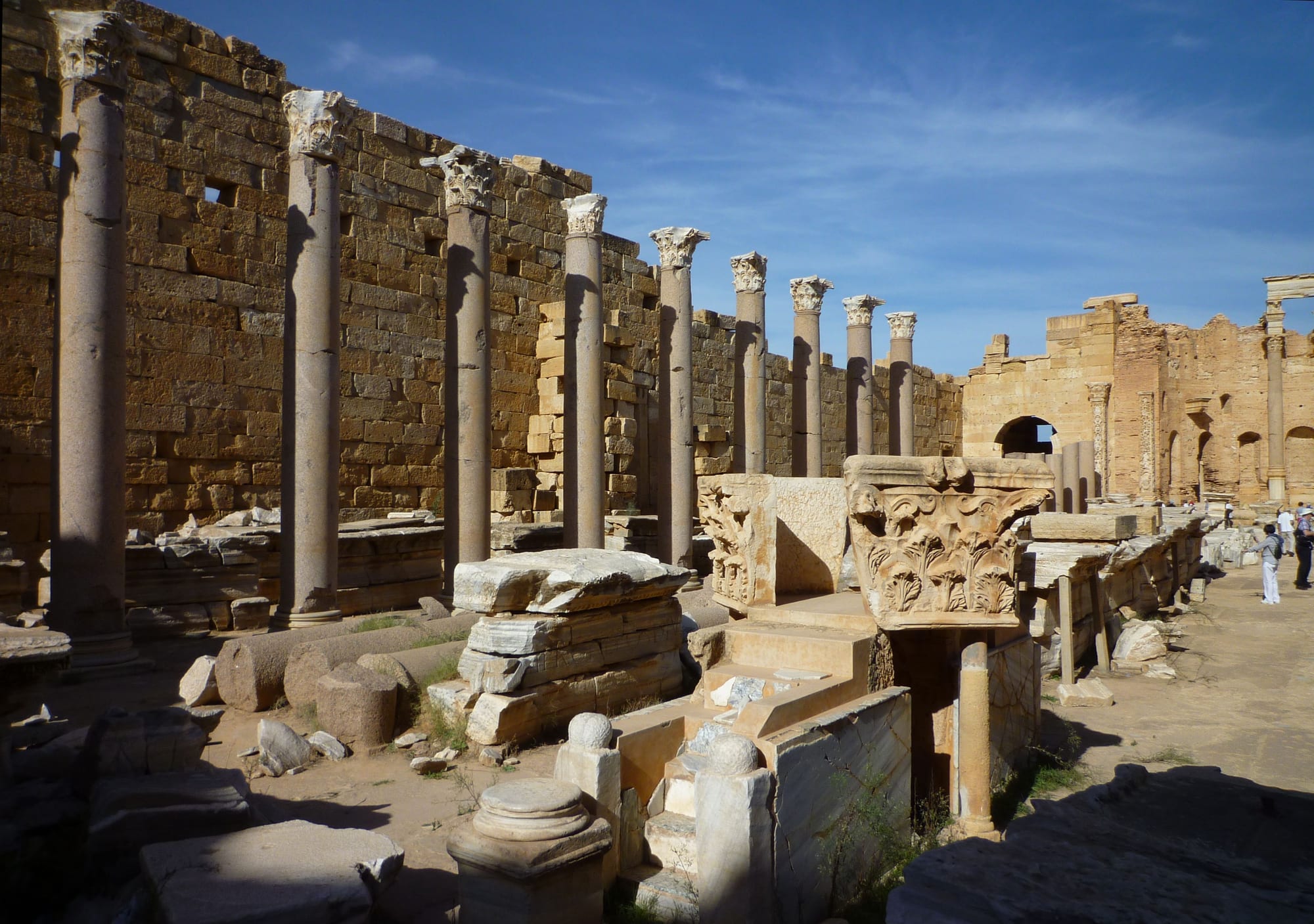
The basilica was one of the great public buildings Severus added to his birthplace.
Decline, abandonment and the sand
The splendour did not last. Leptis had overextended itself, and when trade collapsed in the crisis of the 3rd century its importance fell too. A tsunami in 365 devastated the city, by which time large parts of it had already been abandoned; earthquakes that century also badly damaged Sabratha. In 439 the Vandals took the region, and their king ordered the walls of Leptis demolished, leaving it open to Berber raids. The Byzantine Empire won it back in 533, but the city never recovered. By the Arab conquest around 647 fewer than 1,000 people lived there, and it was later abandoned.
Abandonment is what saved it. Of the three cities, only Oea survived antiquity, becoming modern Tripoli. Leptis Magna and Sabratha were left behind, and Leptis was buried under layers of sand dunes that protected its stones. Its Hunting Baths, built under Severus, have survived in a remarkable state because the sand covered them for much of their history.
Dug out by Italy
The ruins came back to light through another empire. Italy colonised Libya from 1911, and Italian archaeologists put huge effort into rediscovering Leptis Magna. Excavations under Renato Bartoccini began in the mid-1920s, and by the early 1930s nearly the whole city had been uncovered. Sabratha was excavated mainly by Italian teams from 1921, and later by a British team led by Kathleen Kenyon and John Ward-Perkins between 1948 and 1951. Finds still emerge: in 2005 it was revealed that mosaics found at a Roman villa near Leptis included a gladiator scene compared in quality with the Alexander Mosaic from Pompeii.
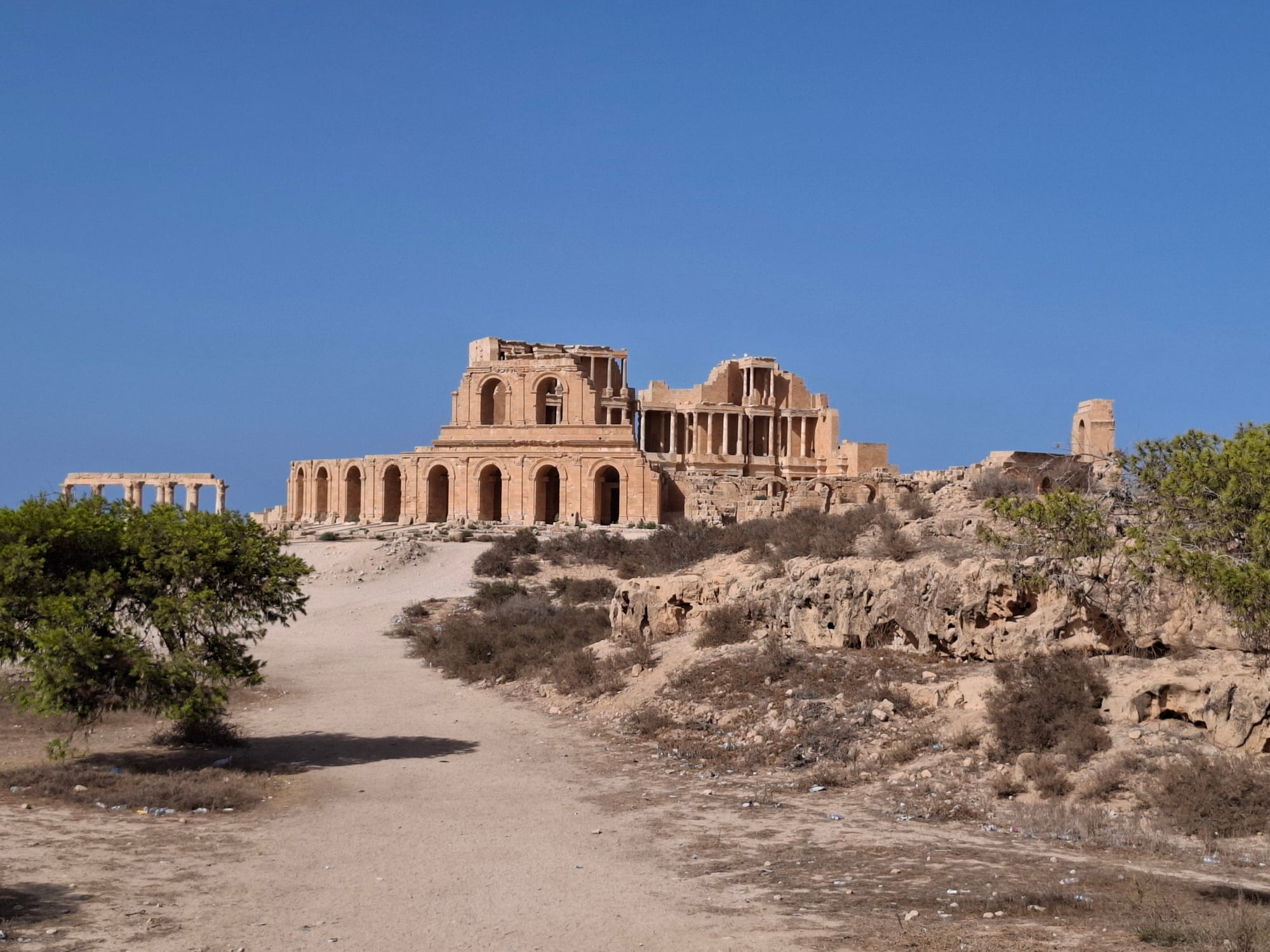
The Sabratha theatre was once considered as a venue for the Beatles' final live concert; they played on a London rooftop instead.
The ruins today
Leptis Magna stands near Al-Khums, about 130 kilometres east of Tripoli, and Sabratha about 70 kilometres west of it. Both are UNESCO World Heritage Sites, and both are among the Libyan sites placed on the List of World Heritage in Danger in 2016. Libya has been divided between rival governments and militias since 2011, and most governments advise against travel there. Shortly after the 2011 war a Libyan archaeologist reported no visible damage at Leptis Magna or Sabratha, and during later fighting local people organised themselves to protect and maintain Leptis Magna. The longer-term threat is the sea: Sabratha is suffering coastal erosion, and Leptis is vulnerable to rising sea levels.