Food · Luxembourg
Luxembourg: Food and the National Dish
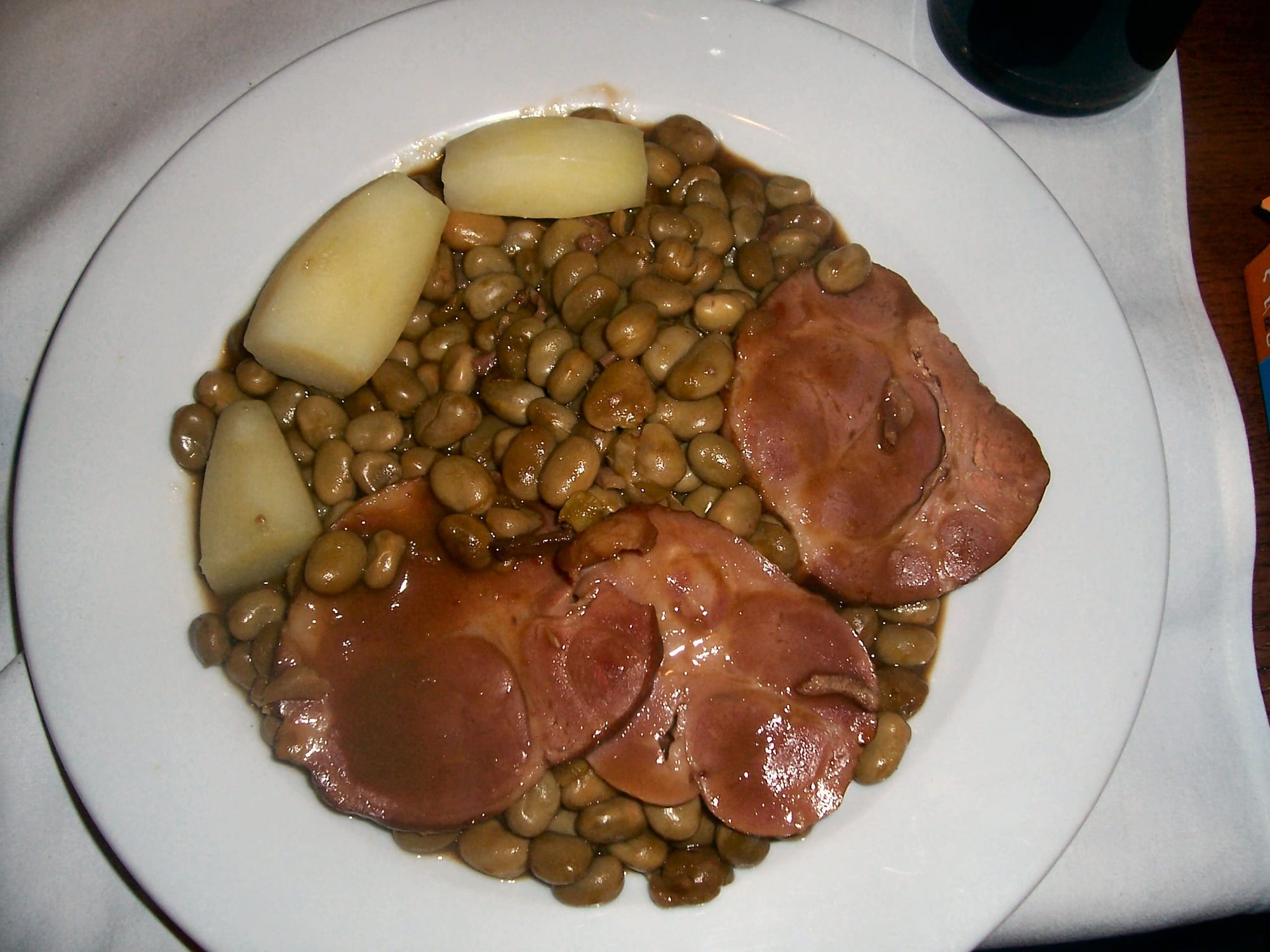
Smoked pork collar and broad beans from a small country wedged between France, Germany and Belgium, whose food quietly draws from all three
By Worldlore Editorial · 30 September 2026
A small country's food, drawn from three neighbours
Luxembourg sits wedged between France, Germany and Belgium, and its food reflects all three without fully belonging to any one of them: French technique, German heartiness, and Belgian-style beer and brasserie culture all show up on the Luxembourgish table, blended into something genuinely its own.
The national dish: Judd mat Gaardebounen
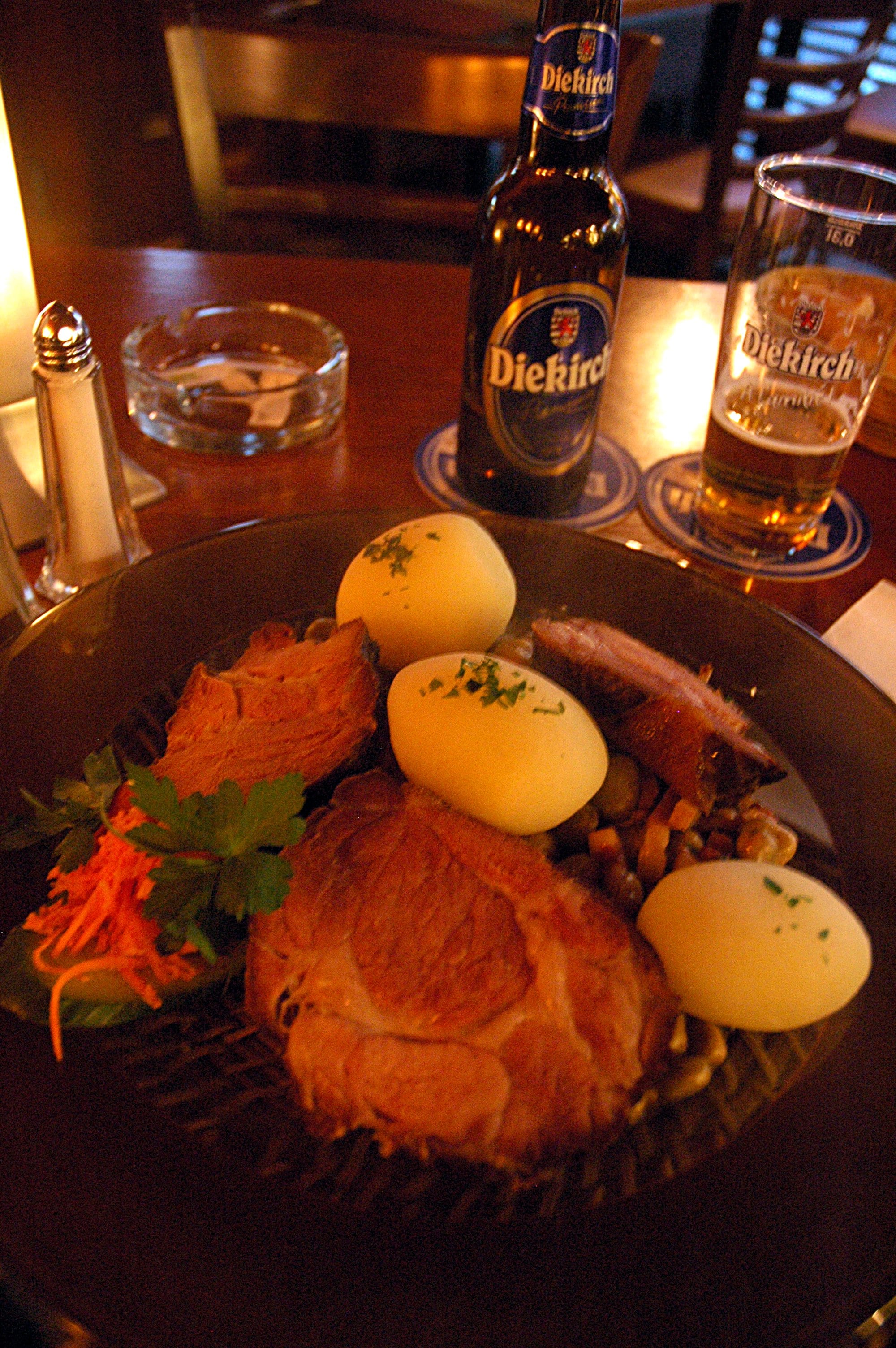
Judd mat Gaardebounen, smoked pork collar served with broad beans and boiled potatoes, is widely regarded as Luxembourg's national dish. The cured or smoked pork is cooked with leeks, carrots, celery and cloves, then sliced and laid on a large plate beside beans in a sauce of onion, butter and meat stock, with wine or beer to drink.
Pork, potatoes and a genuinely blended pantry
Pork, potatoes and broad beans anchor much of Luxembourg's traditional cooking, alongside French-influenced sauces and pastry and German-style sausages and dumplings. That blending is less a modern fusion trend than a genuinely old pattern, reflecting centuries of Luxembourg's position between larger neighbours whose cooking styles simply mixed together over time.
History behind the dish
Luxembourg's food history is inseparable from its geography: a small country that has passed repeatedly between larger European powers through its history, absorbing culinary habits from both rather than developing an isolated cuisine of its own. The Moselle river valley in the country's east has supported winemaking since Roman times, giving Luxembourg its own small but genuine wine industry distinct from its larger neighbours'.
Dishes to know
Five more to recognise across Luxembourg:
- Kachkéis — a soft cheese spread, also known as cancoillotte,
Luxembourg's cheese speciality.
- Bouneschlupp — a green bean soup, a classic everyday dish.
- Gromperekichelcher — spiced potato pancakes with chopped onion and
parsley, deep-fried, a popular snack.
- Quetschentaart — a plum tart, especially popular in late summer when
local plums are in season.
- Träipen — a Luxembourgish black pudding, served with apple sauce.
Drinks
Wine from the Moselle valley in eastern Luxembourg, particularly Riesling and Pinot varieties, is a genuine point of national pride despite the country's small size. Crémant de Luxembourg, a sparkling wine, is made there too, and beer from brands such as Bofferding, Mousel, Diekirch and Simon is widely drunk.
Eating as a traveller
Vegetarians will find potato dishes, cheese and bean soups manageable, though pork is central to much traditional Luxembourgish cooking including the national dish itself. Tap water is safe throughout the country. Trying Judd mat Gaardebounen at a traditional restaurant in Luxembourg City is the most straightforward way to taste the national dish.
What to take from the table
Judd mat Gaardebounen, smoky and hearty, is the dish that best represents Luxembourg's food identity — a genuine blend of its French and German neighbours, made distinctly its own.