History · Moldova
Moldova: The Borderland of Bessarabia
The eastern half of a Romanian principality, taken by Russia in 1812 — a Soviet republic, an independence shadowed by a breakaway region, and a poor country now pulling hard toward Europe
By Worldlore Editorial · 30 September 2026
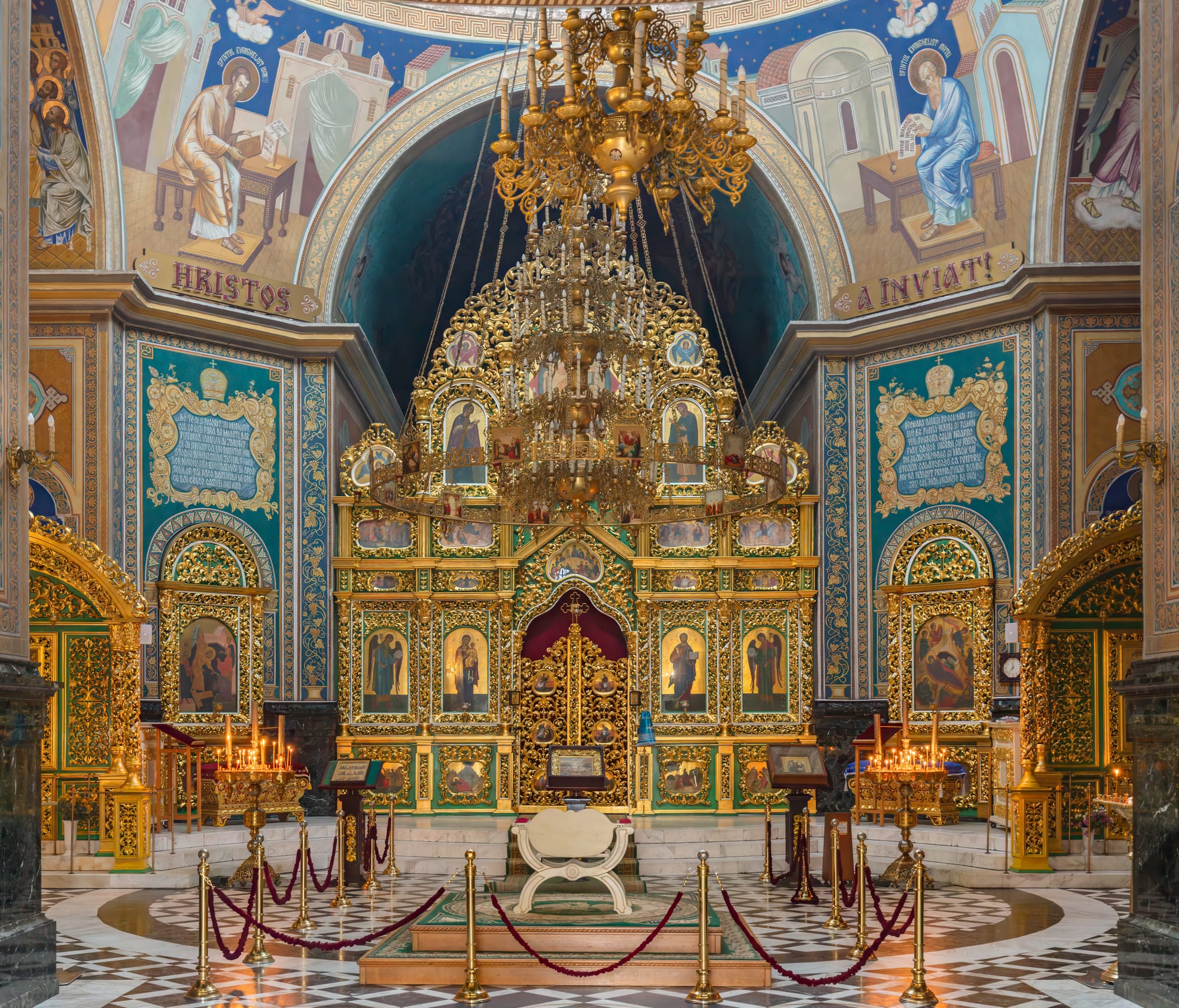
Half a country
Moldova is a landlocked country between Romania and Ukraine, about 2.5 million people, one of the poorest in Europe, and defined by a single historical fact: it is the eastern half of a country that was cut in two. The medieval principality of Moldavia stretched from the Carpathians to the Dniester; in 1812 Russia took the part between the Prut and the Dniester rivers, and for two centuries that territory — Bessarabia — has been pulled back and forth between Russia and Romania.
A short history
- c. 1359
The Principality
Moldavia forms, between the Carpathians and the Dniester.
- 1457–1504
Stephen the Great
Fights off the Ottomans, Hungarians and Poles.
- 16th–18th centuries
Ottoman vassal
Self-governing under tribute.
- 1812
Bessarabia
Russia annexes the eastern half of Moldavia.
- 1918
Union with Romania
Bessarabia joins Romania as the Russian Empire collapses.
- 1940
Soviet annexation
The Moldavian SSR is created under the Nazi–Soviet pact.
- 1991
Independence
Moldova leaves the USSR.
- 1992
The Transnistria war
Fighting on the east bank ends in a ceasefire that still holds.
- 2022
EU candidate
Moldova applies to join the EU days after Russia invades Ukraine.
Moldavia, and the Russian division
The Principality of Moldavia was one of the two Romanian states, alongside Wallachia. Its greatest ruler, Stephen the Great, held off the Ottomans and their neighbours and became a national hero on both sides of the later border.
Principality and partition
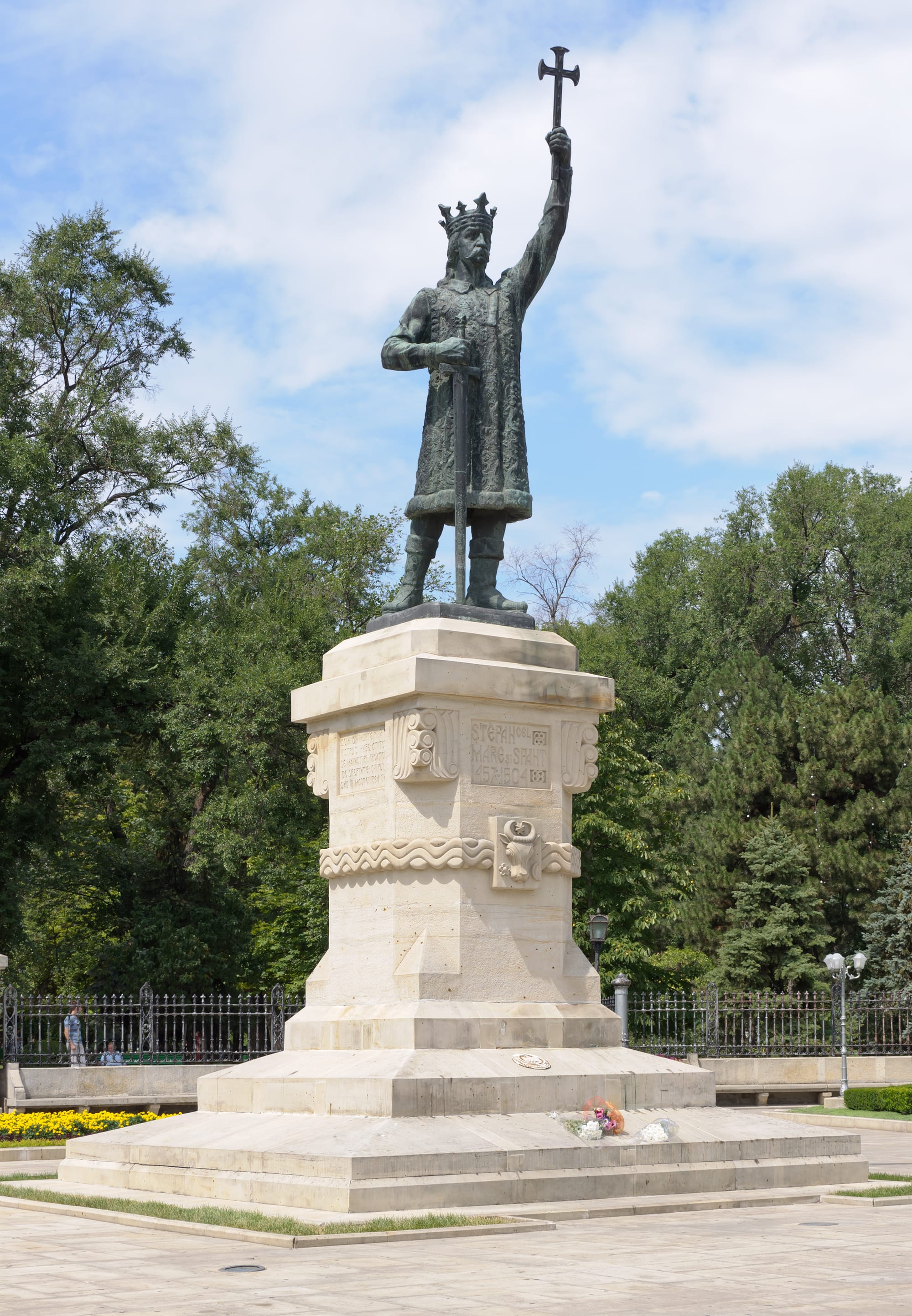
Moldavia became an Ottoman vassal, tributary but self-governing. In 1812 the Ottomans ceded Bessarabia to Russia, which colonised it with Ukrainians, Russians, Germans, Bulgarians and Gagauz, while the Romanian-speaking peasantry stayed poor and largely illiterate, and — in Chișinău in 1903 — saw a notorious anti-Jewish pogrom.
The Soviet republic
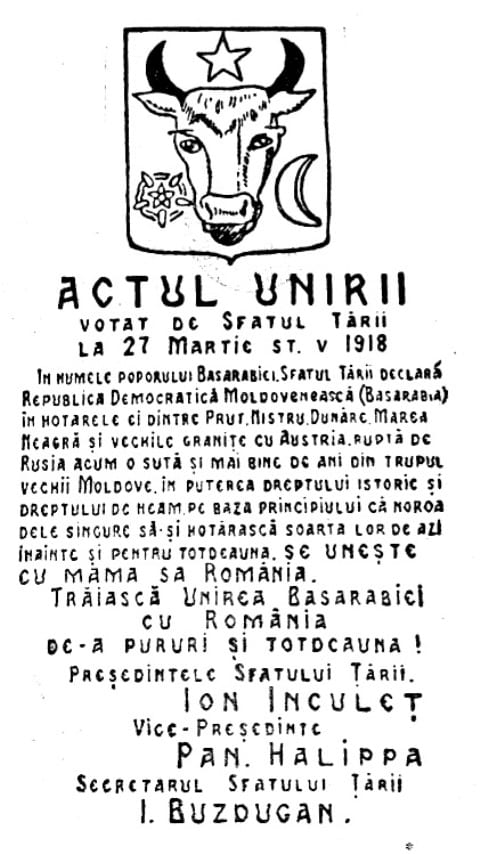
As the Russian Empire fell, Bessarabia declared independence and then voted to unite with Romania in 1918 — a union Moscow rejected. On the Soviet side of the Dniester, the USSR carved out a small "Moldavian Autonomous Republic" within Ukraine, partly as a claim on Bessarabia. The Molotov–Ribbentrop Pact then assigned Bessarabia to the USSR, which annexed it in 1940 and created the Moldavian SSR.
Soviet rule brought mass deportations to Siberia, a catastrophic post-war famine in 1946–47, collectivisation, the writing of Romanian in Cyrillic script, and the official Soviet position that "Moldovan" was a language separate from Romanian. Industry was concentrated on the east bank of the Dniester, which drew Russian and Ukrainian workers and became the more Russified part of the republic.
Independence, and the frozen war
Moldova declared independence on 27 August 1991. The Russian-speaking, industrial east bank, fearing Romanianisation, had already proclaimed its own republic, "Transnistria", in 1990. Fighting in 1992, in which elements of the Russian 14th Army stationed there supported the separatists, ended in a ceasefire that July.
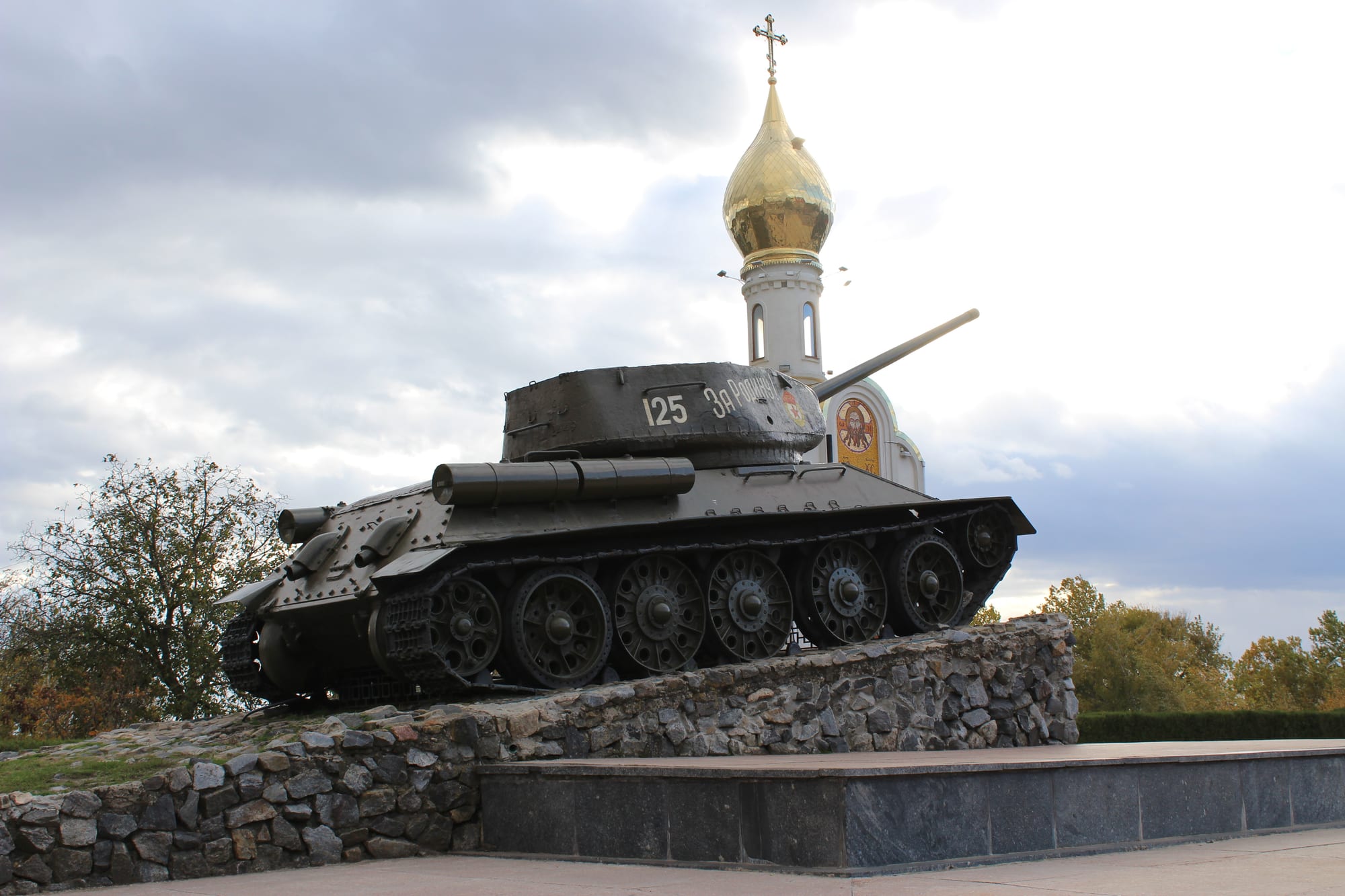
The conflict froze in place. Moldova has been unable to reintegrate Transnistria, and union with Romania — debated in the early 1990s — never happened.
The European turn
Independent Moldova has been poor and politically volatile, swinging between pro-Russian and pro-European governments, with a large share of working-age Moldovans emigrating for work. In 2014, about $1 billion — an eighth of the economy — vanished from three banks in a huge fraud that discredited the pro-European elite.
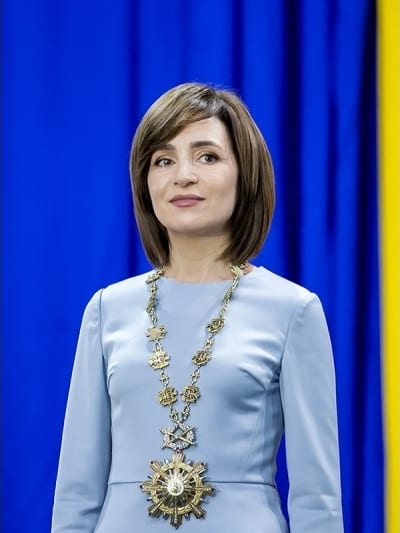
Since 2022 Moldova has been badly exposed — an energy shock when Russia cut gas, missiles crossing its airspace, a large influx of Ukrainian refugees, and a what Moldovan authorities and the EU describe as a sustained Russian campaign of funded protests and disinformation.
What Moldova carries
Moldova's whole modern history follows from the line Russia drew across Moldavia in 1812. Everything since — the union with Romania, the Soviet republic and its invented "Moldovan" identity, the breakaway of Transnistria, and the current push for the EU — has been an argument about which way this borderland faces. That argument is now, once again, being shaped from outside, with Moldova and the EU accusing Moscow of interfering.