Attractions & Natural Wonders · New Caledonia
New Caledonia: Six Attractions and Natural Wonders
One of the largest lagoons on earth, ringed by the longest continuous barrier reef in the world, a pine-covered island the French once used as a prison, and a heart-shaped mangrove made famous by aerial photography
By Worldlore Editorial · 30 September 2026
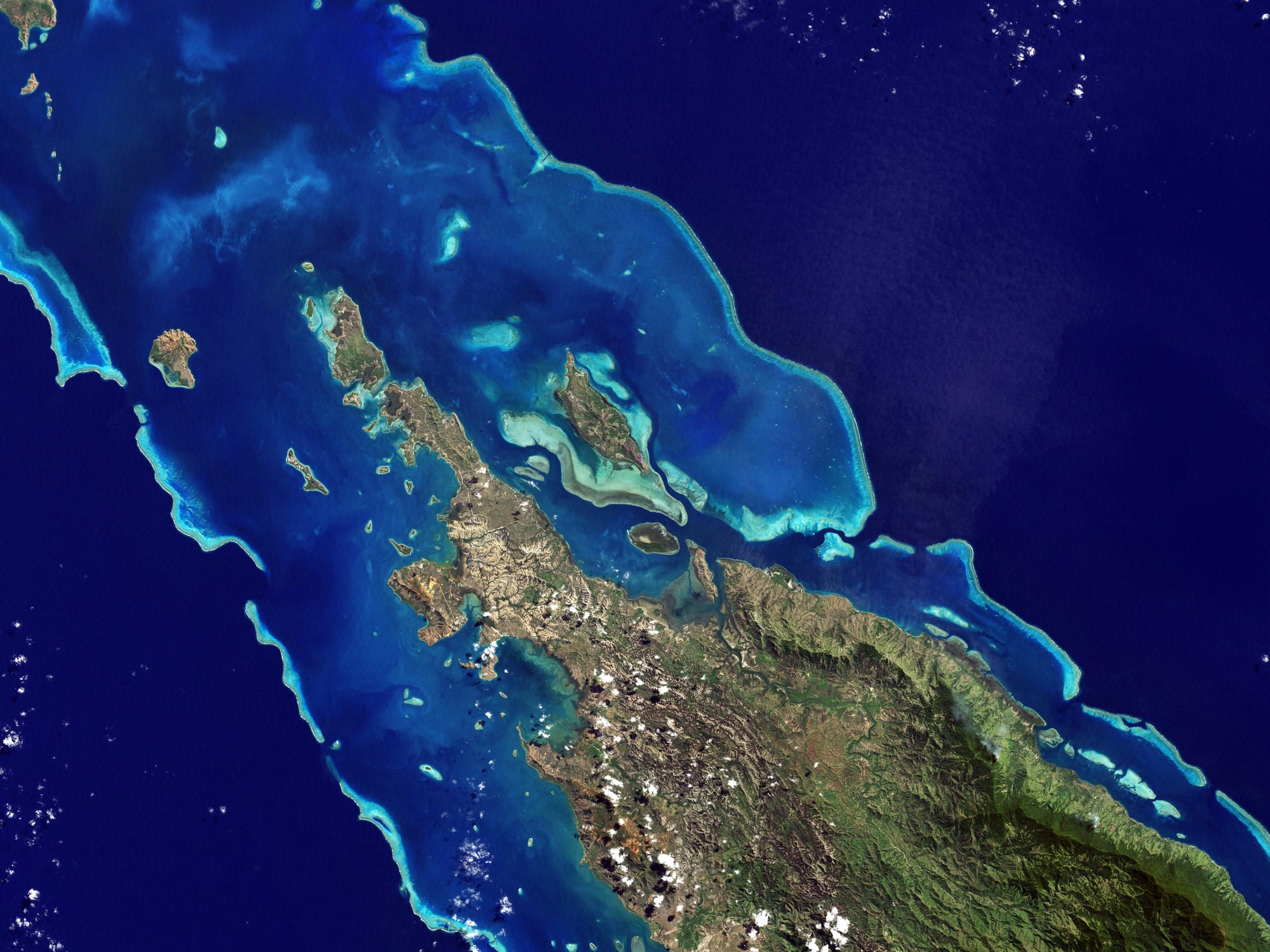
France in the South Pacific
New Caledonia is a sui generis collectivity of France in the South Pacific, east of Australia, with a population of about 265,000 that includes the indigenous Melanesian Kanak people (roughly two-fifths) alongside descendants of French settlers and other Pacific and Asian communities. It has one of the largest coral lagoons in the world, a nickel-mining economy that has shaped much of its landscape, and a long, unresolved debate over independence from France that turned violent in 2024.
The six below cluster around Nouméa and its lagoon. It is warm year-round; the cooler, drier months (May to October) are generally the most comfortable for outdoor activities.
1. The lagoon and barrier reef
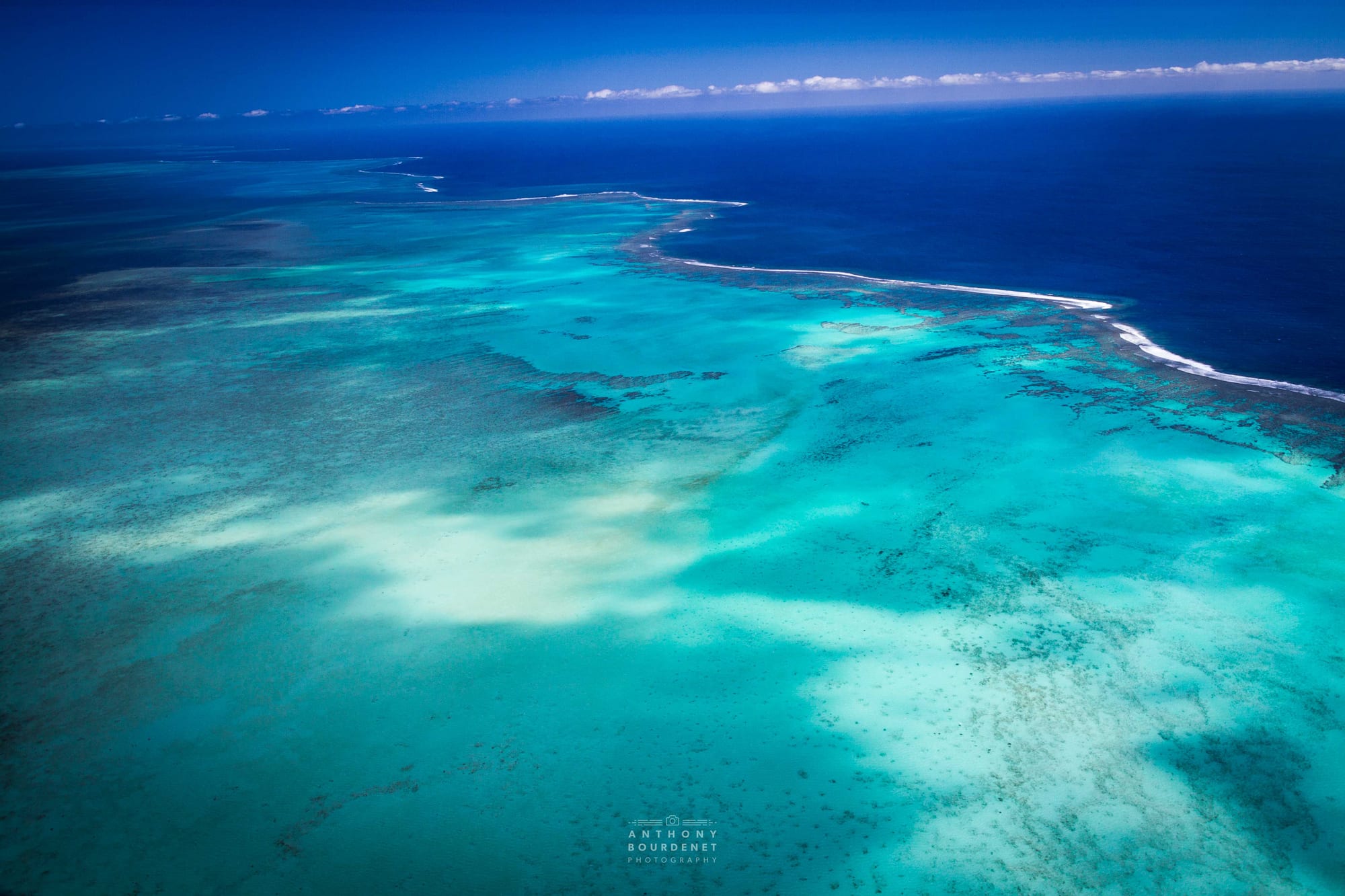
New Caledonia's lagoon, enclosed by the longest continuous barrier reef in the world (about 1,500 kilometres), covers some 24,000 square kilometres and holds an exceptional diversity of coral and fish, one of the world's largest dugong populations and important green turtle nesting sites. The reef and its lagoon were inscribed as a UNESCO World Heritage Site in 2008, recognised for their beauty, for a reef that entirely encircles the main island, and for their exceptional marine diversity.
Diving and snorkelling operators run from Nouméa and most coastal towns.
2. Amédée Lighthouse
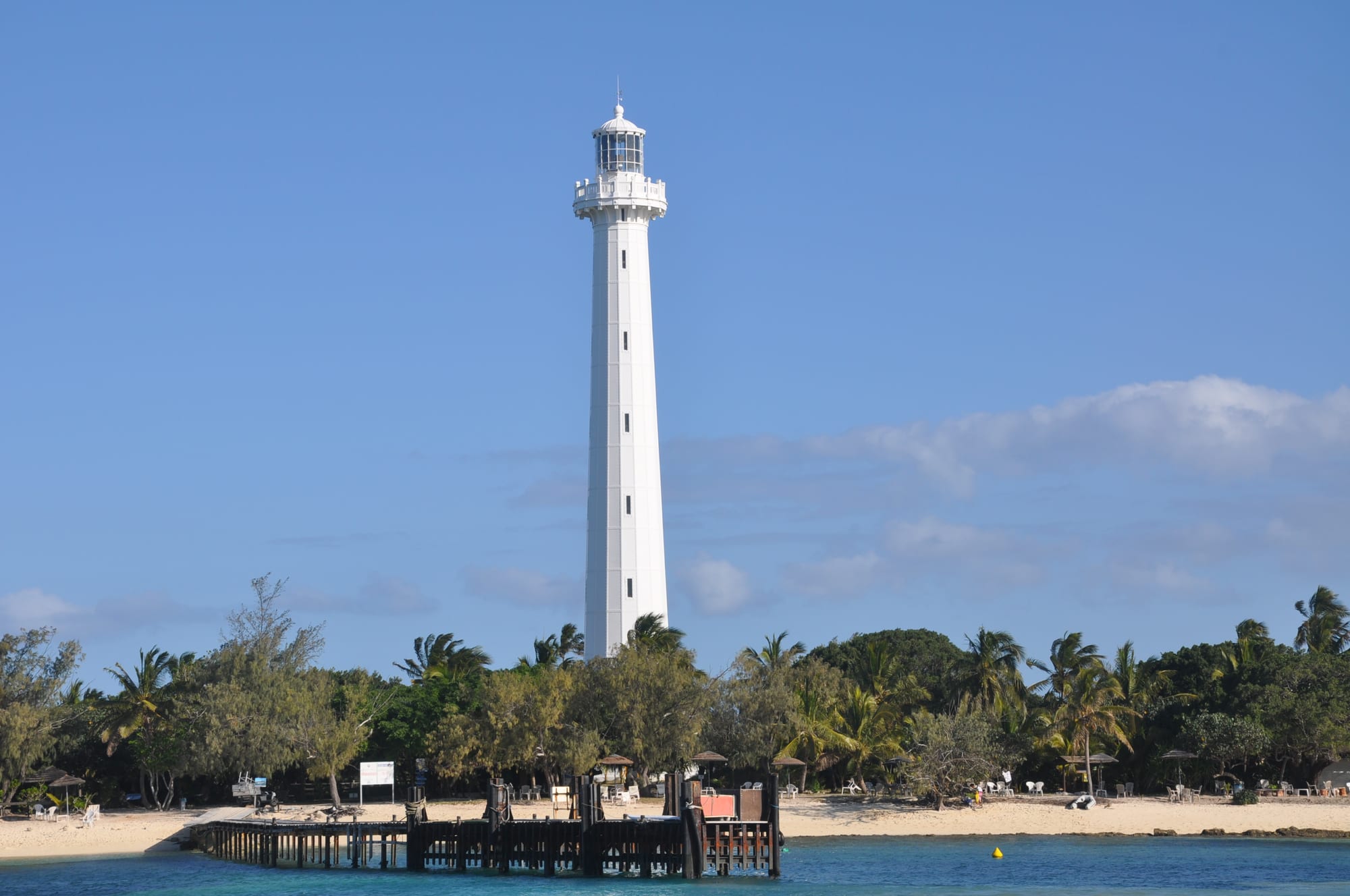
Amédée Islet, a small sand cay in the lagoon south of Nouméa, is topped by a 56-metre metal lighthouse made in Paris in 1862, shipped out in pieces and first lit in 1865 — one of the tallest lighthouses in the world and the first metal lighthouse built in France. Day-trip boats bring visitors to climb its 247 steps for a lagoon panorama and to snorkel the surrounding reef.
It is a popular day trip from the capital.
3. Nouméa
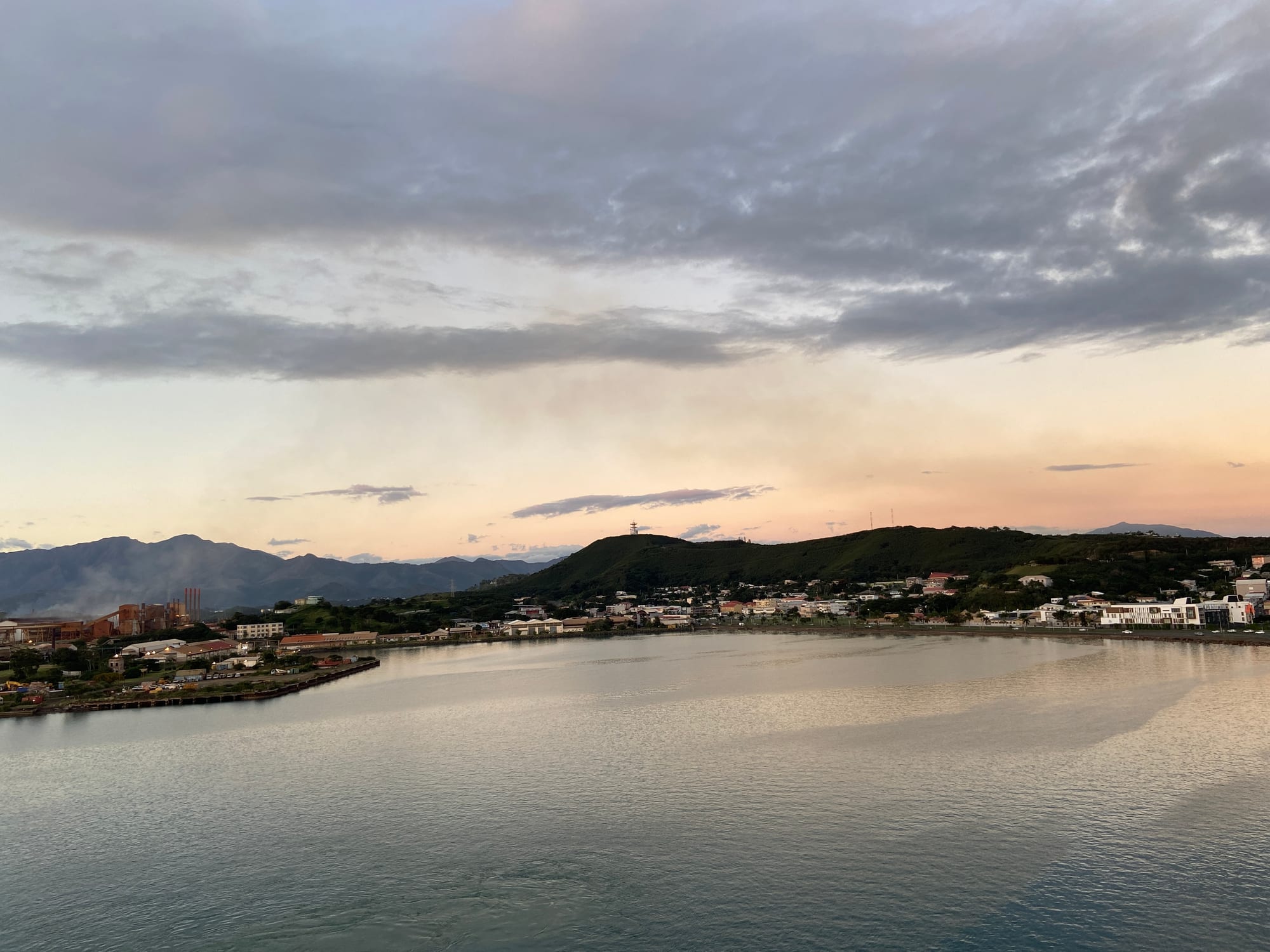
Nouméa, the capital, is a French provincial town transplanted to the tropics — a marina, baguettes and boulangeries alongside Melanesian and Pacific communities, the Tjibaou Cultural Centre (a striking building by Renzo Piano celebrating Kanak culture), and beaches like Anse Vata within the city itself. It sits on its own peninsula almost fully surrounded by the lagoon.
It is the country's only real urban centre and the base for almost every trip.
4. Île des Pins
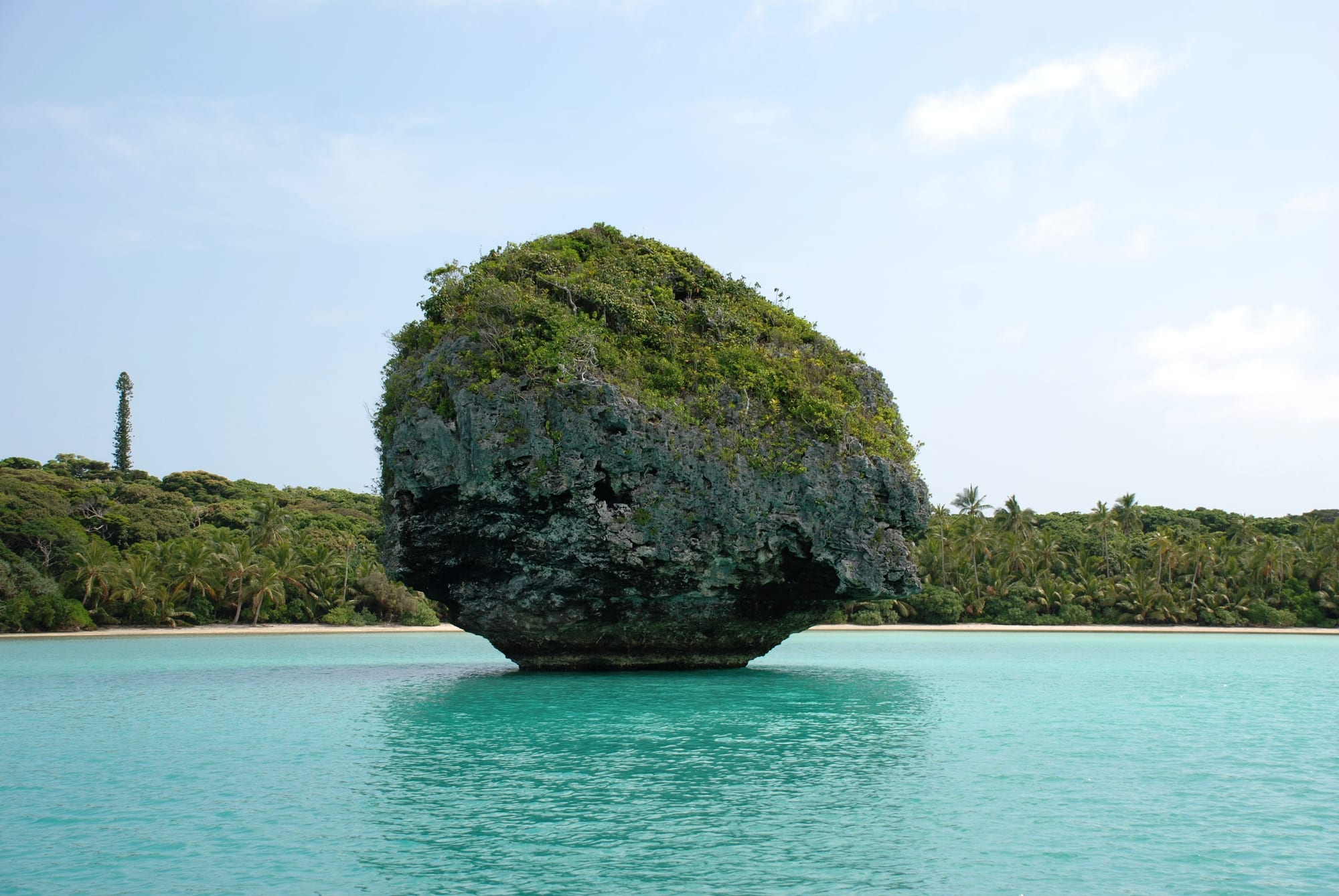
The Île des Pins, a short flight or boat trip from Nouméa, is ringed by some of the country's most striking white-sand bays — Kanuméra and Kuto among them — and named for its tall, distinctive columnar pines (Araucaria columnaris). It became a French penal colony in 1872, holding thousands of deportees from the Paris Commune, and ruins of that era remain alongside traditional Kanak tribal villages.
It is considered by many visitors the single most beautiful island in the territory.
5. Blue River Provincial Park

Blue River (Rivière Bleue) Provincial Park, in the far south of the main island, protects some 22,000 hectares of rainforest and maquis shrubland, including the striking "drowned forest" of dead standing trunks left by the Yaté Dam of 1958, and is one of the best places to see the kagu — an almost flightless, crested grey bird found only in New Caledonia and a symbol of the territory, with some 700 living in the park. Trails wind through the park.
It gives a very different landscape from the coastal lagoon and beaches elsewhere.
6. The Heart of Voh
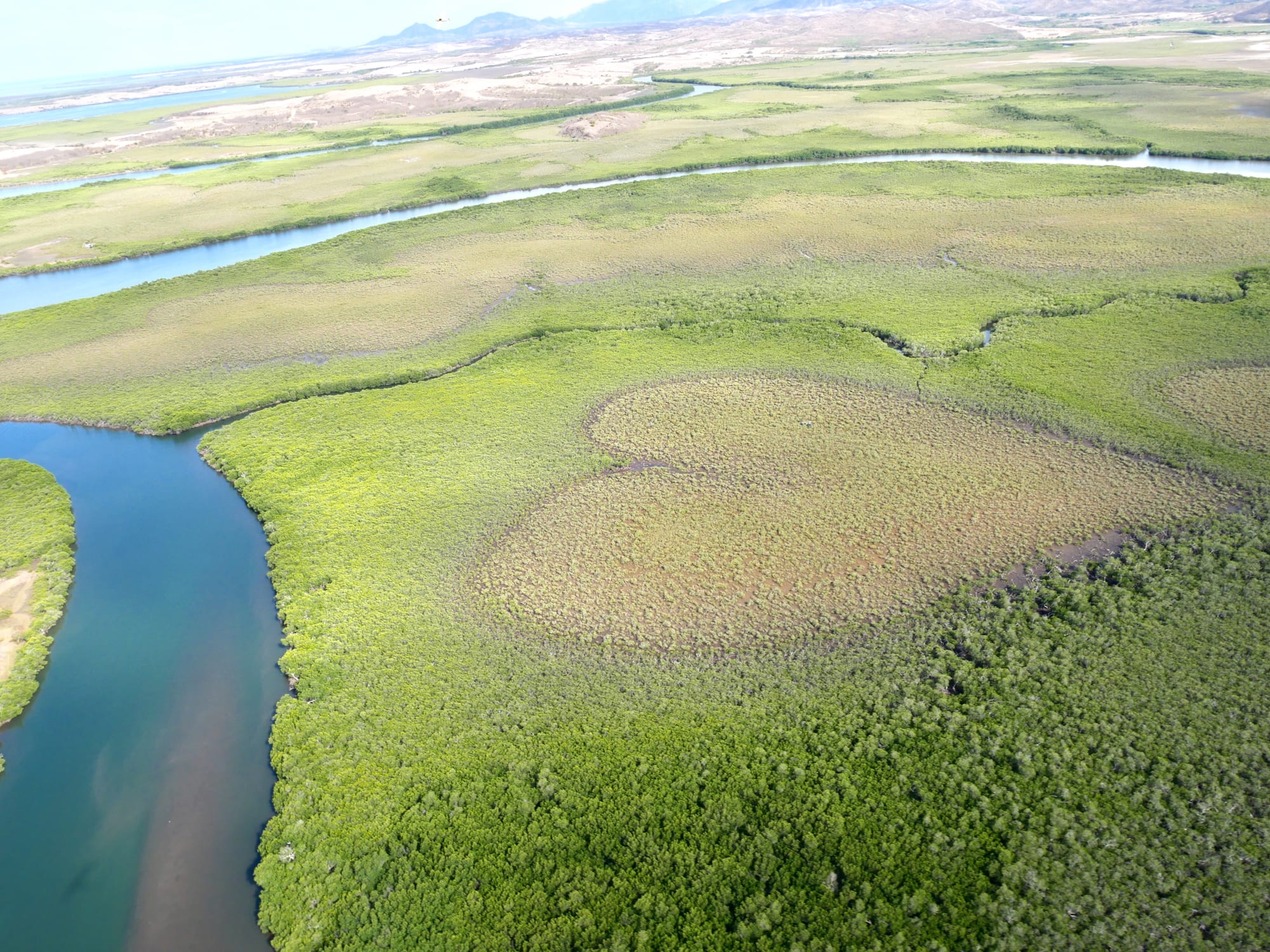
Near the town of Voh in the island's north, a natural clearing in the mangrove forms an almost perfect heart shape, made internationally famous when photographer Yann Arthus-Bertrand captured it from the air for his book Earth from Above. The full heart shape is best appreciated from the air.
It sits a long drive north of Nouméa, usually visited as part of a wider tour of the island's interior.
A practical note
New Caledonia saw serious civil unrest in 2024 over proposed electoral reforms, with rioting, at least 13 deaths, a state of emergency (16 to 28 May) and a curfew that was finally lifted in December 2024, reflecting long-running tensions over the territory's political future and relationship with France. In July 2025 France and most local parties signed the Bougival Accord, which would create a "State of New Caledonia" within France, but the referendum meant to approve it has been postponed and the underlying political question remains unresolved.
A typical visit centres on Nouméa and its lagoon for a week, with day trips to Amédée and Blue River, extended by a few days on the Île des Pins for those with more time.