Food · New Caledonia
New Caledonia: Food and the National Dish
Root vegetables, meat and coconut milk wrapped in banana leaves and cooked over hot stones, a Kanak tradition at the heart of a French Pacific territory
By Globeway Editorial · 30 September 2026
A Kanak tradition inside a French territory
New Caledonia's food reflects its dual identity as a French overseas territory built on Indigenous Kanak land: French culinary technique and imported ingredients sit alongside a genuinely older Melanesian cooking tradition centred on root vegetables, coconut and communal earth-oven cooking that long predates French colonisation.
The national dish: bougna
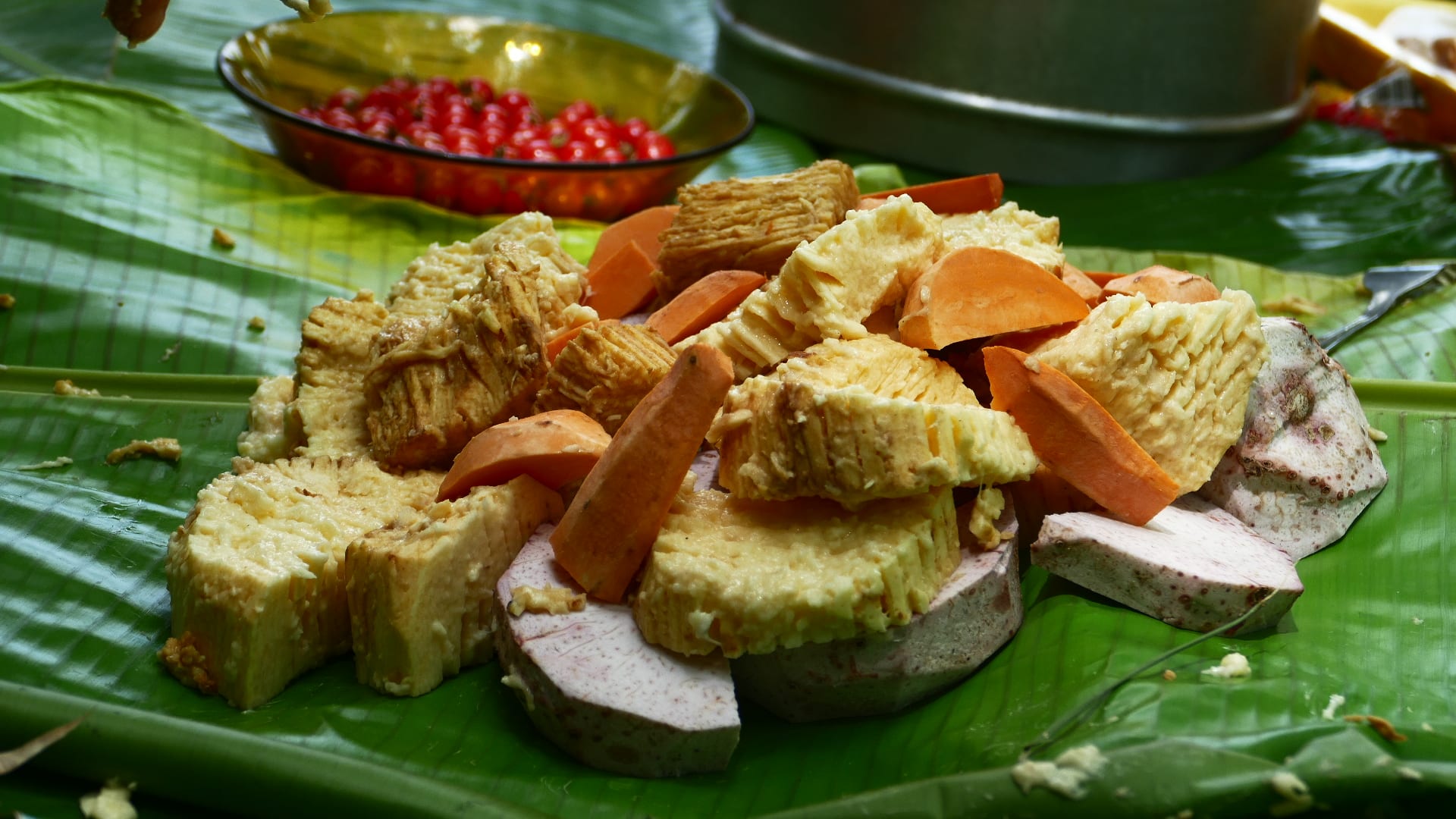
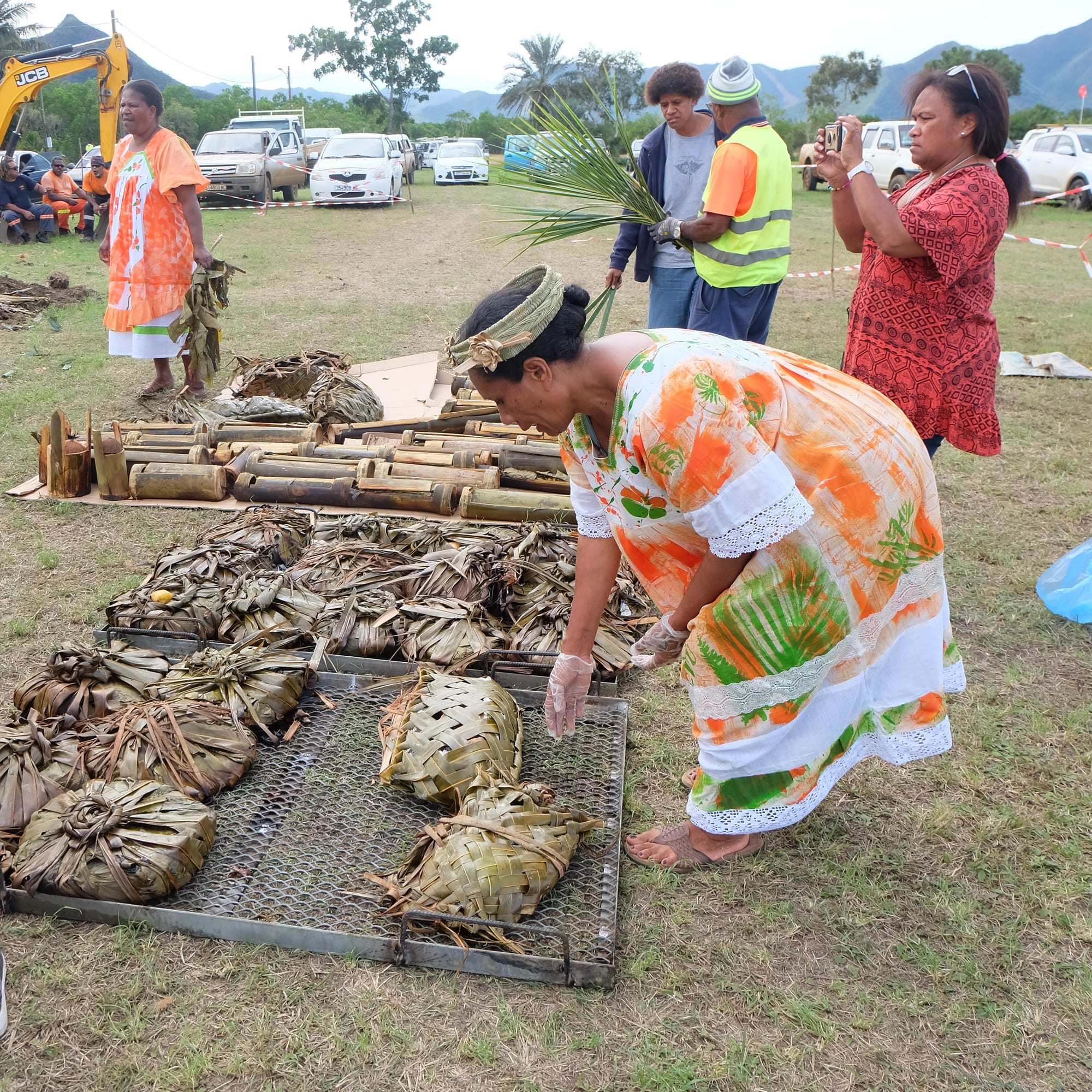
Bougna, root vegetables including taro, yam and cassava, along with chicken, pork or seafood, wrapped together in banana leaves with coconut milk and cooked for about two hours in an earth oven of red-hot stones, is New Caledonia's most emblematic dish, considered a national food by many Kanaks. A traditional feast dish prepared for important gatherings and celebrations, bougna remains a living practice rather than a dish preserved only for tourists.
Root vegetables, coconut and a genuinely dual pantry
Taro, yam, cassava and coconut anchor traditional Kanak cooking across New Caledonia's tribes and villages, while Nouméa and the territory's more urban areas carry a strong French culinary presence, from boulangeries to wine lists built on imported French bottles. That combination, root vegetables and coconut alongside French bread and wine, genuinely coexists rather than one displacing the other.
History behind the earth oven
Bougna's cooking method, wrapping food in banana leaves and cooking it over heated stones in a covered pit or fire, reflects a genuinely old Melanesian technique shared in spirit with earth-oven cooking found elsewhere across the Pacific, though New Caledonia's specific ingredients and preparation remain distinctly Kanak. French colonial rule, beginning in the mid-19th century, added its own culinary layer without displacing that older tradition, particularly visible today in Nouméa's more French-influenced food scene.
Dishes to know
Five more to recognise across New Caledonia:
- Poisson cru — raw fish marinated in citrus juice and coconut milk,
also called salade tahitienne and shared with the wider Pacific.
- Roussette — flying fox, a traditional Kanak food that can also go
into bougna.
- Cerf — venison from introduced rusa deer, which appears on local
menus.
- Crevette bleue — the blue shrimp farmed in lagoon-fed ponds in New
Caledonia and prized as a local product.
- Bò bún — a Vietnamese rice-noodle dish with beef, an
everyday favourite thanks to the long-established Vietnamese community.
Drinks
French wine, given New Caledonia's status as a French territory, is widely available and commonly served in restaurants. Coconut water and fruit juices are easy to find, and coffee culture reflects French habits found throughout the territory.
Eating as a traveller
Vegetarians will find root vegetable and coconut-based dishes manageable, though meat and fish are central to bougna and most traditional Kanak cooking. Being invited to share bougna at a tribal or family gathering, rather than ordering it at a restaurant, is a genuinely meaningful way to experience the dish as it's actually meant to be eaten.
What to take from the table
Bougna, wrapped in banana leaves and cooked slowly over heated stones, is the dish that most directly carries Kanak tradition into modern New Caledonia — a living practice, not a museum piece, at the centre of the territory's food identity.