Food · Saudi Arabia
Saudi Arabia: Food and the National Dish
Spiced rice and meat cooked in one pot, a dish that varies from region to region across a country the size of Western Europe
By Worldlore Editorial · 30 September 2026
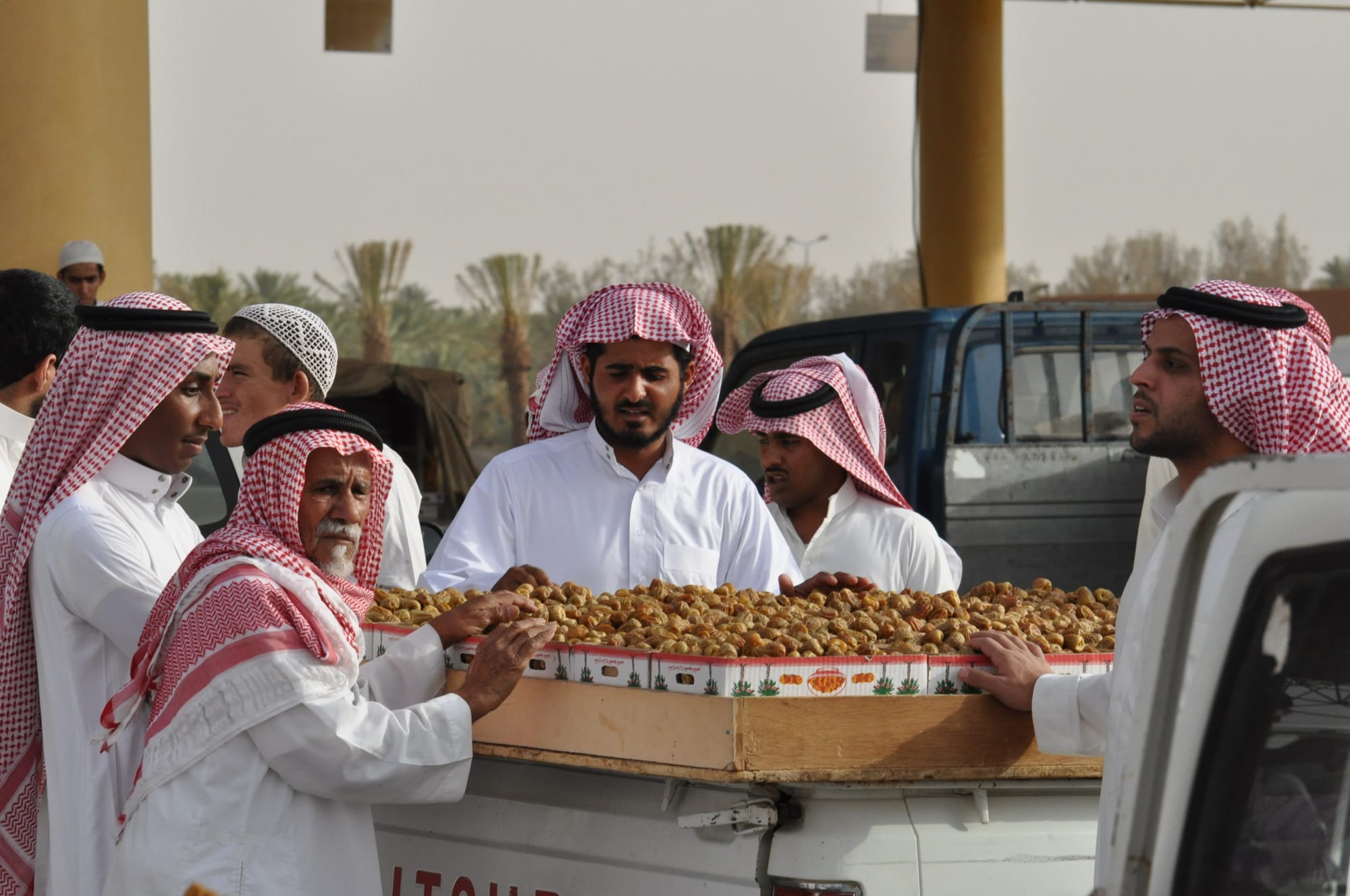
A cuisine that changes across an enormous country
Saudi Arabia's food varies noticeably by region, from the Hejaz coast along the Red Sea to the Najd interior and the Eastern Province along the Gulf, each shaped by different trade routes, geography and historical influence, even as one dish has become widely recognised as the national standard nationwide.
The national dish: kabsa
Kabsa, spiced rice cooked with meat, usually chicken or lamb, and a blend of warming spices including cardamom, cinnamon, cloves and black lime, all cooked together in one pot, is widely regarded as Saudi Arabia's national dish, a status it shares across the Gulf states, and its origins, in Saudi Arabia or Yemen, are debated. Served on a large communal platter and central to family gatherings and celebrations, kabsa varies in exact spice blend and preparation from region to region and household to household.
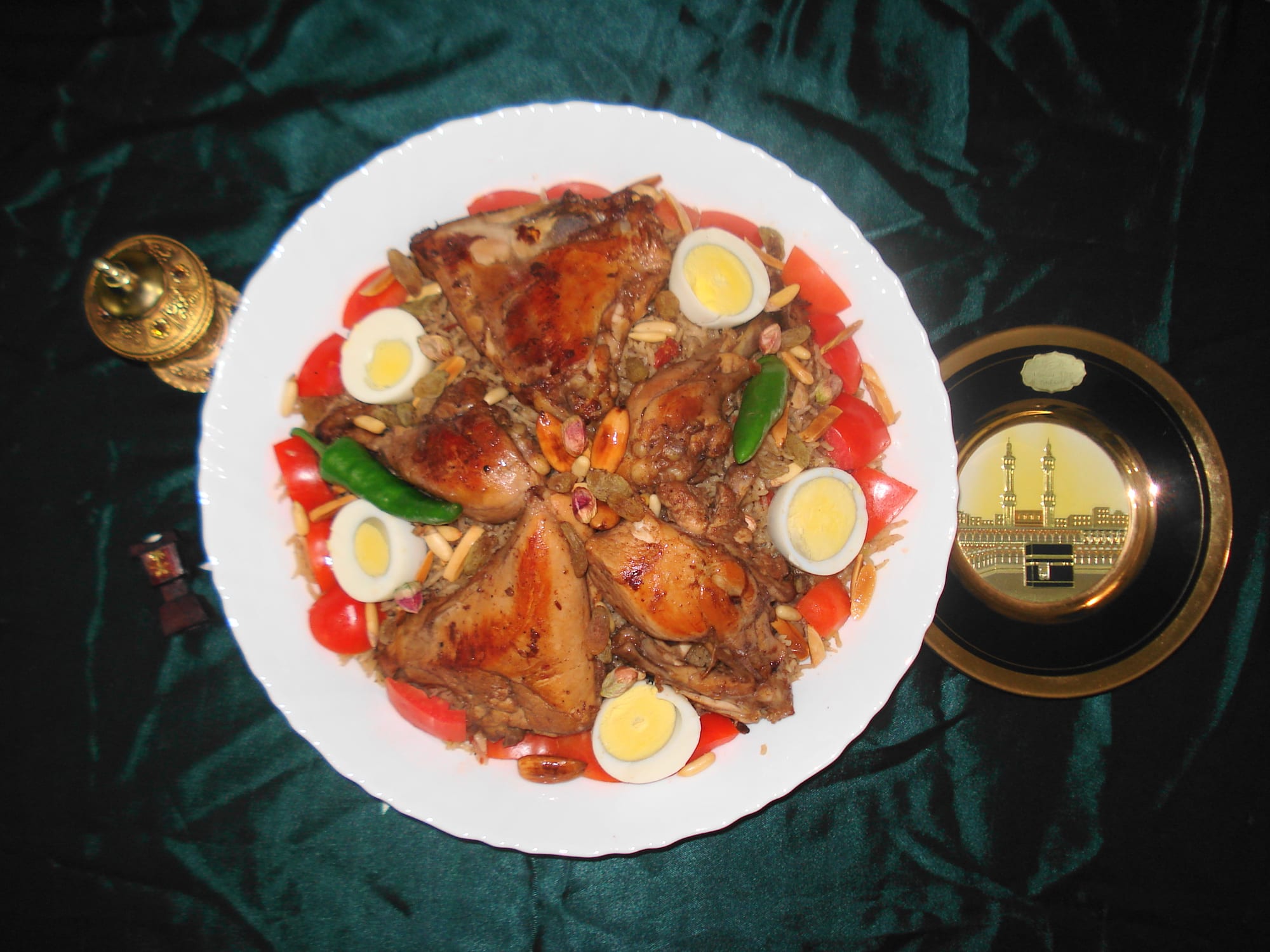
Rice, dates and a genuinely desert-shaped pantry
Rice, dates and lamb anchor much of Saudi Arabian cooking, alongside a spice vocabulary including cardamom, saffron and dried lime that reflects historic trade connections across the Arabian Peninsula and beyond. Yoghurt, flatbread and grilled meats round out a pantry shaped by a largely desert climate and a long-standing pastoral and trading tradition.
History behind the pot
Saudi Arabia's position along historic trade routes connecting Africa, Asia and Europe brought spices like cardamom and saffron into the Arabian Peninsula's cooking centuries before kabsa took its modern form. The dish's one-pot method, practical for feeding large families and guests from a single cooking vessel, reflects a hospitality tradition central to Saudi Arabian culture, where welcoming guests generously is considered a genuine social obligation rather than a mere courtesy.
Dishes to know
Five more to recognise across Saudi Arabia:
- Mandi — meat, often lamb, slow-cooked in a pit oven and served
over rice, a dish of Yemeni origin popular across the country.
- Jareesh — cracked wheat cooked with meat and spices into a
porridge-like consistency.
- Saleeg — a creamy rice dish cooked in meat broth and milk, popular
in the Hejaz region.
- Mutabbaq — a stuffed, folded pastry filled with meat, egg or
vegetables.
- Luqaimat — small, deep-fried dough balls drizzled with date syrup,
a popular dessert.
Drinks
Arabic coffee, qahwa, lightly spiced with cardamom and served with dates, is central to Saudi hospitality and offered to guests as a matter of course. Karak tea, strong, spiced and sweetened with milk, is a genuine everyday drink. Alcohol has been banned since 1952; the only legal outlet, a store in Riyadh's Diplomatic Quarter opened in 2024, sells only to non-Muslim diplomats and, since late 2025, certain high-earning or Premium Residency non-Muslim foreign residents, so visitors cannot buy alcohol anywhere in the country.
Eating as a traveller
Halal food is the default across Saudi Arabia, and vegetarians will find rice, vegetable and legume-based dishes manageable in most restaurants. Bottled water is the common local default. Accepting coffee and dates if offered as a guest is a genuine gesture of Saudi hospitality worth taking part in rather than declining out of politeness.
What to take from the table
Kabsa, cooked in one pot and shared on a communal platter, captures something true about Saudi Arabian food: built as much around generous hospitality as around any single recipe.