Culture & Customs · Sri Lanka
Sri Lanka: Ayubowan and the Auspicious Hour
Four faiths on one island, a greeting that wishes long life, and a calendar in which the stars still decide when to light the hearth, when to marry and when to begin the new year
By Globeway Editorial · 30 September 2026
It is the morning of the Sinhala and Tamil New Year, and a household has been waiting for a precise moment set by the astrologers. When it comes, the hearth is lit, facing a direction the charts have chosen, and a new clay pot of milk is set on the flame and left to boil until it spills over the rim — a sign of plenty for the year ahead. Later, the children of the house offer betel leaves to their parents and grandparents as a sign of gratitude, and receive blessings in return. Across Sri Lanka, Sinhala and Tamil families mark the same turning of the year in their own ways, and the scene gathers up much that matters on the island: faith, family, respect for elders, and a deep attention to the right time for things.
Faith, identity and values
Sri Lanka is home to several peoples. About three quarters of the population are Sinhalese, around fifteen per cent are Tamil — including both Sri Lankan Tamils and the descendants of Indian Tamils — and around ten per cent are Sri Lankan Moors. Smaller communities include the Burghers, of European descent, and the Veddas, the island's Indigenous people. Sinhala and Tamil are the official languages, with English widely used in government and business.
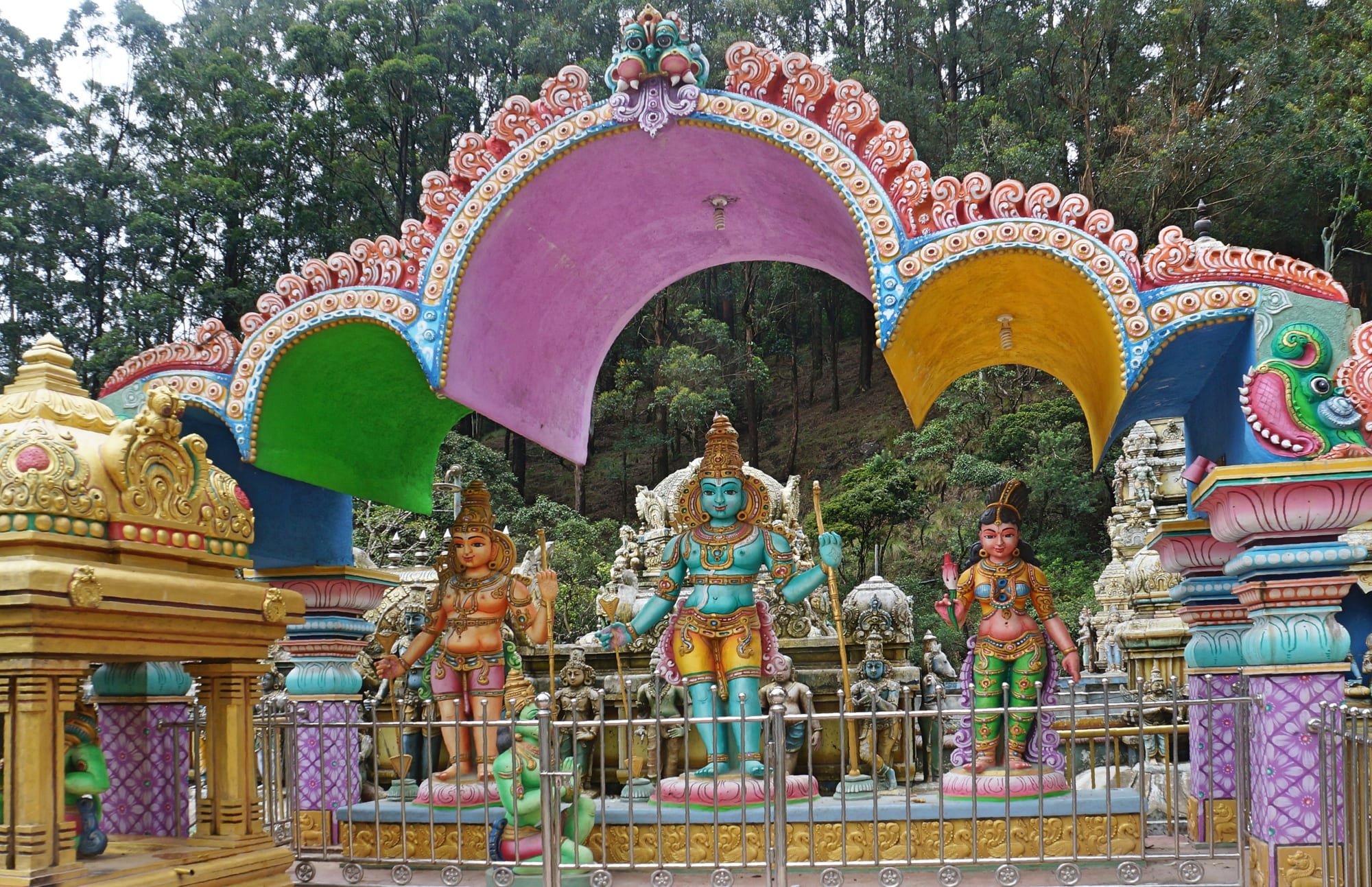
Religion and ethnicity are closely linked. Around seventy per cent of people are Buddhist, most of them Sinhalese and followers of Theravada Buddhism, which holds a special place in the constitution. Around one in eight are Hindu, most of them Tamil; around one in ten are Muslim; and about seven per cent are Christian, drawn from both Sinhalese and Tamil backgrounds. The four faiths often live side by side: Buddhists may visit Hindu temples, and churches and mosques can stand within sight of each other.
Recent history has tested these bonds. From 1983 to 2009, a civil war between the government and Tamil separatist forces cost many thousands of lives, and many Tamils left the country; the grief it caused is still felt in many families, although the communities generally live together peacefully today. Sri Lankan society is collectivist, and a person's actions reflect on their family and community. Face — reputation, dignity and honour — matters, and people prefer to stay calm and resolve problems quietly. The family comes before the individual, several generations often live together, and older relatives are respected, addressed as "aunty" or "uncle" and cared for at home. Arranged marriages were long the norm and remain common, although more young people now choose their own partners. Caste still shapes some attitudes, especially among older people, but many younger Sinhalese pay it little attention. Astrology and auspicious timing are widely observed, and many people consult them before beginning anything important, from a new venture to a marriage.
Greetings and meeting people
The traditional greeting is made with the palms pressed together beneath the chin and a slight bow of the head. Sinhala speakers say "ayubowan", which means "may you live long", and Tamil speakers say "vanakkam", with a similar meaning; "kohomada?" is a casual "how are you?". Handshakes are widely understood, but some people prefer not to touch members of the opposite sex, so men generally wait for a woman to offer her hand first, and a woman may simply return a greeting with folded hands. The oldest person present is greeted first, and some people show deep respect to elders, and to Buddhist monks, by reaching down to touch the ground or their feet.
Titles such as Mr, Ms or Doctor are used with acquaintances, and hugging and kissing are kept for close family and friends. Sri Lankans generally avoid touching others where they can, and public displays of affection are frowned upon. The head is regarded as sacred and should not be touched without permission, while the feet are seen as the least pure part of the body, so they should not be pointed at people or used to touch them.
Communication tends to be indirect. A flat "no" can sound like a wish to end a relationship, so people often hint rather than refuse outright, and a few gentle follow-up questions help clarify what is meant. A side-to-side tilt or wobble of the head usually signals agreement or understanding. Pointing is done with the whole hand rather than a finger, and someone is beckoned with the palm facing down and the fingers waved towards the body. Friendly, direct questions about where a person is going or what they are doing are common, and brief, patient answers are the usual response.
Hospitality and being a guest
Guests are welcomed warmly. Shoes are removed before entering a home, and refreshments are offered almost immediately; declining them is seen as discourteous. Conversation usually comes first and the meal later, so arriving very hungry is a mistake. Gifts are more often symbolic or sentimental than expensive, and they are given and received with both hands and usually not opened in front of the giver. Flowers are associated with mourning, weddings and religious offerings rather than with ordinary visits, black and white wrapping is linked to funerals, and gifts should take account of religion: no pork or alcohol for Muslim friends, no beef for many Buddhists, and no cow products for Hindus. Giving is expected to be returned in time.
Hands are washed before eating, and food is traditionally eaten with the right hand. A completely clean plate suggests that a guest is still hungry and will prompt more food, so leaving a small amount signals that one has had enough. Hosts readily cater for vegetarians, and alcohol at a family dinner is generally not appropriate.
Festivals and life's big moments
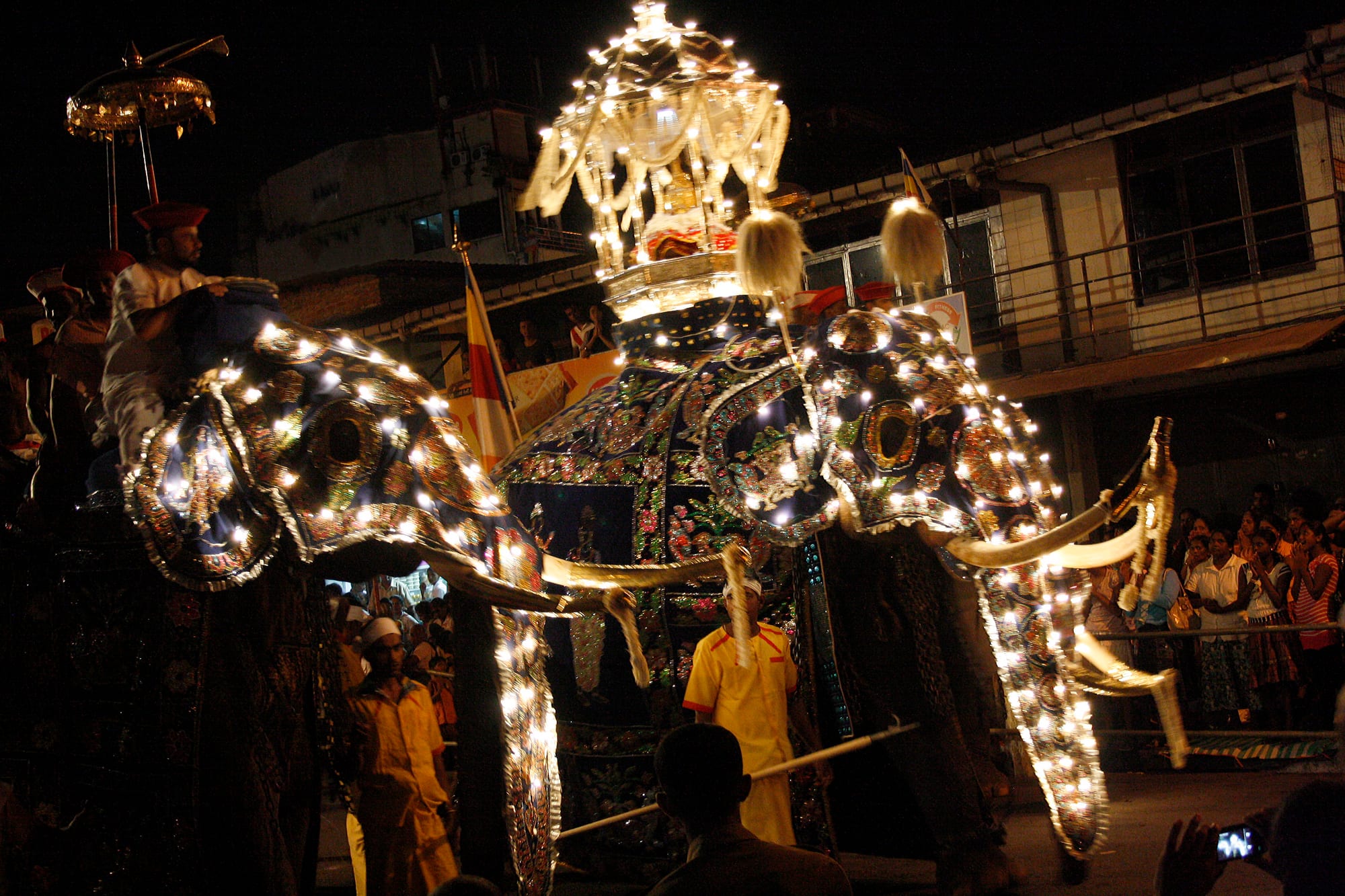
Every full moon is a poya day, a Buddhist public holiday when many people visit temples, and alcohol is not usually on sale. The most important is Vesak, the full moon of May, which marks the birth, enlightenment and passing of the Buddha. Homes, streets and temples are hung with vesak kudu, lanterns of bamboo and coloured paper; large illuminated pandals, or thoranas, depict stories from the Buddha's past lives; and dansal, stalls offering free food and drink to anyone passing, spring up across the country in the spirit of dana, or giving. Buddhist processions known as perahera, in which drummers and dancers perform, are also a highlight of the religious year.
The Sinhala and Tamil New Year, in mid-April, is shared by both communities and follows the sun's movement from Pisces into Aries. The hours in between are treated as a neutral period, when most activities other than religious ones are set aside. Then, at auspicious times calculated in advance, families light the hearth, boil milk until it overflows, cook milk rice, offer betel to their elders and play traditional games such as tug of war, pillow fighting and a contest to mark the elephant's eye. The national calendar also marks Thai Pongal, Maha Shivaratri and Deepavali for Hindus, Eid al-Fitr, Eid al-Adha and the Prophet's birthday for Muslims, and Good Friday and Christmas for Christians.
Weddings are timed by the stars. In the Sinhala Buddhist tradition, an astrologer studies the horoscopes of the couple to fix the date and the exact moment, the nekatha, for each ritual. The couple step onto the poruwa, a decorated wooden platform that represents the home they will share, right foot first. Betel leaves are offered, a maternal uncle ties the couple's little fingers together with a thread while blessed water is poured over them, and the groom presents a length of white cloth to thank his mother-in-law for raising the bride. Tamil, Muslim and Christian families celebrate marriage with rites of their own.
Funeral customs also differ between communities. Buddhists usually cremate their dead; monks chant, cloth is offered to the monks in the name of the deceased, and a vegetarian meal is served after the cremation. About three months after the death, and then every year, families hold an almsgiving for the monks to share merit with the person who has died. Hindus also cremate, while Muslims wash the body, wrap it in white cloth and bury it within a day, facing Mecca, and Christian funerals are accompanied by readings and hymns.
Arts, crafts and music
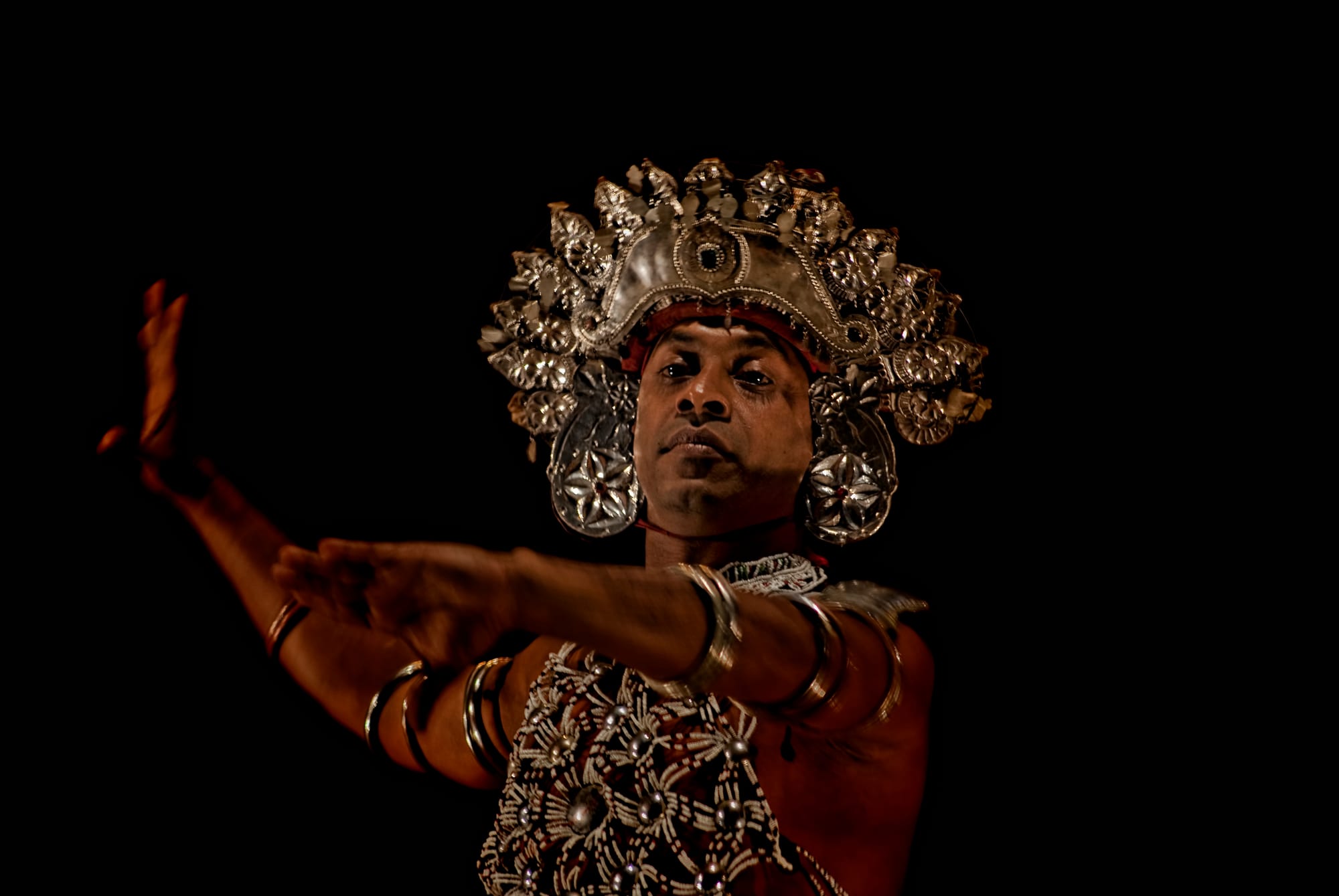
Kandyan dance is regarded as the national dance. It grew out of the Kohomba Kankariya, an ancient ritual performed to invoke blessings, and flourished at the royal court of Kandy. Its best-known form, the ves dance, is traditionally performed only by men, who wear a costume of silver ornaments, beaded breastplates and bangles, crowned by a headdress believed to represent that of the deity Kohomba. The dancers move to the rhythms of the hand-beaten geta bera drum and small cymbals, and a repertoire of vannam dances depicts animals such as the elephant and the peacock. The dance is a central part of the perahera processions.
Three Sri Lankan traditions are inscribed on UNESCO's Representative List of the Intangible Cultural Heritage of Humanity. Rūkada Nātya is a string puppet drama in which puppeteers carve their own wooden figures, write their own scripts of dialogue and song, and perform stories drawn from folk tales, Buddhist stories and history, accompanied by a small band; it was traditionally meant both to entertain village audiences and to teach moral lessons. The list also includes the traditional craftsmanship of making Dumbara Ratā Kalāla and the ancient Indigenous technique of tapping the kithul palm. In everyday life, cricket is a shared passion and an easy way to start a conversation with almost anyone.
Dos and don'ts for visitors
- Do greet people with palms together and "ayubowan" or "vanakkam", and let a woman offer her hand first.
- Do cover shoulders and legs and remove shoes and hats before entering a Buddhist temple.
- Don't pose for photographs standing in front of a Buddha statue, and don't display Buddha tattoos, which can lead to refusal of entry or deportation.
- Do accept refreshments in a home, and give and receive gifts with both hands.
- Do eat with the right hand, and leave a little food on the plate when full.
- Don't touch anyone's head, and don't point the feet at people.
- Don't expect alcohol to be on sale on poya days, and avoid drinking in public on religious holidays.
- Don't show affection in public, and keep physical contact with acquaintances to a minimum.
What to take away
Sri Lanka's many communities keep their own faiths and festivals, yet share a courtesy built on respect for elders, the sacred and the right moment — and visitors who greet with folded hands and dress with care at temples will be welcomed warmly in return.