Culture & Customs · Switzerland
Switzerland: A Bonfire on Every Hill
Four national languages, a national day that every commune celebrates in its own way, and a set of manners built on punctuality, discretion, a proper greeting and consideration for the neighbours
By Globeway Editorial · 30 September 2026
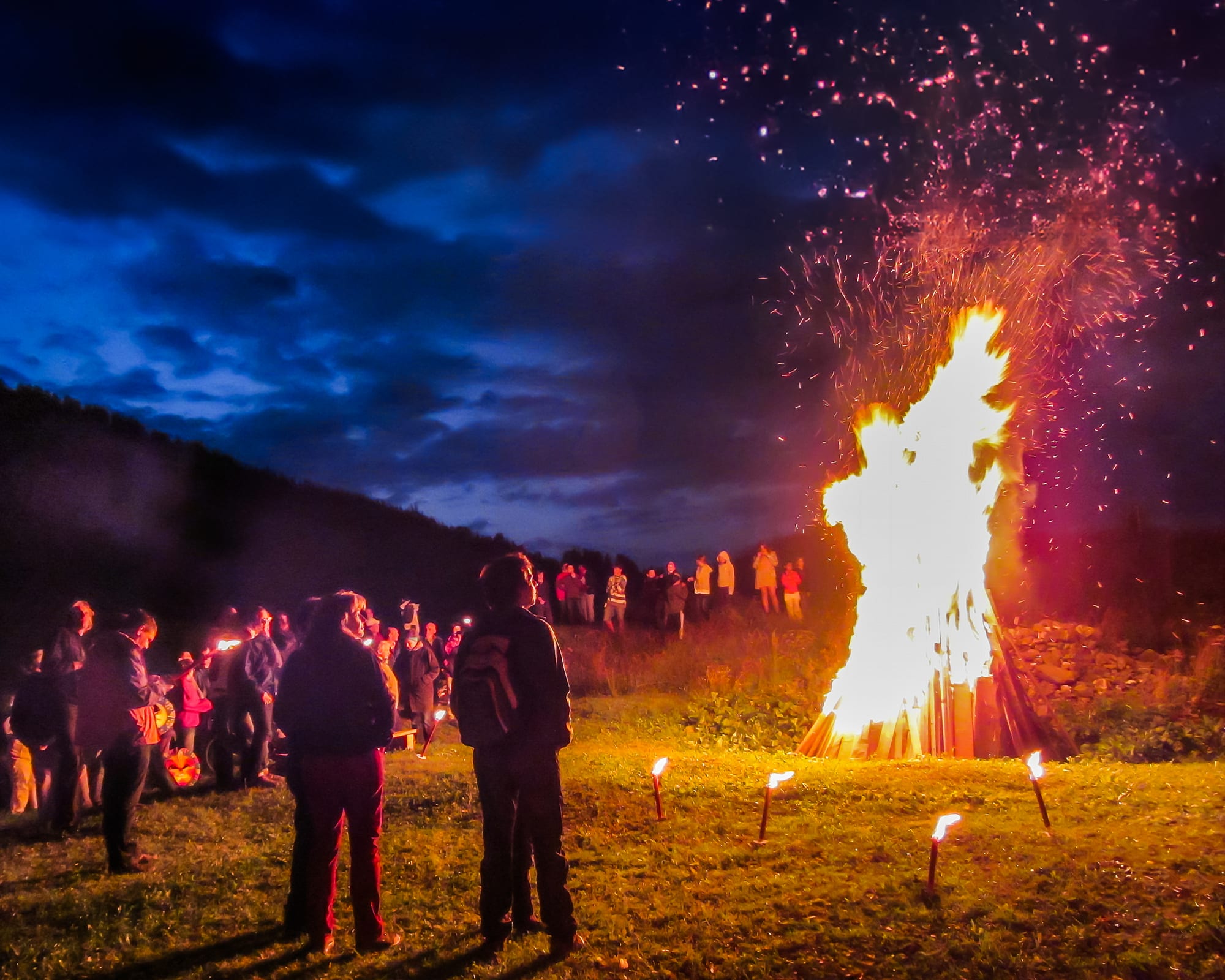
On the evening of 1 August, as darkness falls, bonfires are lit on hills and meadows across Switzerland. Children walk through village streets carrying paper lanterns printed with the Swiss cross, and fireworks light up the sky. Earlier in the day, families may have gathered for brunch on a farm, and in town squares everyone from mayors to members of the Federal Council has given a speech. What is striking is that there is no single national parade. Each commune marks the day in its own way, in its own language, with its own music. Switzerland's national day only became a public holiday across the whole country after a referendum in 1993, which is itself a very Swiss detail: even a celebration of the nation was decided by a popular vote.
Faith, identity and values
Switzerland holds together four national languages, German, French, Italian and Romansh, and a proud tradition of local self-government. In 2023 about two thirds of permanent residents gave German as a main language, nearly a quarter French, eight per cent Italian and half a per cent Romansh, and a growing share also use a language from abroad. More than two thirds of people aged 15 and over regularly speak more than one language. In the German-speaking majority, everyday speech is Swiss German, a family of Alemannic dialects that differs noticeably from the standard German used in writing. Each language community looks partly towards its larger neighbour, yet a shared Swiss identity, rooted in the landscape, neutrality and direct democracy, sits above them all.
The country's two historic Christian traditions, Catholic and Reformed Protestant, shaped its borders and politics for centuries, but religious life has changed quickly. According to the Federal Statistical Office, people with no religious affiliation have been the largest group since 2022; in 2023 they made up 36 per cent of the population, compared with 31 per cent Catholic and 19 per cent Evangelical Reformed. Muslims and other faiths form smaller communities. As with so much in Switzerland, relations between church and state are settled canton by canton. Cantons may levy a church tax on members of the churches they recognise, which usually include the Catholic and Reformed churches, and in most cantons anyone who no longer wishes to pay must formally leave their church.
Values often described as Swiss include punctuality, discretion, thrift, tidiness and respect for rules, along with a strong sense of privacy. Public life also depends heavily on the militia principle, under which ordinary citizens take on public duties part-time or as volunteers, and on a dense web of clubs and associations, many of them devoted to sport. A large share of the population volunteers in some form over the course of a year. People tend to keep personal matters, and especially money, to themselves, and topics such as finances, politics and religion are best avoided with people just met. Consideration for others extends to noise. Swiss labour law generally forbids employment between 11pm on Saturday and 11pm on Sunday, with exceptions for sectors such as healthcare and hospitality, and Sunday is treated as a day of rest. Many buildings' house rules, and many neighbours, expect quiet: noisy DIY, lawnmowing, hanging out a full washing line or tipping a week's empty bottles into the recycling bank on a Sunday are all frowned upon.
Greetings and meeting people
A greeting matters in Switzerland, and it depends on where it is spoken. In German-speaking areas the standard greeting to strangers is "Grüezi"; in French-speaking areas it is "Bonjour". Greeting someone who is not a friend or relative with a casual "Hallo" is not common and can come across as rude. It is customary to greet shopkeepers on entering a shop and again when paying, and a goodbye on leaving is equally expected.
On a first meeting, people shake hands firmly and look each other in the eye. Adults usually address one another by title and surname, with the formal "Sie", "vous" or "Lei", until invited to switch to first names, particularly where there is a difference in age or rank. Between friends and acquaintances, three kisses on alternating cheeks are the standard greeting in many parts of the country, especially in French-speaking areas.
Punctuality is taken seriously, in social life as well as business. Arriving late to a dinner or a party is poorly received, and anyone running late is expected to phone ahead.
Hospitality and being a guest
Guests invited to a party or a dinner are expected to arrive on time and to bring a small thank-you gift, most often a bottle of wine or a seasonal bouquet of flowers; anything expensive or flashy would sit uneasily with Swiss modesty.
At the table, nobody starts eating until everyone has been served, and the meal begins with the whole party wishing each other a good appetite, "Guten Appetit" in German or "bon appétit" in French. When glasses are raised, people sit through the whole toast before eating and look each other in the eye as they drink. In restaurants, waving to attract a waiter is best avoided. A tip is not required, though many people round up the bill to the nearest franc.
Festivals and life's big moments
Swiss National Day on 1 August commemorates the Federal Charter of 1291, in which three communities in the heart of the Alps pledged to help one another if attacked. According to legend their representatives swore the oath on the Rütli meadow above Lake Lucerne, though historians regard the story as more legend than fact. Alongside the bonfires, lanterns and speeches, there are parades with traditional costumes, yodelling choirs, alphorns and flag throwers. Swissinfo notes that the bonfires have no direct link to the founding story and probably recall the old hilltop signal fires, and that farm brunches on the day are a relatively recent invention. Even the fireworks are subject to Swiss debate: according to swissinfo, a majority of the population opposes rockets and firecrackers, and a popular initiative to ban most noisy fireworks is due to go to a national vote in November 2026.
In December, many children await the Samichlaus, the Swiss Saint Nicholas, who visits kindergartens, schools and homes around 6 December with his dark-robed companion, the Schmutzli. Children are expected to recite a poem or sing a song for him, and are rewarded with gingerbread, chocolate, nuts and mandarins.
Much of the Swiss festive calendar is local rather than national, which suits a country of strong communes and cantons. Several of these local traditions, including a carnival, a winegrowers' festival and Holy Week processions, are on UNESCO's list of intangible cultural heritage, along with the alpine pasture season, when herds and herders spend the summer on high mountain pastures.
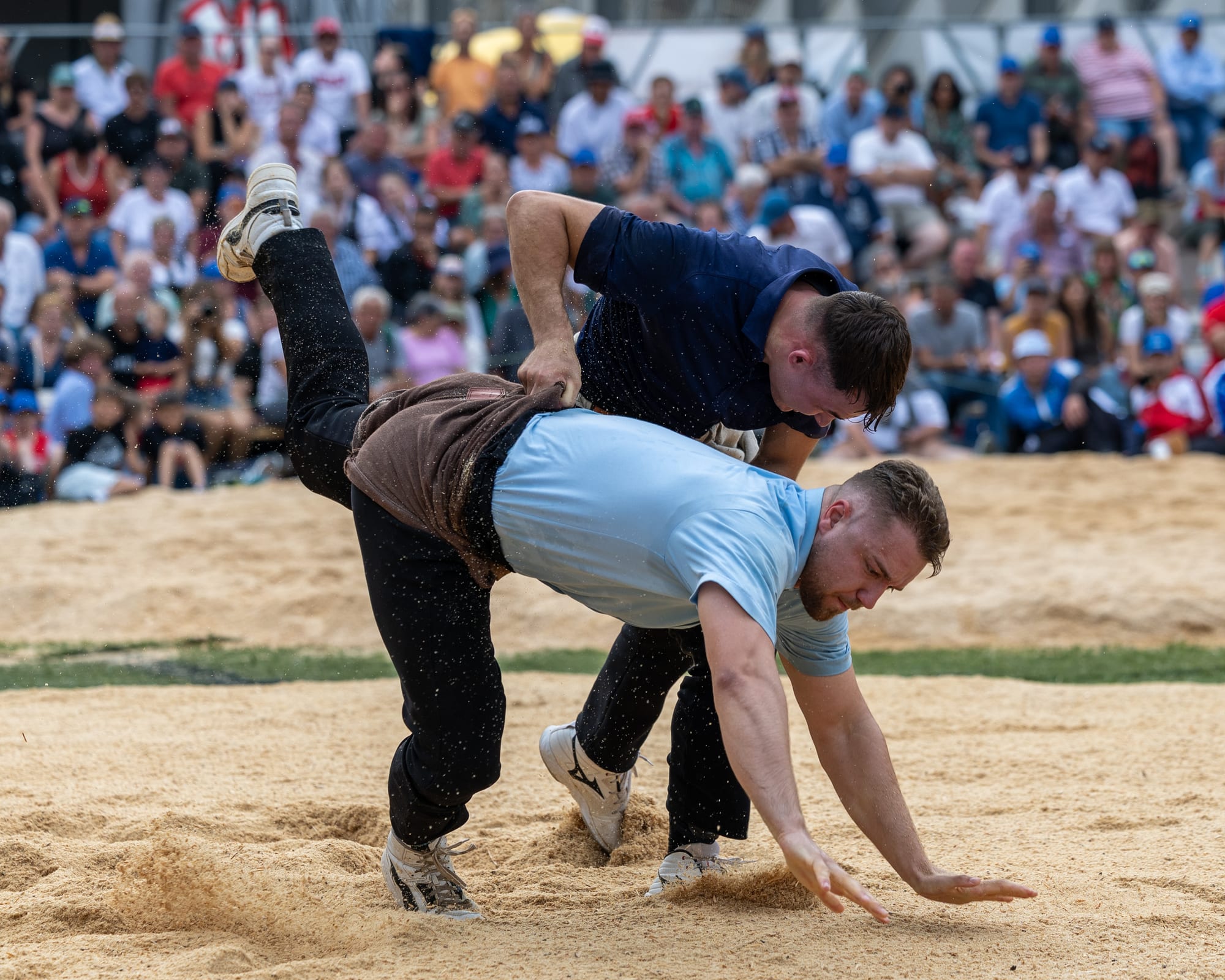
Schwingen is as much a festival as a sport. Herdsmen were already wrestling on alpine pastures by the seventeenth century, and the modern rules were set down in the nineteenth. There are no weight classes, and fair play is prized. The federal festival, organised in turn by the five regional associations, draws enormous crowds.
Life's milestones reflect a secular, practical state. Marriage in Switzerland is a civil act, performed by a civil registrar; couples who want a church wedding hold it only after the civil ceremony, either the same day or later. Funerals have changed markedly. Switzerland has one of the highest cremation rates in Europe, about 80 per cent, and there are no legal rules on what families do with the ashes, which may be buried, scattered or kept. Some communes offer burial among the roots of trees in memorial woods. By the early 2010s, more than a third of people already wanted a non-religious service rather than one led by a pastor or priest, yet funerals remain the church occasion that people seek out most.
Arts, crafts and music
Yodelling is the sound most closely associated with Switzerland, and in 2025 it was added to UNESCO's list of intangible cultural heritage. It uses rapid switches between chest and head voice to sing melodies on syllables rather than words. Natural yodels are wordless tunes that vary from one region and dialect to another and are passed on by ear; sung yodels combine verses with a yodelled refrain, often about nature and daily life. The tradition lives on in families, music schools and clubs: some 12,000 yodellers belong to the national yodelling association, often performing in traditional regional costume, sometimes with an accordion.
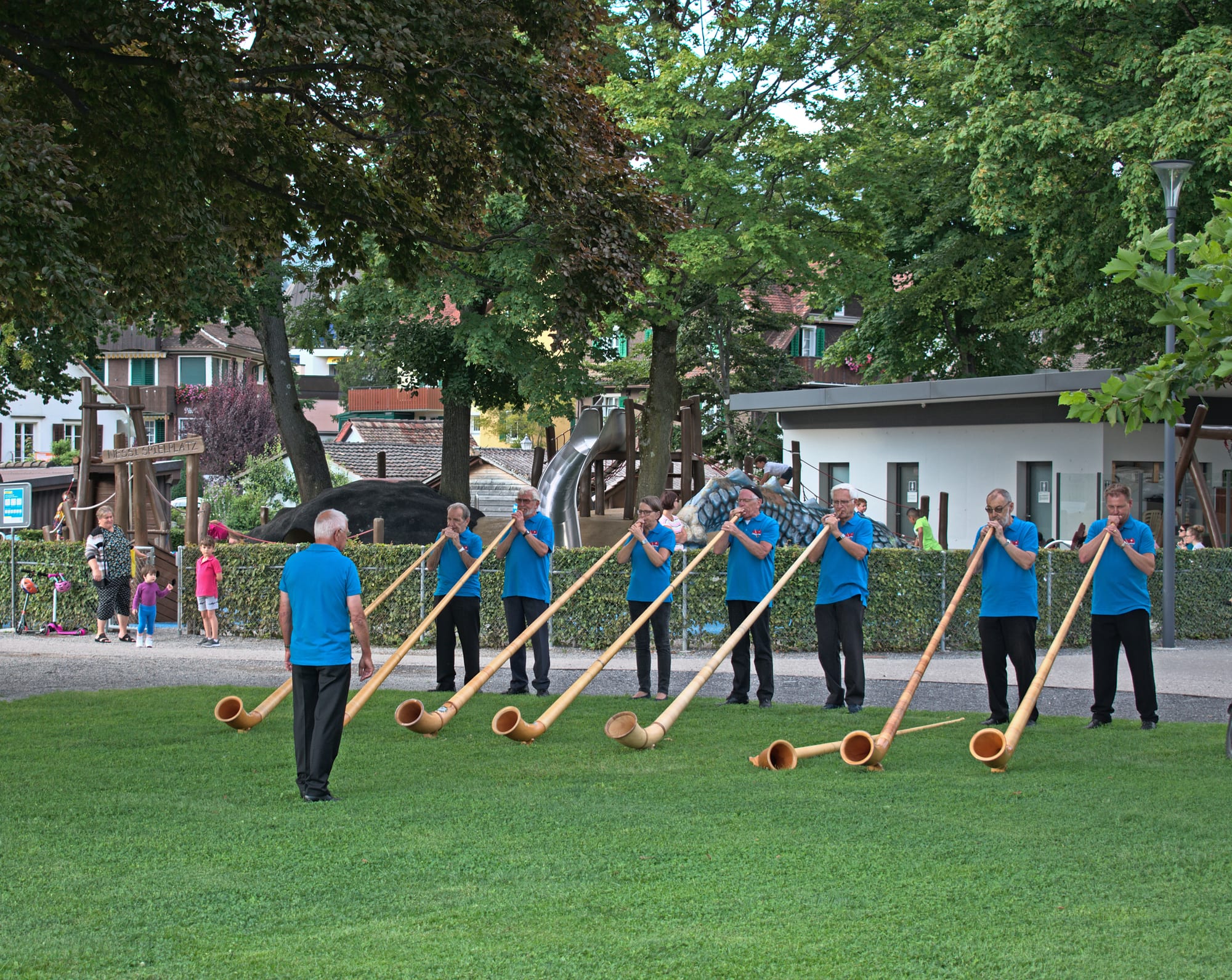
The alphorn, a long wooden horn, is part of the same world, heard with yodelling choirs and flag throwers in the parades of 1 August and often played by groups standing in a line. Other living skills on UNESCO's list, several of them shared with neighbouring countries, include the craftsmanship of mechanical watchmaking and art mechanics, the building of dry stone walls, traditional irrigation and the work of cathedral workshops. Even the national anthem, the Swiss Psalm, reflects the country's make-up: composed in 1841 and formally adopted in 1981, it has words in all four national languages.
Dos and don'ts for visitors
- Do greet shop staff on entering and when paying, with "Grüezi" or "Bonjour" as appropriate.
- Do shake hands firmly and use surnames and the formal "Sie" or "vous" until invited to use first names.
- Do be punctual, including for social invitations, and phone ahead if running late.
- Do bring a small gift, such as wine or seasonal flowers, when invited to someone's home.
- Do wait until everyone is served before eating, and look each person in the eye when toasting.
- Don't make noise, mow lawns or recycle bottles on a Sunday, and respect quiet hours at night.
- Don't ask about salaries or wealth, or raise politics or religion with people just met.
- Don't wave to call a waiter; tipping is not required, though rounding up is common.
What to take away
Swiss manners can seem formal at first, but they rest on a simple idea shared across all four languages: that a proper greeting, punctuality and consideration for others make it possible for very different communities to live closely and peacefully together.