Culture & Customs · Taiwan
Taiwan: Enter by the Dragon Door
Temples that blend three faiths with the worship of ancestors, a goddess of the sea followed on foot by hundreds of thousands, sixteen recognised Indigenous peoples, and manners built on respect for elders, both hands and saving face
By Globeway Editorial · 30 September 2026
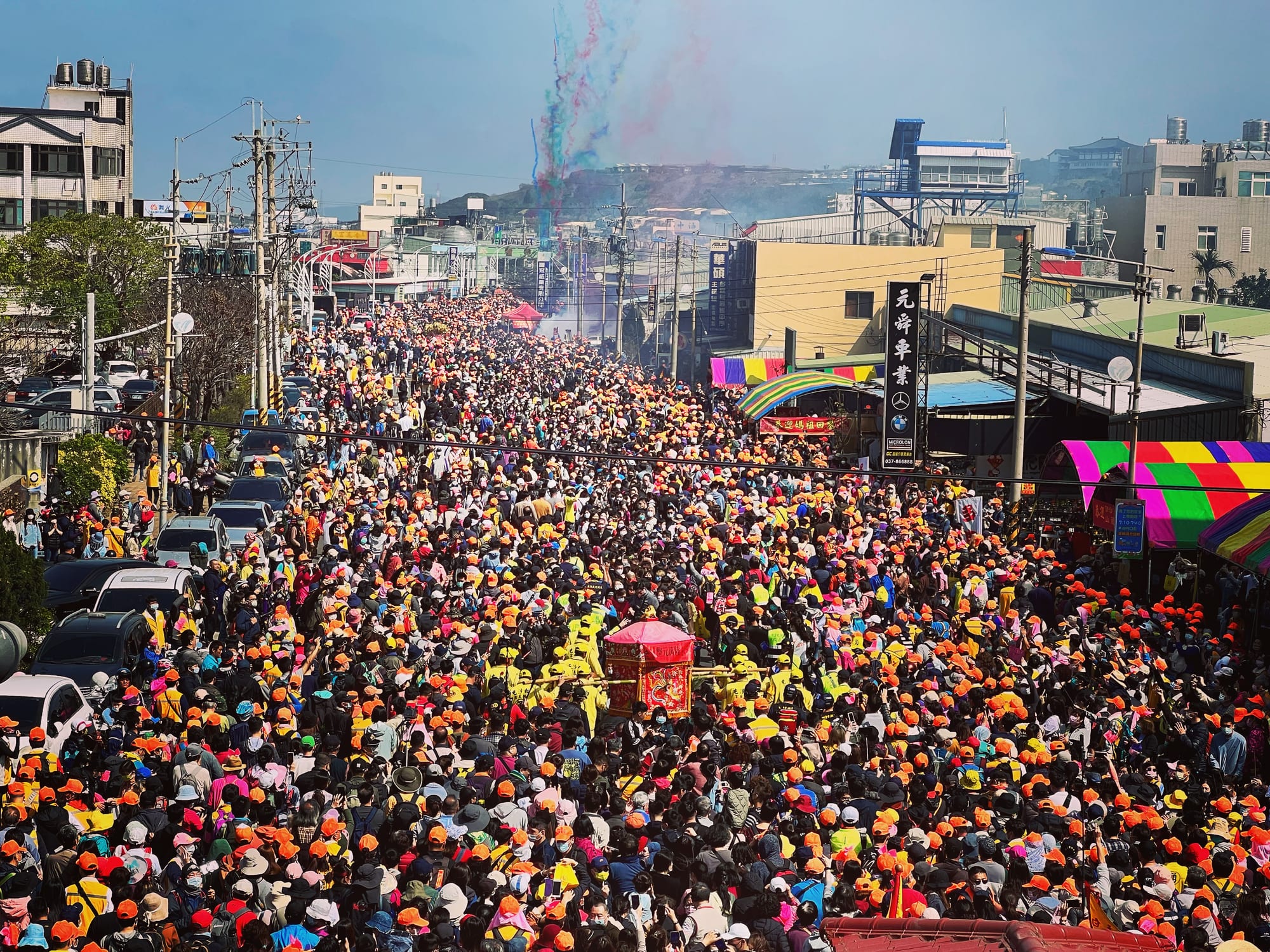
Each spring, a pink palanquin carrying a statue of Mazu, the goddess of the sea, leaves its temple on the west coast and heads south on foot. Behind and around it walk pilgrims in orange caps, in 2026 a record 460,000 of them at the start of an eight-day journey of some 400 kilometres. The procession has no fixed route: its turns and stops are believed to be guided by the goddess herself. Along the way, residents and shopkeepers set out tables with incense and let off firecrackers as the palanquin passes. The pilgrimage is an act of devotion, but also of community, generosity and endurance, and it captures something essential about Taiwan, where faith is lived out in public, in the street and in company.
Faith, identity and values
Taiwan is governed by the Republic of China, whose government moved to the island in 1949. The People's Republic of China claims Taiwan as part of its territory, and only a small number of states formally recognise the Republic of China. Questions of identity are much discussed, and many younger people see themselves as culturally distinct. The culture itself draws on several layers: the southern Chinese traditions of Hokkien and Hakka settlers, half a century of Japanese rule, the mainland heritage brought in 1949, and the cultures of the island's Indigenous peoples, of whom sixteen are officially recognised, from the Amis, the most numerous, to the Atayal, Paiwan, Bunun and others.
Religious life is famously plural. In a survey by Academia Sinica cited by the US State Department, about 28 per cent of people practised folk religion alone, around 20 per cent Buddhism and 19 per cent Taoism, while about 24 per cent described themselves as non-believers. The categories blur in practice: by some estimates as many as four in five religious practitioners combine more than one tradition, and many temples reflect a fusion of Buddhism, Taoism and Confucian thought. Ancestor worship is a major part of daily life for many families. Mazu, whose cult arrived with settlers from Fujian in the seventeenth century, is among the most revered deities, with close to a thousand temples dedicated to her.
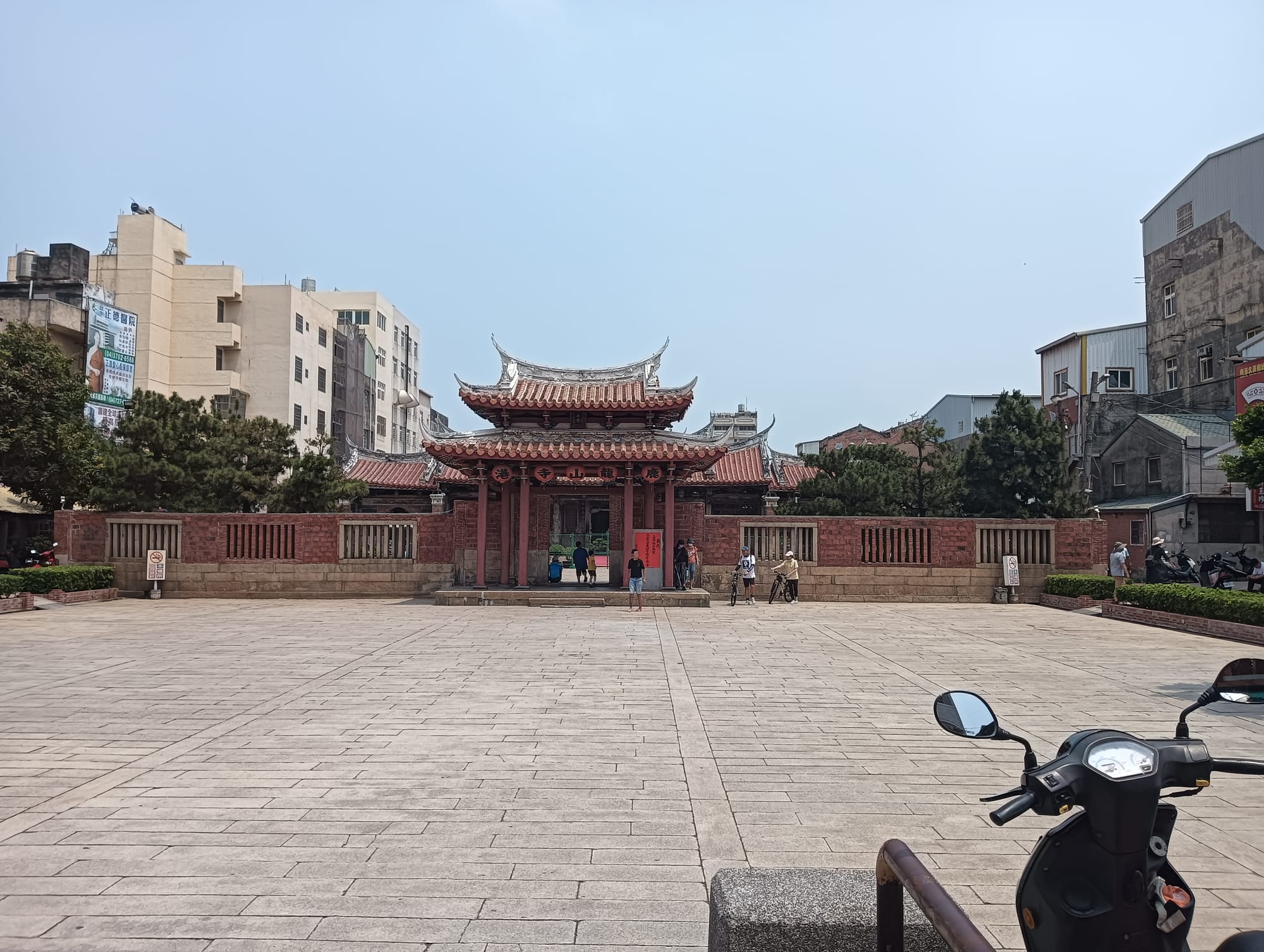
Temples are open to visitors, and a few customs are worth knowing. Most have three doors at the front. The central one is traditionally reserved for the gods, so worshippers go in through the door on the right as they face the temple, the dragon door, and leave through the left, the tiger door, a sequence believed to dispel misfortune. The raised threshold should be stepped over rather than on, since in folk belief treading on it is disrespectful to the deities.
Beneath the religious calendar lie values shared across communities. Face, the reputation and dignity of a person, family or company, shapes a great deal of behaviour, and embarrassing someone in public is avoided. Harmony and cooperation are prized over individual gain. Filial piety, the duty owed to parents and elders, translates into a general respect for age, and relationships built over time, known as guanxi, matter in both business and social life. Taiwanese people are also widely known for their friendliness and hospitality towards visitors.
Greetings and meeting people
On meeting a group, the oldest or most senior person is greeted or introduced first. A slight nod or bow of the head is an accepted greeting, and handshakes are common too, though they may be gentler than visitors from some countries expect. Eye contact during a greeting shows respect.
Formal titles are used on first meeting, and first names are not used unless someone has been invited to do so. Professionals are often addressed by surname followed by title, so a schoolteacher named Lin would be addressed as "Teacher Lin". Objects of any importance, from gifts and business cards to food and documents, are offered and received with both hands, a small gesture that signals respect.
Hospitality and being a guest
Being invited into someone's home is considered an honour and is usually a sign that a relationship is growing. Shoes are generally taken off before entering. A gift is appreciated, but some choices are best avoided. Knives and scissors suggest severing the relationship, and an umbrella is a poor idea because the word for it sounds like the word for "separate". Gifts are often refused at first out of politeness, and the giver is expected to insist gently until the gift is accepted.
At the table, the eldest begin eating first, and younger people wait until their elders have started. Chopsticks should never be stuck upright in a bowl of rice or left pointing downwards, both of which are considered taboo. As with gifts, dishes and drinks are passed and received with both hands.
Festivals and life's big moments
Lunar New Year is the most important holiday of the year. Homes are cleaned to sweep away bad fortune, spring couplets are pasted on doors, and on New Year's Eve families gather for the reunion dinner known as wei lu, "around the stove". Offerings are made to deities and ancestors, children receive money in red envelopes, hongbao, and many families stay up late in the belief that the later they stay awake, the more prosperous the coming year will be. Two weeks later, the Lantern Festival marks the first full moon of the year with paper lanterns, riddles and sweet rice balls, and in some places sky lanterns painted with wishes are released into the night. Since 1990 the national tourism authorities have also organised an annual Taiwan Lantern Festival to keep the old customs of the season alive.
In spring, Tomb Sweeping Day sees families clean and tend ancestors' graves, make offerings and burn joss paper. The Dragon Boat Festival brings boat races and sticky rice dumplings, and mugwort and calamus are hung by doors to ward off evil. Temple festivals for the birthdays of deities, above all Mazu in the third lunar month, fill the calendar with processions, embroidered banners, floats, puppet theatre and dragon and lion dances.
The seventh lunar month is Ghost Month, when the gates of the underworld are believed to open and wandering spirits roam among the living. Many households and businesses set out tables of dishes, cakes and pastries as offerings in rites known as pudu, "universal ferrying", and temples raise tall lantern poles to guide lonely souls. Traditionally, people avoid marrying, buying a house, renovating, travelling or having an operation during the month, and stay well away from water. At public rites, larger spreads are laid out, traditionally including five kinds of meat, and once the ceremonies are complete and the ghosts are believed to have been ferried to salvation, people in the crowd may be invited to help themselves to the food.
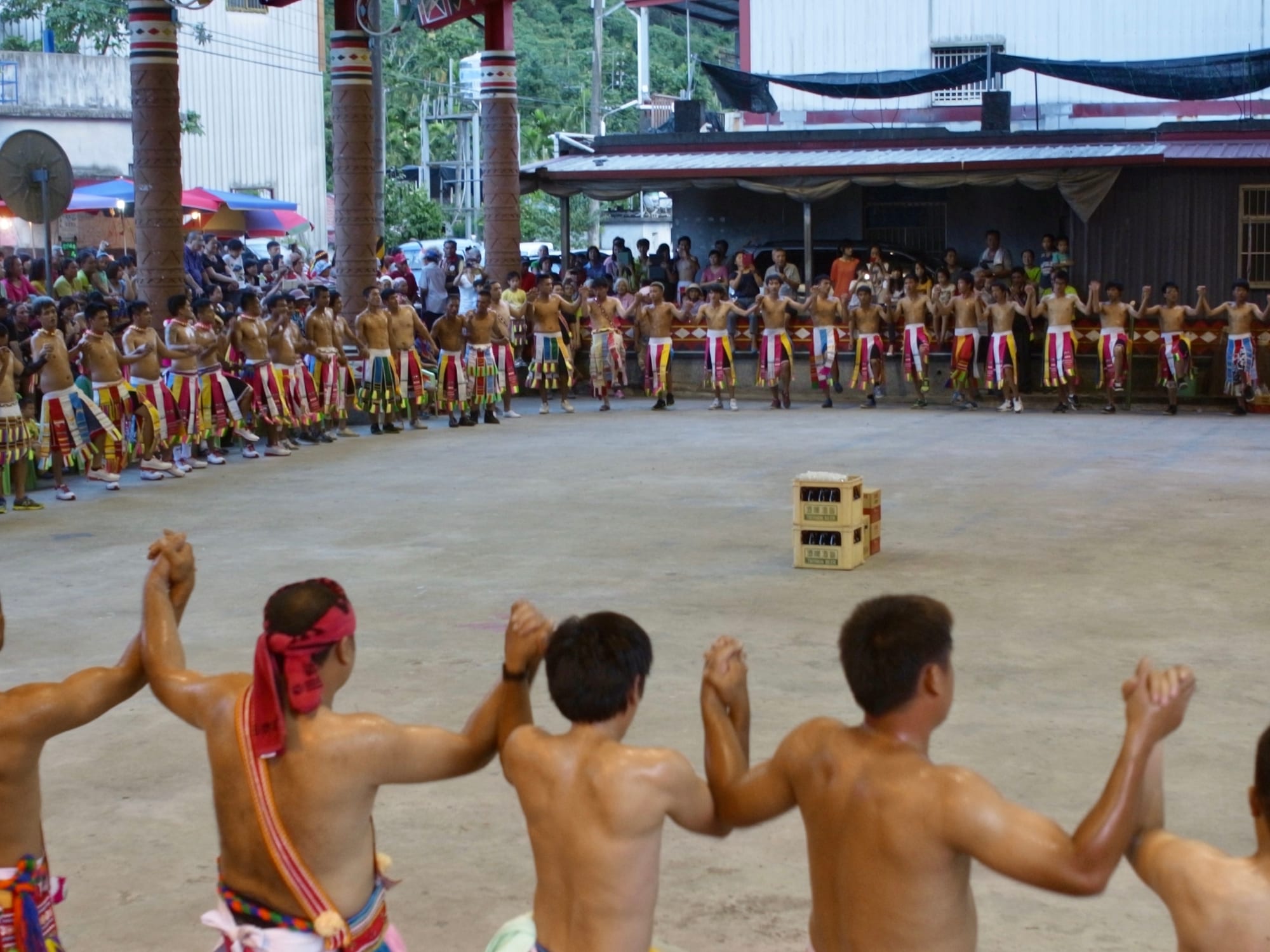
Among Indigenous peoples, harvest festivals are central. The Amis hold Ilisin, a thanksgiving ceremony that once followed the millet harvest and now comes after the rice harvest. From July onwards, each community holds its own festival lasting one to seven days, an occasion for thanksgiving, friendship, the teaching of the young and promotion within the age grades that organise Amis men's lives. Amis society has also traditionally been matrilineal: couples have lived with the wife's family, and property and clan membership have passed from mother to daughter.
Life's milestones are marked with money and with colour. At weddings, guests usually give cash rather than presents, handing a red envelope to hosts at the entrance of the banquet as a blessing and a contribution to its cost. Even sums are preferred, and amounts involving the number four, which sounds like the word for death, are avoided. Funerals reverse the colours: condolence money goes in a white envelope, and white has long been the colour of mourning. Traditional rites blend Buddhist, Taoist and folk practice. Families make offerings before the memorial tablet in the spirit of "in death as in life", mark a series of seven-day periods after the death, and burn paper offerings, from money to paper houses, for the use of the departed.
Arts, crafts and music
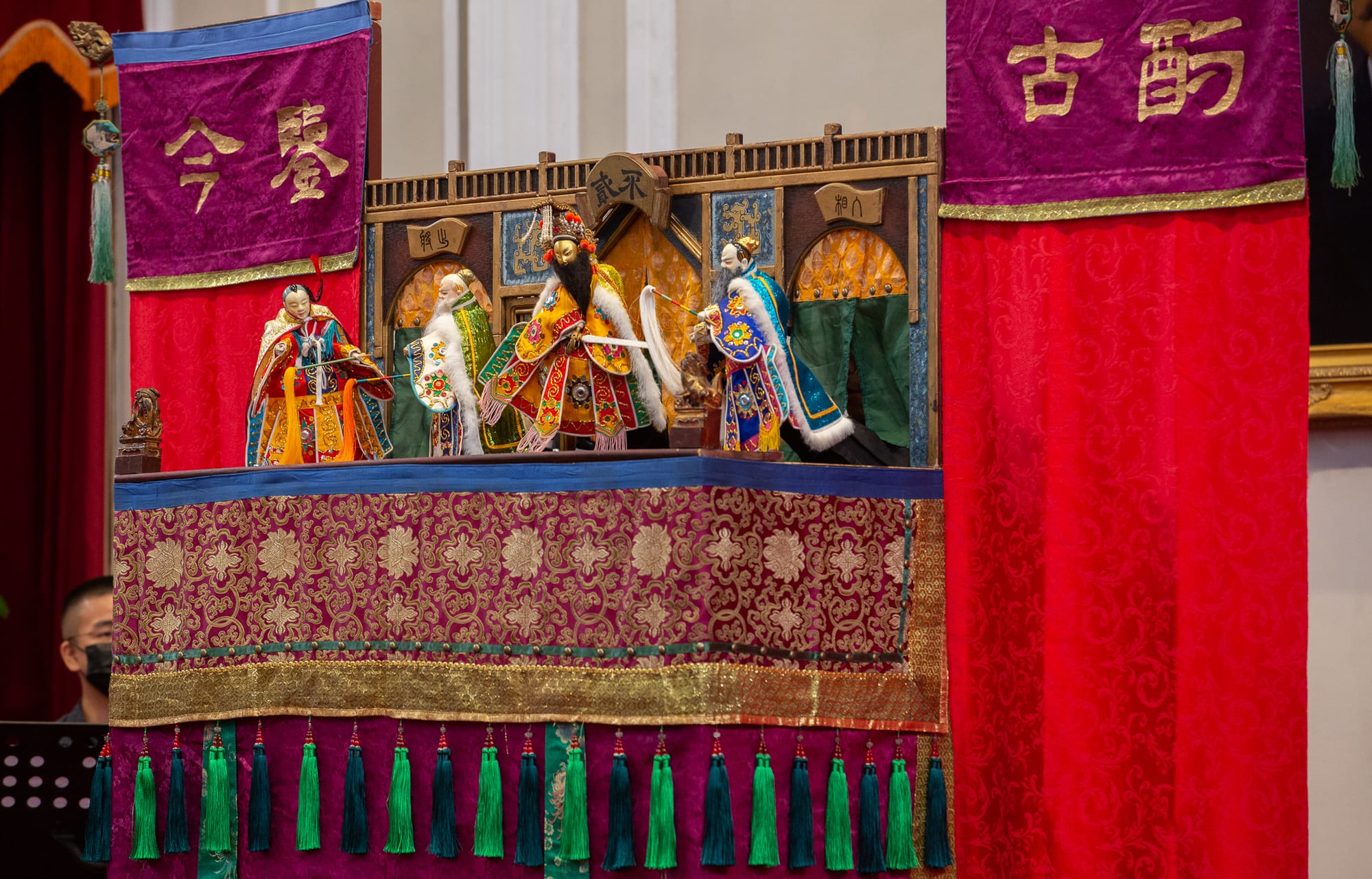
Glove puppetry, budaixi or "cloth bag drama", emerged in Fujian in the seventeenth century and was carried to Taiwan by migrants. Puppeteers bring small, richly costumed puppets to life with precise finger movements, narrating the story with music and sound effects. Troupes once earned their living at weddings, funerals and temple celebrations, often on makeshift stages in front of temples, where performances were both an offering to the deities and entertainment for the neighbourhood. In the early 1970s the art moved on to television, and puppet dramas are still produced for broadcast and streaming today, while museums and school workshops keep the traditional craft alive.
Temple festivals are the great stage for Taiwan's folk arts. Alongside the puppets come lion and dragon dancers, drummers and troupes performing martial arts formations, while communities in some places stage rituals such as the burning of a plague god's boat, held every few years to pray for peace and good fortune. Indigenous communities keep their own music, dance and dress, often shown at the harvest festivals, where each age grade has its own songs and dances.
Dos and don'ts for visitors
- Do greet the oldest person first, and use titles and surnames until invited to use first names.
- Do offer and receive gifts, cards and food with both hands.
- Do take shoes off before entering someone's home.
- Do enter a temple by the right-hand door and leave by the left, stepping over the threshold rather than on it.
- Don't stand chopsticks upright in rice or leave them pointing downwards.
- Don't give knives, scissors or umbrellas as gifts, and don't give up at once if a gift is at first refused; insist gently.
- Do give cash in a red envelope at a wedding, in an even amount without fours, and in a white envelope at a funeral.
What to take away
Taiwan's customs rest on respect for elders, for the gods and for the ancestors, and visitors who greet people in order of age, use both hands and step carefully over a temple threshold will find a warm welcome in return.