Culture & Customs · Thailand
Thailand: The Sacred Head and the Humble Foot
A Buddhist kingdom where the wai rises with respect, the monarchy is revered and protected by law, temples welcome quiet visitors, and water is poured over elders' hands at the turn of the year
By Globeway Editorial · 30 September 2026
A young woman meets her grandmother's old friend at the gate of a temple. She presses her palms together, raises them until her thumbs touch the tip of her nose, and bows her head. The older woman answers with a lighter gesture, hands held at chest level and the slightest of nods. Neither says much, but the moment says a great deal. In Thailand, respect is shown through the body: in how high the hands rise, how low the head is held, where the feet are pointed and who sits where. Beneath these gestures lie Buddhism, a deep regard for age and status, and a reverence for the monarchy that is both heartfelt and protected by law.
Faith, identity and values
According to official census data, more than 90 per cent of Thais are Buddhist, almost all following Theravada Buddhism. Muslims, many of them in the south, make up around 4 to 5 per cent of the population and Christians around 1 per cent, and religious freedom is protected in law. For many Thais Buddhism is less a set of doctrines than a way of life, and the Buddha is honoured as a teacher rather than worshipped as a god. Buddhist images are found in homes, shops and government offices alike.
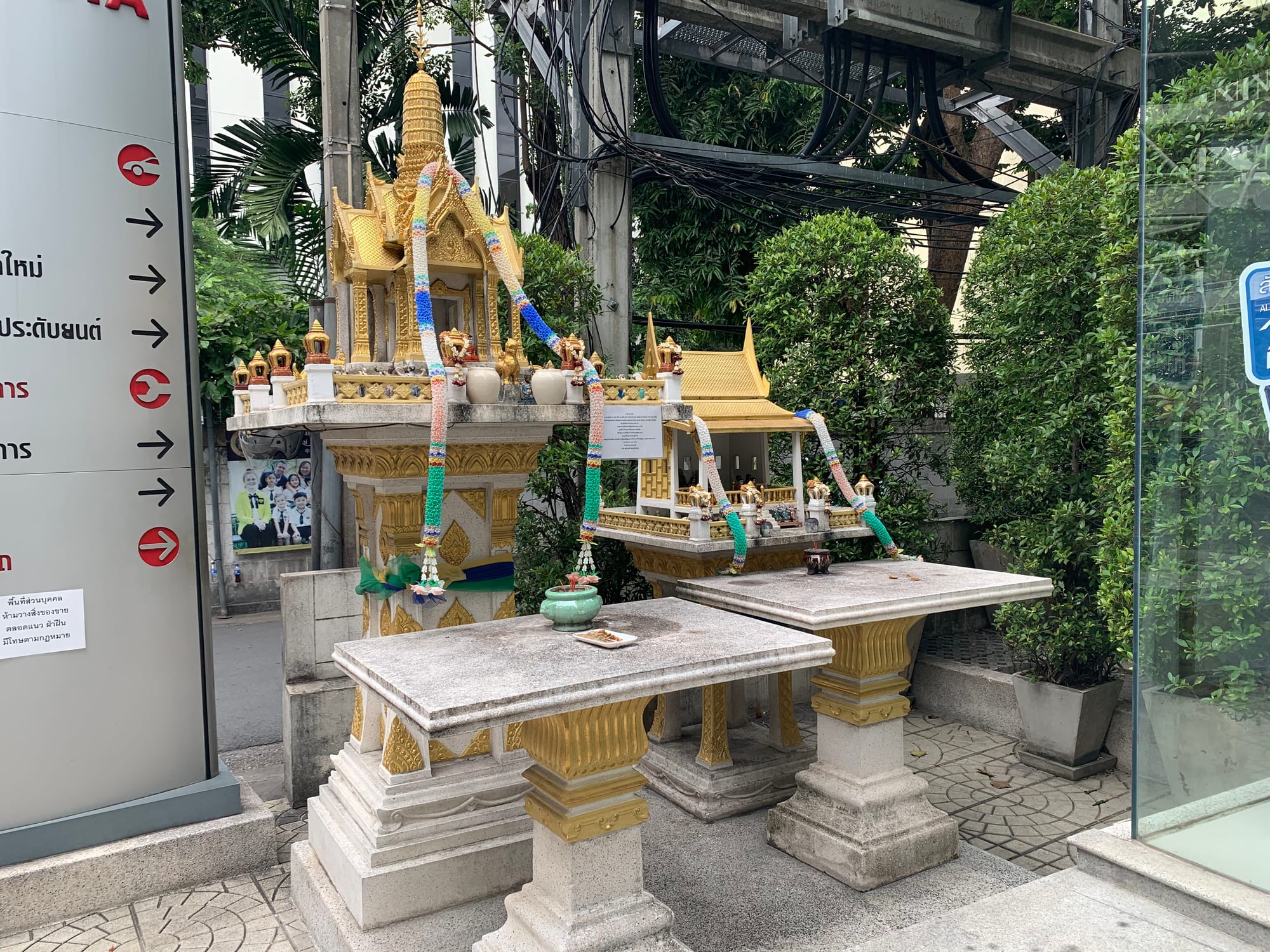
At the heart of everyday practice is merit-making: good deeds, above all giving to monks, that are believed to bring spiritual benefit to the giver and to those they dedicate it to. Families often see a son's ordination as a monk as bringing merit to the whole household. Thai Buddhism also absorbs older beliefs drawn from animism and Hinduism. Outside homes, offices and hotels stand spirit houses, small shrines on pillars where daily offerings are made to the spirits believed to live in that place.
Buddhism and the monarchy are regarded as the twin symbols of Thai unity. Portraits of the late King Bhumibol, still described as the heart of the Thai people, are displayed in living rooms, shops and public spaces. The royal anthem is played in cinemas before films and at the opening of important events, and people rise to their feet. Disrespect towards the royal family is both culturally taboo and a crime. Section 112 of the Criminal Code, the lèse-majesté law, provides that anyone who defames, insults or threatens the king, the queen, the heir apparent or the regent faces three to 15 years in prison for each offence. The UK government notes that the law can be interpreted broadly, and that journalists, activists and members of the public, foreigners among them, have been charged over comments or articles shared online.
Everyday behaviour is shaped by hierarchy and by face, a person's reputation and dignity. Status follows age, education and occupation, and how people sit, walk and speak adjusts to those present. Harmony is prized, so flat refusals and open criticism are avoided, raising the voice is taken as a loss of self-control, and a smile is often a gesture of politeness rather than a sign of agreement. The phrase mai pen rai, "never mind", captures an easy acceptance of what cannot be changed.
Greetings and meeting people
The spoken greeting is sawadee, followed by kha when a woman is speaking and khrap when a man is. It comes with the wai, palms pressed together and raised towards the face with a small bow of the head. The higher the hands and the deeper the bow, the greater the respect: for parents, teachers and elders the thumbs touch the nose. A senior person returns a younger person's wai with a lighter version, hands at chest level. Monks are greeted with the highest form of respect, and in religious and royal settings people may kneel and bow to the floor.
People are usually addressed as Khun followed by their first name, a polite title for both men and women, while close friends and people of the same age drop the title, and many Thais go by a short nickname. Handshakes are common in international settings, though a man generally waits for a woman to offer her hand.
The body carries a clear hierarchy of its own. The head is regarded as the most sacred part of the body, so touching anyone on the head, even a child, is disrespectful. The feet are the lowest and least clean, and pointing them at a person or at a Buddha image is a serious slight. Pointing at someone with a finger is thought rude, and people are beckoned with the fingers facing down. Public displays of affection are rare, and physical contact between men and women in public is generally avoided.
Hospitality and being a guest
Shoes come off before entering a home, just as they do at a temple, and guests step over the threshold rather than on it, since a spirit is traditionally believed to dwell there. Gifts are usually small tokens, such as sweets or a souvenir. Wrapping in blue, black or green is best avoided, as these colours are associated with mourning, and a present is not usually opened in front of the giver unless the host invites it.
At the table, food is shared from common dishes, taken with the serving spoon rather than one's own utensils, and items are passed and received with the right hand. Leaving a little rice on the plate signals that the guest has had enough; a completely clean plate may suggest the host did not provide enough. Throughout, the eldest and most senior people are shown particular deference, and younger family members are expected to follow their advice.
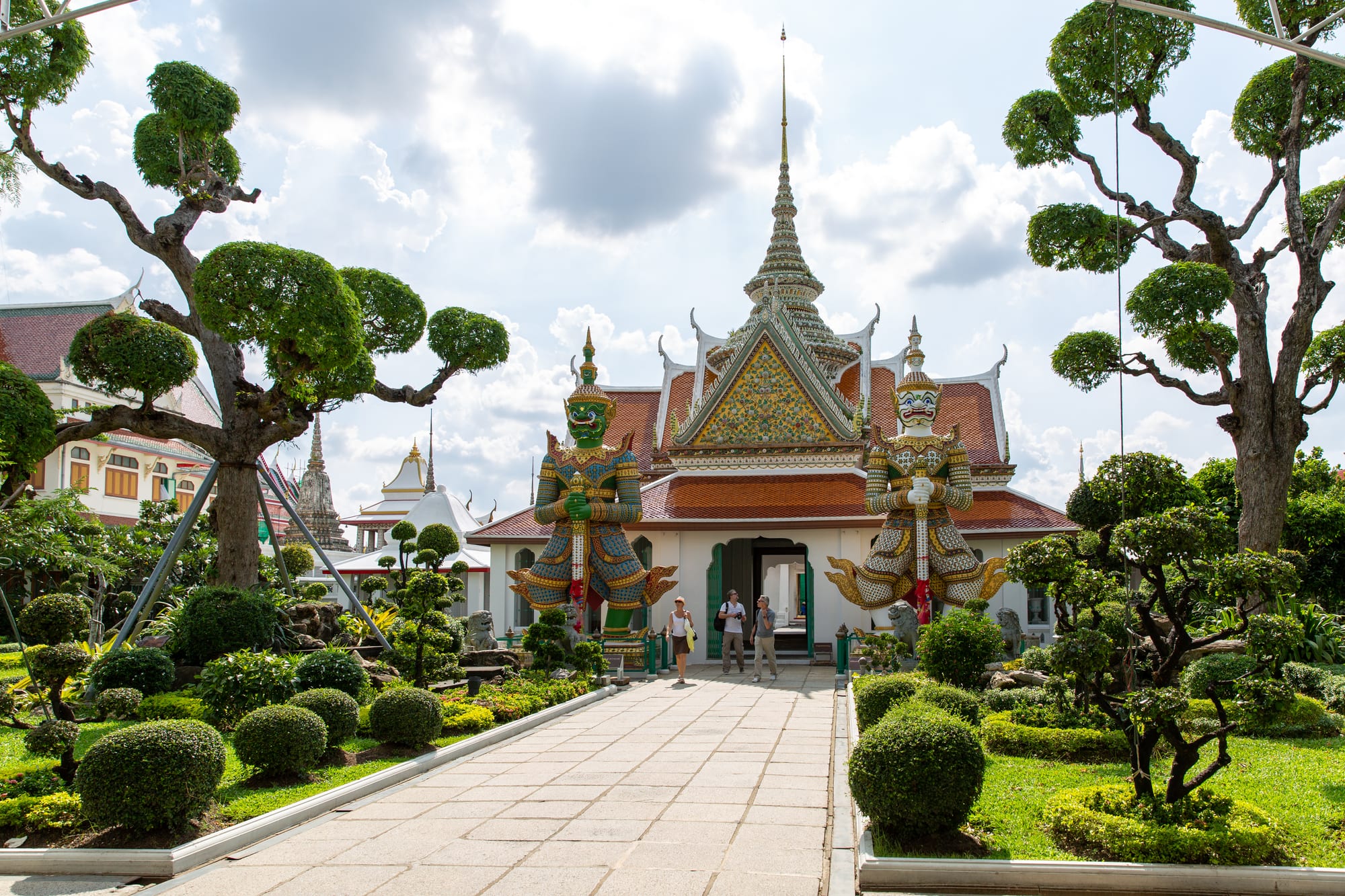
Temples welcome visitors, but with clear expectations. The Tourism Authority of Thailand asks men to wear sleeved shirts and long trousers or shorts that cover the knee, and women sleeved tops and skirts below the knee. Shoes are left outside, hats and sunglasses removed, phones silenced and voices kept low. Visitors sitting before a Buddha image turn their feet away from it, walk around images clockwise, and avoid turning their backs on them. Women may not touch a monk or his robes; anything offered to a monk by a woman is handed to a man to pass on, or set down for the monk to take.
Festivals and life's big moments
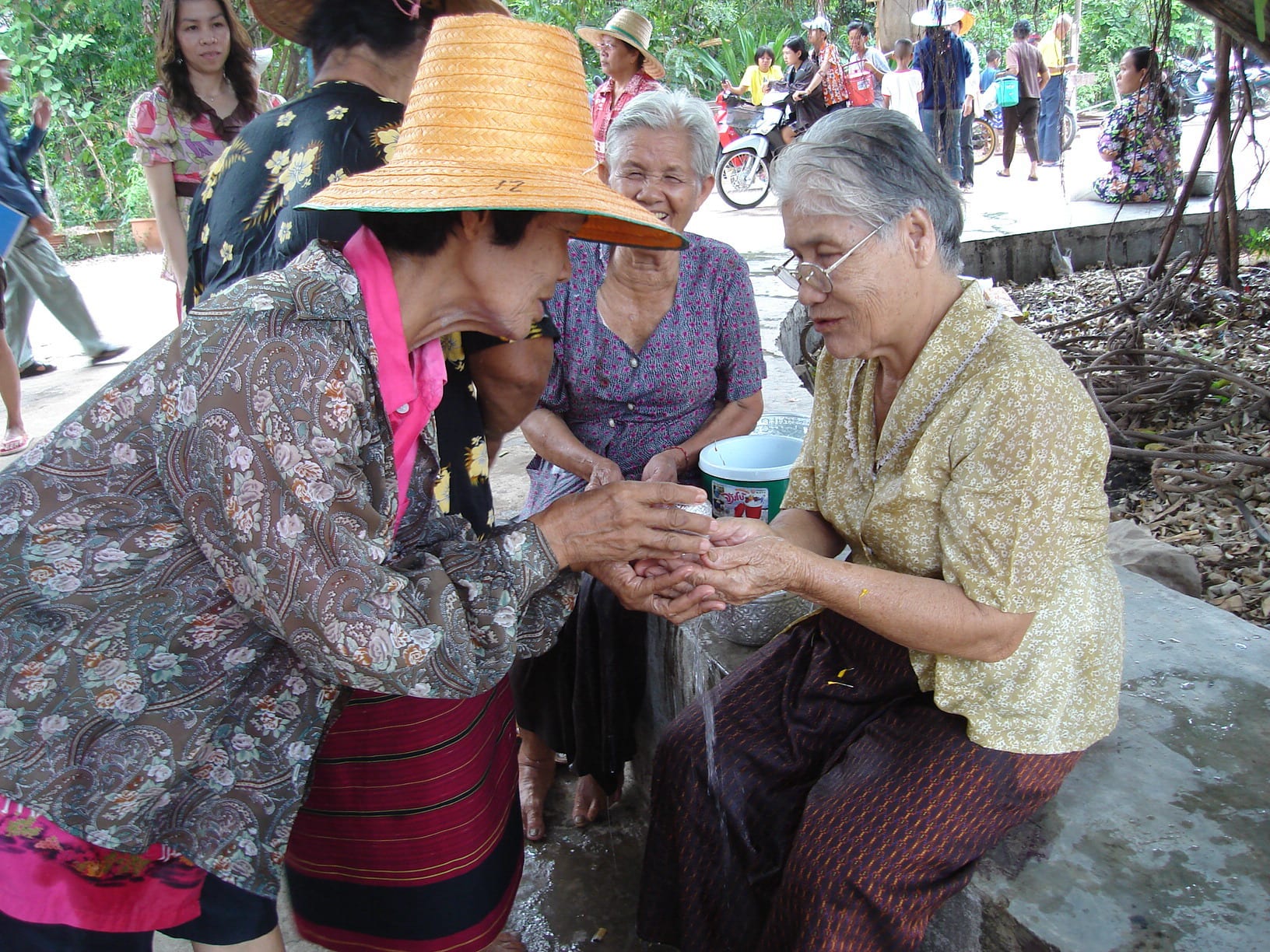
The biggest festival is Songkran, the traditional Thai New Year, held from 13 to 15 April. Beneath the famous water fights lies a quieter set of rituals. People bathe Buddha images, make merit at the temple, and pour fragrant water over the hands of parents and elders to ask for their blessing. Water stands for cleansing, reverence and good fortune, and the festival brings families home to honour their elders. Songkran is on UNESCO's list of intangible cultural heritage. On the full moon of the twelfth lunar month, usually in November, Loy Krathong sees people float small decorated offerings on rivers and lakes to give thanks for water and let go of misfortune.
The Buddhist lunar calendar sets further holidays, so their dates move each year. Makha Bucha, usually in February or March, recalls the gathering of 1,250 monks to hear the Buddha preach; Visakha Bucha, usually in May, marks his birth, enlightenment and death, all believed to have fallen on the same full-moon day; and Asalha Bucha, usually in July, recalls his first sermon. On these days people visit temples and join candlelit processions that circle the main hall clockwise. The start of the Buddhist Lent, Khao Phansa, is also a holiday. Royal occasions fill the rest of the calendar, among them the king's birthday on 28 July, National Mother's Day on 12 August, the birthday of the late King Bhumibol on 5 December, which is also National Day and Father's Day, and his memorial day on 13 October.
Weddings are often held in two parts: a Buddhist ceremony in which monks are offered food and chant blessings, followed by family rituals and a reception. The groom's party brings engagement trays to the bride's house in a procession, carrying the sinsod, or bride price, a ring, betel nuts, incense and candles. At the rod nam sang ceremony, guests pour holy water from a conch shell over the couple's hands as they offer their blessings, and most give money in an envelope to help with the costs.
Funerals are Buddhist occasions of merit-making. Mourners first pay their respects by pouring perfumed water over the hand of the deceased. Monks chant each night of the funeral rites, which are usually held for three, five or seven days, before cremation at a temple. Mourners dress modestly in black or white, guests may contribute money to the merit-making ceremonies, and further merit is made for the dead at seven, fifty and one hundred days.
Arts, crafts and music
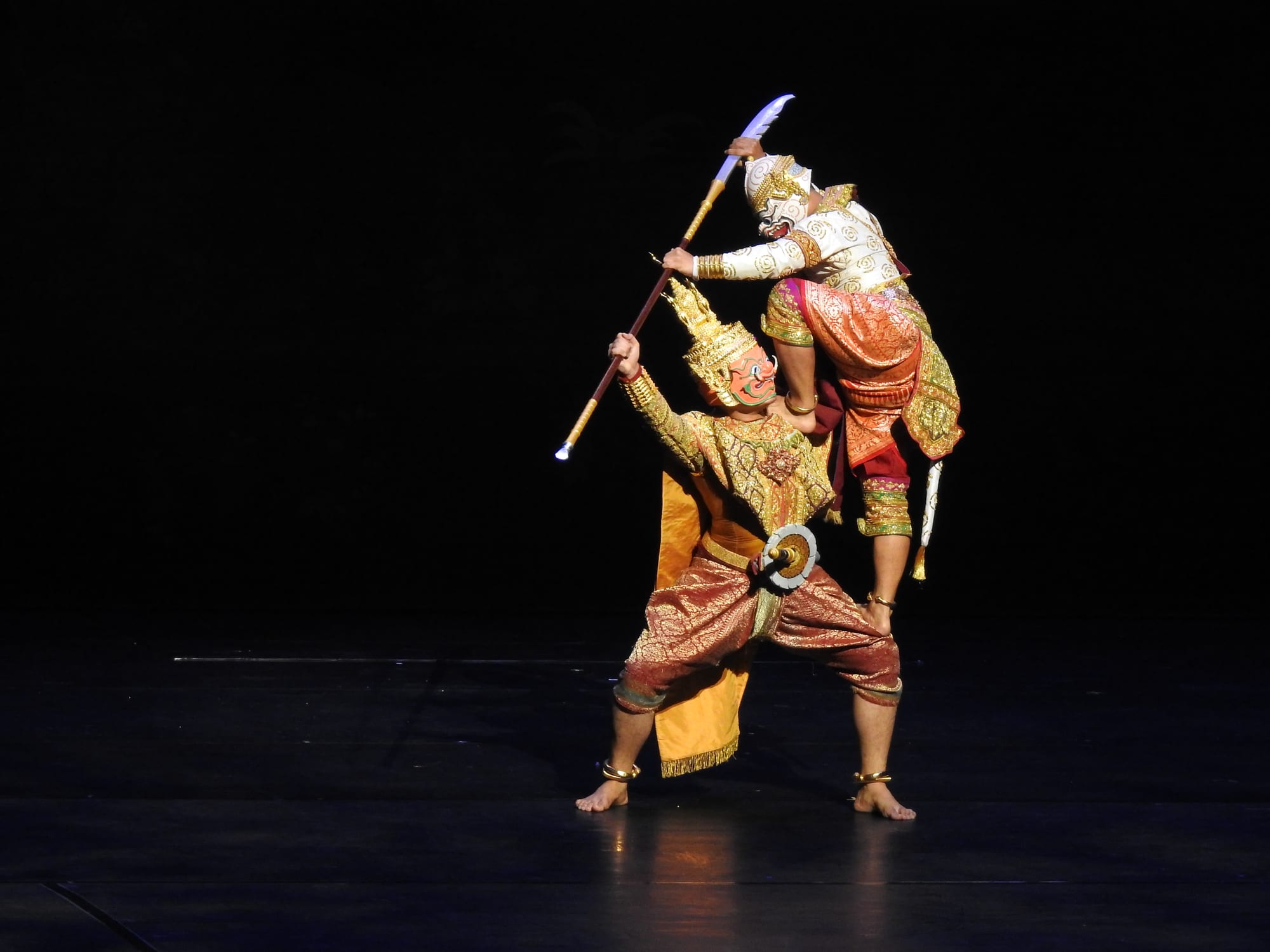
The grandest of the classical arts is khon, a masked dance drama that combines music, song, literature, dance, ritual and craft, and which is on UNESCO's list. Its stories come from the Ramakien, the Thai version of the Ramayana, in which the hero Rama leads an army of monkeys against Thotsakan, king of the giants. Once cultivated in the royal and princely courts, khon is now taught mainly in schools and colleges, still largely by traditional methods, and its glittering costumes and carved masks convey each character at a glance. At its heart lies the triumph of good over evil.
Classical music accompanies khon and court ceremonies. The piphat ensemble of percussion and wind instruments plays for royal ceremonies and masked dance, the mahori blends strings and percussion, and the khrueang sai, built around stringed instruments, suits more intimate indoor settings. Instruments include the ranat, a wooden xylophone, the saw fiddles and the jakhe zither, while in the north-east the khaen, a bamboo mouth organ, accompanies the sung storytelling of mor lam. Respect for teachers runs through every art, and musicians and dancers honour their teachers in the Wai Khru ceremony.
Traditional healing is part of the heritage too. Nuad Thai, traditional Thai massage, grew from village self-care, when every community had massage healers for aching farm workers, and it is also on UNESCO's list, alongside the southern dance drama nora.
Dos and don'ts for visitors
- Do check the latest government travel advice before any trip; the UK advises against all but essential travel to Pattani, Yala and Narathiwat provinces, four districts of southern Songkhla, and within 20 km of the land border with Cambodia.
- Do treat the monarchy with respect in speech and online; insulting or defaming the king and royal family is a crime carrying long prison sentences.
- Do return a wai when greeted with one, and stand when the royal anthem is played.
- Do cover shoulders and knees at temples, take off shoes, and step over the threshold rather than on it.
- Don't touch anyone's head or point the feet at people or Buddha images.
- Don't, as a woman, touch a monk or his robes; pass any offering through a man or set it down for him.
- Don't smoke in public places or bring a vape or e-cigarette into the country, both of which are illegal, and remember that cannabis is now legal only on a medical prescription.
- Don't raise the voice or show anger in public, which causes a loss of face on all sides.
What to take away
In Thailand respect is written in the body, in the height of a wai, the care taken with the feet and the reverence shown to monks and monarchy, and visitors who move gently and speak softly will find a welcome as warm as the country's famous smile.