Culture & Customs · Uruguay
Uruguay: A Thermos Under Every Arm
Latin America's most secular country, a single kiss on the cheek for almost everyone, a shared gourd passed around the circle, and a carnival sung in satire and beaten out on candombe drums
By Globeway Editorial · 30 September 2026
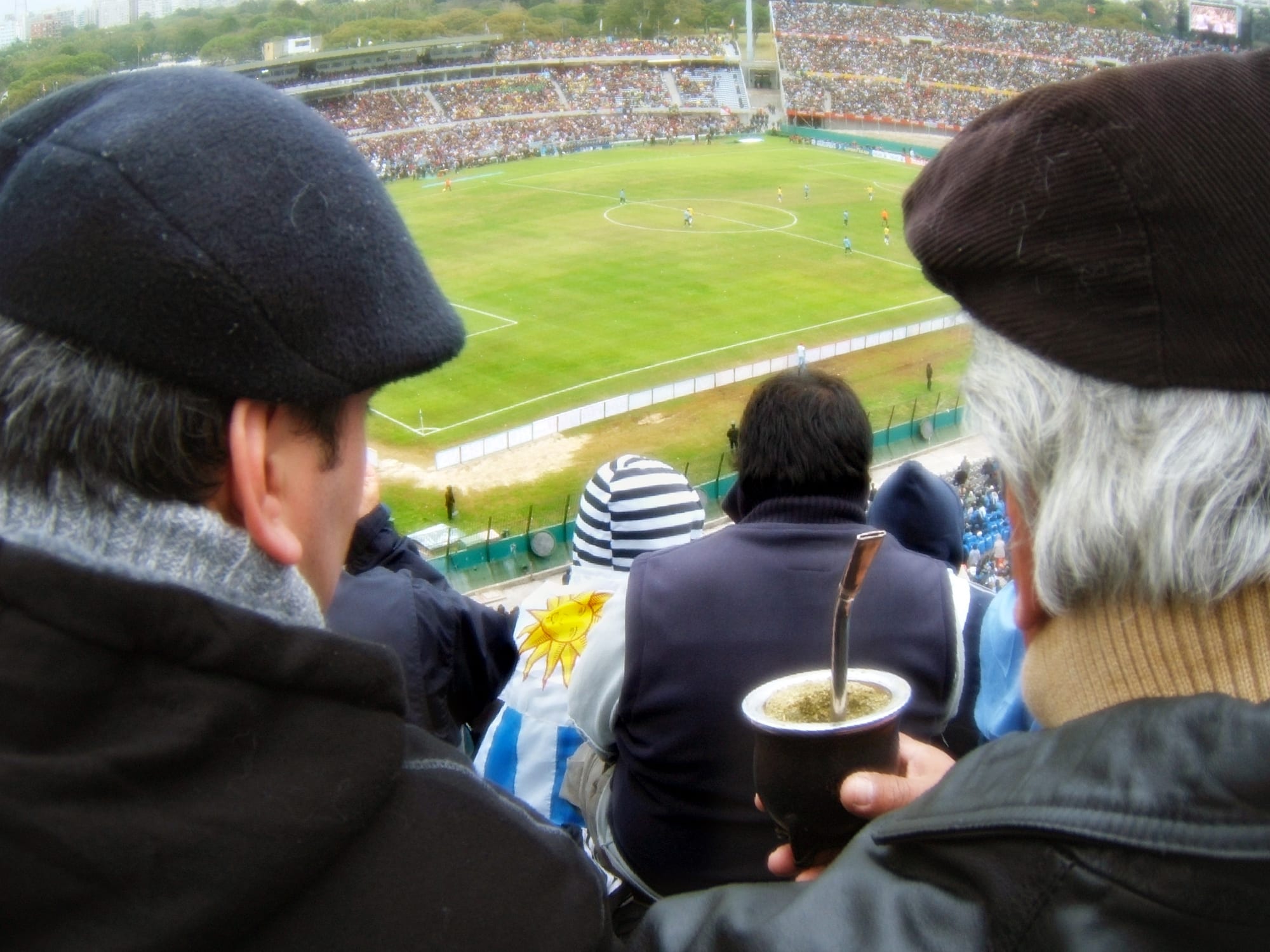
A friend arrives at a Uruguayan home, and before coats are off or news exchanged, a gourd of warm mate is held out at the door. The host has already tasted the first bitter brew, to check it is right, and now acts as cebador, the one who pours. The gourd goes to each person in turn, is drained through its metal straw, and comes back to be refilled for the next, the same gourd and the same straw for everyone in the circle. Nothing about it is formal, yet everyone knows the rules. Uruguay's Ministry of Tourism calls mate a gesture of welcome and an element of communion, and quotes the anthropologist Daniel Vidart on its deeper effect: it evens out social classes, and it was the mate that made the circle of friends, not the circle that brought the mate. It is a fitting emblem for a small, understated country that prizes equality, friendship and taking time over the people around it.
Faith, identity and values
Uruguay is, in the words of the Pew Research Center, far and away Latin America's most secular country. In Pew's regional survey, 42 per cent of Uruguayans identified as Catholic and 15 per cent as Protestant, while 37 per cent said they had no religious affiliation, a share that no other Latin American country surveyed came close to. Church and state were separated early and thoroughly, and religion is generally treated as a private matter rather than a public identity. Holy Week is known officially as Tourism Week, Christmas Day as Día de la Familia, Family Day, and for many families Tourism Week it is a time for camping and fishing trips rather than processions.
Faith has not disappeared, however, and it takes some unexpected forms. Every 2 February, followers of Afro-Brazilian Umbanda gather on the beaches at dusk to honour Iemanjá, the goddess of the sea, setting out candles, white flowers, fruit and small boats as offerings at the water's edge in the hope that she will grant their petitions. Uruguay also has long-established Jewish, Protestant and other communities, and freedom of belief is taken for granted.
The values that shape everyday behaviour are modest and egalitarian. Showing off is frowned upon, and the ideal is to treat everyone as an equal, a spirit the tourism ministry sees in the sense of equality among those who share a mate. The gaucho, the horseman of the open grasslands, remains a national symbol of freedom, individuality and courage, and of a frank, dignified hospitality. Football carries enormous emotional weight: the national team's world and Olympic titles made the game a matter of unusual intensity, and many children play in a youth team or on a patch of open ground. Uruguayans also cherish their social calm and tolerance, and are often quietly proud of the country's reputation for stability.
Greetings and meeting people
The everyday greeting between friends and acquaintances is a single kiss on the right cheek, and it is used regardless of gender. Men who know each other commonly greet this way too, sometimes even on being introduced, which can surprise visitors from countries where men only shake hands. A handshake is standard at a first business meeting or in a formal setting, and among men who have just met. On arriving at a gathering, it is usual to greet each person individually rather than with a wave to the room, and to say goodbye to each person individually on leaving as well.
Conversation tends to be warm but unhurried and relatively low-key by regional standards. Uruguayans are generally modest about their country and wary of anyone who boasts, and they appreciate interest in what makes Uruguay distinct from its larger neighbours; being mistaken for Argentines is a common irritation. Football, family and food are safe subjects, while the military dictatorship of 1973 to 1985 remains a painful memory for many families and is best left for the other person to raise.
Hospitality and being a guest
Mate is the heart of Uruguayan hospitality, and it comes with its own etiquette. One person, the cebador, prepares the gourd, drinks the first serving and then fills it with hot water from the thermos for each person in turn around the circle. The drinker finishes the whole gourd, until the straw gurgles, and hands it straight back to the cebador rather than passing it on. The straw, or bombilla, should never be stirred or moved, since that disturbs the carefully settled yerba. Saying "gracias" when handing the gourd back is not simply polite: it signals that the drinker has had enough and should be left out of the next round. Declining a first offer is fine, but joining the circle is one of the simplest ways to be welcomed in.
The other great invitation is to an asado. The tourism ministry describes the suggestion to get together for an asado as an offer of reunion and friendship as much as a meal, and many homes, and even apartment buildings, have their own grill for the purpose. For guests, the point is the company: arriving with something to share, staying for a long, unhurried afternoon and thanking the person who has tended the fire are all part of the occasion.
Eating out has two customs worth knowing. Many restaurants add a cubierto, a cover charge for bread and other small items, to the bill; it goes to the restaurant and is not a tip. A tip of about 10 per cent is customary for good service in restaurants, and service is rarely included except in the most tourist-oriented places. Taxi drivers, by contrast, are not normally tipped, and simply rounding up the change is enough for a coffee or a drink.
Festivals and life's big moments
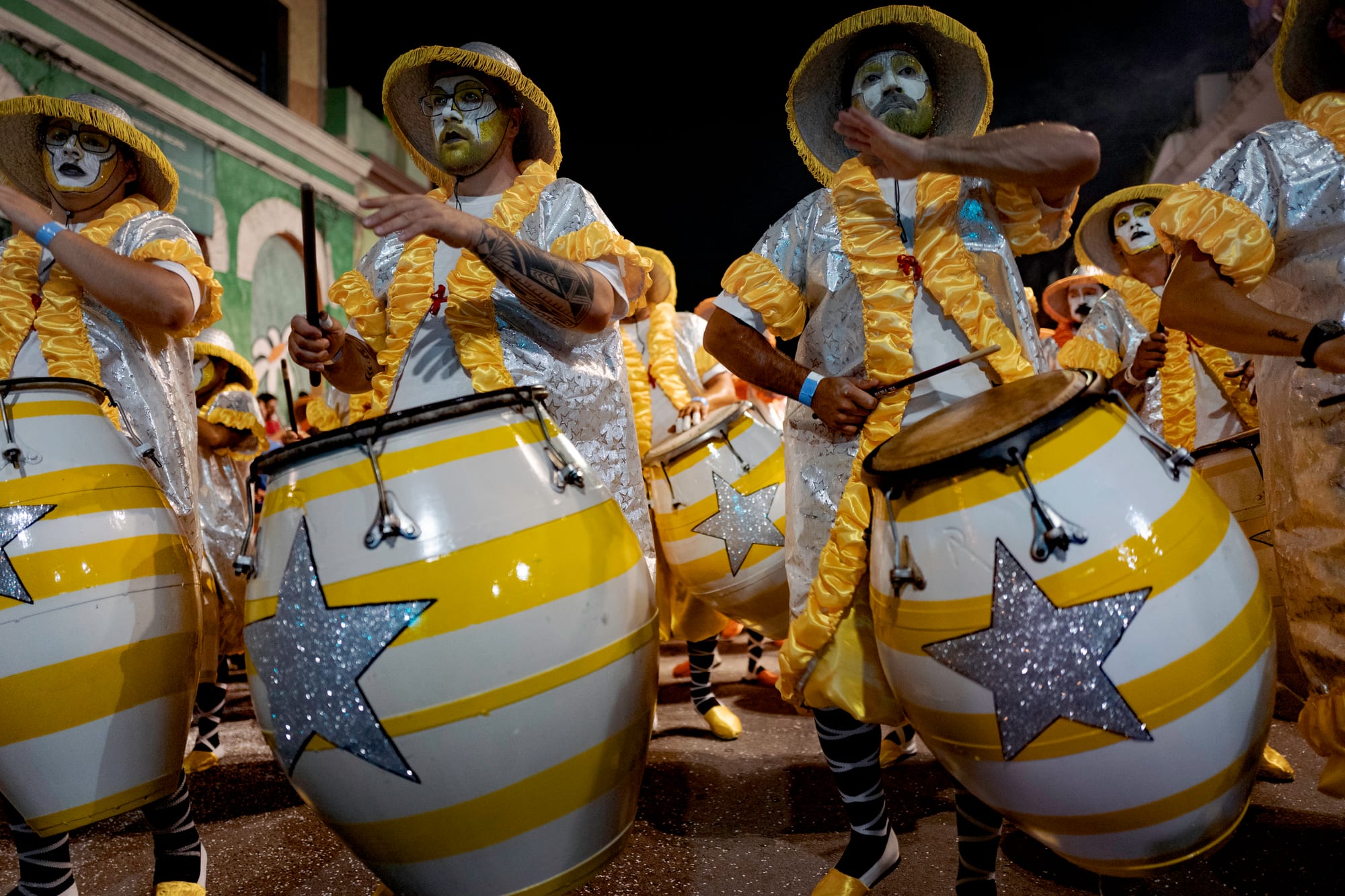
Carnival is the great event of the year, and the tourism ministry describes it as the longest in the world, running from late January for well over a month. Its two most distinctive art forms are candombe and murga. Candombe, on UNESCO's list of intangible cultural heritage, grew up among Uruguayans of African descent and is described by UNESCO as a symbol of resistance and of the community's memory. Its drum calls, or llamadas, bring rows of drummers through the streets of historic neighbourhoods on Sundays and holidays throughout the year, and during carnival the Desfile de Llamadas parade gathers thousands of drummers and tens of thousands of spectators.
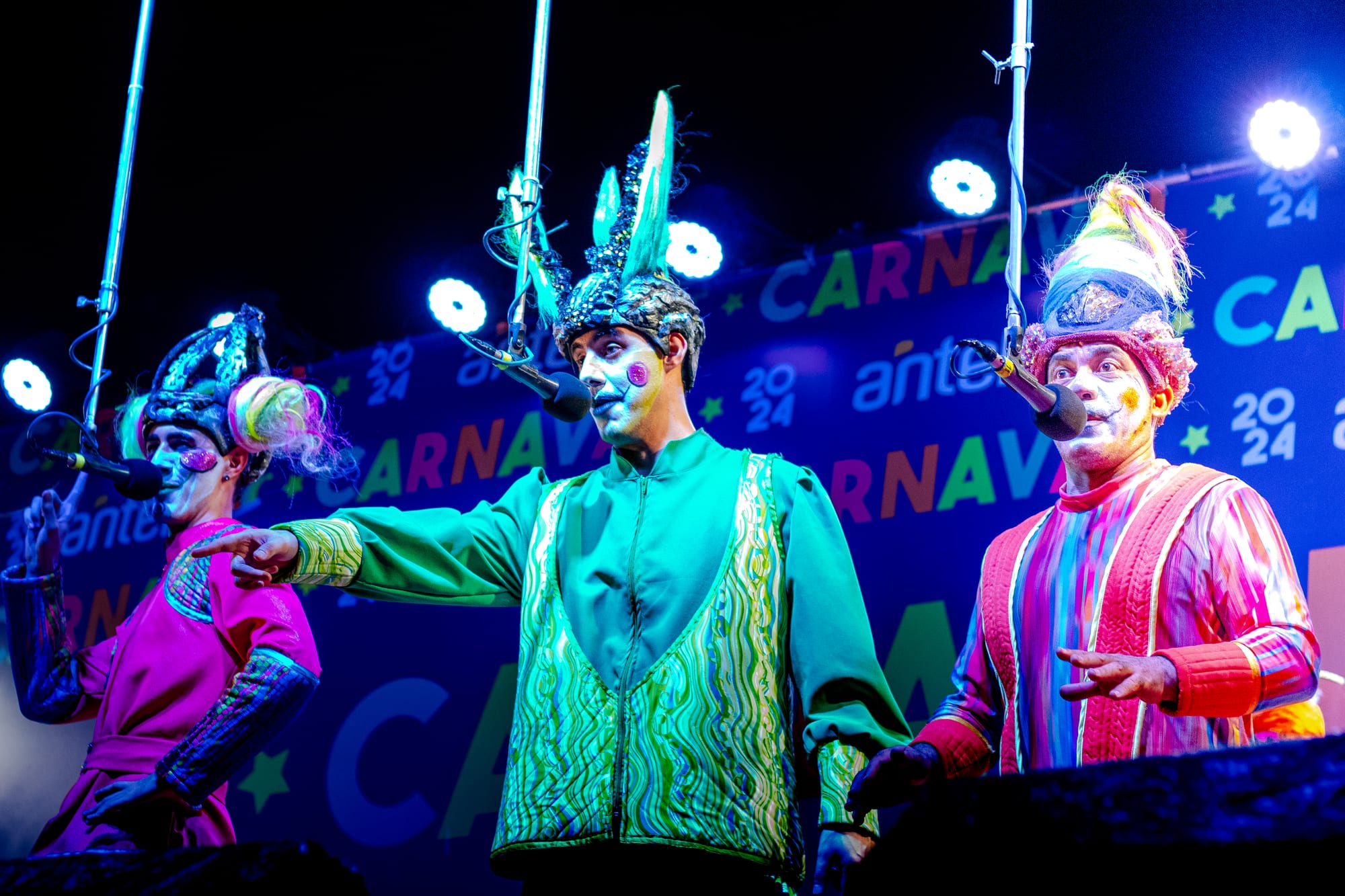
Murga is carnival's sung theatre. A murga is a company of up to 17 performers, typically a director, a choir divided by vocal range, and three percussionists on bass drum, cymbals and snare. Though linked in its origins to the carnival of Cádiz in Spain, it has become thoroughly Uruguayan. In bright costumes and painted faces, murgas perform humorous, satirical songs about the year's politics and society on neighbourhood stages called tablados and compete before judges in the official contest. Most neighbourhoods have a murga to follow, and rehearsals are open to the public, so whole families learn the repertoire by heart.
Other dates bring the country out in different ways. Holy Week doubles as Semana Criolla, when rural traditions come to town with horse-breaking displays and folk music festivals. Each year in early October, the Día del Patrimonio, or Heritage Day, opens museums, government buildings, factories and historic homes to the public free of charge; held since 1995, its 2024 edition offered more than 500 sites and 1,500 events. And on 24 August, the Night of Nostalgia fills dance floors with old favourites.
Family milestones are marked quietly and in keeping with the secular state. Civil marriage has been the only legally valid form of marriage since 1885; a religious wedding carries no legal weight on its own and is held, if at all, in addition to the civil ceremony at the registry, and many couples choose the civil wedding alone. When someone dies, the wake, or velorio, follows soon afterwards. Once held at home, it now normally takes place at a funeral parlour, where the family sits near the coffin and visitors come to shake hands and offer their condolences, the pésame.
Arts, crafts and music
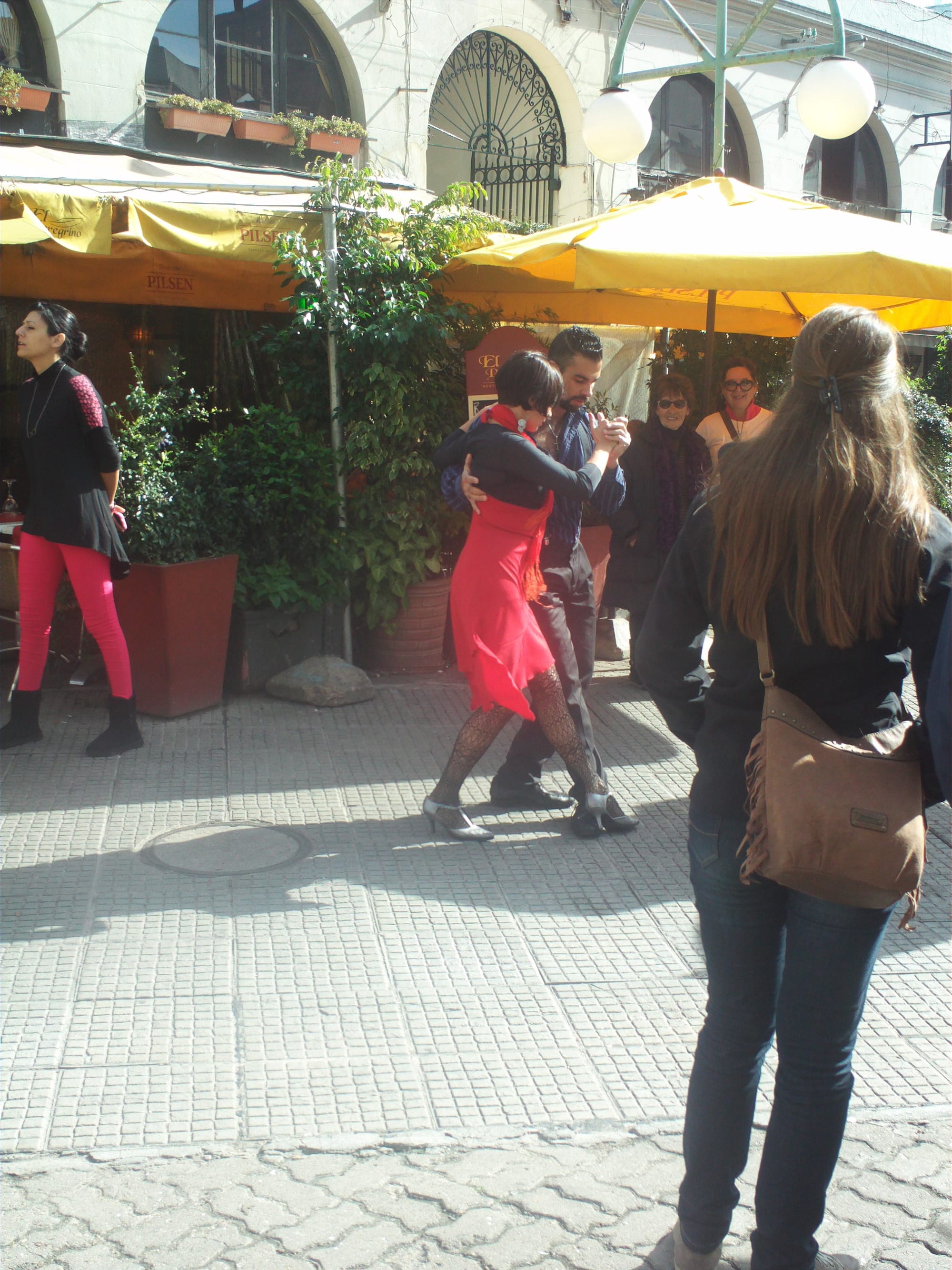
Tango belongs to both banks of the Río de la Plata. UNESCO inscribed it jointly for Argentina and Uruguay, describing its birth among the urban working classes of Buenos Aires and Montevideo from a mix of European immigrant, African and criollo traditions. The dance, the music and the poetry are all part of it, and it is still danced in traditional halls. Uruguay claims the most famous tango of all: according to the tourism ministry, "La Cumparsita", by the Uruguayan composer Gerardo Matos Rodríguez, was first performed publicly at the Café La Giralda in Montevideo, a site that now houses a tango museum.
Candombe is as much a musical tradition as a festival one. It is played on three drums: the small, high chico, the repique, which improvises and leads, and the large, deep piano. According to UNESCO, the pattern played on the piano drum differs from one historic neighbourhood to another, marking each one's identity, and the tradition is handed down within families of African descent, with long-established drumming families at the head of each procession. Before a llamada, drummers gather around a small fire to tune the skins of their drums.
The gaucho has left a lasting mark on the arts as well as on values. The figure of the free, brave horseman runs through Uruguayan poetry, song, literature and painting, and the skills of the countryside, above all horsemanship, are still celebrated at rural festivals and during Semana Criolla.
Dos and don'ts for visitors
- Do greet friends and new acquaintances with a single kiss on the right cheek, and greet each person in a group individually.
- Do accept a mate if offered, drink the whole gourd and hand it straight back to the cebador.
- Do say "gracias" only when handing back the mate for the last time; it means no more for now.
- Do leave a tip of about 10 per cent in restaurants; the cubierto on the bill is not a tip.
- Do go to a tablado or a llamada at carnival time to hear murga and candombe at close range.
- Don't stir or move the bombilla in a shared mate.
- Don't call Uruguayans Argentines, or treat the two countries as one.
- Don't boast or flaunt wealth; modesty is valued.
What to take away
Uruguay rarely asks much of its visitors, but the passing of a single gourd around a circle says a great deal about the country: in Uruguay, sharing and treating everyone as an equal are the manners that matter most.