Culture & Customs · United States Virgin Islands
US Virgin Islands: Where Good Night Means Hello
A greeting owed to everyone, churches planted in the Danish era, a synagogue with a sand floor, stilt-walking spirits at carnival and an official music born on the plantations
By Globeway Editorial · 30 September 2026
It is early evening, and a visitor steps into a small shop with a question ready. Before it can be asked, the shopkeeper looks up and says, warmly, "Good night." In the US Virgin Islands those words are a greeting rather than a farewell, and the right reply is to return it before saying anything else. Launching straight into a question, however polite, can come across as rude. It is a small moment, but it captures the territory well: beneath the dollar, the US mail and the American cars sits an older, Afro-Caribbean code of courtesy, one that expects every encounter to begin by acknowledging the other person as a person first.
Faith, identity and values
The US Virgin Islands are an overwhelmingly Christian territory. The Pew Research Center estimated that about 95 per cent of the population was Christian in 2010, with fewer than 4 per cent unaffiliated with any religion. Estimates published in the CIA World Factbook for the same year put Protestants at about 65 per cent and Roman Catholics at about 27 per cent. The churches' roots go back to the Danish era. The Lutheran congregation of Frederick Church on St Thomas was founded in 1666, a few years before Denmark formally took the island, and is counted among the oldest Lutheran churches in the western hemisphere. In the early eighteenth century Moravian missionaries arrived in the islands to educate and convert enslaved Africans; they translated the Bible into the local Dutch creole and, in the words of the Smithsonian's folklife researchers, played a major role in shaping the islands' culture.
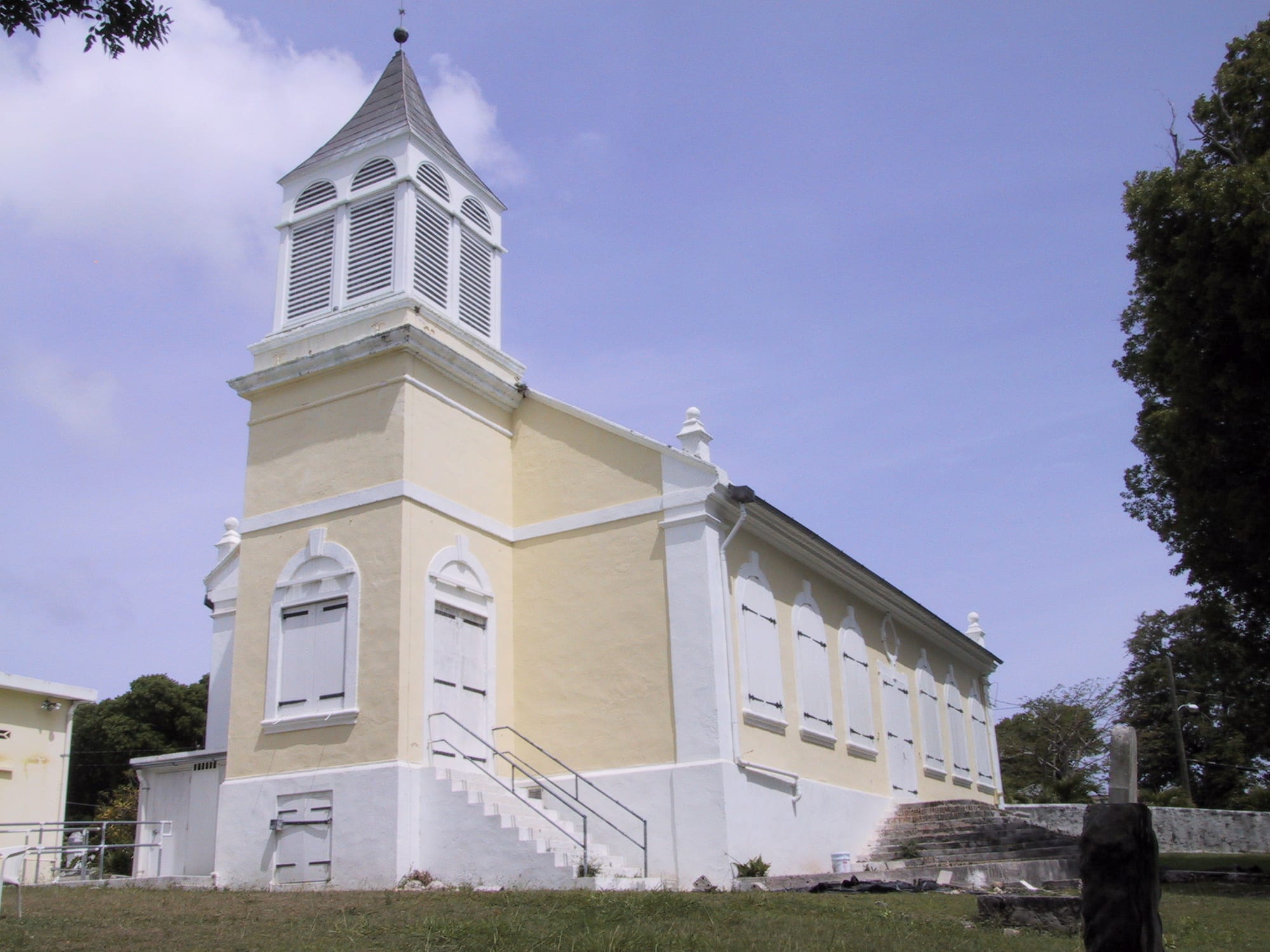
There is also a small but historic Jewish community. Its congregation was founded in 1796 by nine Sephardic families, and the synagogue they rebuilt in 1833 still keeps a floor of sand, which the congregation explains as a memory of ancestors who, fleeing the Inquisition, muffled the sound of secret worship.
Identity in the islands is layered. The culture is Afro-Caribbean at its core, shaped by more than two centuries of Danish colonial rule, by a century of American government since 1917, and by migration from the wider Caribbean and from Puerto Rico, a tie recognised in the territory's own holiday calendar. Residents are US citizens, and questions about the territory's future status remain a matter of local debate. Local people are generally described as courteous and traditionally conservative, and good manners are treated as a genuine value rather than a formality.
Greetings and meeting people
The greeting matters more than almost anything else a visitor will do. A friendly "good morning" or "good afternoon" is expected on entering a shop, office or taxi, and when passing people in the street, and it comes before any question or request. "Hello" or "hi" on its own does not carry the same weight. After dark, the greeting becomes "good night", which confuses many newcomers because it means hello rather than goodbye. Taking a moment for these niceties is noticed and appreciated; skipping them is noticed too.
The same unhurried courtesy runs through everyday dealings. Conversation tends to start with the person before the business, and local people often put friendliness ahead of strict rules, something visitors notice even at road junctions, where drivers commonly wave one another through.
Hospitality and being a guest
Dress is where visitors most often misjudge the mood. Swimwear belongs on the beach. On leaving it, women are expected to put on a cover-up rather than walk about in a bikini, and men to put on a shirt, since the local population is traditionally conservative about dress in town, in shops and in restaurants. The same modesty is sensible when visiting historic churches and the synagogue.
Food is one of the easiest ways into island life, and it is shared most generously at festival time. Carnival on each island includes a food fair, where local cooks and vendors sell traditional dishes, drinks and sweets to the crowds, and cultural festivals include demonstrations of traditional baking and drink making. At these gatherings, as elsewhere, a greeting before ordering and a little patience go a long way.
Festivals and life's big moments
The territory keeps its own calendar alongside the national one. Its legal holidays include Three Kings Day on 6 January; Transfer Day on 31 March, marking the transfer of the islands from Denmark to the United States in 1917; Holy Thursday, Good Friday and Easter Monday; Emancipation Day on 3 July, recalling the end of slavery in the Danish West Indies in 1848; D. Hamilton Jackson Day on 1 November; Puerto Rico and Virgin Islands Friendship Day in October; and Christmas Second Day on 26 December, alongside the US federal holidays.
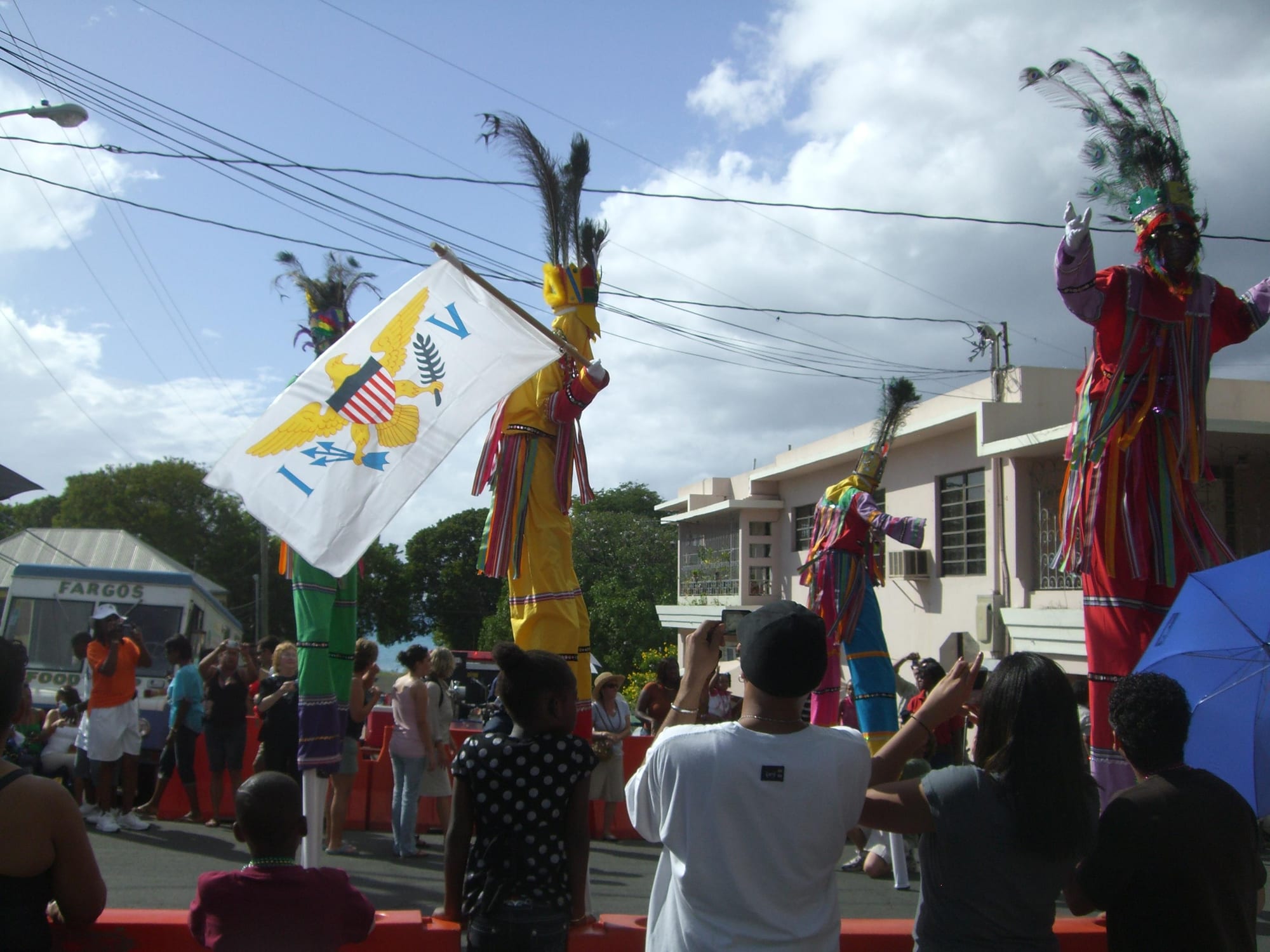
Carnival is the great celebration, and each of the three main islands holds its own. On St Thomas it falls in spring, and the government regularly gives its employees leave for its food fair, J'ouvert street party and parades. St John's carnival comes in June and July. On St Croix the Crucian Christmas Festival, a tradition the Department of Tourism traces back to the 1800s, runs from early December into the first days of January, with a festival village of nightly music, a food fair, J'ouvert and parades for children and adults.
The towering figures at the heart of every carnival are the moko jumbies, masked dancers on stilts that can reach 10 to 20 feet. Local tradition traces them to West Africa, where such figures were seen as seers and protectors of the village, tall enough to spot evil before it arrived; the name is often explained as joining a West African word for healer with a Creole word for spirit. Enslaved Africans are said to have kept the tradition alive by folding it into festive occasions when their own practices were forbidden. Costumes cover the performer completely and were once hung with mirrors to frighten away evil spirits, and dancing beneath a moko jumbie is considered good luck.
An older festive custom survives mostly in memory. The tea meeting, brought by migrants from Barbados and neighbouring islands, was a mixture of variety show and church social, traditionally held around Christmas. A chairman presided over a costumed king and queen while speakers, each in character, came forward in turn to deliver grand and deliberately flowery orations, with hymns from a choir in between and tea and homemade bread served at the midnight interval. The whole community took part, but because the event is so elaborate to stage, it is rarely held today.
Arts, crafts and music
In 2003 the territory's legislature passed a bill making quelbe the official traditional music of the Virgin Islands and requiring it to be taught in the public schools. Quelbe is a folk style with roots in both Africa and Europe, fusing the rhythms and chants of bamboula with cariso songs and melodies. It is played by scratch bands, a sound created by enslaved, self-taught musicians on the sugar plantations who made their own instruments. The classic line-up includes the squash, a gourd scraped with a stick, the steel, a triangle, and flute and banjo or ukulele, joined today by keyboards, drum kit, congas and electric bass.
Bamboula is older still: an African-rooted dance, song and drum tradition in which players work a goatskin drum with their fingers and the heels of their hands to change its tone. Colonial authorities feared it, and a Danish governor banned it on St Thomas in 1672, yet enslaved people kept it alive for centuries. Women have long been at its centre, and in 1892 a leader remembered as Queen Coziah led some 200 bamboula dancers to the port at Charlotte Amalie in a protest over the underpayment of women workers. The dance is now rare, and cultural practitioners are working to revive it.
Other traditions are kept alive through festivals and cultural groups. Quadrille, a traditional form of square dancing, is still performed by local troupes, and folklife events feature maypole dancing, storytelling, basket weaving, broom making from tyre palm, wood carving and the making of moko jumbie and masquerade costumes. Some of the basket-making styles still practised on the islands were introduced by the Moravian missionaries, and have a European look that folklorists have compared to baskets made in Appalachia.
Dos and don'ts for visitors
- Do say "good morning" or "good afternoon" before asking anything, whether in a shop, a taxi or on the street.
- Do return a "good night" after dark; here it is a greeting, not a goodbye.
- Do put on a cover-up or a shirt when leaving the beach, and keep swimwear out of town, shops and restaurants.
- Do look out for quelbe, quadrille and bamboula at festivals and cultural events.
- Do join the dancing beneath a moko jumbie if the chance arises; it is considered good luck.
- Don't launch straight into a request without a greeting; it is considered rude.
- Don't confuse the US and British Virgin Islands, which are separate territories with their own governments and traditions.
What to take away
In the US Virgin Islands the most important custom costs nothing at all: a proper greeting, offered to everyone and returned in kind, opens nearly every door in the territory.