Culture & Customs · Uzbekistan
Uzbekistan: Bread Broken by Hand
A guest offered tea before any questions, a hand on the heart for every greeting, bread that is never cut or thrown away, and a tea bowl kept deliberately almost empty
By Globeway Editorial · 30 September 2026
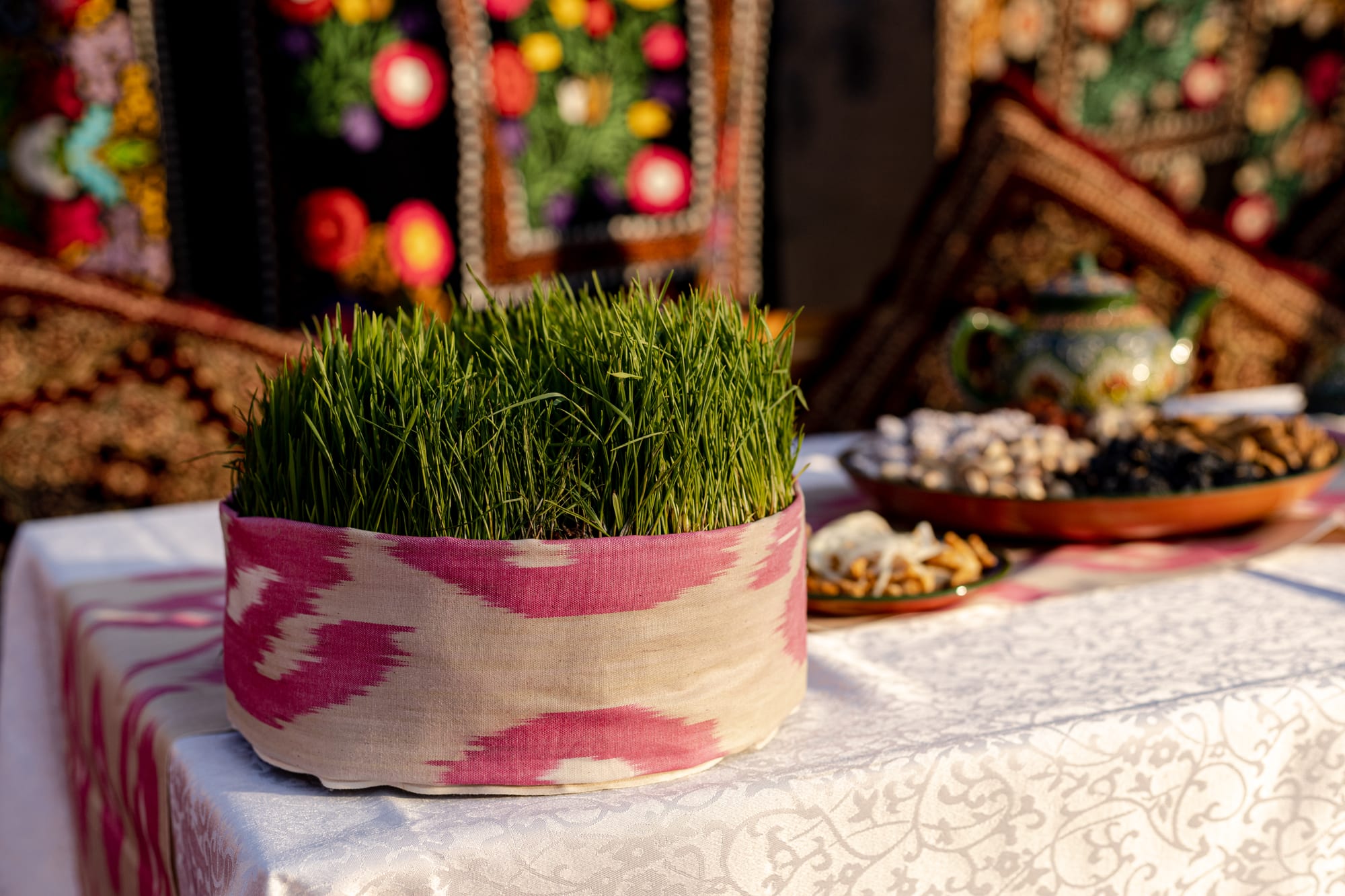
A stranger knocks at the gate of an Uzbek home. Before anyone asks who the visitor is or why they have come, they are invited inside and offered tea and something to eat; only then do the questions begin. The guest is shown to a place away from the entrance, where the most respected people sit, beside a cloth spread with round loaves of bread, fruit and sweets. The bread is torn by hand, never cut. Then comes the tea, poured into a small bowl and tipped back into the pot three times before the fourth pour is handed across, and even then the bowl holds only a sip or two. The meagre measure is deliberate: every refill is another chance to show the guest attention. Across Uzbekistan the ability to receive a visitor well is prized far above the richness of the table.
Faith, identity and values
Most Uzbeks are Muslims. United States government estimates cited in the State Department's religious freedom report put the Muslim share of the population at about 88 per cent, while Uzbekistan's own Ministry of Foreign Affairs estimates 96 per cent; most are Sunnis of the Hanafi school. The Russian Orthodox community, a little over 2 per cent, has been shrinking as ethnic Russians emigrate, and there are smaller Christian and Jewish communities. After seven decades of Soviet rule and continued state management of religion, faith is generally practised in a moderate, private way, and it is woven as much into family and community custom as into regular observance.
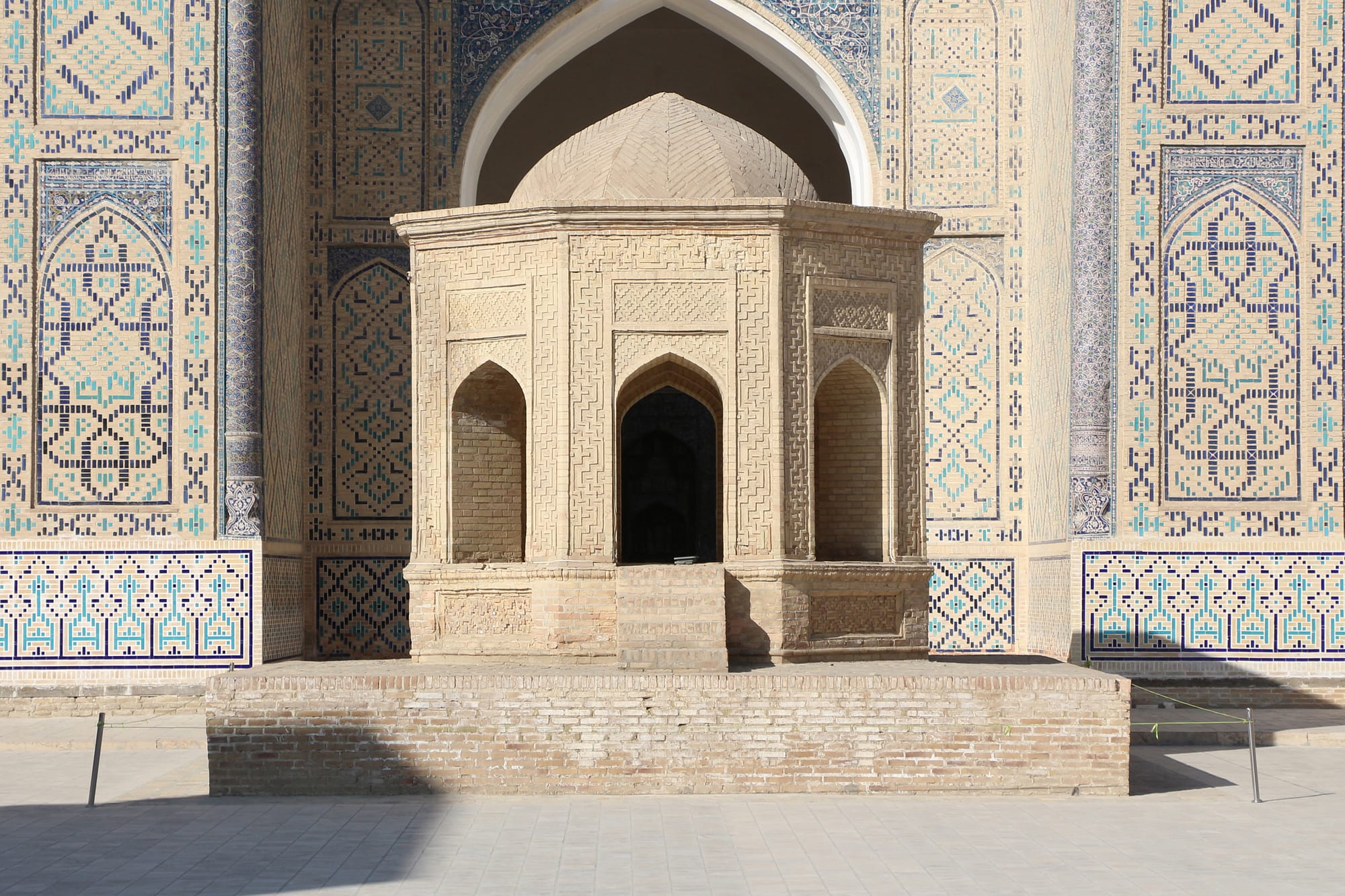
Modest dress is appreciated, especially away from the big cities and in the more conservative countryside. Short skirts and vest tops are best avoided, and women visiting an active mosque should bring a headscarf to cover their hair. Faith also shapes small daily gestures: at the end of a meal, many Muslims cup their hands before their face and pass them lightly over it as a way of giving thanks for the food.
Much of social life is organised through the mahalla, the neighbourhood community. The government describes it as more than a place of residence: a way of life and a centuries-old tradition that unites people, brings them closer and teaches respect for each person regardless of social status, nationality or religion, and the national tourism portal describes it as functioning like one family, in both joy and sorrow. Respect for elders runs through every part of this life, from who greets whom first to who sits where at the table.
Greetings and meeting people
"Assalomu alaykum", peace be upon you, opens most encounters, and a hand laid on the chest is the gesture that goes with it. When men meet, the younger generally greets first and the older responds. The senior man may then offer his hand, but it is not the custom for the younger man to offer his first. Handshakes between men are frequent and warm, and a visiting man will be expected to shake hands with the other men he meets, especially the elders, known as oqsoqol, or "white beards". Many men lay the other hand over the heart as they shake.
Greetings between men and women are more reserved. An Uzbek man does not usually offer his hand to a woman, though he may take it if she offers first; a woman greeting a man typically places her right hand on her chest and keeps a little distance. Women greeting one another often place a right hand on the other's shoulder or elbow. These customs are observed most strictly in the countryside, and in Tashkent and other big cities, especially among younger people, handshakes between men and women are more common. For visitors, a slight bow with the right hand on the heart is a graceful greeting in almost any situation, and particularly useful when men and women meet.
Courtesy extends to doorways. It is considered impolite to walk into or out of a room ahead of someone of higher status, and a group will often pause at an entrance, each insisting that someone else go first. Acquaintances meeting in the street usually ask after one another's affairs and family before anything else is discussed.
Hospitality and being a guest
The dastarkhan is both the tablecloth and the meal spread upon it, laid on a table in many city homes and on the floor in the countryside, where people sit around it on carpets or padded quilts. Younger guests take care not to make themselves more comfortable than their elders. The cloth itself is treated with respect: bags and other items considered unclean are never put on it, and nobody should step on it or pass anything dirty across it.
Tea is offered at every visit, and the pouring carries meaning. Before it is served, it is poured into a bowl and returned to the pot three times, and only the fourth pour goes to the guest. After that it arrives a little at a time, often just enough for a sip or two, and the more often the host refills a guest's bowl, the more highly that guest is regarded. A brimming bowl sends the opposite message, quietly signalling that the visit has come at the wrong time. Hosts go to great lengths over food, even when they have little, and a guest who leaves what is offered untouched may disappoint them. When it is time to go, a guest asks the host's permission to leave with a set phrase rather than simply standing up.
Bread, non, is treated as close to sacred. It is torn and shared by hand rather than cut with a knife, it should never be placed upside down or put on the floor, and it is never thrown away. If a crumb falls to the ground, it is picked up, kissed, touched to the forehead and set on a clean surface. Scholars link this reverence partly to Islam and partly to memories of famine in the Soviet period. Bread also travels as a gift: the national tourism portal notes that visitors bring several loaves with them when calling on someone, and that the number should be even.
Festivals and life's big moments
Navruz, the spring new year on 21 March, is one of the most important holidays of the year, and it is inscribed on UNESCO's list of intangible heritage for Uzbekistan together with many other countries that share it. It is a time for festivals, music and public gatherings, family visits and generous tables. Uzbekistan's other public holidays include New Year, International Women's Day on 8 March, the Day of Remembrance and Honour on 9 May, Independence Day on 1 September, Teachers' Day on 1 October and Constitution Day on 8 December, alongside the two Islamic festivals, Ramazon Hayit at the end of Ramadan and Qurbon Hayit, whose dates move each year with the lunar calendar. During Ramadan itself, iftar, the evening meal that breaks the day's fast, becomes a nightly occasion for hospitality; the social traditions of iftar are on UNESCO's list for Uzbekistan, Azerbaijan, Iran and Türkiye.
Family life moves through a cycle of celebrations, each known as a toy, among them beshik toy, the cradle celebration after a birth, and sunnat toy, the circumcision feast for young boys. Weddings, the greatest of all, often last several days and follow a long chain of customs. Uzbekistan's national inventory of intangible heritage describes how female relatives of a young man first visit a prospective bride's home "as guests", before matchmakers are sent: women to open the matter, then uncles and eloquent elders to settle the arrangements. The engagement, fotiha toyi, is held at the bride's home, where respected elders take part in non sindirish, the ritual breaking of bread, and the wedding date is agreed. On or before the wedding day, palov is offered to the bride's relatives and the residents of her mahalla, and an imam performs the nikoh, the religious marriage, at her family's home. At the groom's house the bride walks around a fire three times before entering, and the day after the wedding comes kelin salom, the new bride's formal greeting to her husband's family.
Mourning follows Islamic custom and is shared by the wider community. Burial usually takes place within twenty-four hours of death, and women of the family mourn aloud at set moments during the funeral. The dead are then remembered at a series of gatherings, traditionally on the seventh, twentieth and fortieth days and on the first anniversary, with forty days marking the main period of mourning.
Arts, crafts and music
Shashmaqom, "six maqoms", is the classical music of the region, a tradition more than ten centuries old that combines vocal and instrumental music with poetry. UNESCO, which inscribed it for Uzbekistan and Tajikistan, describes Bukhara as its historical and spiritual centre. Singers are accompanied by lutes, fiddles, frame drums and flutes, and because notation can capture only the outline, the music is still passed on mainly by ear, from master to student.
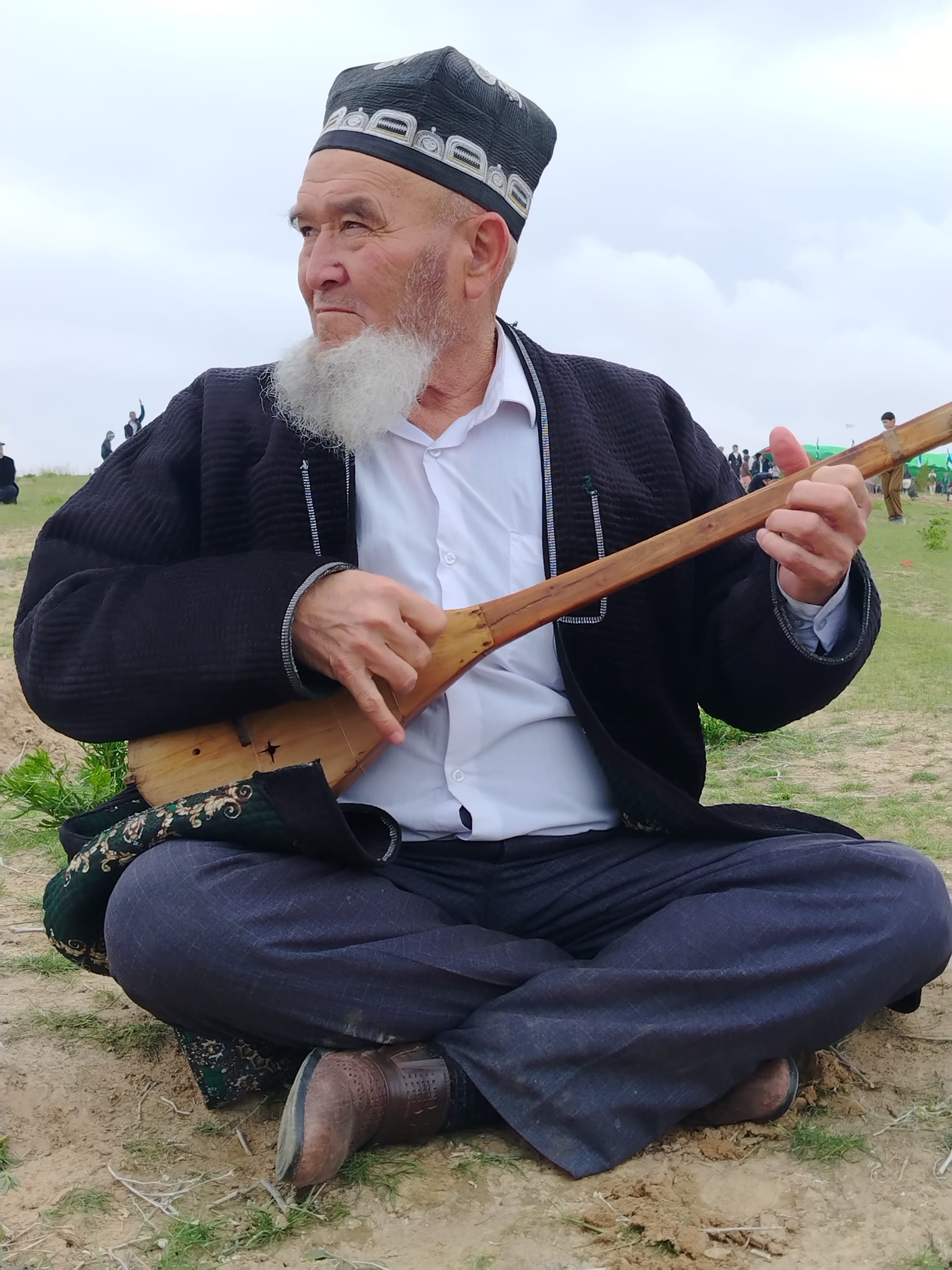
The bakhshi, a folk storyteller-singer, keeps an older oral tradition alive. Accompanied by the two-stringed dombra or the bowed kobuz, a bakhshi performs dostons, long epic poems drawn from myth, legend and folk tale, from memory, on themes of patriotism, love, friendship and loyalty. Askiya, the art of wit, is a quick-fire verbal duel in which two or more performers, mostly men, trade improvised jokes and banter on a theme. Its humour carries a serious edge, drawing attention to social issues through sharp observation of daily life, and it is performed at festivals, family celebrations and gatherings across the country.
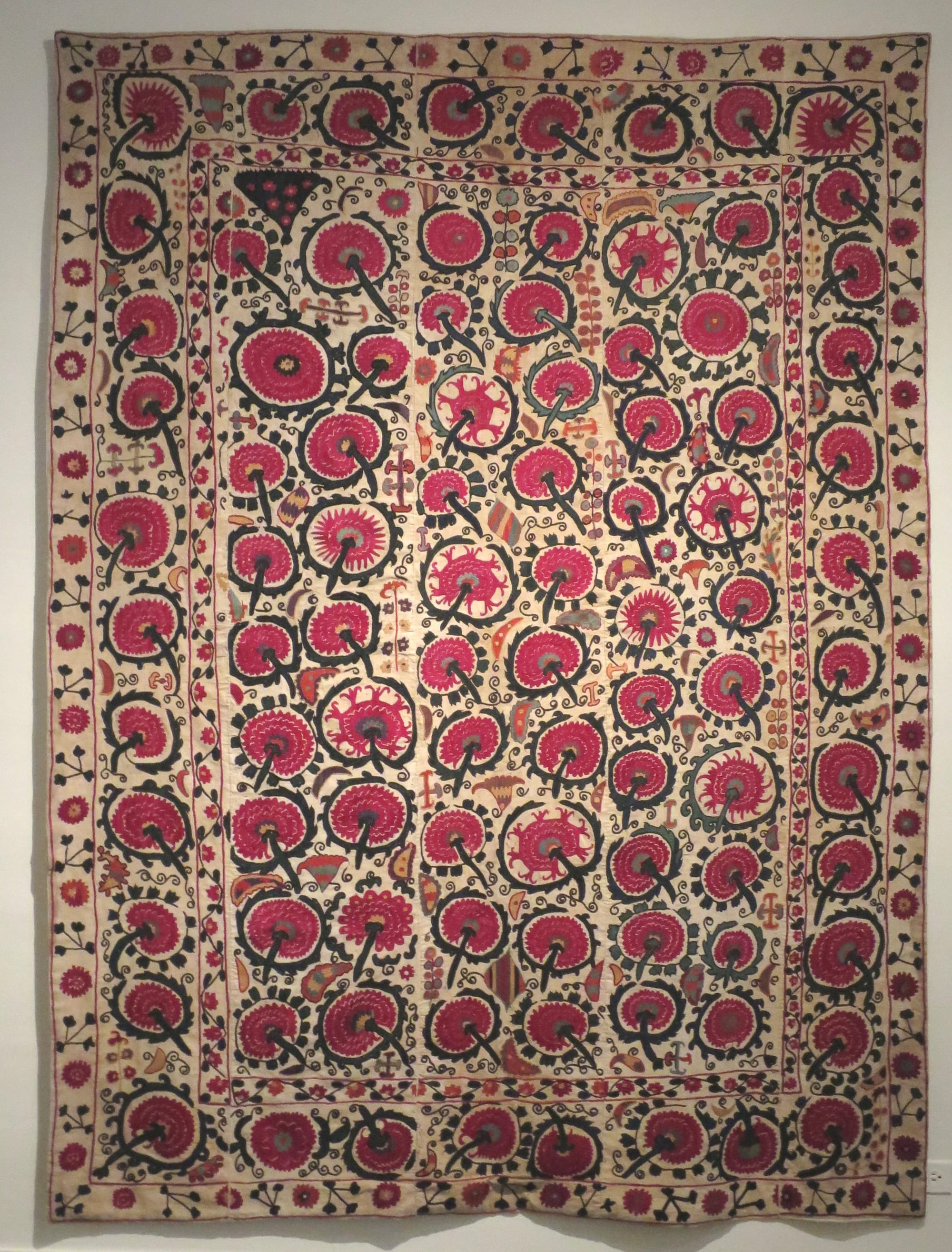
Crafts are just as prized. Embroidery is one of the most elaborate forms of traditional art in Uzbekistan, and suzani, large hangings and covers embroidered in silk with bold flowers and medallions, were historically an essential part of a girl's dowry. Uzbekistan's sericulture and silk production for weaving, its ceramic arts, its art of miniature and its art of illumination are all on UNESCO's list of intangible cultural heritage.
Dos and don'ts for visitors
- Do greet people with "Assalomu alaykum" and a hand on the heart, and let a woman offer her hand first.
- Do wait to be shown where to sit; the place farthest from the entrance is the most honoured.
- Do accept tea and food when offered; a bowl holding only a sip or two is a mark of respect, not meanness.
- Do tear bread by hand and keep it right side up; never put it on the floor or throw it away.
- Do dress modestly, and women should carry a headscarf for visits to active mosques.
- Do ask before taking photographs, especially near government buildings, police and military sites, where photography can draw the attention of the authorities.
- Don't put bags or other belongings on the dastarkhan, or step across it.
- Don't fill a guest's tea bowl to the brim; it can suggest the visit is unwelcome.
What to take away
In Uzbekistan the smallest gestures carry the most meaning: bread broken by hand, tea poured a sip at a time and a hand laid on the heart all say the same thing, that every guest is someone to be honoured.