Culture & Customs · Wallis and Futuna
Wallis and Futuna: Kings, Kava and the Katoaga
A small French overseas collectivity where three customary kingdoms endure alongside the Republic, a kava ceremony is watched in silence, and gifts of mats, tapa and pigs bind families, villages and chiefs together
By Globeway Editorial · 30 September 2026
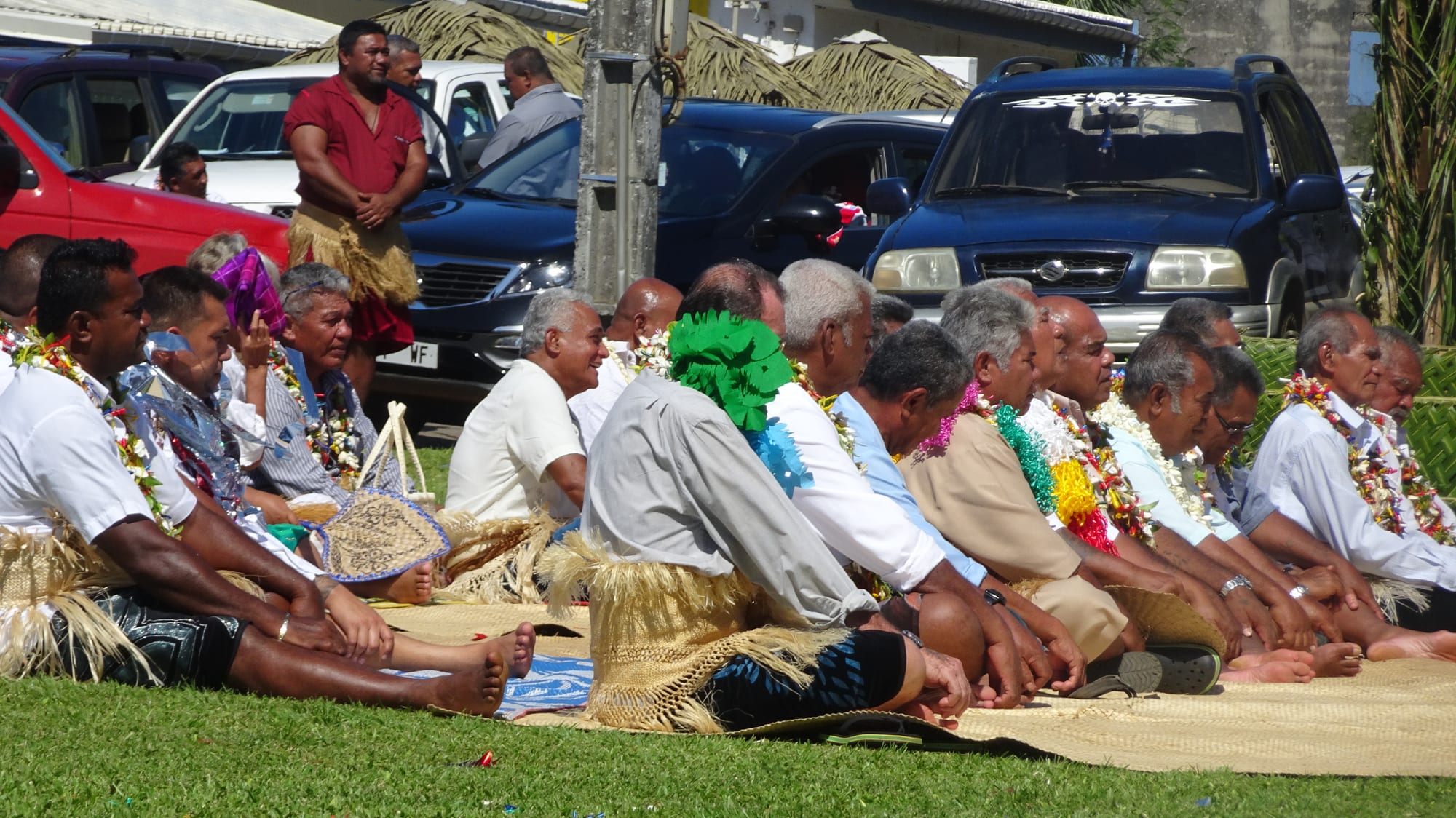
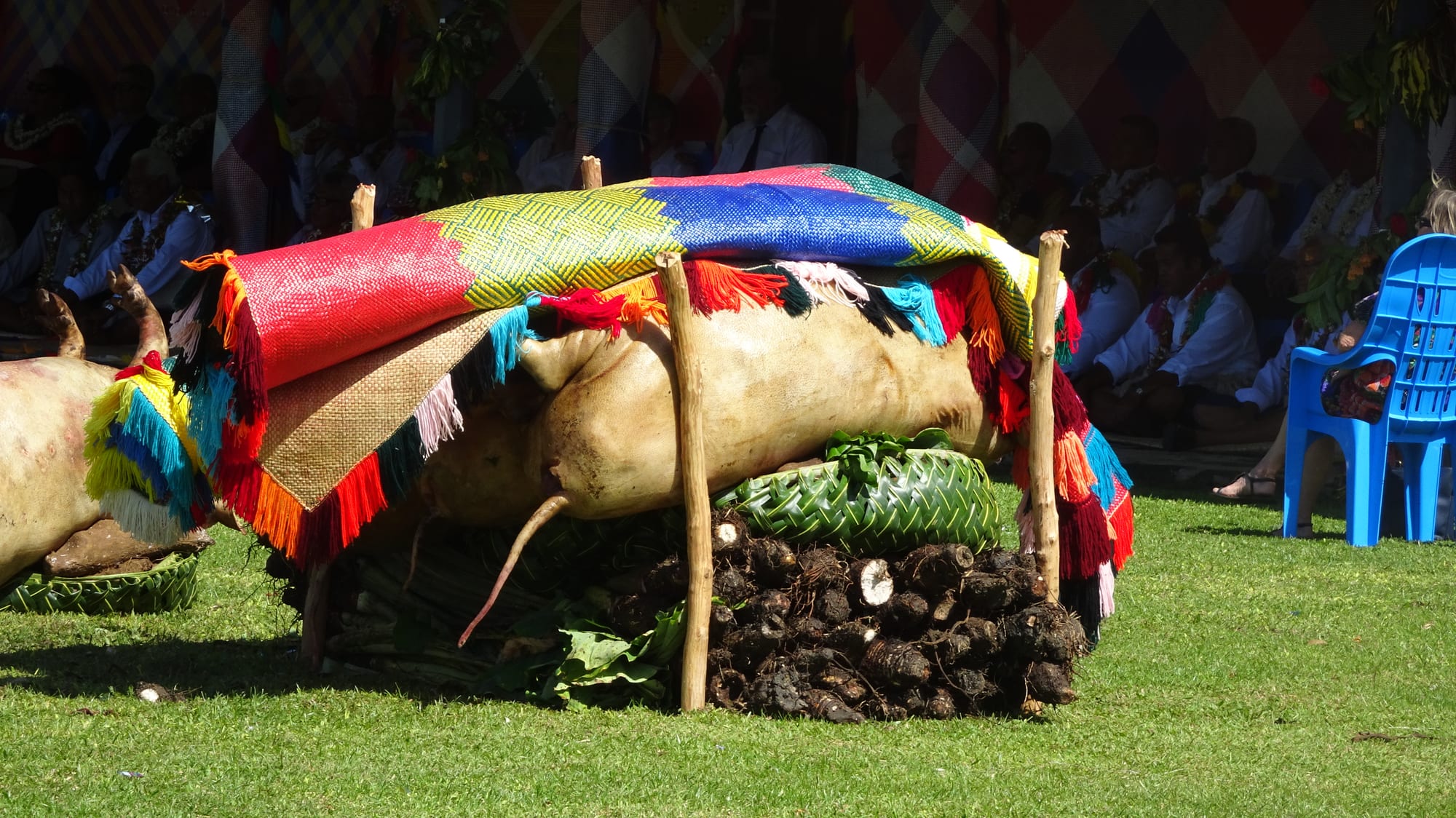
On an open lawn, mats have been unrolled across the grass, and the guests of honour take their places on them, cross-legged, garlanded with flowers, many wearing waist mats over their clothes. Before them, kava is prepared in a wide wooden bowl. For as long as the ceremony lasts, no one stands and no one wanders about; customary guards are on hand to correct anyone who forgets. Nearby lie the gifts that will be presented and shared out: roasted pigs, heaps of taro and yams, and brightly coloured mats. It is a scene repeated at every important moment in Wallis and Futuna, and it shows how the territory works. The French Republic is sovereign here, but custom, the chiefs and the Church set the tone of daily life.
Faith, identity and values
Wallis and Futuna is a French overseas collectivity of two small island groups in the western Pacific, and one of the most distinctive corners of the Republic. A law of 29 July 1961 made the islands an overseas territory and, uniquely in France, formally recognised three traditional kingdoms: Uvea, which covers the island of Wallis, and Alo and Sigave on Futuna. Article 3 of that law guarantees the free exercise of religion and respect for local beliefs and customs, as long as they do not conflict with the general principles of French law.
Each kingdom has its own monarch: the Lavelua on Wallis, the Tu'i Agaifo in Alo and the Keletaona in Sigave. They govern customary matters with prime ministers and village chiefs — Uvea has twenty-one villages in three districts, Alo nine and Sigave six — and the kings take part in the territory's council. Custom, known as aga'ifenua, provides the basis for many actions, and disputes and obligations are settled through customary gestures: gifts of kava root, tobacco, drink or money, offered according to the status of the person receiving them, which keep relationships in balance between families, villages and districts.
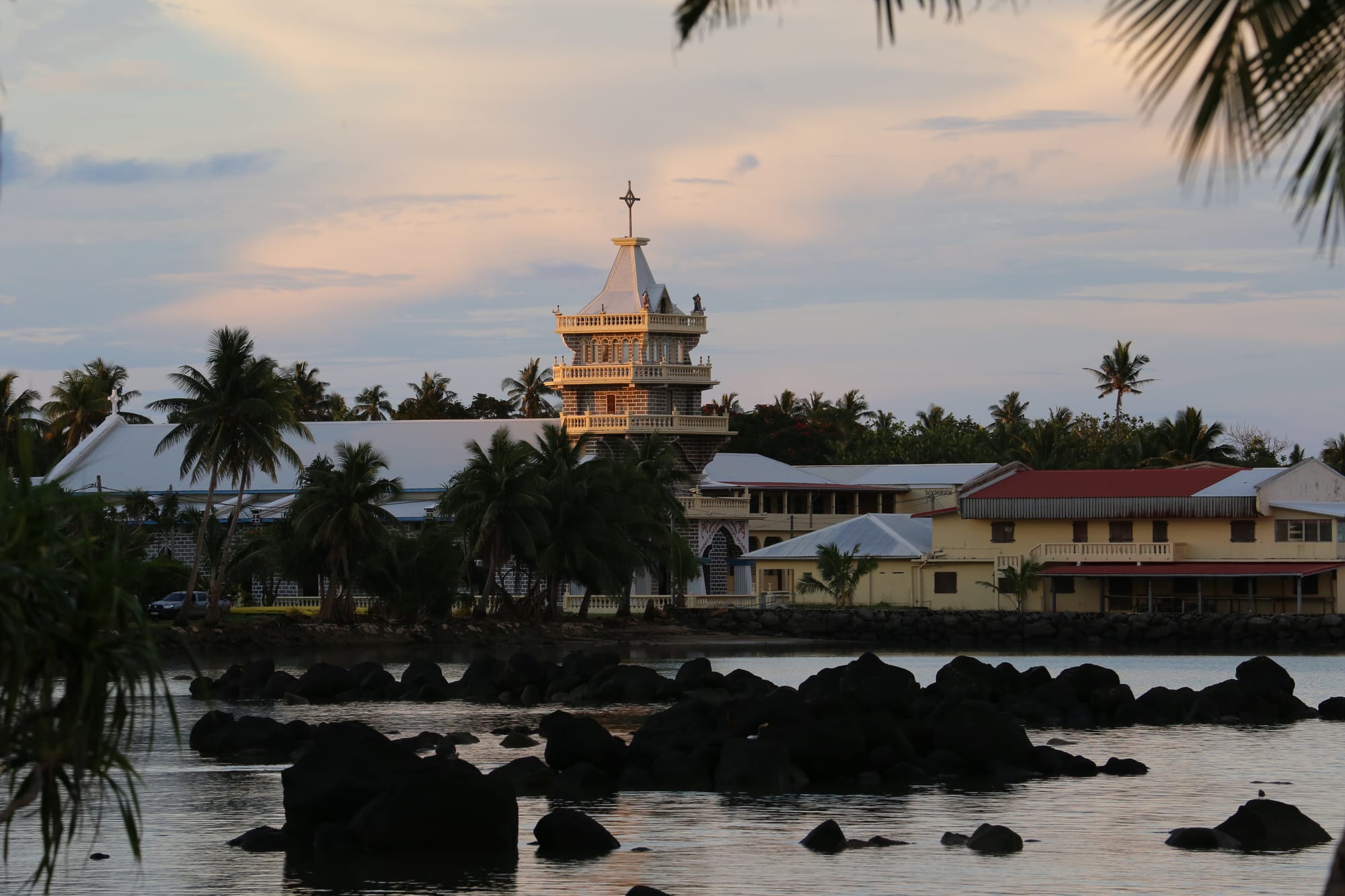
The Catholic Church is the other pillar of island life. Catholic belief and observance play a central part in the everyday, Mass is celebrated for every important occasion, and first communions and confirmations are major events for families. Futuna holds a special place in the Church in the Pacific as the place where Pierre Chanel, a French Marist missionary, was killed in 1841; he was later made a saint and is honoured as the patron of Oceania.
The two islands have their own languages as well as French. Wallisian shows a strong Tongan influence, in language and in custom, while Futunan is related to Samoan, and the difference is part of each island's sense of itself within the shared territory.
Greetings and meeting people
The everyday greeting in both Wallisian and Futunan is simply "malo". A visitor is welcomed with "malo te fagona" on Wallis and "malo le fai folau" on Futuna, and thanks are given with "malo tou ofa" in Wallisian or "malo le alofa" in Futunan. Learning these few words is an easy courtesy, and the people of the islands are known for their open, tolerant welcome to visitors of every background.
Rank matters in public life, where kings, prime ministers and chiefs hold customary authority. Private property is also taken seriously: a beach in front of a house belongs to the household, and it is customary to ask permission, or at least make oneself known, before swimming there. Before visiting a beauty spot or site, it is worth checking that it is not private and that no permission is needed.
Flower garlands are a typical ornament, worn in daily life as well as for ceremonies. The kahoa kakala, made of flowers, leaves and seeds, is particular to the islands, and garlands and shell necklaces are traditionally made only by women.
Hospitality and being a guest
The kava ceremony stands at the centre of social life. It is performed at the enthronement of a king and his chiefs, and it plays a part in public and private celebrations and in negotiations, religious or not. The drink is made from the root of the kava plant and prepared in a tanoa, a traditional wooden bowl. For a guest, the key rule is simple: during a kava ceremony it is forbidden to stand up or move around, and the customary guards will quickly point out any slip.
The katoaga is the great customary gathering, held around the chiefs to mark an important event. It combines a kava ceremony with the presentation and sharing out of gifts, such as pigs, yams, cassava and mats, and when the occasion is a happy one it continues with dancing and singing, often in costumes made from natural materials. For visitors, being invited to watch a katoaga is a privilege, and the best guide to how to behave is the local tourism office or the territory's cultural affairs department, which can explain the protocol for a particular event.
In church, as in most places, it is customary to remove a hat and to be properly dressed.
Festivals and life's big moments
Territory Day, on 29 July, marks the anniversary of the 1961 statute and brings together the Church, the customary kingdoms and the state. The day typically begins with Mass in the cathedral on Wallis, followed by the raising of the flag, a kava ceremony and katoaga, parades, traditional dances and races between traditional canoes, and in recent years the programme has included exhibitions on the history of the statute.
On Futuna, the most important religious occasion is the feast of Saint Pierre Chanel on 27 and 28 April. On the evening of the 27th, the faithful of both Futunan kingdoms gather for a procession carrying the saint's relics to the basilica at Poi, the place of his death, and the anniversary itself, on the 28th, draws pilgrims from elsewhere in the Pacific. Church feasts, the enthronement of chiefs and kings, and other important events are all marked with kava and katoaga.
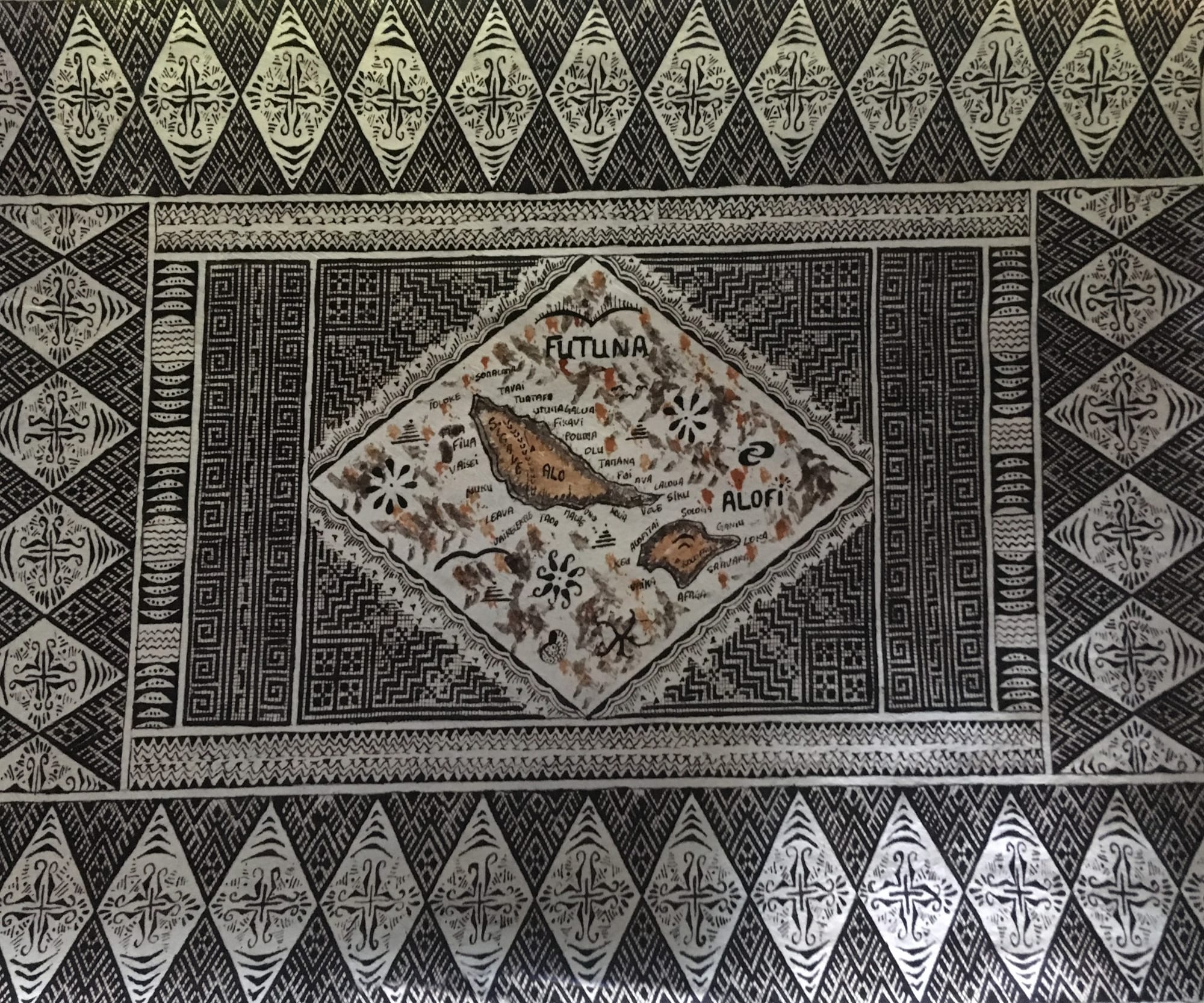
Family milestones are occasions for giving on a large scale. Woven mats and tapa are among the most valued offerings, presented at festive ceremonies and at every major family event, from first communions to weddings and deaths. Giant tapa cloths, called gatu, are offered at customary and religious ceremonies. Singing marks the passage of life too: ceremonial songs known as hiva laulausiva open major celebrations and family events, while funeral songs are sung during the vigils held by families and at later commemorations to keep the memory of the dead alive.
Arts, crafts and music
The crafts of Wallis and Futuna are handed down from one generation to the next and remain part of everyday and ceremonial life. Tapa is made from the bark of the paper mulberry, known as tutu, which is beaten, soaked, dried, cut to shape and then painted by hand with traditional motifs. On Futuna in particular, women produce elaborate painted tapa, keeping the method of making the ink to themselves.
Mats, called fala, are woven from leaves. On Wallis, both men and women wear the ta'ovala, a ceremonial waist mat, at customary and religious events, and women still make it from tree bark through a long process of soaking and drying. Men carve wood, most often into turtles or tanoa bowls for kava.
Music and dance are inseparable from ceremony. Villages present dances at customary celebrations, and the soamako is one of the best-known traditional dances. Alongside the ceremonial hiva laulausiva, there are unaccompanied traditional songs, hua lau. Kilikiti, a form of cricket of Samoan origin, is a popular traditional sport on Wallis.
Dos and don'ts for visitors
- Do greet people with "malo", and thank them with "malo tou ofa" on Wallis or "malo le alofa" on Futuna.
- Do ask permission, or make oneself known, before swimming from a beach in front of a house; such beaches belong to the household.
- Do check whether a site is private, and whether permission is needed, before visiting it.
- Do remove hats and dress correctly when entering a church.
- Don't stand up or move around during a kava ceremony; customary guards will point out any mistake.
- Do ask the tourism office or the cultural affairs department about protocol before attending a katoaga or other ceremony.
What to take away
In Wallis and Futuna, the kings, the chiefs and the Church still shape the rhythm of life within the French Republic, and a visitor who sits still during the kava and asks before stepping onto a family's beach will be welcomed with a warm "malo".