History · Myanmar
Why are there more than 2,000 temples on the plain of Bagan?
For 250 years a rich Buddhist kingdom poured its wealth into building merit in brick. Over 10,000 monuments went up; the survivors still fill the plain.
By Globeway Editorial · 2 November 2026
The short answer
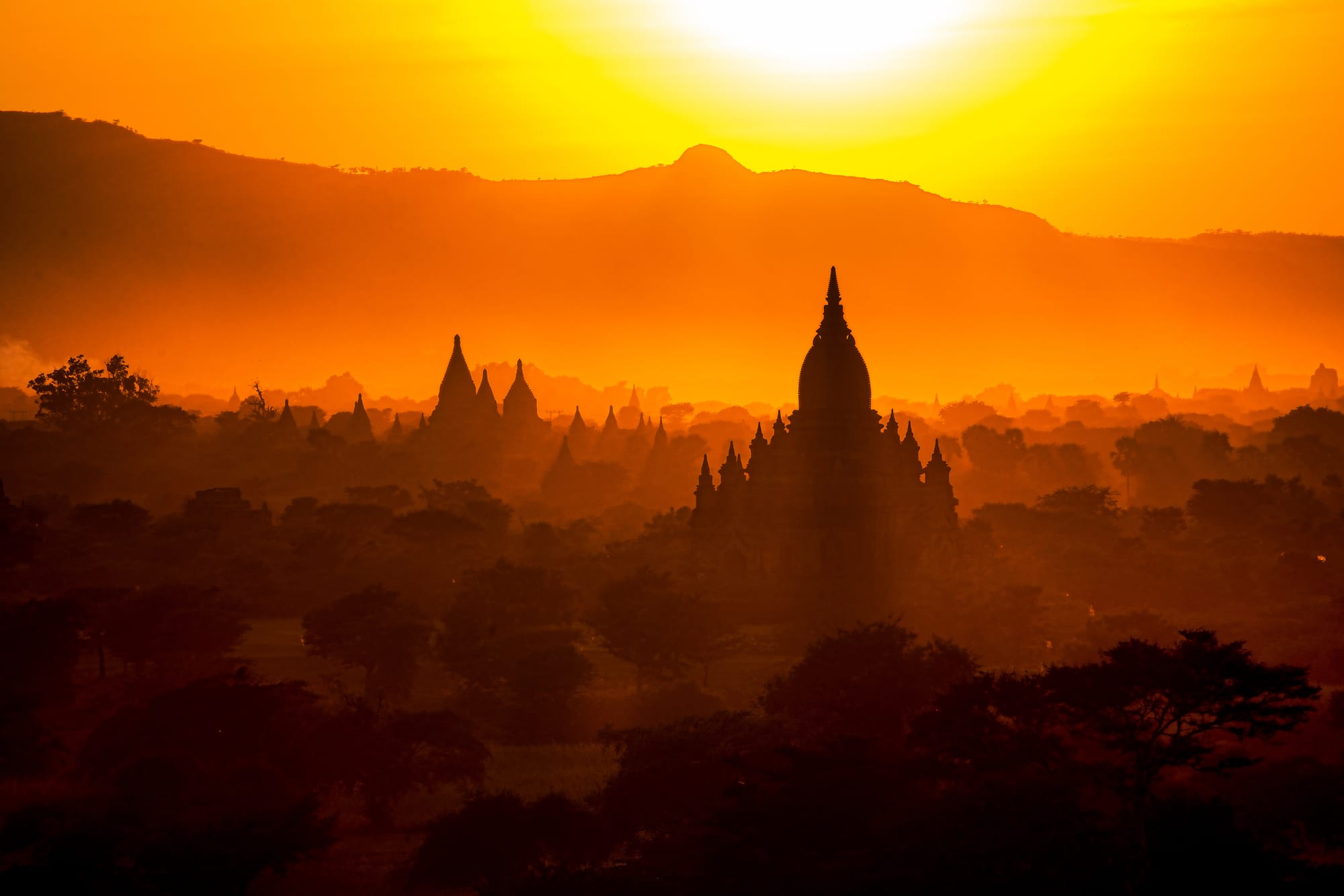
Bagan was the capital of the Pagan Kingdom, the first state to unite the lands that became Myanmar, and from 1044 to 1287 it was the kingdom's political, economic and religious centre. Its kings, nobles and, increasingly, ordinary families believed that building a temple or stupa earned them religious merit, a spiritual credit that Buddhists hold brings good results and a better rebirth. With a booming rice economy to pay for it, they built on an extraordinary scale: more than 10,000 Buddhist temples, stupas and monasteries went up on the Bagan plain, in an area of about 104 square kilometres.
The 2,000-plus monuments standing today are the remnant. After the kingdom declined, a score or so of famous temples were kept up by pilgrims, while thousands of lesser ones crumbled, and earthquakes have taken more. The remains of over 2,300 temples and pagodas survive; one current count puts the number of temples and pagodas at 2,229.
Merit, made in brick
The religion behind the building boom was Theravada Buddhism, the school that still dominates Myanmar. According to Burmese tradition, King Anawrahta, who came to power in December 1044, was converted to Theravada from the Ari Buddhism of his homeland by Shin Arahan, a monk from the southern city of Thaton. Royal patronage from the mid-11th century gradually gave Theravada primacy, although Mahayana and Tantric Buddhism, Hindu schools and the worship of nats, the spirits of local tradition, all continued to flourish at Bagan.
At the heart of the building lay the idea of merit. In Buddhist teaching, merit is a force that results from good deeds; it is believed to bring good circumstances in this life and to shape the quality of the next. Giving is one of the main ways to earn it, and few gifts were grander than a temple. Kings led the way, and the wealthy followed. Historians Bob Hudson, Nyein Lwin and Win Maung argue that in the 13th century the merit of endowing a monument became more widely accessible, and that more private individuals paid for small shrines, perhaps village by village.
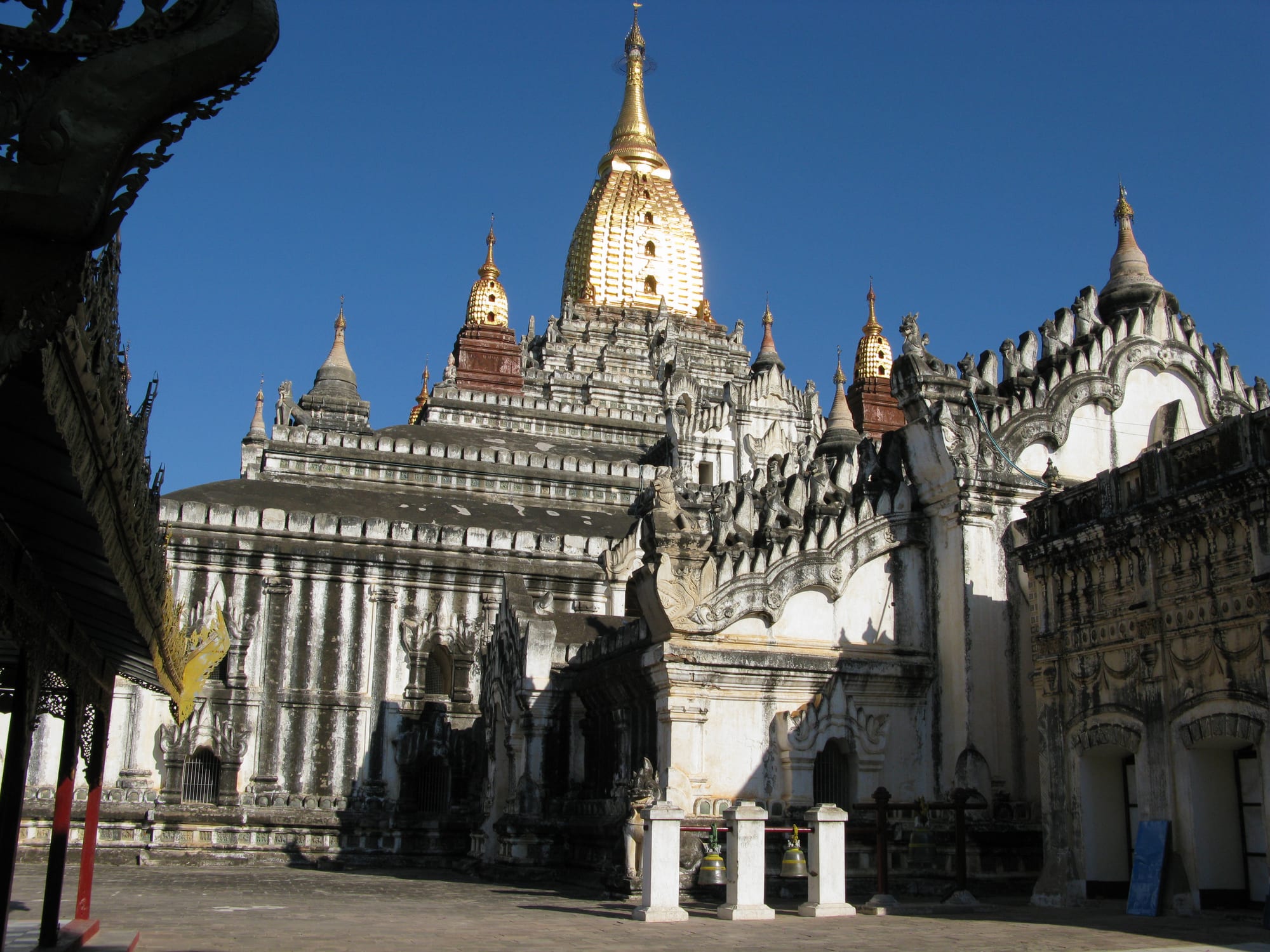
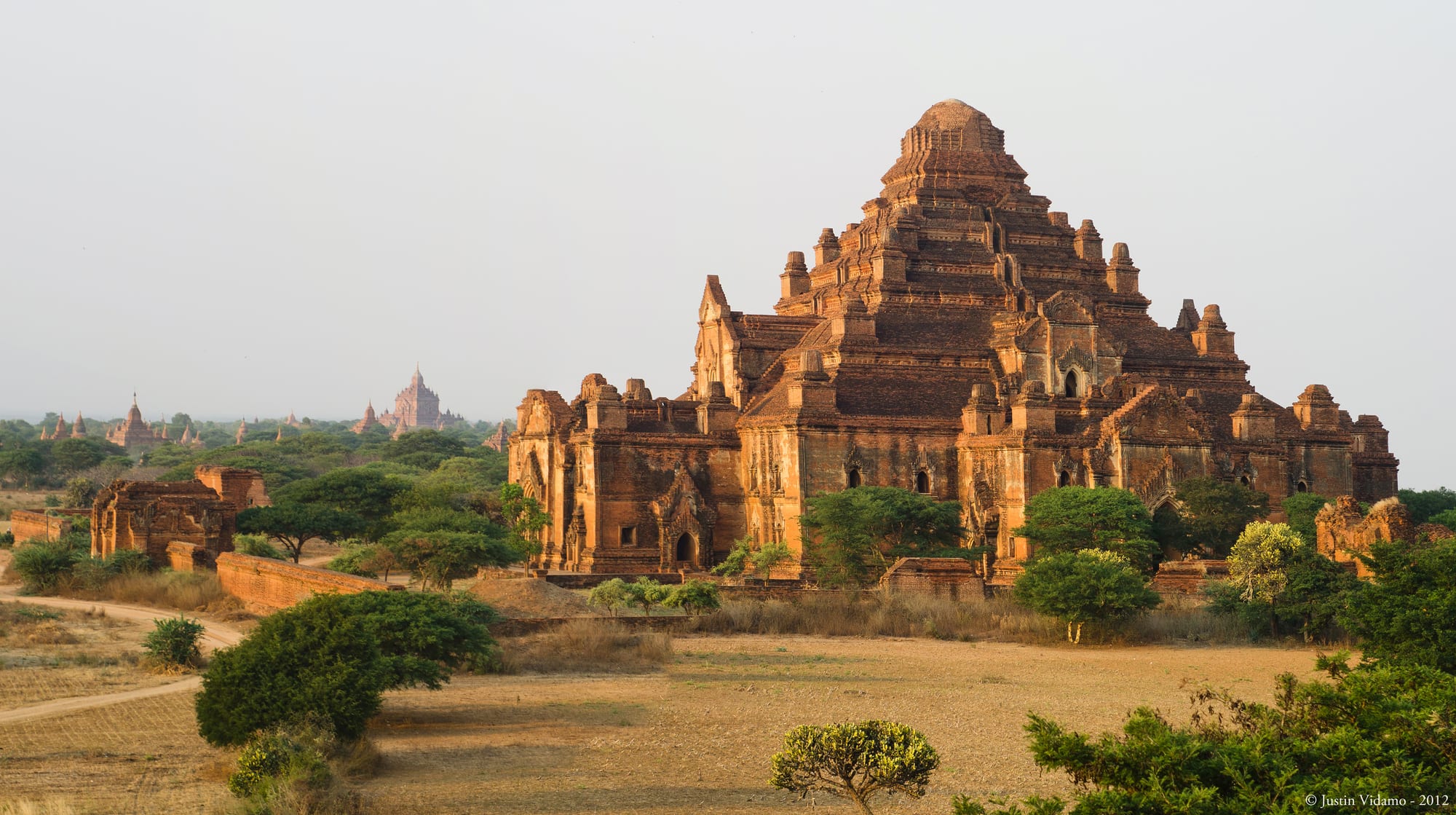
Personal motives could run deep. The Dhammayangyi, the largest of all Bagan's temples, was built during the short reign of King Narathu (1167–1171), who had taken the throne by murdering his father and elder brother; he is presumed to have raised this enormous temple to atone for his sins.
A rice bowl that paid the builders
Faith alone does not raise 10,000 buildings; money does. Anawrahta spent the first decade of his reign turning the parched lands of central Myanmar into a rice granary, building and enlarging weirs and canals, mostly around Kyaukse to the east of Bagan. Bagan lies in the Dry Zone, sheltered from the monsoon by the Rakhine Yoma mountains, so irrigation made the difference. By the mid-1050s Pagan was a regional power, and its armies went on to take Thaton in 1057.
His successors grew rich on farming and on trade by land and sea, and much of that wealth was devoted to temple building. Construction began in earnest under King Kyansittha, who reigned from 1084 to 1112, and the temples grew ever grander. The peak came between about 1150 and 1200, when most of Bagan's largest buildings went up and the amount of building material used also reached its height.
The building itself became an economy. Temple projects created work for brickmakers and masons, gold, silver and bronze workers, carpenters, woodcarvers and potters, and finished temples needed upkeep for generations. Accountants, bankers and scribes managed temple property. Artisans were well paid, and contemporary inscriptions show that people of many languages and cultures lived and worked in Bagan, a city thought to have held between 50,000 and 200,000 people. Monks and students came from as far as India, Sri Lanka and the Khmer Empire.
When the merit ran out
The temple boom contained the seeds of the kingdom's decline. The wealthy donated land to the Buddhist clergy along with their temples, and religious land and the people who farmed it were permanently exempt from tax. For about two centuries the practice helped the economy grow, but once the kingdom stopped expanding, the donations did not. By 1280, between one and two-thirds of Upper Myanmar's cultivable land had been given to religion. Kings could not easily stop, since their own desire for merit and better rebirths was as strong as anyone's; at times they purged the clergy and seized donated land back.
- December 1044
Anawrahta becomes king and begins building the Pagan Empire.
- 1057
Pagan's armies conquer Thaton after a three-month siege.
- 1105
The Ananda Temple is built under King Kyansittha.
- c. 1150–1200
The peak of monument building on the Bagan plain.
- 1280
Between one and two-thirds of Upper Myanmar's farmland belongs to religion.
- 1287
The Pagan Empire collapses amid Mongol invasions.
- 8 July 1975
An earthquake badly damages many temples.
- 6 July 2019
Bagan is inscribed as a UNESCO World Heritage Site.
The empire collapsed in 1287 during a period of Mongol invasions, although recent research suggests the Mongols may never have reached Bagan itself. The historian Michael Aung-Thwin argues that provincial governors grew so powerful defending the frontier that their capitals replaced Bagan as centres of power. Bagan shrank to a small town, and fewer than 200 temples were built there between the 15th and 20th centuries.
Why only some survive
Pilgrims kept coming, but they focused on a score or so of the most famous temples, such as the Ananda, the Shwezigon, the Sulamani and the Htilominlo. Those received upkeep, new murals and new Buddha images; thousands of out-of-the-way temples fell into disrepair, and most did not survive.
Earthquakes did further damage. More than 400 were recorded at Bagan between 1904 and 1975, and the quake of 8 July 1975 damaged many temples, some irreparably. Restorations by the military government in the 1990s were widely criticised for ignoring original styles and using modern materials, and Bagan was not inscribed as a UNESCO World Heritage Site until 6 July 2019, 24 years after its first nomination. Another earthquake in August 2016 damaged nearly 400 temples. When a major earthquake struck in March 2025, major stupas including the Htilominlo and Shwezigon escaped structural damage.
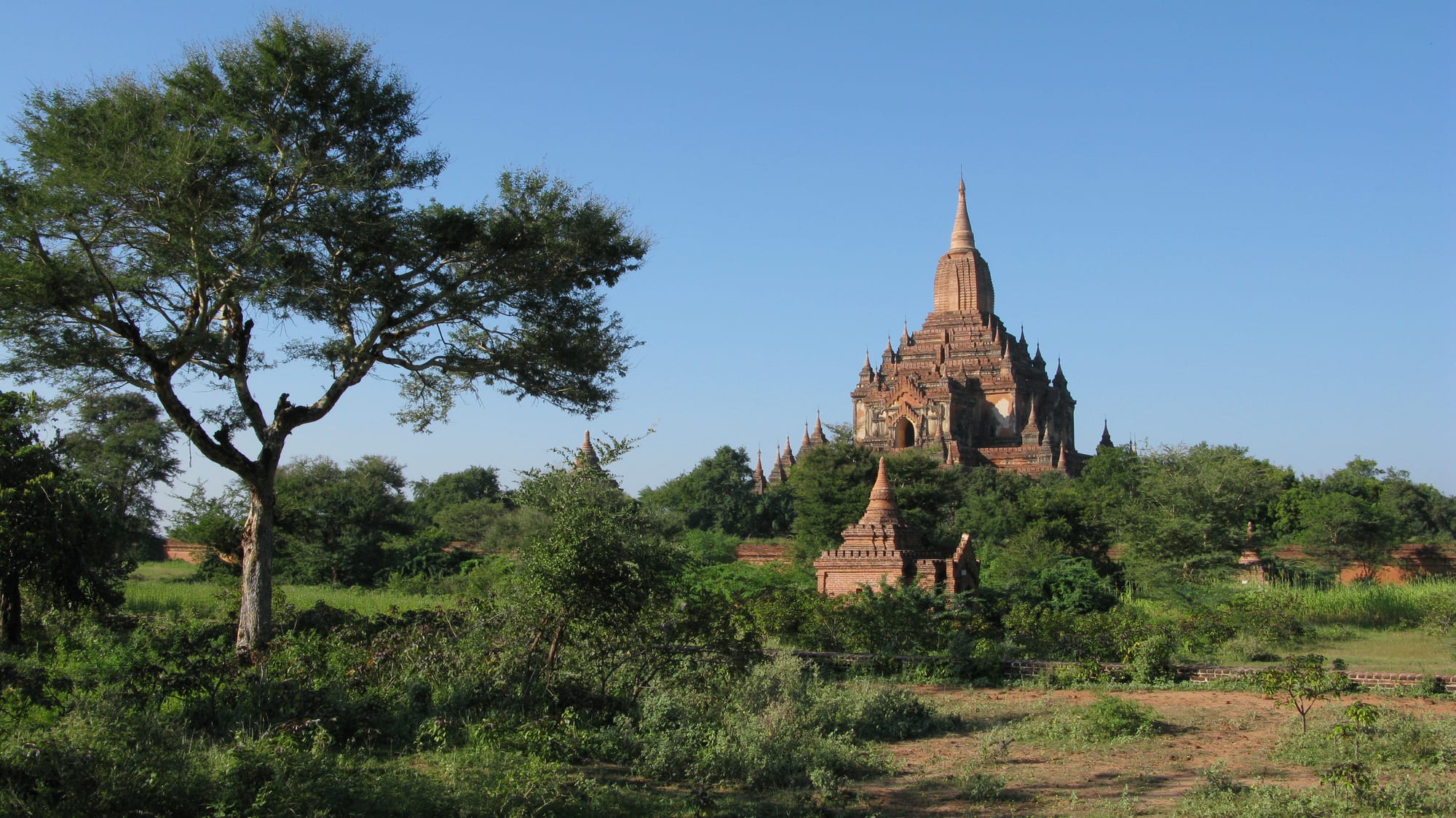
The Bagan Archaeological Zone covers about 13 by 8 kilometres on a bend of the Irrawaddy, from Nyaung U in the north to New Bagan in the south. Since the military coup of 2021, Myanmar has been gripped by civil war, and much of the country, including many of its best-known sights, is affected by the conflict.