Attractions & Natural Wonders · Palau
Why can you swim with millions of jellyfish in Palau without being hurt?
Cut off from the sea for thousands of years, the golden jellyfish of Palau's Jellyfish Lake live off sunlight and carry a sting too weak to harm people.
By Globeway Editorial · 2 November 2026
The short answer
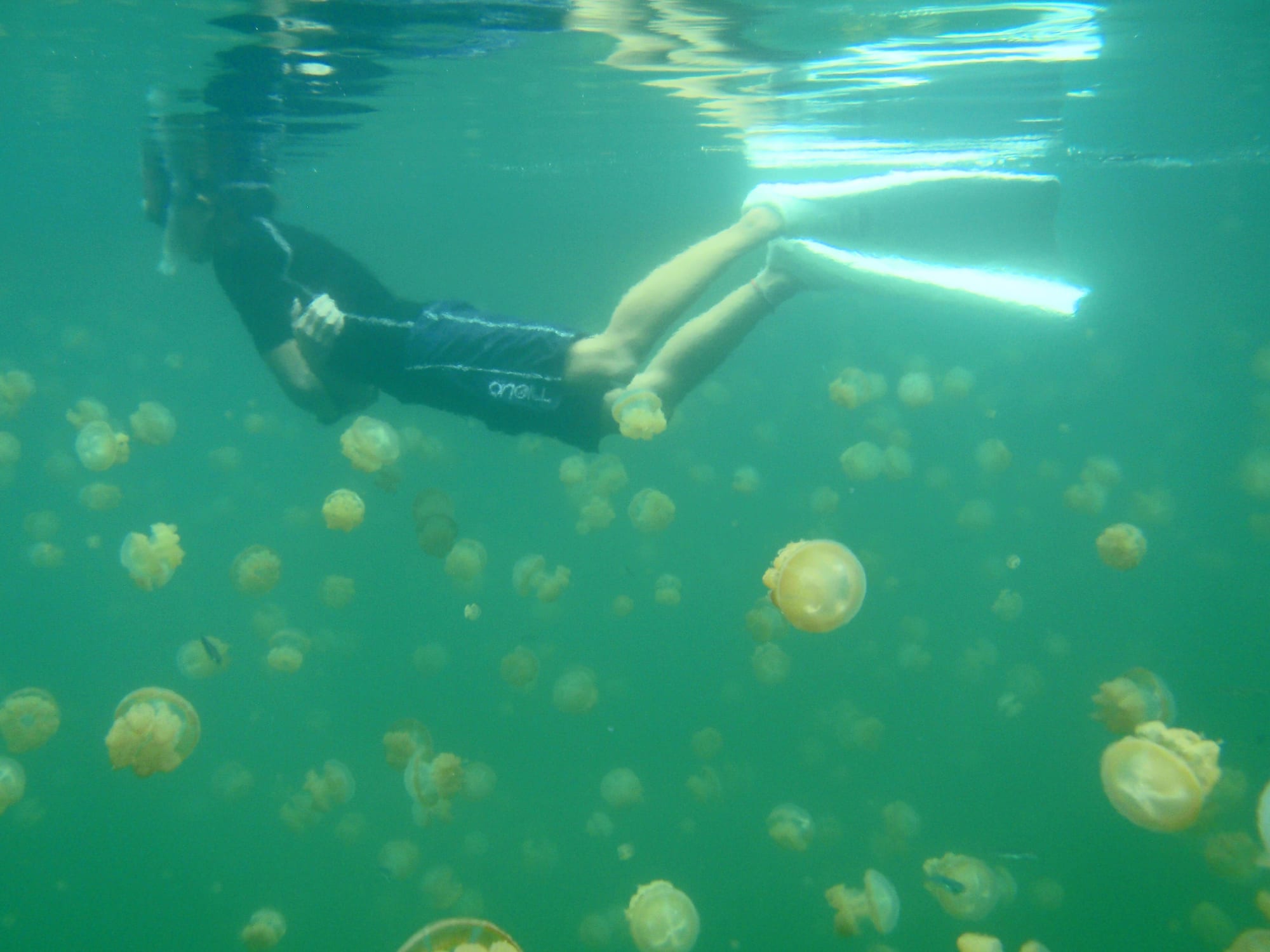
The jellyfish of Palau's Jellyfish Lake do still have stinging cells, but their sting is far too weak to harm people. The lake is a pocket of seawater trapped inside a limestone island, and the golden jellyfish that live there have been isolated from their ocean relatives for so long that they have changed. Their stinging cells have wasted away, and conditions in the lake are thought to break down their protein-based venom.
They can afford to lose their weapons because they barely need them. Much of their food comes from tiny algae living inside their bodies, which turn sunlight into nutrients, so the jellyfish spend their days following the sun across the lake. A swimmer may just notice a faint tingle on sensitive skin such as the lips, but nothing more, which is why the lake has become one of Palau's best-known sights.
A slice of sea locked inside an island
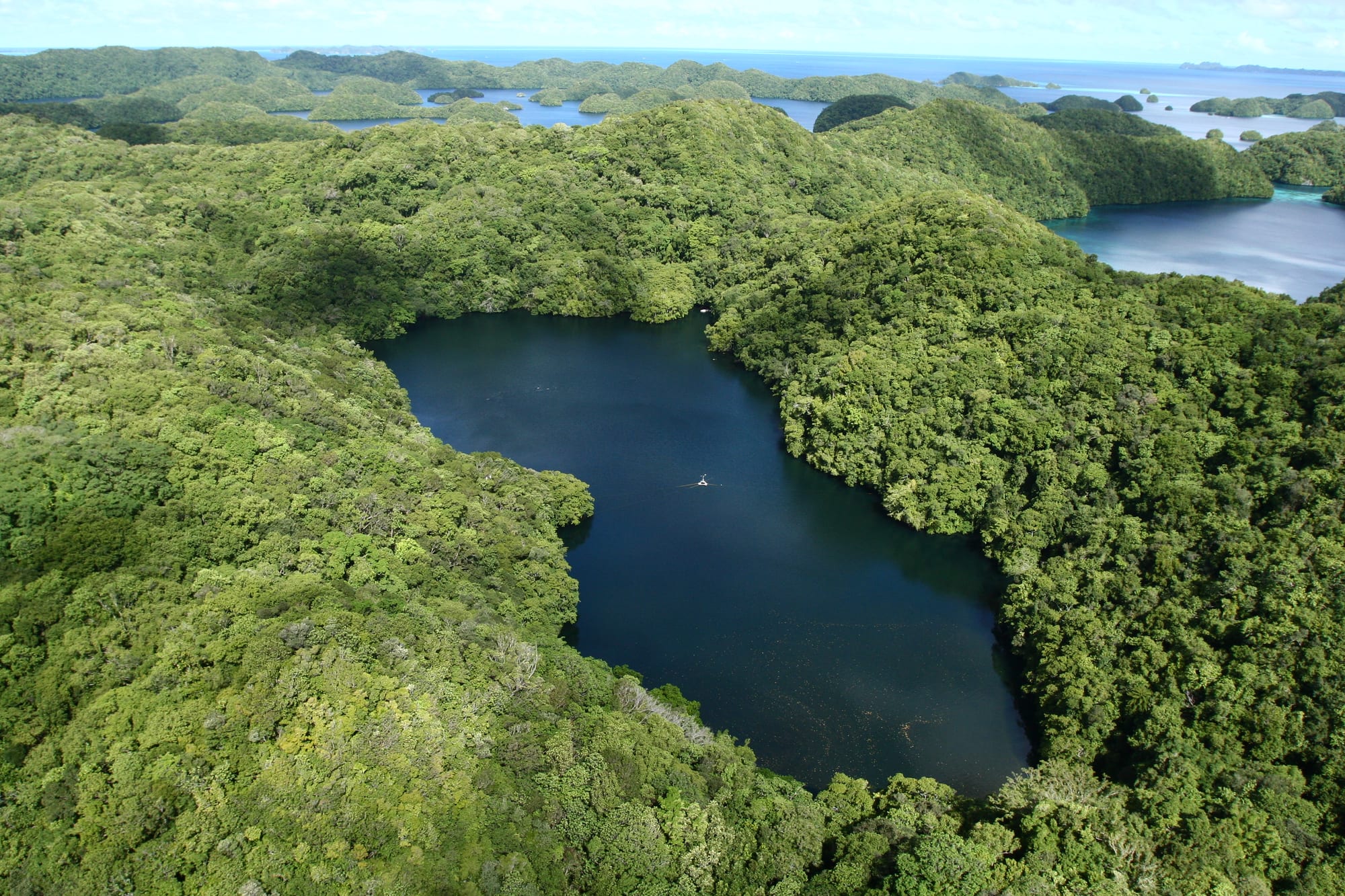
Jellyfish Lake, known in Palauan as Ongeim'l Tketau, "Fifth Lake", lies on Eil Malk, one of the Rock Islands: some 250 to 300 forested limestone islets in Palau's Southern Lagoon between Koror and Peleliu, listed as a UNESCO World Heritage Site in 2012. About 70 other marine lakes are scattered through the group.
The lake formed around 12,000 years ago, when sea levels rising at the end of the last ice age began to fill a hollow in the ancient reef rock. It is still fed by the sea, through fissures and three tunnels near the surface, but only a trickle of water passes through them; each tide exchanges about 2.5 per cent of the lake's volume. That isolation is the key to everything. Far fewer species live in the lake than in the lagoon outside, and with time its golden jellyfish have become distinct from their relatives in the open sea.
Jellyfish that farm the sun
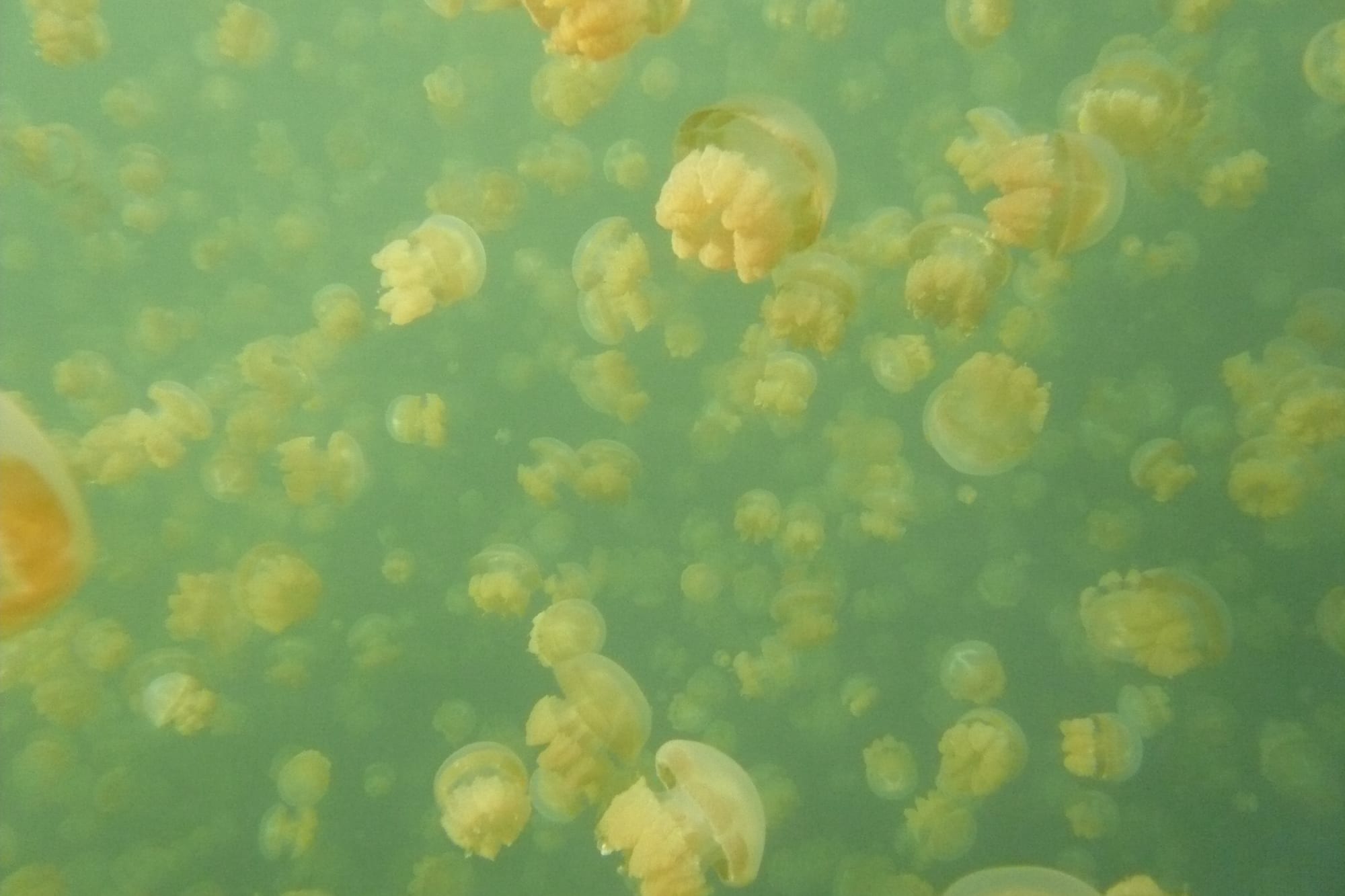
The golden jellyfish is a subspecies of the spotted jellyfish of the Indo-Pacific, described as separate in 2005 together with four other subspecies from nearby marine lakes. Like its ocean cousin, it carries symbiotic algae called zooxanthellae in its tissues. The algae photosynthesise and pass on nutrients, and in return they get a safe home. The jellyfish also catch zooplankton, the drifting tiny animals of the water.
Feeding the algae shapes the jellyfish's whole day. Millions of them migrate across the lake every day, moving east in the morning and back west in the early afternoon, and they slowly rotate as they swim at the surface, apparently to give their algae even light. At night they make repeated trips down to around 15 metres (49 feet), possibly to collect nutrients for the algae. Researchers have proposed that even the timing of their crossings is an adaptation. Sea anemones that eat jellyfish live at the eastern end of the lake, and the jellyfish instinctively avoid shadows; by turning back west in the early afternoon, they leave the east before the lowering sun takes away the shadows that keep them clear of the anemones.
How the sting faded
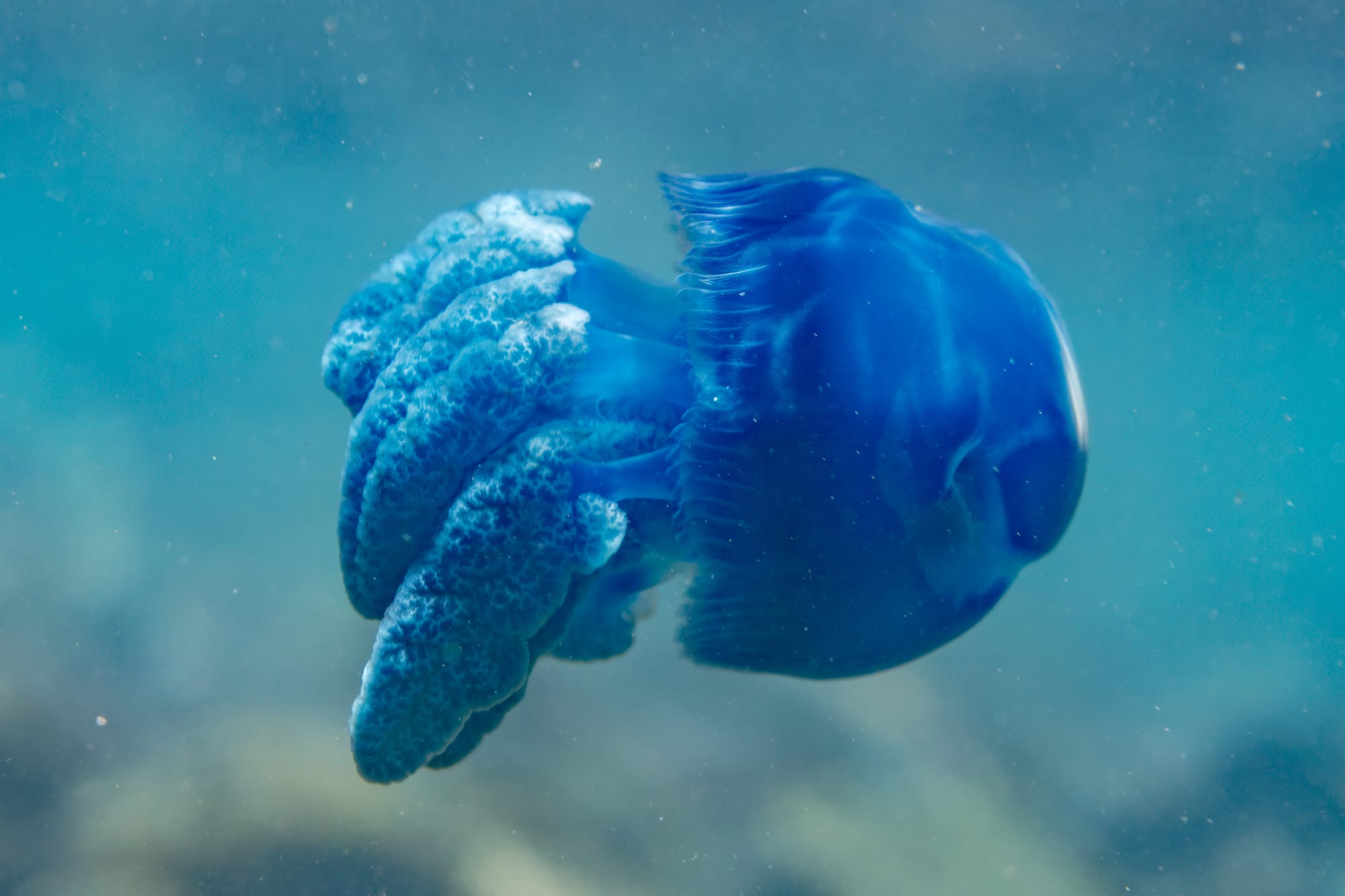
In the open ocean, the spotted jellyfish uses stinging cells on its frilled arms to catch prey. In marine lakes like Palau's, isolated populations lost most of that ability. Their stinging cells have atrophied, or wasted away, and the conditions in the lakes are thought to denature the protein-based venom, breaking it down so it no longer works. The lake jellyfish also look different: the golden jellyfish has lost almost all of the spots on its bell and almost all of the club-shaped appendages that hang from its arms.
The lake's second species, a moon jellyfish, also carries stinging cells too weak to cause harm. So the honest version of the famous claim is not that the jellyfish cannot sting at all, but that their stings are too feeble for most swimmers ever to feel.
The poison layer below
The greater danger in the lake lies deeper down. Jellyfish Lake is permanently split into two layers that never mix. The top 15 metres (49 feet) hold oxygen and all the lake's animals, in slightly murky water where visibility is only about 5 metres (16 feet). Below that lies water with no oxygen at all, where a dense layer of purple bacteria lives and hydrogen sulphide, a toxic gas that can be absorbed through the skin, builds up towards the bottom. For that reason, and because bubbles from scuba tanks can collect under the jellyfish's bells and harm them, scuba diving is not allowed. Visitors only snorkel, at the surface where the jellyfish gather.
The year the jellyfish disappeared
The jellyfish are not guaranteed. In late 1998 the golden jellyfish population crashed, and by December that year there were none left in the water at all. Scientists concluded that an El Niño event had warmed the lake until the algae inside the jellyfish could not survive. The jellyfish reappeared in January 2000, and by 2012 their numbers were back to earlier levels. A sharp drop had also been recorded in 1987, and numbers still rise and fall with drought cycles.
Seeing the lake today means a boat ride of about 45 minutes from Koror and a short trail from the beach on Eil Malk to the water. Visitors need a Koror State permit, and Jellyfish Lake is the only one of Palau's marine lakes open to tourists. Because jellyfish numbers vary, it is worth checking the current situation before going.