Attractions & Natural Wonders · Gibraltar
Why do wild monkeys live on the Rock of Gibraltar?
Gibraltar's Barbary macaques were almost certainly brought from North Africa, and soldiers, a wartime legend and careful management have kept them there.
By Globeway Editorial · 2 November 2026
The short answer
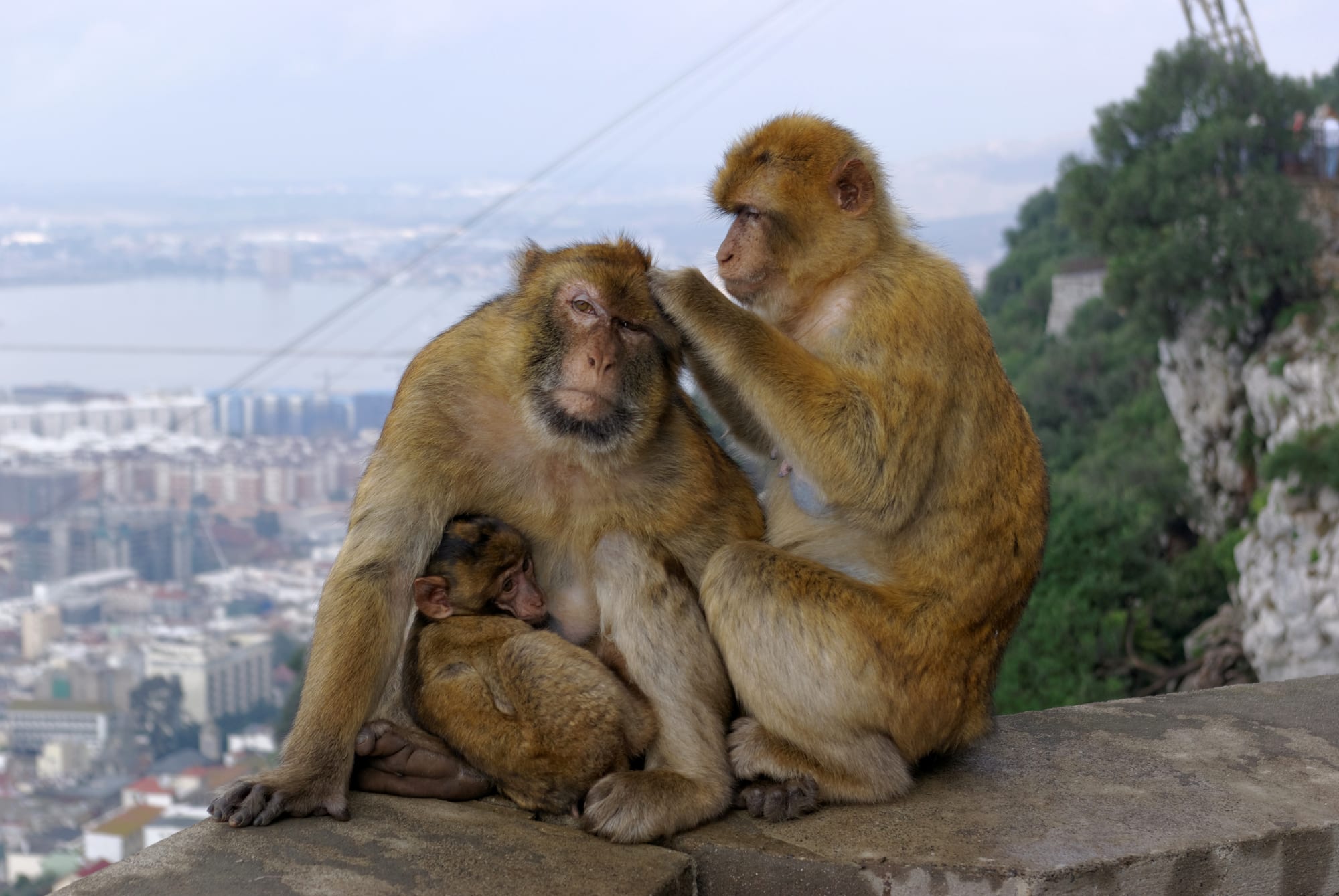
The monkeys on the Rock of Gibraltar are Barbary macaques, a species whose home is the Atlas and Rif mountains of Morocco and Algeria. They are almost certainly not survivors of Europe's own ancient monkeys: genetic studies show their ancestry is North African, and the most likely explanation is that the Moors, who ruled Gibraltar for much of the Middle Ages, brought them across the strait. They were already living on the Rock "from time immemorial" according to Gibraltar's first chronicler, writing in the early 17th century.
They have stayed because people have made sure of it. The British Army looked after them for most of the 20th century, and during the Second World War, when only seven were left, Winston Churchill ordered more brought in from North Africa, swayed by a legend that Britain would hold Gibraltar only as long as the monkeys remained. Today about 300 live in the nature reserve on the Upper Rock, the only wild monkey population in Europe.
Monkeys, not apes
Gibraltarians often call them "Barbary apes" or "rock apes", but they are monkeys. The mistake comes from their missing tail: the Barbary macaque has only a tiny, boneless stump, between 4 and 22 millimetres long when it is present at all, so it looks more like an ape than most monkeys do. Spanish speakers on the Rock simply call them monos, monkeys. The name Barbary refers to the Berber, or Amazigh, peoples of North Africa.
Adult males weigh around 14.5 to 16 kilograms and females around 10 to 11. They live in matriarchal troops of 10 to 100 animals, ranked by their descent from the lead female, and they eat mainly plants and insects. Unusually among monkeys, males take a large part in raising the young: because no one can be sure who the father is, males help care for all the infants in the group.
An African monkey on a European rock
Barbary macaques did once live wild in Europe. Fossils have been found from the Atlantic to the Black Sea, and during warm periods of the last ice ages the species reached as far north as Germany and Britain. The youngest known European remains, from Bavaria, date to between 85,000 and 40,000 years ago. For a long time some people believed that Gibraltar's monkeys were the last of those ancient Europeans.
The evidence points the other way. Every type of mitochondrial DNA (genetic material passed down through the mother) found in Gibraltar's macaques also occurs in North Africa, and no fossils show the species on the Rock at the end of the last ice age. That makes a surviving European population very unlikely, though it cannot be ruled out completely. The most probable story is that the animals were introduced from North Africa during the Moorish period, which began when Muslim forces crossed from North Africa and landed near Gibraltar in 711. Records suggest they were present before the Castilians took the Rock in 1462, and long before Britain captured it in 1704.
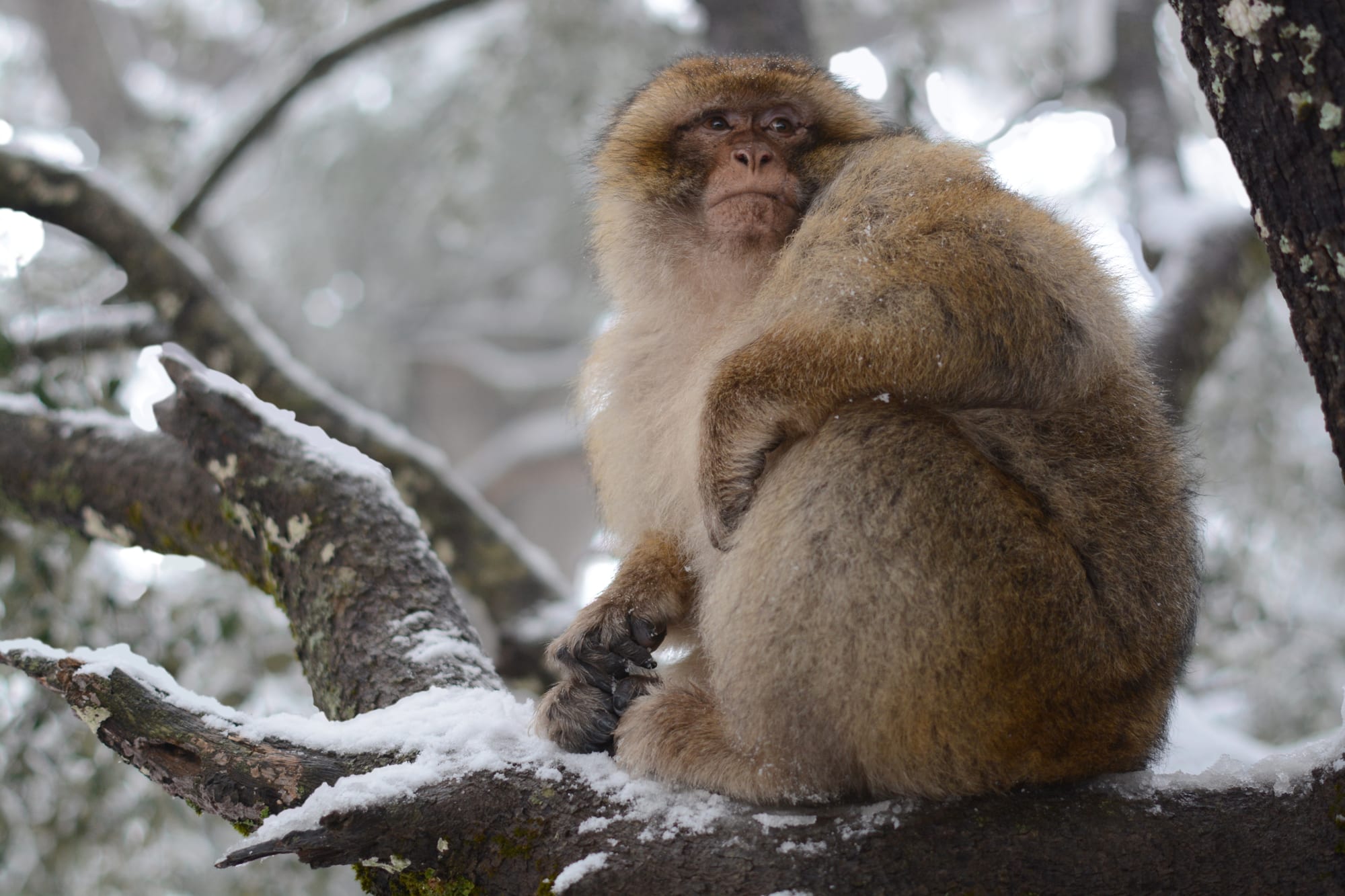
About three-quarters of all Barbary macaques live in the Middle Atlas, where they grow a thick coat for winter and moult it in spring.
Repeated introductions over the centuries have blurred the picture further. The historian Ignacio López de Ayala wrote in 1782 that neither Moors, Spaniards nor English, nor cannon nor bomb, had been able to dislodge them.
Soldiers, a legend and Churchill
From 1915 to 1991 the monkeys were in the care of the British Army and later the Gibraltar Regiment. An officer known as the Keeper of the Apes kept a register of every animal, recording births and names and supervising a weekly ration of fruit, vegetables and nuts; in 1944 the War Office budgeted £4 a month for it. Monkeys were named after governors and senior officers, births were announced in the Gibraltar Chronicle, and sick animals were treated at the Royal Naval Hospital like enlisted servicemen.
Behind this care lay a superstition: that as long as the macaques remained on Gibraltar, the territory would stay British. In 1942, during the Second World War, the population fell to just seven. Churchill, mindful of the legend, ordered it replenished immediately with monkeys from forests in Morocco and Algeria. When British infantry units left in 1991, the Government of Gibraltar took over responsibility for them.
Too much of a good thing
The monkeys' success has created problems of its own. While the species is classed as endangered and declining in North Africa because of hunting and the loss of its forests, Gibraltar's population keeps growing. In 2020 some 300 animals lived in five troops on the Upper Rock, and the females breed well, putting pressure on limited space.
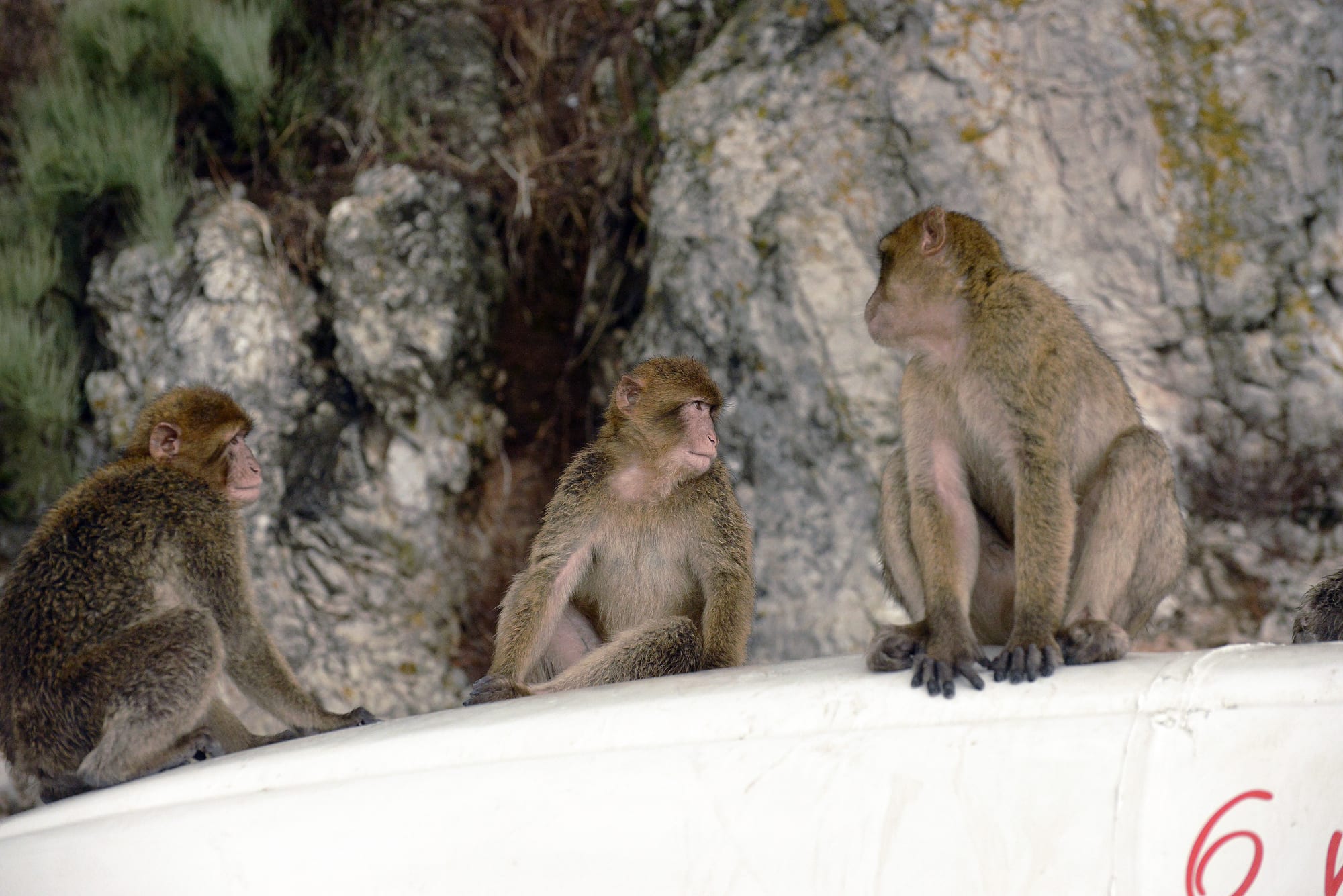
The troops sometimes make forays down into the town.
Contact with visitors made it worse. Many monkeys came to depend on food from people, their social groups began to break down, and some raided the town, damaging buildings, cars and clothing and learning to unzip bags and open pockets. Feeding them is now a criminal offence carrying a fine of up to £4,000. In 2026 researchers concluded that some of the monkeys had even started eating soil, a behaviour called geophagy, to ease the gut irritation caused by the salty and sugary food they take from tourists.
Managing the population is now the job of the Gibraltar Ornithological and Natural History Society. The animals receive fresh water and supplementary fruit, vegetables and seeds, are caught regularly for health checks, and are identified by microchips and tattoos. A census is held every year, and the fertility of selected animals is controlled. In 2008 a small group that had settled permanently at Catalan Bay was culled, and in 2014 the government announced that 30 monkeys would go to a safari park near Stirling in Scotland, where the first births had been recorded by 2017.
Meeting the monkeys today
The macaques live in the Gibraltar Nature Reserve, which covers more than 40 per cent of the territory and most of the upper part of the Rock, a limestone mountain 426 metres high. The reserve can be reached by road or by cable car. The best-known troop gathers at the Apes' Den near Queen's Gate, where the monkeys are used to people and will approach and even climb on them. They are still wild animals, though, and will bite if frightened or annoyed.