Culture & Customs · Lithuania
Why is a hill in Lithuania covered with more than 100,000 crosses?
Crosses for lost rebels, prayers in hard times, and quiet defiance of Soviet bulldozers turned a small hill fort into a mountain of faith.
By Globeway Editorial · 2 November 2026
The short answer
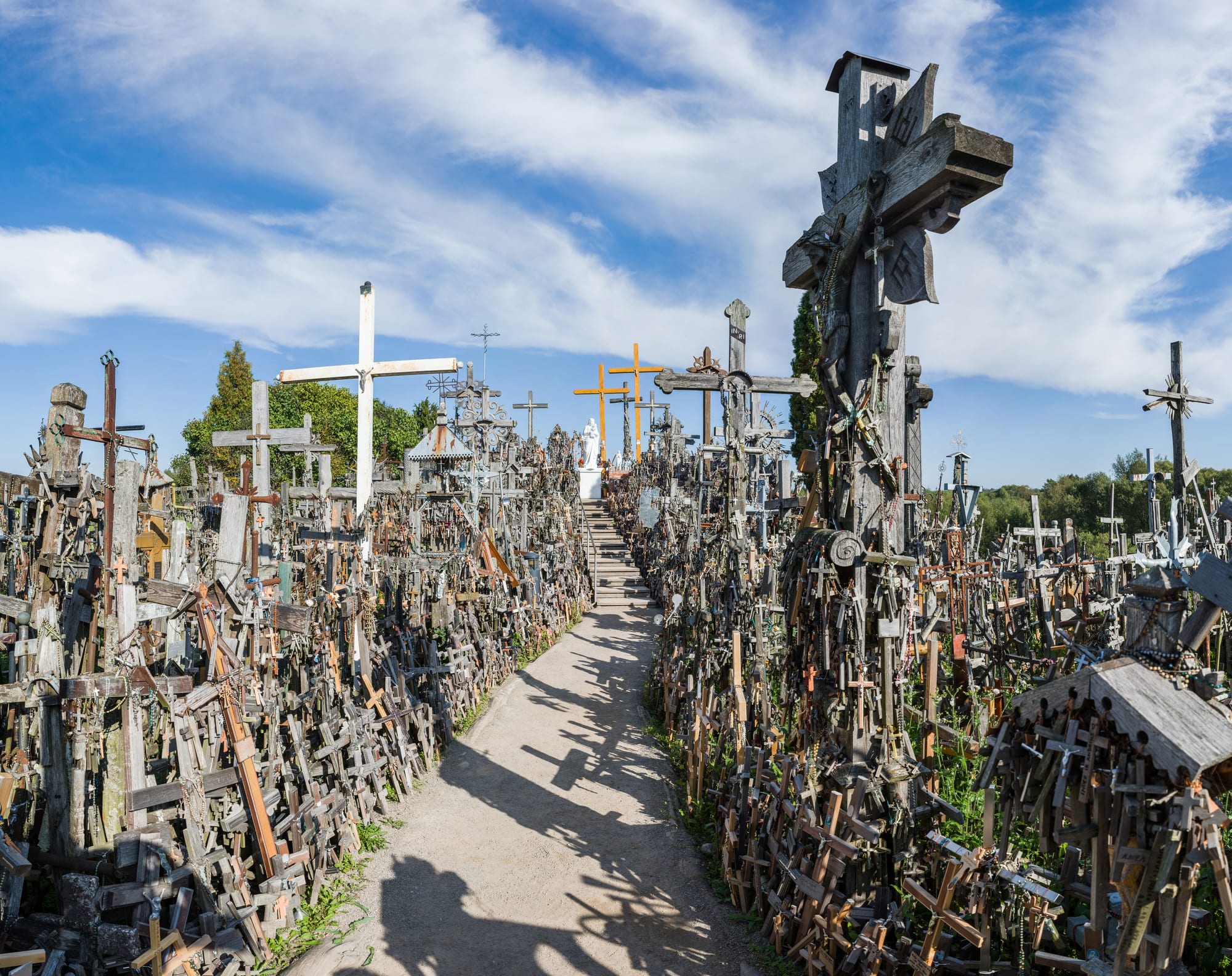
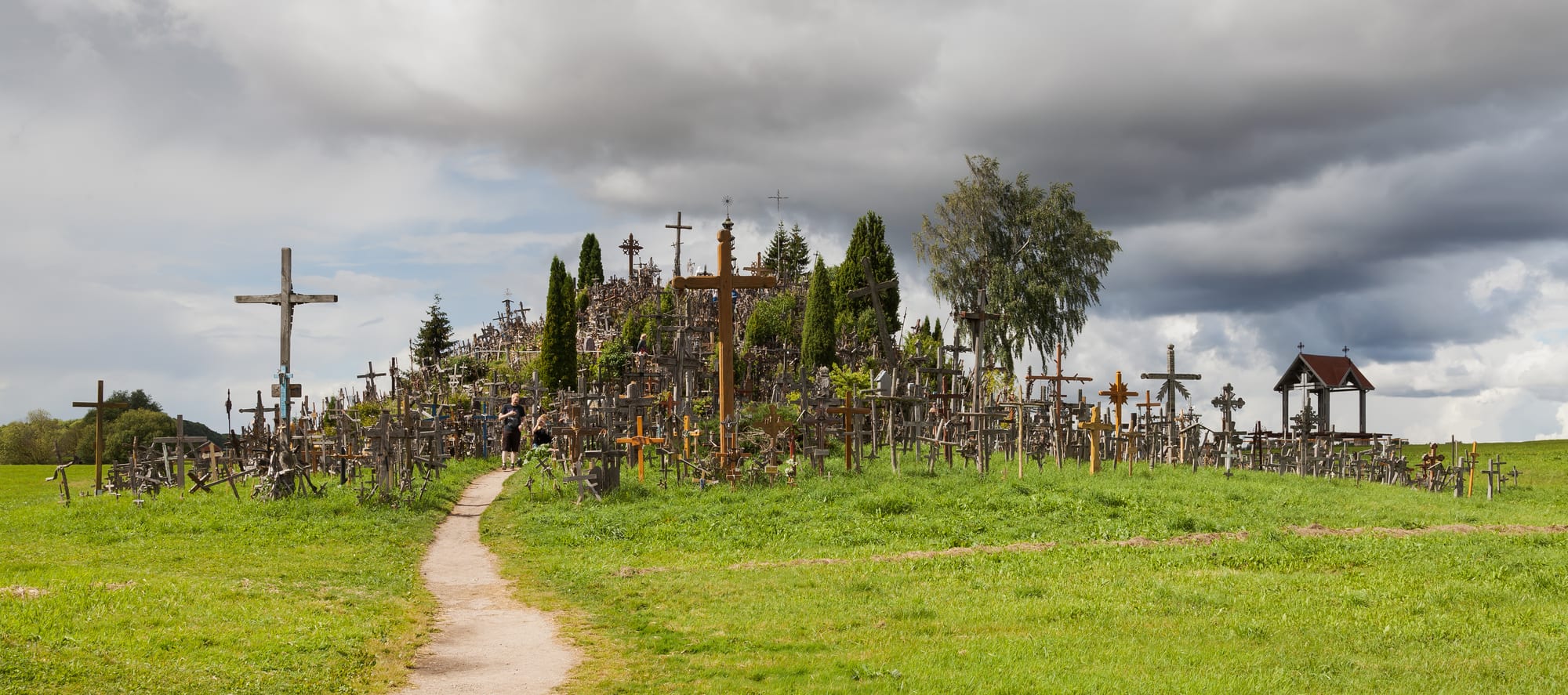
The Hill of Crosses, about 12 kilometres north of the city of Šiauliai, is a Catholic pilgrimage site where, for nearly two centuries, people have left crosses as prayers, memorials and thanks. The habit is believed to have begun after the uprisings of 1831 and 1863 against Russian rule, when families who could not find the bodies of fallen rebels raised symbolic crosses on an old hill fort instead.
The crosses kept coming, and under Soviet rule the hill became a silent protest: the authorities bulldozed it several times, and Lithuanians kept bringing new crosses, often at night. Nobody knows the exact count. Estimates put it at about 55,000 in 1990 and 100,000 in 2006, and later Lithuanian estimates run as high as 200,000.
Crosses for rebels who had no graves
After the third partition of the Polish–Lithuanian Commonwealth in 1795, Lithuania became part of the Russian Empire. Poles and Lithuanians rose against Russian rule twice, in 1831 and 1863, and both uprisings failed and were put down harshly. Many rebels died without a known grave.
The hill chosen to remember them was not a random rise in the fields. It is the Jurgaičiai, or Domantai, hill fort, a fortified natural hill on the left bank of the Kulpė river. With no bodies to bury, families planted crosses on it as stand-ins for the graves they could not visit. The precise origin of the practice is uncertain, but crosses on the hill are recorded from around 1850.
By about 1900 the site was drawing growing crowds of believers, who raised crosses in the hope of receiving grace, and in the early 20th century it had become a sacred place with regular services. When Lithuania declared independence in 1918, people came to pray for peace, for their country and for loved ones lost in the Wars of Independence.
A craft older than the hill
Planting a cross was already deep in Lithuanian habit. Cross-crafting, a tradition formed in the 15th century, blends Christian art with motifs from older Baltic beliefs. Traditional crosses are usually carved from oak, sometimes with iron work, and stand one to five metres tall, decorated with flowers, geometric patterns, suns, birds and the tree of life. They mark roadsides, farmsteads, cemeteries, sacred springs and the places where someone died.
The ritual matters as much as the object: choosing a carver, carving and raising the cross, and having it blessed. Since the 19th century, when Lithuania lay inside the Russian Empire, these crosses have also come to stand for the Lithuanian people themselves. UNESCO recognised Lithuanian cross-crafting in 2001 as a masterpiece of the oral and intangible heritage of humanity, and more than 200 cross-makers are active in the country today.
The hill the bulldozers could not clear
After 1944 Lithuania was under Soviet rule, and religion was persecuted: clergy were harassed, religious teaching was banned and anti-religious propaganda was everywhere. A hill thick with crosses was an open contradiction of the official ideology, and the authorities set out to remove it.
Destruction began in 1961. Bulldozers flattened the hill, wooden crosses were burned, metal ones were carted off as scrap, and stone and concrete crosses were buried. Roads to the site were blocked, the hill was guarded by the KGB and the army, and there were rumours of a plan to flood the area. Anyone caught bringing a cross risked a fine or prison.
It made no difference. After every clearance new crosses appeared, many carried in under cover of darkness. What had begun as a memorial to rebels became a peaceful act of resistance, a way of saying, without a word, that Lithuanian faith and identity had not been erased.
- 1795
The third partition of the Polish–Lithuanian Commonwealth puts Lithuania inside the Russian Empire.
- 1831
A failed uprising against Russian rule; the first crosses are believed to follow it.
- 1863
A second uprising is crushed, and more crosses are raised for the dead.
- 1918
Lithuania declares independence; the hill becomes a place to pray for the nation.
- 1961
Soviet authorities begin bulldozing the hill and destroying its crosses.
- 7 September 1993
Pope John Paul II visits the Hill of Crosses.
- 2000
A Franciscan hermitage opens nearby.
From protest to pilgrimage
When Soviet rule ended, the number of crosses exploded. People no longer had to fear punishment, and the hill's role as a symbol of endurance drew Lithuanians and visitors from abroad alike. Some build elaborate carved crosses; others tie a few twigs together with grass and push them into the ground.
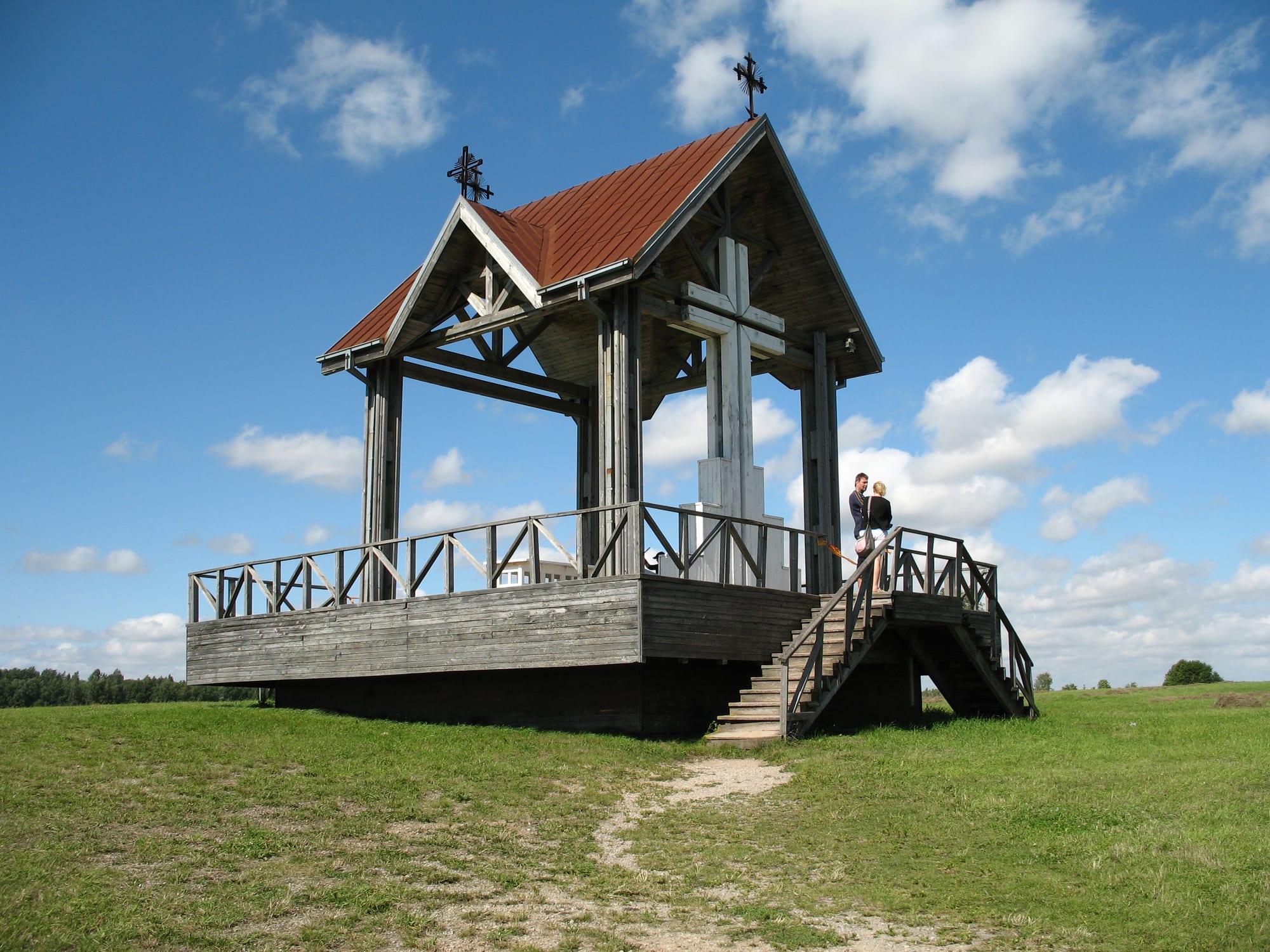
On 7 September 1993 Pope John Paul II came to the hill and called it a place of hope, peace, love and sacrifice. A chapel was built at the foot of the hill for the visit, and hundreds of thousands of people from Lithuania and neighbouring countries attended the Mass. At his urging a Franciscan hermitage was later built nearby; it opened in 2000, with an interior that echoes La Verna, the Italian mountain where Saint Francis is said to have received the stigmata.
Why nobody can count them
New crosses arrive constantly and the exact number is unknown, so every figure is an estimate. Alongside the crosses and crucifixes are statues of the Virgin Mary, carvings of Lithuanian patriots, thousands of tiny figures and countless rosaries hung from the larger crosses. Each was left with its own intention: to remember someone, to ask for health or success, or to mark an event.
There is now a little order. Since 2013 the Šiauliai District Municipality has allowed wooden crosses under 3 metres tall to be put up without a permit, and the hill keeps its character as a place where anyone may add one more.
Visiting the hill today
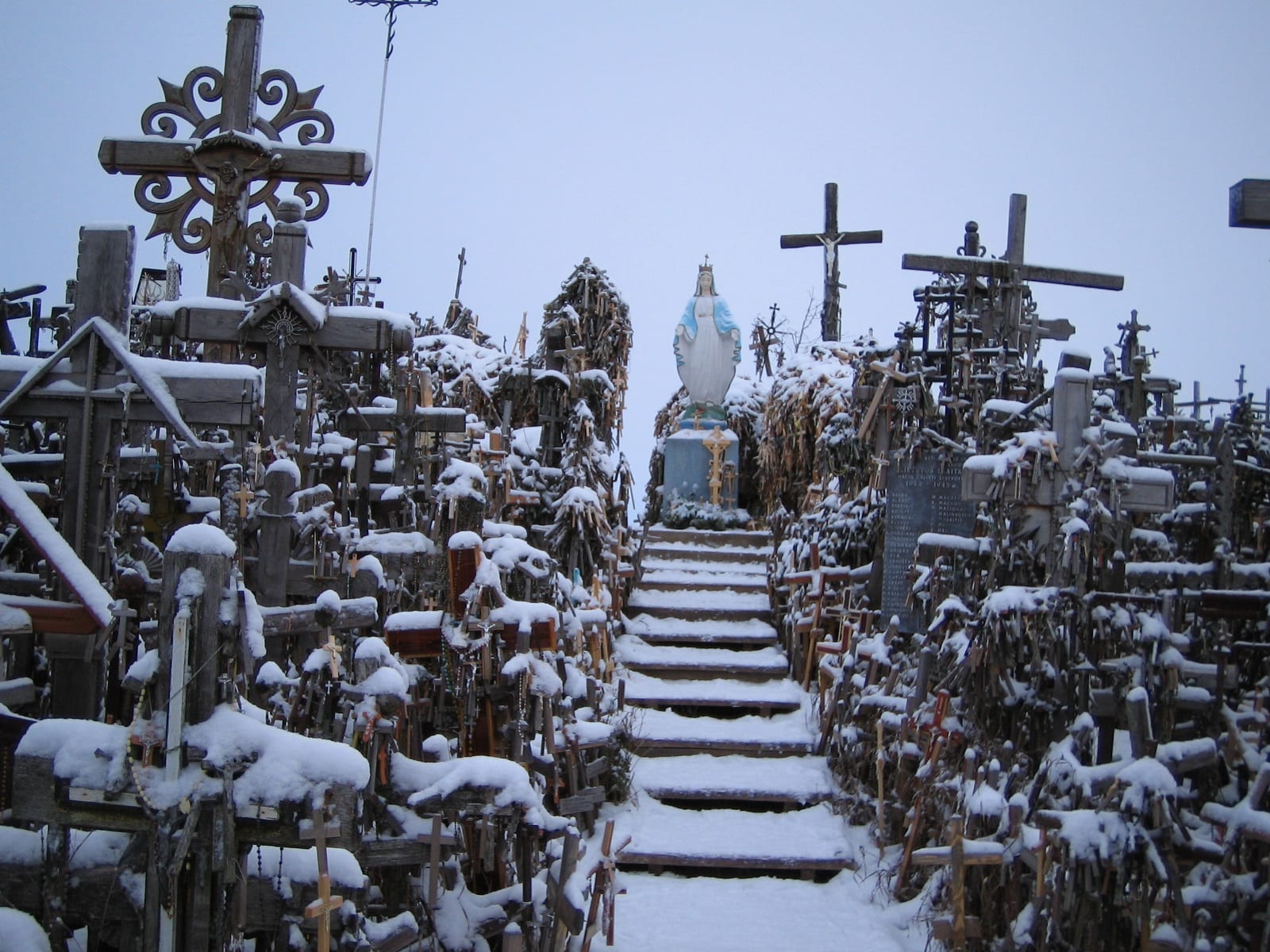
The hill stands in open farmland near the road from Šiauliai to Riga, and a path runs along its length between walls of crosses. It is a working place of prayer rather than a monument, and visitors are welcome to bring or make a cross of their own. Since 1997 a church festival has been held there on the last Sunday of July, while in winter the crosses stand under snow and the hill is at its quietest.