History · Eritrea
Why is Asmara full of 1930s Italian buildings?
Mussolini's invasion of Ethiopia turned Eritrea's capital into a boom town, and most of central Asmara was built in just six years, from 1935 to 1941.
By Globeway Editorial · 2 November 2026
The short answer
Asmara is full of 1930s Italian buildings because Italy ruled Eritrea as a colony, and in the late 1930s Mussolini's government poured money and settlers into its capital. Eritrea was the launch pad for Fascist Italy's invasion of Ethiopia in 1935, and Asmara swelled into a boom town almost overnight. Most of central Asmara was built between 1935 and 1941, so in just six years the Italians, with Eritrean labour, built almost an entire city.
It was built in the newest styles of the day: Art Deco, futurism, Cubism and rationalism. Then the boom stopped as abruptly as it started, when Italy lost the colony to Britain in 1941. Asmara came through the long wars that followed relatively undamaged, and today more than 400 buildings of Italian origin survive. In 2017 UNESCO made the city a World Heritage Site, the first modernist city anywhere to be listed in its entirety.
From highland village to colonial capital
Asmara sits at 2,325 metres on the Eritrean highlands, which makes it one of the highest capitals in the world. According to local tradition, it was founded when four rival clans united; the name comes from the Tigrinya phrase "Arbate Asmera", meaning "the four made them unite". For centuries it was a modest settlement on the trade route to the Red Sea port of Massawa.
Italy occupied Massawa in 1885 and Asmara in 1889. The Colony of Eritrea was declared on 1 January 1890, with its capital at Massawa, and in 1897 the governor, Ferdinando Martini, moved the capital up to Asmara. Martini also imposed strict racial segregation and denied Eritreans access to education, a pattern that shaped the colony. A railway from the coast reached Asmara in
- Even so, the town grew slowly: in 1935 it had only about 4,000 Italians
and 12,000 Eritreans.
War, empire and a boom town
Everything changed with Mussolini's ambitions in East Africa. His government treated Eritrea as a strategic base, and on 3 October 1935 an army of 200,000 soldiers attacked Ethiopia from Italian Eritrea without a declaration of war. After the conquest, in May 1936, Mussolini proclaimed a new Italian Empire, and Eritrea was merged with Ethiopia and Italian Somaliland into Italian East Africa.
Asmara became the supply base and the showpiece of that empire. The number of Italians in Eritrea rose from 4,600 to 75,000 in five years. By 1938 Asmara had 48,000 Italians and 36,000 Eritreans, and the 1939 census counted 98,000 people, more than half of them Italian. In 1940 there were more than 2,000 small and medium-sized industrial firms around the city, in construction, mechanics, textiles, food processing and electricity. Asmara had become the main Italian town of Italy's African empire, and people called it Piccola Roma, "Little Rome".
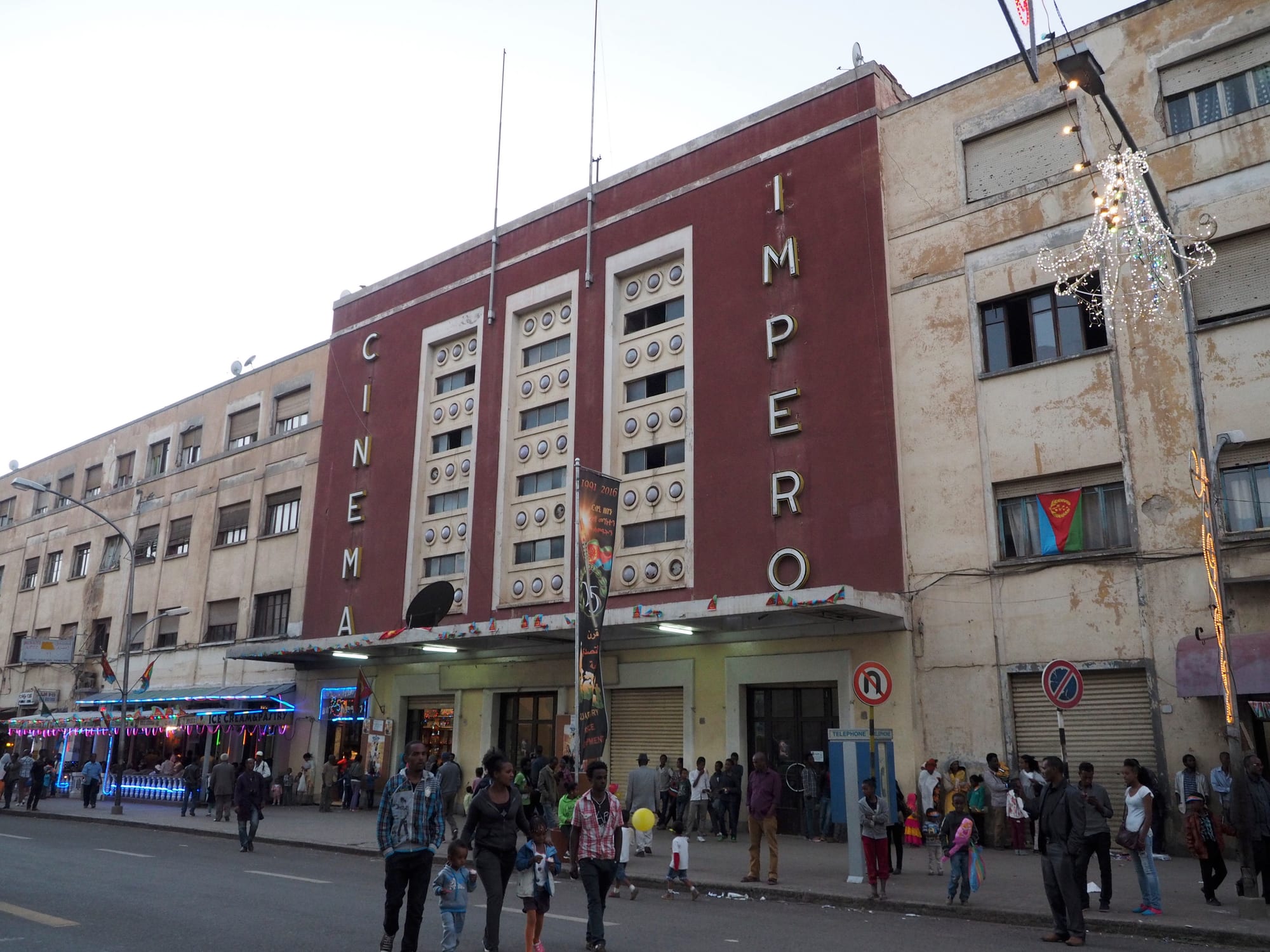
Forty-five round lights decorate the front, and most of the seats and equipment inside are original.
A laboratory for modern architecture
The new city was planned from scratch, and its architects treated Asmara as a place to experiment with radical new designs. The cool highland climate made it a good place to build, and they used both Italian and local materials. Asmara was famously modern in other ways too: it had more traffic lights than Rome did when the city was being built.
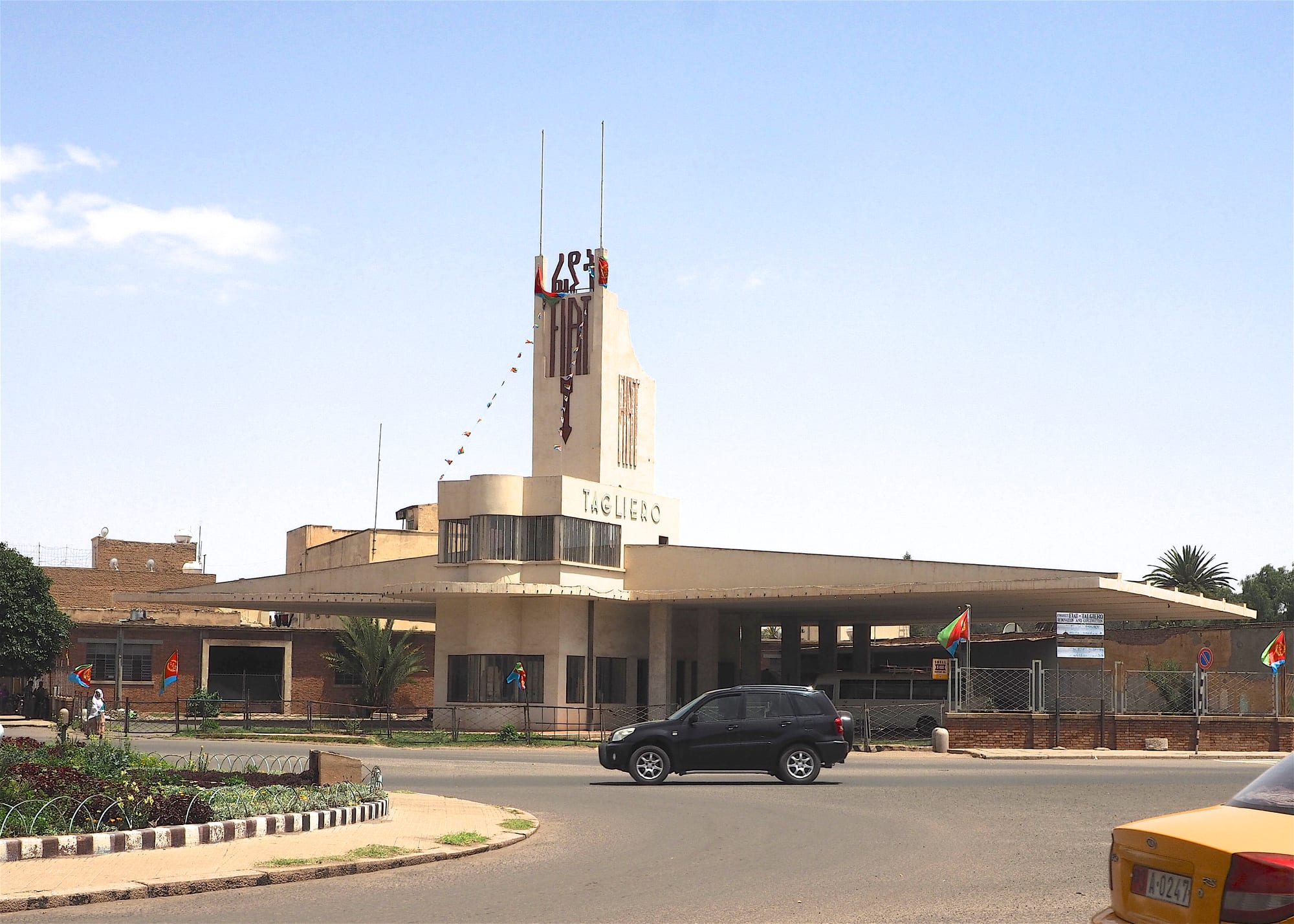
The results range across almost every style of the early 20th century. The Cinema Impero (1937), by the architect Mario Messina, is considered one of the world's finest Art Deco buildings. The Africa Pension shows touches of Cubism. The Church of Our Lady of the Rosary is neo-Romanesque, and the Governor's Palace is neoclassical. Most famous of all is the Fiat Tagliero Building, a petrol station completed in 1938 to a design by the engineer Giuseppe Pettazzi. It is shaped like an aeroplane, with a central tower and two huge cantilevered concrete wings with no supporting pillars.
The whole project was political. Mussolini dreamed of a second Roman Empire in Africa, and his money created the Asmara of today, a city intended as a symbol of colonial Fascism.
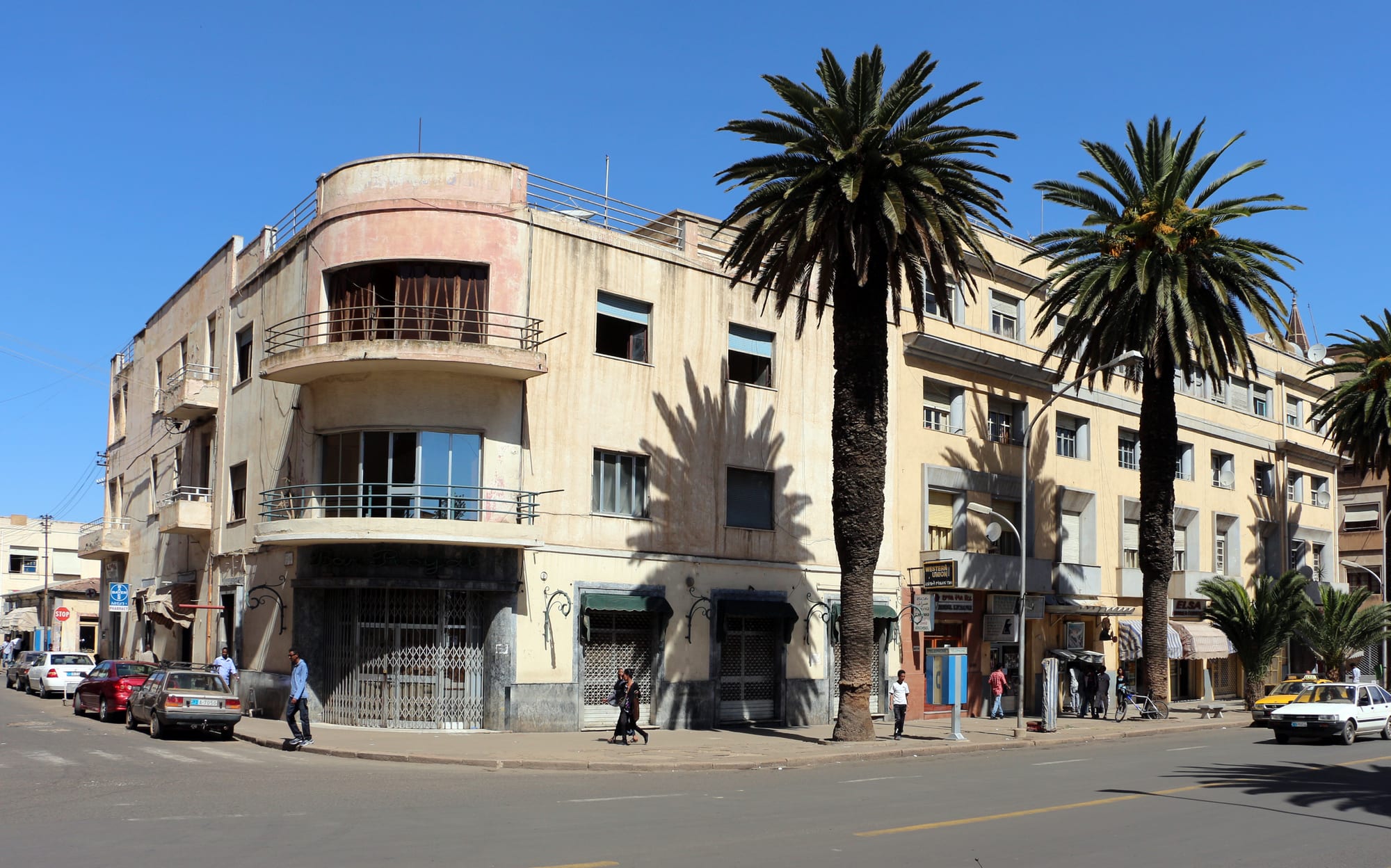
Many shops in the centre still carry Italian names, such as Bar Vittoria and Pasticceria moderna.
Why the city stood still
The building boom lasted barely six years. The Second World War halted Italy's investment, and in 1941, during the East African campaign, Britain took Eritrea from Italy. Many Italian settlers left; by 1946 only 38,000 remained in the whole country. Under British military administration and then a United Nations plan, Eritrea was federated with Ethiopia in 1952, and Asmara lost its role as a capital to Addis Ababa, more than 1,000 kilometres to the south.
In 1961 Ethiopia annexed Eritrea outright, setting off a war of independence that lasted until 1991. Asmara, like most of the highlands, was left relatively undamaged, and it became a capital again when Eritrea won its independence, confirmed by a referendum in 1993. With the centre largely intact, the city's 1930s fabric survived to become its defining feature.
Survival was not the same as safety. In 2006 the World Monuments Fund put the historic centre on its watch list of the 100 most endangered sites, to save it from decay and redevelopment, and a European Union heritage project launched in 2010 to support restoration. The Fiat Tagliero was restored in 2003 and is listed in the highest category of protection, so no part of it may be altered.
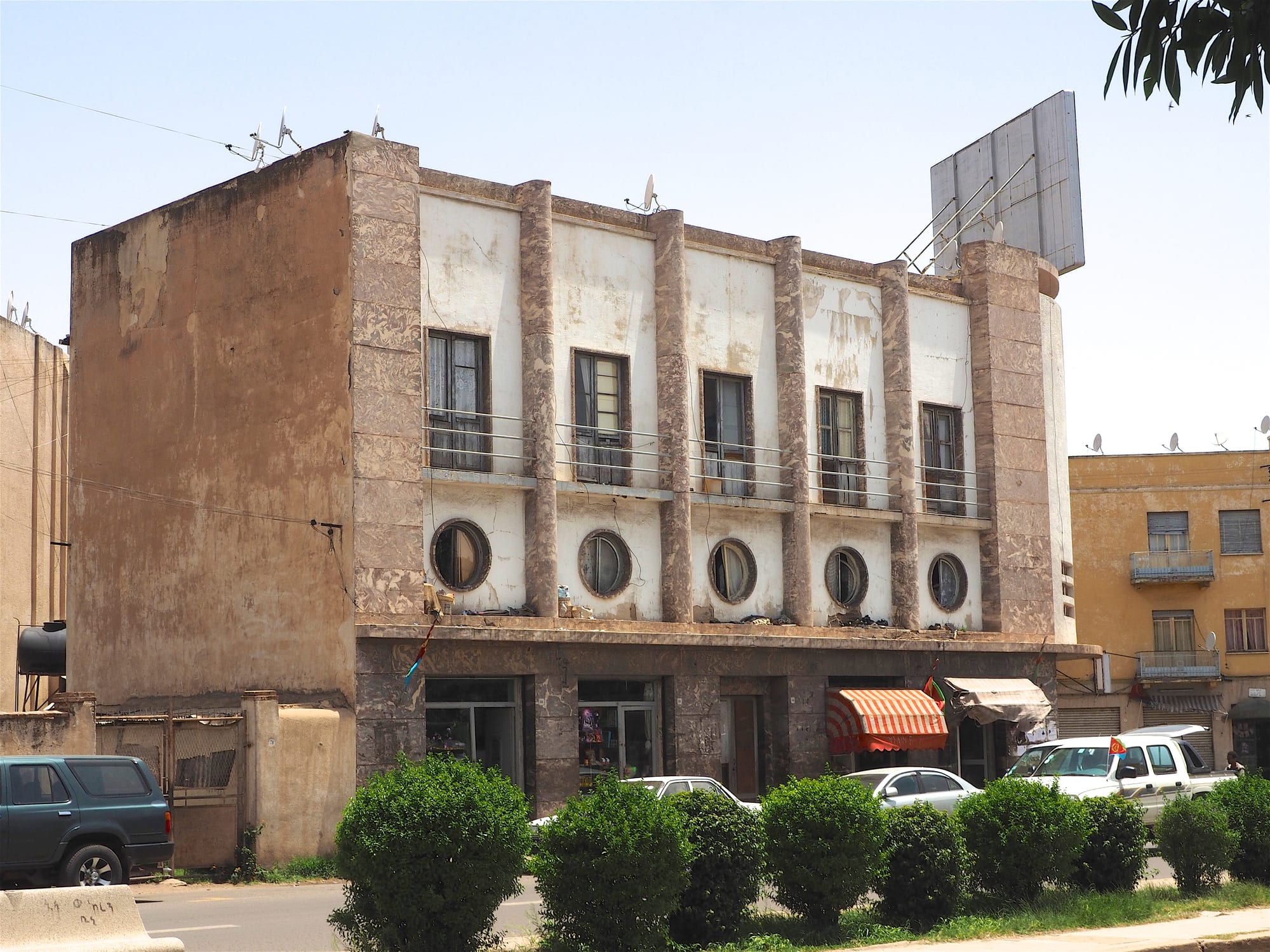
The city has thousands of Art Deco, futurist, modernist and rationalist buildings from the Italian period.
Little Rome today
UNESCO inscribed "Asmara: A Modernist African City" in July 2017, calling it an exceptional example of early modernist town planning and its application in an African context. Its wide streets, piazzas and palm-lined boulevards are best seen on foot, and the Italian legacy runs through daily life as well as the buildings: cafés serve espresso and cappuccino, and pasta al sugo e berbere, pasta in tomato sauce spiced with the Eritrean pepper blend berbere, is a common dish. The Cinema Impero still works as a cinema.
The city's climate helps explain its appeal to its builders. It is mild all year, with most of its rain falling in July and August, and a long dry season from September to around April.