History · Dominican Republic
Why is Santo Domingo the oldest surviving European city in the Americas?
It was not quite the first European settlement, but it was the first to survive, because Spain made it the capital and launch pad of its new empire.
By Globeway Editorial · 2 November 2026
The short answer
Santo Domingo was not, strictly, the first European settlement in the Americas. Norse explorers built a camp at L'Anse aux Meadows in Newfoundland around 1,000 years ago, and Christopher Columbus founded two short-lived outposts on the island of Hispaniola before it: the fort of La Navidad in 1492 and the town of La Isabela in 1493 to 1494. All of them were destroyed or abandoned. What makes Santo Domingo special is that it survived: founded by Columbus's brother Bartholomew between 1496 and 1498, it is the oldest continuously inhabited European settlement in the Americas.
It survived because Spain chose it as the centre of everything it did in the New World. Placed on the sheltered mouth of the Ozama River on Hispaniola's south coast, rebuilt after a hurricane in 1502 and backed by the largest fleet yet sent across the Atlantic, it became the seat of Spanish government, law and church in the Americas and the base from which the conquests of Puerto Rico, Cuba and Mexico were launched.
The settlements that came before
The Norse site at L'Anse aux Meadows, on the northern tip of Newfoundland, dates to around 990 to 1050, and tree-ring dating points to 1021. It is the only undisputed site of pre-Columbian European contact with the Americas outside Greenland, and seems to have been a base camp for exploration further south. It held eight buildings of sod over wooden frames, and it did not last.
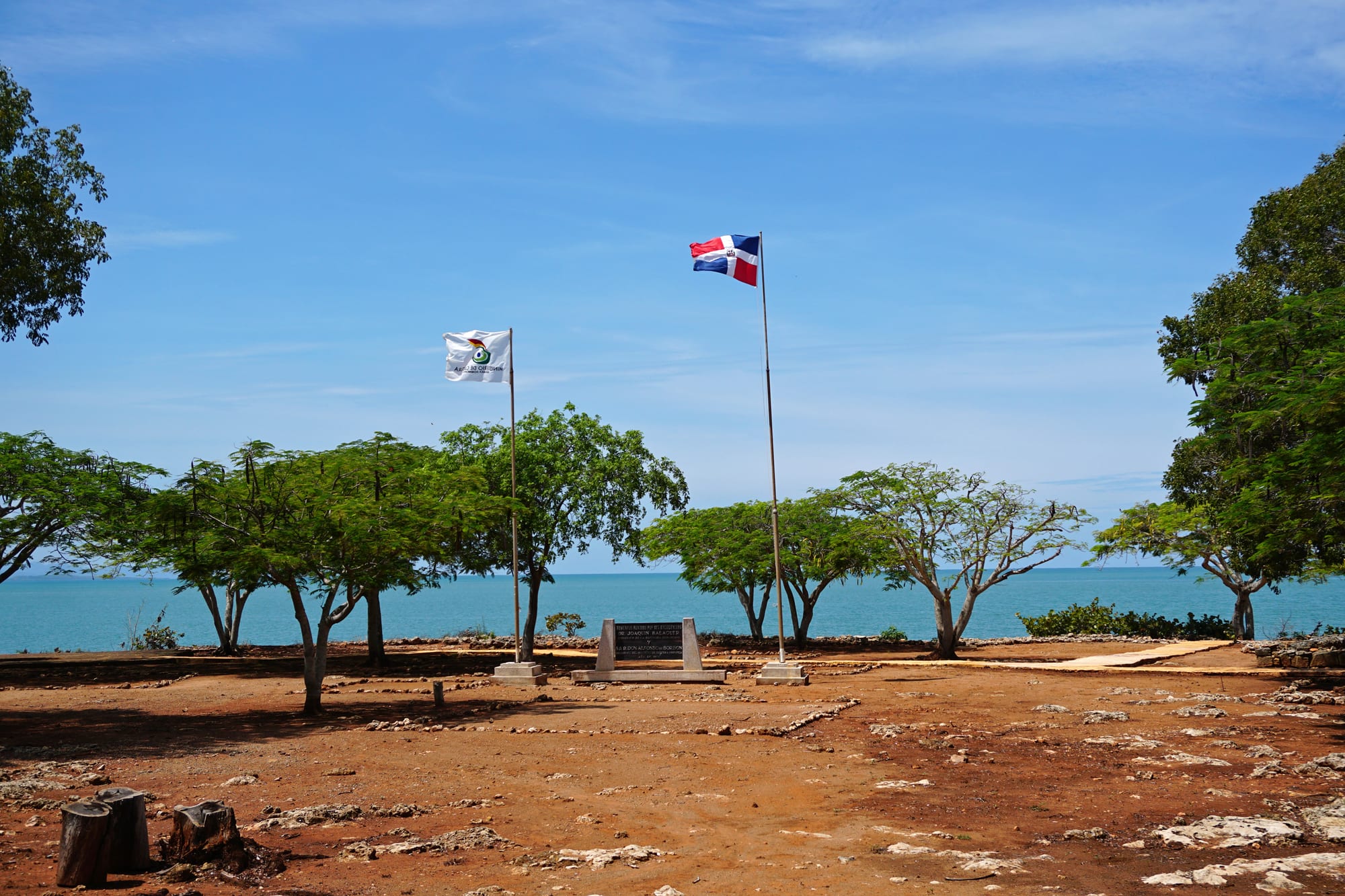
Five centuries later, Columbus's first voyage left a small garrison on the north coast of Hispaniola in a fort built from the timbers of the wrecked Santa María and named La Navidad, because the wreck happened on Christmas Day
- The garrison fell to quarrelling, mistreated the Taíno people around
them, and the fort was destroyed by the forces of the cacique, or chief, Caonabo before Columbus returned.
On his second voyage, Columbus arrived with seventeen ships and more than a thousand men and founded La Isabela, with its first Mass held on 6 January
- It was a real town, with a church, a plaza, storehouses and a stone house
for Columbus, but it was built to search for gold and it struggled from the start. The first known European epidemic to reach the Americas struck it; hurricanes struck in 1494 and 1495, the second sinking several ships; hunger and disease led to mutiny. By 1500 it was empty.
A fresh start on the south coast
With La Isabela failing, Bartholomew Columbus established a new settlement on the southern coast, on the east bank of the Ozama River. Spanish settlement there dates from 1496, and the official founding date is 5 August 1498. He called it La Nueva Isabela, but it soon took the name Santo Domingo, in honour of Saint Dominic, and became the new capital.
Its position mattered. The river mouth offered a harbour on the Caribbean, and the city's place on the Ozama remained central to its trade throughout colonial times; the country's busiest port still stands there. Then, in June 1502, a major hurricane destroyed the young town. The new governor, Nicolás de Ovando, rebuilt it on a different site on the west bank, and that is the city whose streets survive today.
Ovando's city and the gold rush
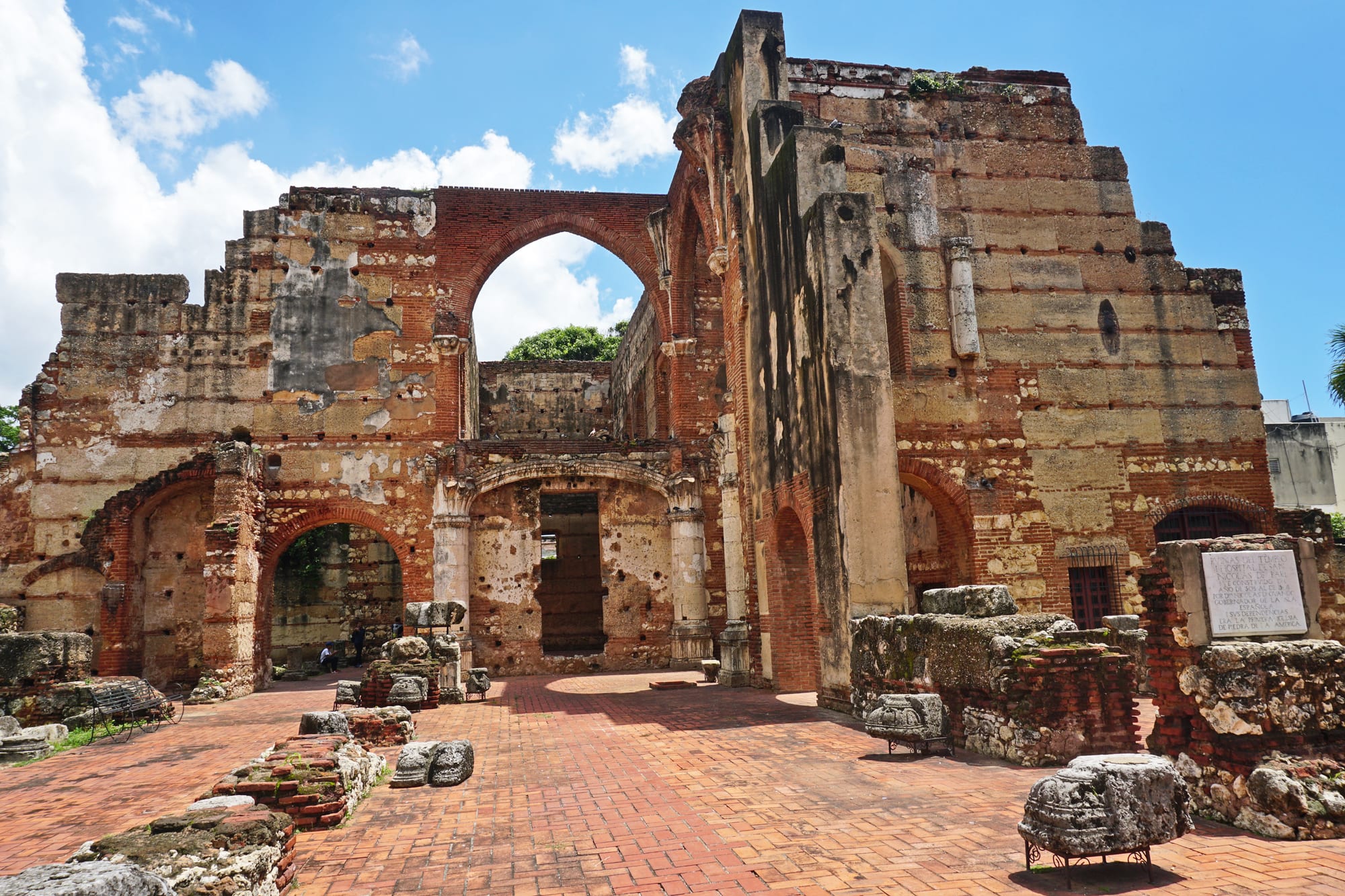
Ovando had sailed from Spain in February 1502 with thirty ships, the largest fleet that had ever crossed to the New World, carrying around 2,500 colonists chosen to represent a cross-section of Spanish society. The crown meant to develop the islands economically and extend its rule. Calle Las Damas, dating from 1502, is the oldest paved street in the Americas, and work on the Hospital San Nicolás de Bari, the first hospital in the Americas, began in 1503.
Money followed. A gold rush in the Cordillera Central, the island's central mountain range, lasted from 1500 to 1508, and an estimated 30,000 kilograms of gold were extracted in the first two decades, more than all of Europe produced in those years. Diego Columbus, Christopher's son, arrived as governor in 1509, and the Alcázar de Colón, the first castle in the Americas, was built as his residence between 1511 and 1514. In 1512 King Ferdinand set up a Real Audiencia, a royal court of appeal, in the city.
That prosperity rested on terrible human costs. Ovando crushed resistance on Hispaniola with massacres and forced the Taíno to labour for settlers under the encomienda system. Estimates of the island's original population vary widely, but by around 1508 forced labour, hunger, disease and killings had reduced it to tens of thousands, and by 1535 only a few dozen Taíno were said to remain. Enslaved Africans were shipped in to work the new sugar plantations, and the first major slave revolt in the Americas broke out on Diego Columbus's sugar plantation in the early 1520s.
Gateway to an empire
For its first decades, Santo Domingo was the capital of all Spain's colonies in the Americas and was known as the "Gateway to the New World". Juan Ponce de León's colonisation of Puerto Rico, Diego Velázquez's colonisation of Cuba, Hernán Cortés's conquest of Mexico and Vasco Núñez de Balboa's sighting of the Pacific were all launched from here.
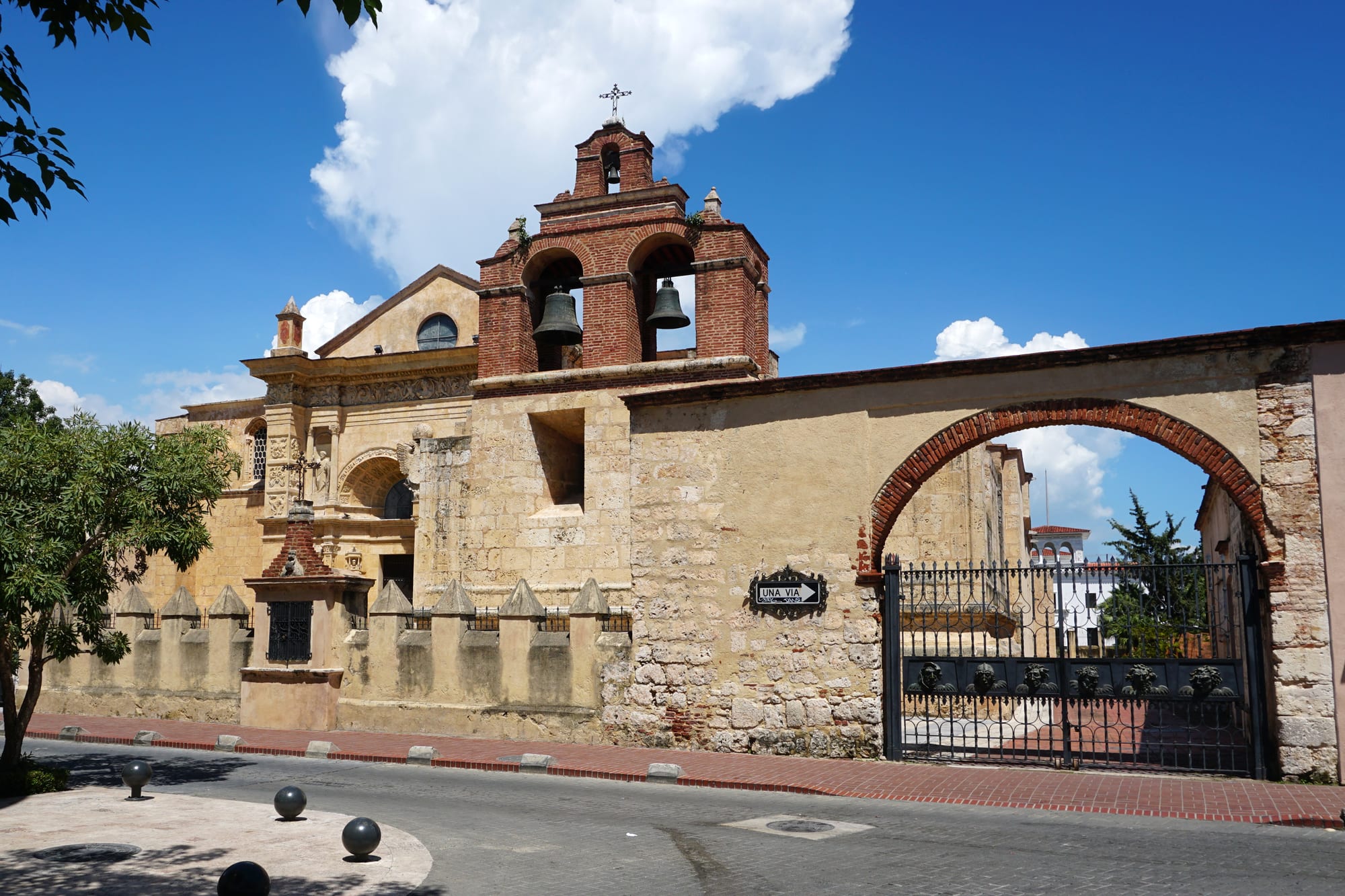
The city collected the institutions of a capital. Work on the cathedral was ordered in 1504 and it was consecrated in 1541; it is the oldest cathedral still standing in the Americas, and its archbishop still holds the title Primate of the Indies. A papal bull of 1538 founded the Universidad Santo Tomás de Aquino, one of the first universities in the Americas.
Its very success on the mainland ended its leading role. After the conquests of Mexico and Peru, Spain turned its attention to the continent, and Havana, better placed for the Gulf Stream, became the stopping point for the merchant fleets. Sir Francis Drake captured and ransomed the city in 1586. But Santo Domingo never emptied as La Isabela had: it went on to become the capital of the Dominican Republic and, with its suburbs, the largest metropolitan area in the Caribbean.
The Colonial City today
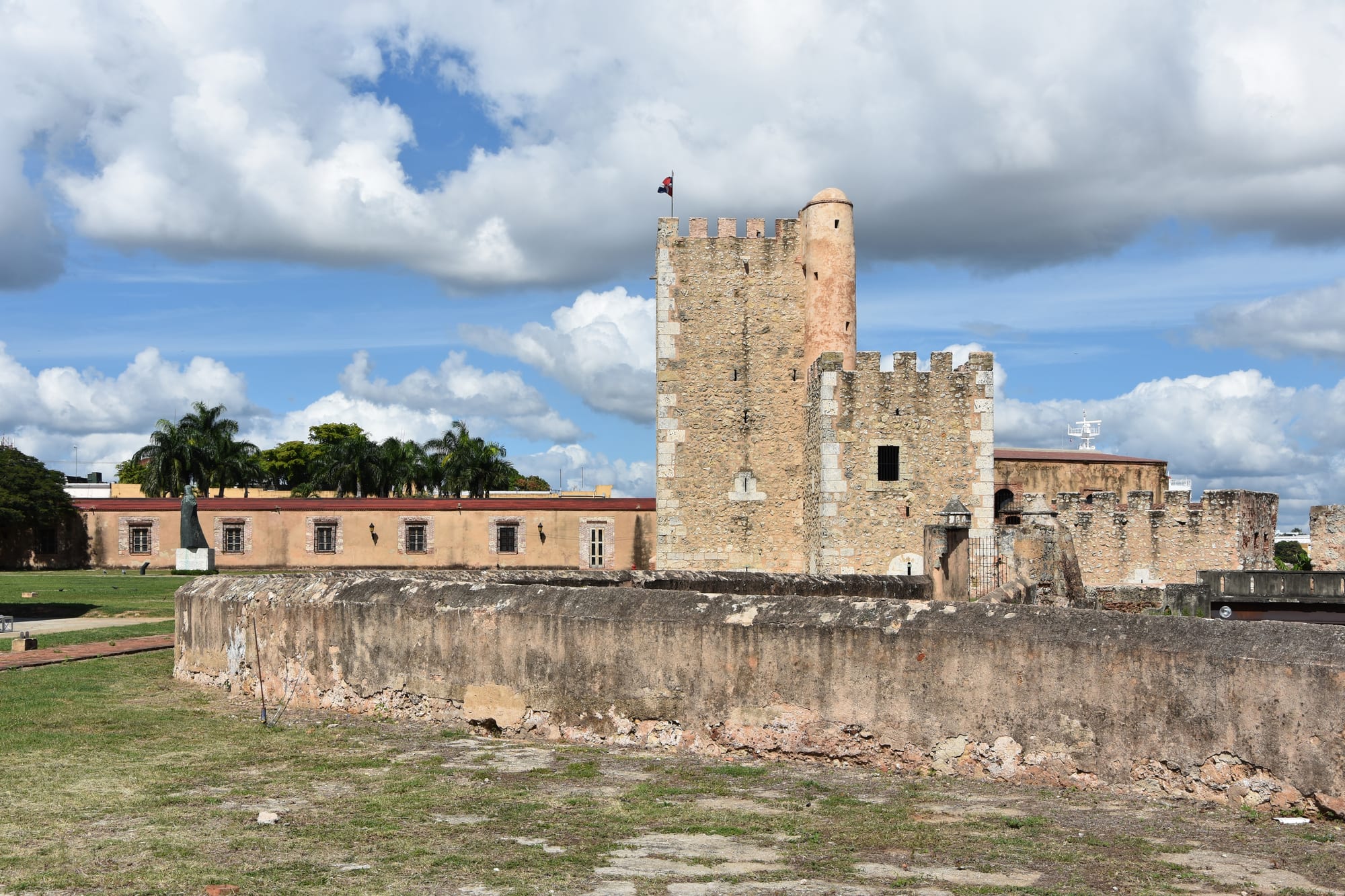
The surviving core of Ovando's city, the Ciudad Colonial on the west bank of the Ozama, covers just over a square kilometre and has been a UNESCO World Heritage Site since 1990. Within it stand the Fortaleza Ozama, part of the oldest European military construction in the Americas; the cathedral beside Parque Colón; the Alcázar de Colón, restored in 1957 and now a museum; the ruins of the first monastery in the Americas; and more than 300 historical sites in all, linked by Calle Las Damas and the pedestrian Calle del Conde.