💰 Budget
Ghazni is inexpensive, with a few simple guesthouses aimed at Afghan travellers and bazaar meals that cost very little. The significant cost is transport: the town sits on the long Kabul–Kandahar highway, and visitors reach it by hired car with a driver rather than by public transport.
- Daily Budget Midrange
- USD 40–80 (better hotel in Kandahar or Kabul, hired car with driver)
- Daily Budget Shoestring
- USD 15–30 (simple guesthouse, bazaar food, shared taxis)
Afghanis, changed from US dollars, are the currency to carry; change only what is needed.
📅 Best Time to Visit
Spring and autumn — roughly April to early June and September to October — when the plateau is mild and the highway is clear. Summer days are warm but dry and dusty. Winter, from about November to March, is cold and snowy, and snow and ice can make the road slow and dangerous.
⏳ Suggested Number of Days
The citadel, the old town and the monuments on the plain can be covered in a single day. A second allows the excavated sites around the town at a slower pace. Most people see Ghazni as a stop on the long road between Kabul and Kandahar.
- First Visit
- 1 day
- With Surroundings
- 2 days
🚆 Transportation
The town is small enough to cross on foot, and shared taxis, minibuses and rickshaws serve the bazaar and the surrounding villages. There is no railway and no scheduled public transport beyond the highway buses and shared cars that run between Kabul and Kandahar. Reaching the minarets and the excavated sites is easiest by car.
The Kabul–Kandahar highway is long and has a violent history; travel only by day and with a trusted driver.
🛬 Airport & Station Connections
Ghazni lies on the ring road about 150 kilometres south-west of Kabul, three to four hours by car in good conditions, and roughly 350 kilometres north-east of Kandahar, most of a day. Ghazni Airport began a twice-weekly scheduled service to Kabul in January 2025, but almost everyone arrives by road. Visas must be arranged in advance.
🚶 Walkability
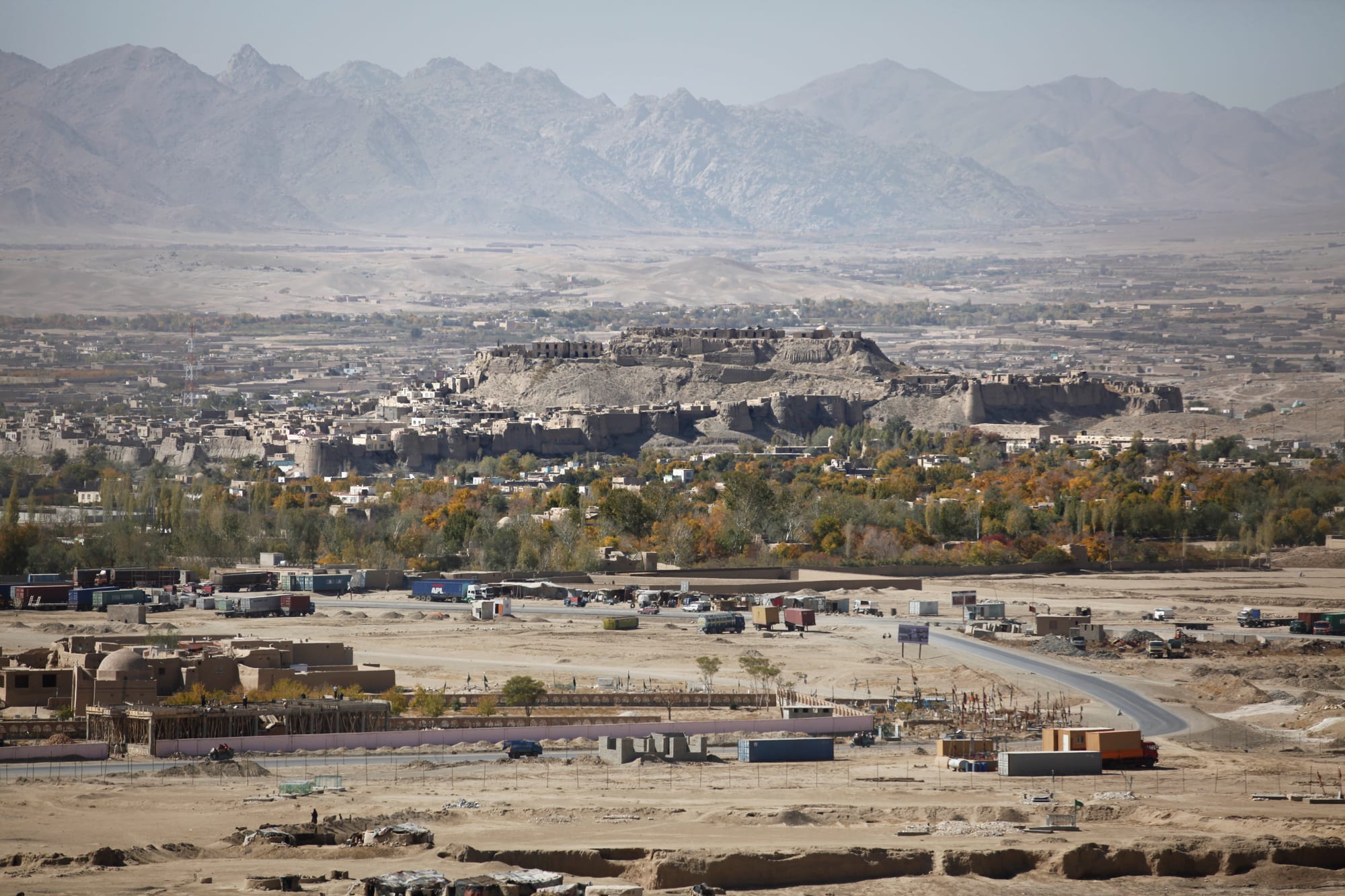
The old town, the bazaar and the climb to the citadel are all walkable, and the lanes below the walls are best seen on foot. The minarets and the excavated sites stand out on the plain a few kilometres away, with little shade and rough ground between. The altitude of about 2,200 metres makes climbing harder than it looks, and winter snow and mud slow everything.
🛡️ Safety
Most governments advise against all travel to Afghanistan, and this region saw the heaviest fighting of the 2001–2021 war. Ghazni and the highway through it were repeatedly contested, terrorism, kidnapping and wrongful detention risks apply, and there is no consular help. Landmines, unexploded ordnance and old improvised explosives remain a danger off made ground, and medical facilities are very limited.
Most governments advise against all travel to Afghanistan, and this region saw the heaviest fighting of the 2001–2021 war. Anyone still considering a visit should read their government's full advisory, stay off unpaved ground, and avoid the border areas and the desert. Check current official travel advice before travelling.
🌦️ Climate
A cold semi-arid highland climate at about 2,200 metres, drier and colder than Kabul, with wide day-to-night temperature swings and most of the little precipitation falling as snow in winter and early spring.
- Summer
- warm and dry by day, usually around 28–32°C, with cold nights
- Winter
- cold and snowy — daytime temperatures often near or below 0°C and nights far colder
🤝 Local Customs
Ghazni is a conservative, ethnically mixed town where public space is essentially male. Women are required to cover their hair and body in public, and rules on dress and on women travelling without a male relative have tightened since 2021. Both Pashto and Dari are heard. Greetings are long, the right hand is used for eating and giving, and hospitality is an obligation rather than a courtesy: tea will be offered and should be accepted.
Alcohol is prohibited. Never photograph people, especially women, without clear permission, and avoid photographing checkpoints, the citadel garrison area and official buildings. Climbing on the minarets or the excavated ruins is not permitted.
💳 Common Payment Methods
The currency is the afghani and the town runs entirely on cash. Foreign cards and ATMs cannot be relied on; visitors change US dollars with money changers in Kabul or Kandahar before arriving and carry small notes for the bazaar, drivers and guesthouses.