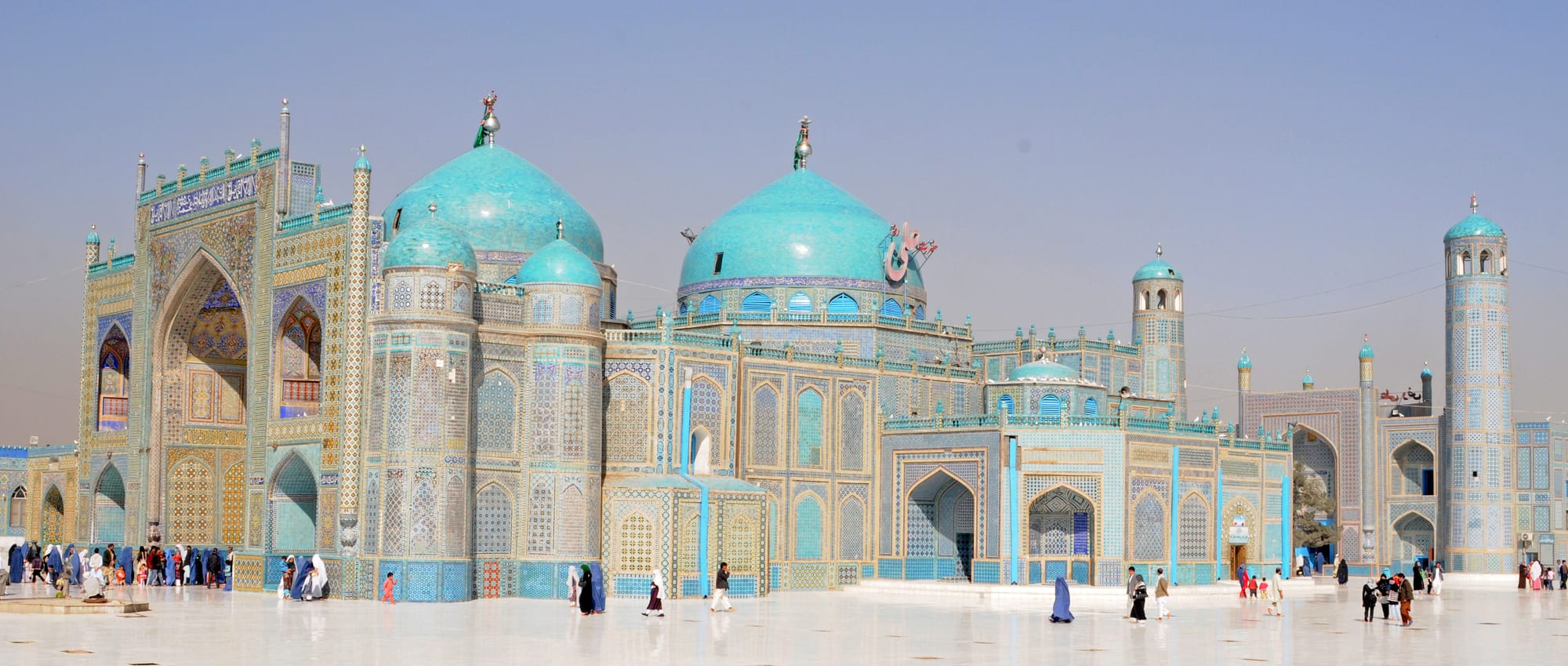
💰 Budget
Costs in Mazar-i-Sharif are low and everything is paid in cash, in afghanis changed from US dollars. The city has the widest choice of guesthouses and hotels in northern Afghanistan, and food in the bazaar is cheap. The main expense for any outsider is a hired car with a driver, and any onward travel into Badakhshan or the Wakhan costs far more than time in the city.
- Daily Budget Midrange
- USD 50–100 (better hotel, hired car with driver; travel further north-east costs considerably more)
- Daily Budget Shoestring
- USD 15–30 (basic guesthouse near the centre, bazaar food, shared taxis)
Bring clean, newer US dollar bills and change them with the money dealers in the central bazaar; cards are not usable.
📅 Best Time to Visit
March to May, when the plain is green and Nowruz falls at the shrine on 21 March, and again in October, when the heat has broken. Midsummer on the Bactrian plain is punishing, with dust storms, and winter is cold and grey.
⏳ Suggested Number of Days
The city itself is compact and centred on one great monument, so a day or two covers it. Add a day or more for the ruins and shrines out on the plain, and considerably longer for anyone continuing east into Badakhshan.
- First Visit
- 1–2 days
- With Surroundings
- 3–4 days
🚆 Transportation
The city lies on the main road north from Kabul through the Salang tunnel, a long day's drive when the pass is open, and has an airport with domestic flights. Shared taxis link it with Balkh, Sheberghan, Kunduz and Pul-e Khumri, and a freight railway runs north to the Uzbek border at Hairatan. Within the city, shared taxis, small three-wheelers and buses cover the radiating avenues.
Distances on northern roads are unpredictable; allow far more time than the map suggests and travel by day.
🛬 Airport & Station Connections
Mazar-i-Sharif International Airport sits on the eastern edge of the city, a short drive from the centre, with domestic flights to Kabul and a limited number of regional services. Most arrivals come overland: from Kabul over the Salang pass, from the Uzbek border at Hairatan about 60 kilometres north, or from Tajikistan and Turkmenistan through other northern crossings.
🚶 Walkability
The centre is flat, laid out around the shrine park, and the bazaars, hotels and offices within it are easily walked. Pavements are uneven and in summer the heat and dust make midday walking hard. Anything beyond the central ring — the airport, the Balkh road, the northern industrial belt — needs a vehicle.
🛡️ Safety
Most governments advise against all travel to Afghanistan, and that applies here. The city has seen heavy fighting within living memory and bombings have struck mosques and public places in the north. Risks of terrorism, kidnapping and detention apply, there is no consular help, and landmines and unexploded ordnance remain a hazard off used ground in the surrounding countryside.
Most governments advise against all travel to Afghanistan, and that applies here. Anyone still considering a visit should read their government's full advisory, follow local guidance on dress and conduct, and never stray off used tracks. Check current official travel advice before travelling.
🌦️ Climate
A hot, dry continental climate on the northern plain. Summers are long and very hot, with dust carried on the wind; spring is short and green; winters are cold and grey with some snow, and rain falls mostly between December and April.
- Summer
- very hot and dusty — often around 38–42°C by day, with warm nights
- Winter
- cold and grey — daytime highs often around 8–12°C, with nights at or below 0°C and occasional snow
🤝 Local Customs
This is a conservative Muslim city and the shrine is a place of pilgrimage. Modest dress is expected of everyone; women cover their hair and wear loose clothing, and foreign men wear long trousers and sleeves. Greetings are unhurried, the right hand is used for eating and giving, and shoes come off indoors and at shrines. Guests are pressed with tea, dried fruit and nuts.
Ask before photographing people, particularly women, and never photograph officials, checkpoints or military sites. Alcohol is prohibited, and the restrictions on women's dress, movement and work apply to visitors as well as residents.
💳 Common Payment Methods
The currency is the Afghan afghani and the economy runs on cash. International cards do not work, ATMs cannot be relied upon, and foreign banking links are limited. US dollars in clean, recent notes are changed at money dealers in the bazaar; small afghani notes are needed for taxis, bread and tea.