💰 Budget
Berat stays inexpensive all year, and rooms in restored Ottoman houses in Mangalem and Gorica are good value. Grill-house meals, byrek and furgon fares are cheap; the main costs are site tickets and a hire car for the mountain and canyon trips.
- Daily Budget Midrange
- USD 80–150 (heritage guesthouse, restaurant dinners, museum tickets, a taxi or hire car for day trips)
- Daily Budget Shoestring
- USD 35–55 (hostel bed or guesthouse room, byrek and grill-house meals, buses and furgons)
Carry lek in cash for furgons, small restaurants and guesthouses, and wear shoes with grip for the polished cobbles up to the castle.
📅 Best Time to Visit
April to June and September to October, before and after the heat. July is hot in the valley, and afternoons are best spent indoors until the evening walk along the river. Winters are mild and wet, quiet, and Mount Tomorr above the town is often white with snow.
⏳ Suggested Number of Days
The old town is small, and most visitors spend one or two days. Allow three or four to add the mountain, the canyon country upstream or the ancient sites on the plain to the west; the canyon is best when spring water is high.
- First Visit
- 1–2 days
- With Surroundings
- 3–4 days
🚆 Transportation
Buses and furgons link Berat with Tirana and with Durrës, Fier, Gjirokastër and Sarandë, from a bus station on the northern outskirts; a local bus or taxi covers the last stretch to the centre. In town, walking is the norm, and a hire car or a 4WD with a driver is needed for Mount Tomorr.
Furgons heading south tend to leave early in the morning; check the departure board at the bus station the day before.
🛬 Airport & Station Connections
Most visitors arrive by road from Tirana, by bus or furgon, coming from the international airport outside the capital or from the port of Durrës. Buses also run south to Gjirokastër and Sarandë. From the bus station on the northern outskirts the old town is a short local bus ride or a walk of about 45 minutes.
🚶 Walkability
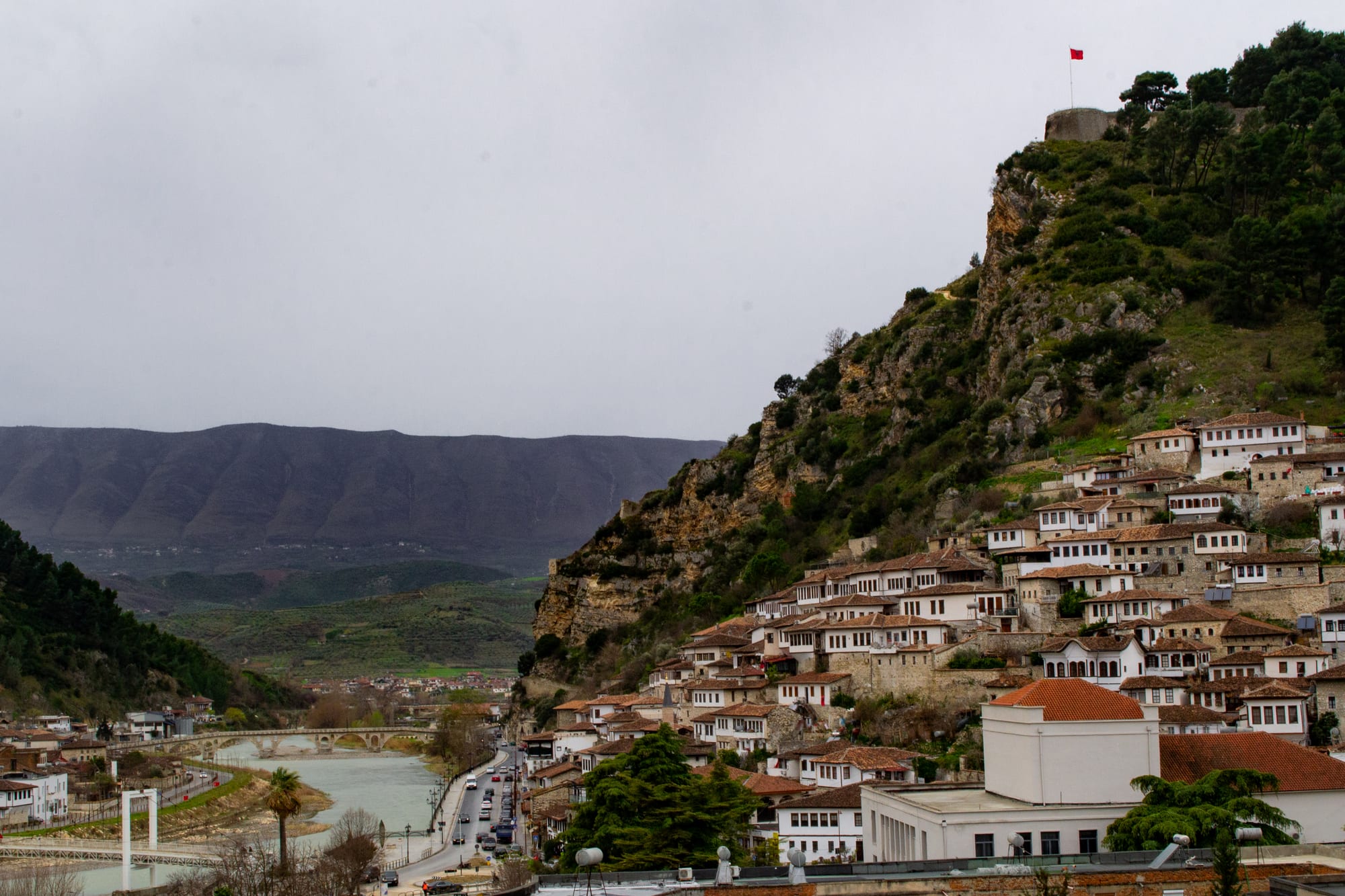
The old quarters are made for walking but are steep: lanes and steps climb from Mangalem to the castle, the town's old nickname is the city of two thousand steps, and the cobbles are polished smooth. The river promenade and the modern centre are flat, and the Gorica Bridge links the two banks.
🛡️ Safety
Albania is a safe country for visitors, and violent crime against tourists is rare. In Berat the practical hazards are physical: the castle has unfenced drops, the polished cobbles of the old town are slippery in rain, and the valley is very hot in July and August.
Carry water and a hat for the castle climb, keep back from the edges of the walls, and drive mountain roads in daylight. Check current official travel advice before travelling.
🌦️ Climate
A Mediterranean climate with hot, dry summers and mild, wet winters, sheltered in its valley below the Tomorr range. Heatwaves in the valley can be extreme.
- Summer
- hot and dry — the average July maximum is about 28°C, and the record high is 47.1°C
- Winter
- mild and wet — January averages about 7°C, with snow on the mountains above the town
🤝 Local Customs
Berat has long been a town of both mosques and churches, and the Albanian Orthodox Church proclaimed its independence here in 1922. Dress modestly inside mosques and churches. Many people in the castle quarter live in their houses there: courtyards can look like ruins, so ask before walking in or photographing residents. The evening walk along the river promenade is a fixed part of the day.
Tipping is not an established custom in Albania and is not expected. Shake hands on meeting, and avoid arguing about religion or politics.
💳 Common Payment Methods
The currency is the Albanian lek (ALL). Cards work in larger hotels and some restaurants, but cash is needed for furgons, small cafés, lace sellers in the castle and many guesthouses. There are ATMs in the modern centre; some charge high withdrawal fees. Prices are sometimes quoted in old lek, ten times higher, so confirm which is meant.