💰 Budget
Sarandë and Ksamil cost most in July and August, when beaches fill with paid sunbeds and rooms are dearer; June and September are cheaper. Food is still cheap by Mediterranean standards, especially at fast-food counters, and city buses to Ksamil and Butrint cost little.
- Daily Budget Midrange
- USD 90–170 (sea-view hotel or apartment, fish dinners, Butrint ticket, a sunbed set at Ksamil)
- Daily Budget Shoestring
- USD 35–60 (hostel bed or guesthouse, souvlaki and byrek, city buses)
Ask the price of a pair of sunbeds before sitting down at Ksamil, and book rooms well ahead for August or come in June or September.
📅 Best Time to Visit
May, June and September, with a warm sea and room on the beaches. July and August are hot, crowded and slow on the roads, especially on the road to Ksamil around sunset. The sea stays swimmable into October. Many restaurants in Ksamil close out of season, though Sarandë itself stays a working town.
⏳ Suggested Number of Days
Two or three days are enough for the town, the ancient site to the south and a beach day. Allow four to six for the spring inland, more beaches and the Riviera villages to the north. In high summer, traffic on the coast road adds time to every trip.
- First Visit
- 2–3 days
- With Surroundings
- 4–6 days
🚆 Transportation
Buses and furgons reach Tirana either through Gjirokastër and Tepelenë or along the Riviera through Himarë and Vlorë; the Riviera road is slow and narrow. City buses run from the centre to Ksamil and Butrint about every half hour. The road south is heavily congested in high season, so a bus takes little longer than a taxi.
The tourist information centres keep bus timetables, so check times the day before; a hire car is the practical way to reach the smaller beaches.
🛬 Airport & Station Connections
Ferries and hydrofoils cross from Corfu several times a day in summer, fewer out of season; Corfu is an hour ahead of Albania. By road, buses come from Tirana and Gjirokastër, and from Greece by the Kakavia crossing beyond Gjirokastër or the narrower Qafë Botë crossing from Igoumenitsa. Cruise ships also call at the port.
🚶 Walkability
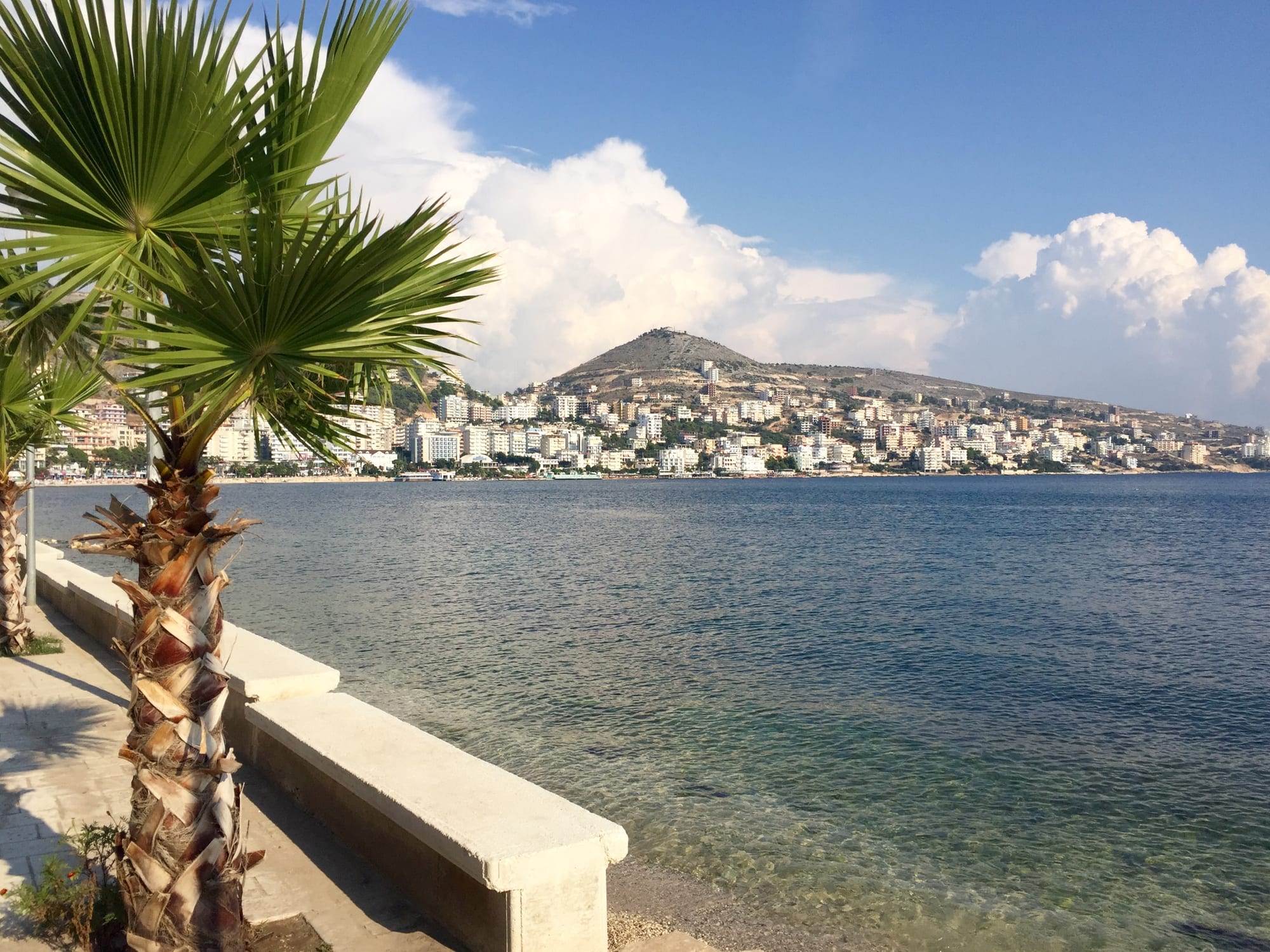
The centre is compact and flat along the bay, and the promenade is the natural way to get around it. Streets climb steeply behind the seafront, and the castle and monastery on the hills are a hot uphill walk or a short taxi ride. Ksamil and Butrint are too far to walk; take the city bus.
🛡️ Safety
Albania is a safe country for visitors, and violent crime against tourists is rare. In Sarandë the risks are traffic on the coast road, jet skis and boats running close to swimmers at Ksamil and in the bay, heat at Butrint, and petty theft in the busy summer resorts.
Swim inside the buoyed areas, carry water and a hat for Butrint, and drive the coast road in daylight. Check current official travel advice before travelling.
🌦️ Climate
A hot-summer Mediterranean climate with more than 300 sunny days a year. Summers are dry and hot; winters are mild and bring most of the rain.
- Summer
- hot and dry — up the coast at Vlorë, August averages 26.8°C
- Winter
- mild and rainy — January averages 7.9°C at Vlorë
🤝 Local Customs
Sarandë has an Albanian majority and is one of the two centres of Albania's Greek minority, with Greek-language school classes; Greek is heard alongside Albanian. Beachwear belongs on the beach — cover up on the promenade and in churches. The xhiro, the evening walk along the bay front, is the social event of the day.
Tipping is not an established custom in Albania and is not expected. Shake hands on meeting, and avoid arguing about religion or politics.
💳 Common Payment Methods
The currency is the Albanian lek (ALL). Cards work in hotels and many restaurants, but cash is needed for buses, beach bars and small guesthouses; ATMs are plentiful in the centre, and some charge high fees. Ferry tickets to Corfu and some hostels are priced in euros.