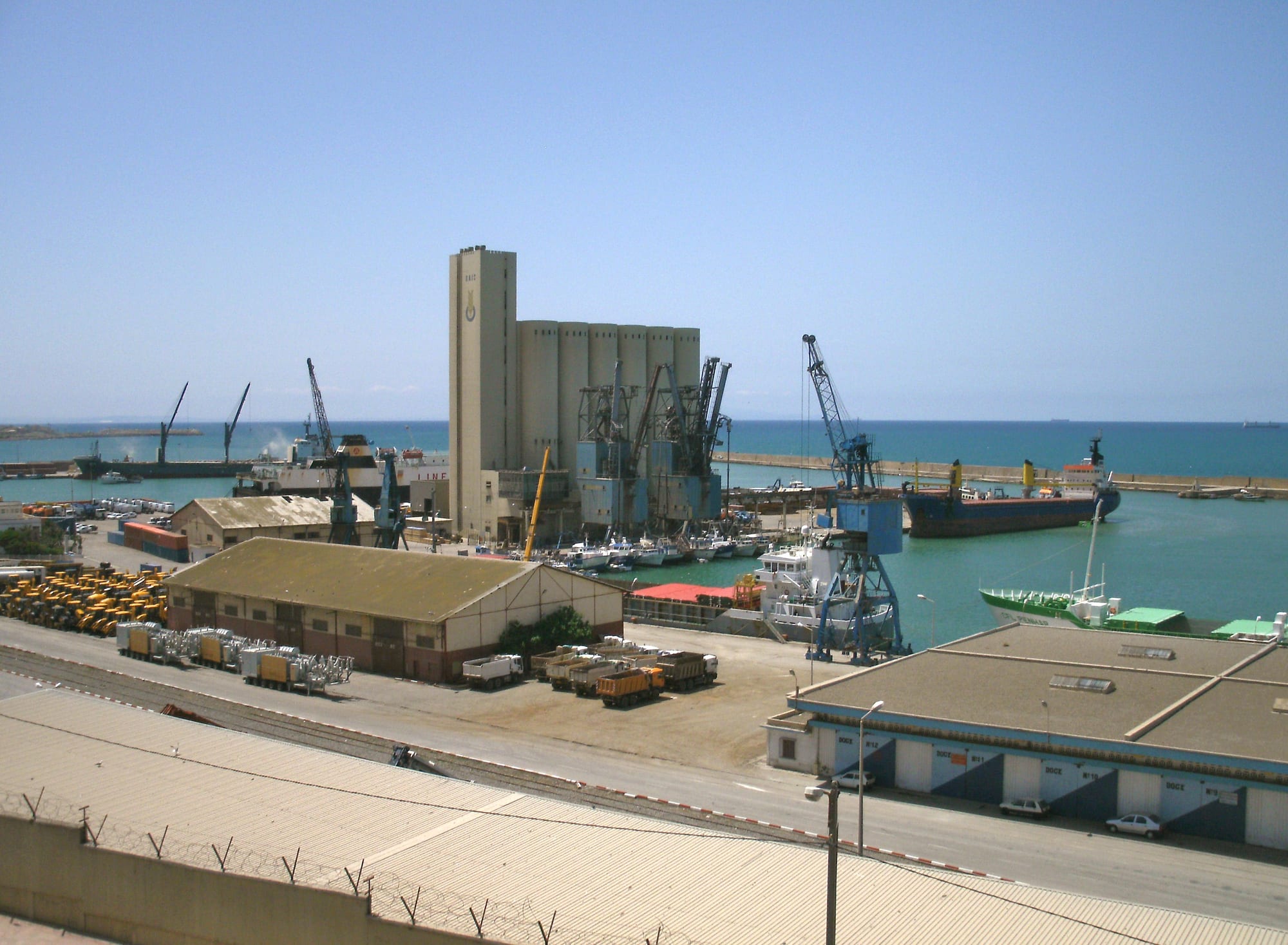
Cranes, grain silos and cargo ships in a harbour beside turquoise sea, with warehouses and lorries on the quays below

Oran & the West, Algeria

Mostaganem

The working port of Mostaganem on the Gulf of Arzew. (Yelles / Wikimedia Commons · CC BY-SA 3.0)

A port city on the Gulf of Arzew in western Algeria, east of Oran, whose old quarters stand on either side of a ravine above the sea. Founded in the 11th century and rebuilt by the Ottomans and then the French, it lives today from its harbour, its farmland and its beaches, and is known across the country for a festival of amateur theatre.

Neighbourhoods

  • Tigditt
    • Historic district
    • Local life

    The old quarter on the eastern side of the Aïn Sefra ravine, a dense grid of narrow lanes, small mosques and courtyard houses that grew up as the Muslim town under Ottoman and then French rule. It remains crowded, poor in places and strongly attached to its own identity within the city.

    Open in Maps
  • Derb and the old Ottoman town
    • Historic district
    • Walking

    The older western quarter above the ravine, the Andalusian and Ottoman side of Mostaganem, with stepped alleys, whitewashed walls and old houses looking over the harbour. Restoration has been patchy and much of it is lived in rather than visited.

    Open in Maps
  • The colonial centre
    • First-time visitors
    • Close to public transport

    The French-era grid of boulevards, arcaded shopfronts and squares between the two old quarters and the sea, where most hotels, banks, cafés and offices are. The tramway runs through it, and it is the easiest base for a short stay.

    Open in Maps
  • Salamandre
    • Beaches
    • Quiet and residential

    The seaside suburb south-west of the centre, a stretch of sand, apartment blocks and seasonal cafés that fills with families through July and August and empties again in autumn.

    Open in Maps
  • Kharrouba
    • Students
    • Beaches

    The eastern edge of the city, where the university campus and newer housing estates sit near the coast. It is functional rather than pretty, but it is close to the beaches that run east along the gulf.

    Open in Maps

Things to do

The old quarters

  • Tigdittneighborhood

    The old Muslim quarter on the far side of the Aïn Sefra ravine, a dense maze of lanes, small mosques and courtyard houses that is still densely lived in.

    Open in Maps
  • The Ottoman upper townneighborhood

    The older quarter on the western side of the ravine, with stepped alleys, whitewashed walls and old houses standing above the harbour.

    Open in Maps
  • Bordj el-Turclandmark

    The 16th-century Ottoman fort, also known as the Fort de l'Est, on the heights above the Tigditt quarter.

    Open in Maps

The port and the beaches

  • The port of Mostaganemtransit hub

    A commercial harbour of silos, cranes and fishing boats at the mouth of the ravine, handling grain and general cargo alongside the fishing fleet.

    Open in Maps
  • Salamandre beachbeach

    The city's own beach, just south-west of the centre, with a promenade of cafés that comes alive in the summer months.

    Open in Maps

Short trips from the city

  • Arzewattraction

    A port town west along the gulf, known for its natural harbour and for the large gas and petrochemical complex that dominates the bay.

    Open in Maps
  • Stidiabeach

    A coastal village west of the city, founded in 1846 by German settlers bound for South America who were landed in Algeria instead, with quiet beaches along the shore of the gulf.

    Open in Maps
  • Oranattraction

    Algeria's second city, about 70 kilometres west, with the Santa Cruz fort above its bay, the old Sidi El Houari quarter and the cabarets in which raï music grew.

    Open in Maps

Seasonal events

  • Mostaganem amateur theatre festivalvaries from year to year

    A long-running national gathering of amateur theatre companies that fills the city's halls and public spaces and is the event Mostaganem is best known for across Algeria.

  • Beach seasonJuly and August

    The weeks when families from the inland provinces fill the coast either side of the city, hotels are full and the seafront cafés stay open late.

  • Ramadan eveningsvaries with the lunar calendar

    The month reverses the rhythm of the city, with daytime quiet and crowded streets, cafés and sweet shops after sunset.

Eat and drink

Long-standing places and food districts in Mostaganem. Hours, ratings and directions come from your maps app, always current.

Western Algerian classics

  • Karantikamarket

    The baked chickpea-flour flan of western Algeria, cut into squares, dusted with cumin and often eaten in a length of baguette, sold from small counters and street carts around the centre.

    Open in Maps
  • Grilled sardinesrestaurant

    The everyday fish of this coast, grilled whole or stuffed with herbs and fried, served in simple places near the harbour and along the beach road.

    Open in Maps

Markets and food streets

  • The central marketmarket

    The city's produce market, stacked with citrus, melons, tomatoes and potatoes from the surrounding plain, alongside butchers, spice sellers and bread stalls.

    Open in Maps
  • Cafés of the colonial centrecafe

    The arcaded streets between the old quarters and the sea are lined with cafés serving strong coffee and mint tea, busiest in the late afternoon.

    Open in Maps

Experience Mostaganem

History

Mostaganem grew where the Aïn Sefra ravine meets the sea, on a shelf of land above a natural landing place. The city was founded in the 11th century as Murustage, on a site with Punic and Roman origins, and took shape under the Berber dynasties that ruled the western Maghreb, serving the grain country of the Chélif valley and the plateau behind it. Its position between Oran and the Chélif made it a place armies passed through as well as a market.

The Ottoman admiral Barbarossa took the town in 1516, and it became a corsair base, a garrison and a port of the western beylik, whose beys ruled at times from nearby Mascara. The upper quarter kept its walls and gates; the Muslim town of Tigditt spread on the far side of the ravine. French forces took Mostaganem in 1833, early in the conquest, and it became a colonial garrison town with a grid of boulevards laid between the two older quarters, a new harbour and vineyards and citrus groves planted across the surrounding plain.

Independence in 1962 emptied the European quarters and filled them with Algerians from the countryside. The vineyards were largely uprooted and replaced by cereals, citrus and market gardens, the port was enlarged for grain and general cargo, and new estates climbed the slopes east and west of the old centre. The city grew steadily through the later 20th century into a provincial capital of universities, farming and shipping, with the tourism of its beaches added in recent decades.

Culture & Customs

Mostaganem belongs to the Oranie, the west of Algeria, and shares its accent of Algerian Arabic — quick, full of Spanish and French borrowings — and its reputation for an easy-going manner. Raï, the popular music that grew out of the bars and rural poetry of the west, is heard here as it is in Oran, alongside the older bedoui sung poetry of the plateaus and the Andalusian repertoire that the coastal towns kept.

The city's strongest cultural claim is theatre. Its national festival of amateur theatre has drawn companies from across Algeria for decades and has given Mostaganem a place in the country's cultural map out of proportion to its size, with performances in the city's halls and theatres.

Religious life is Sunni Islam of the Maliki school, and Sufi brotherhoods have deep roots in the province. The 16th-century poet Sidi Lakhdar Ben Khlouf, whose verse in Algerian Arabic is still sung by chaabi singers, is one of the patron saints of the region, and his tomb, in the village of the same name in the province, is a place of pilgrimage. Family occasions — weddings with henna nights, long meals and loud music — organise the social calendar, and Friday prayer and the shared couscous that follows it mark the week.

Daily Life

About 406,000 people were counted in the city at the 2019 census, with more again in the province around it, the population divided between the crowded old quarters, the colonial centre and the estates that have spread inland and along the coast. The city is the capital of its province, so administration, the university and schools employ a large share of the workforce.

The rest of the economy is farming, fishing and the port. The plateau behind Mostaganem is one of Algeria's better market-gardening areas, growing citrus, potatoes, tomatoes and melons, and the harbour ships grain and general cargo and lands sardines and other fish. Small workshops, retail and construction fill in around them, and many households rely on work that is seasonal or informal.

Days begin early, with markets busiest in the morning and shops shutting for a long break in the heat before reopening in the late afternoon. Cafés fill with men after work; families come out to the seafront in the evening. Housing shortages, youth unemployment and the wish of many young people to emigrate are the recurring concerns here as across the country, and summer brings a different rhythm, with the population swollen by holidaymakers and by Algerians visiting from abroad.

Food

Mostaganem eats the food of the western coast. Karantika, the baked chickpea-flour flan that began in Oran and is street food across western Algeria, is cut into squares, dusted with cumin and harissa and often pushed into a baguette. Sardines are the everyday fish, grilled over charcoal or stuffed with garlic, coriander and cumin, floured and fried; larger fish from the gulf appear in restaurants near the harbour.

Home cooking follows the national pattern with a coastal accent. Couscous is the Friday dish, steamed semolina under a stew of lamb or chicken with chickpeas and seasonal vegetables; chorba frik, the cracked-wheat and tomato soup, breaks the fast through Ramadan; and dolma, stuffed vegetables, bourek, fried pastry rolls of meat or cheese, and grilled merguez sausages fill out the table. The province's own citrus, tomatoes and melons give the markets their character in season.

Bread and pastry keep a French inheritance, with baguettes from neighbourhood bakeries and cakes in the town-centre patisseries, beside Algerian sweets — makroud stuffed with dates, baklawa, griwech dipped in honey — that are made in quantity for weddings and for Eid. Strong black coffee and mint tea are drunk all day, and mazagran, the cold sweetened coffee, takes its name from the village and fort just outside the city.

Planning tools

Budget

Mostaganem is cheaper than Oran and much cheaper than Algiers, with simple hotels in the centre and a few larger ones near the beaches. Prices rise in July and August, when the coast fills with Algerian holidaymakers. Food, taxis and the tram cost very little, and almost everything is paid in cash.

Daily Budget Midrange
USD 80–160 (mid-range or seafront hotel, seafood dinners, taxis or a car with a driver for the coast)
Daily Budget Shoestring
USD 30–55 (simple hotel, karantika and café meals, shared taxis and the tram)

Bring enough cash for the whole stay: foreign cards are rarely accepted and working ATMs for them are scarce.

Best Time to Visit

April to June and September to October are the most comfortable months, warm but not hot, with green countryside in spring and a warm sea in early autumn. July and August are the beach season, crowded and expensive by local standards. Winter is mild and wet.

Suggested Number of Days

One or two days cover the city itself. Allow three or four to include the beaches along the gulf and a trip west along the coast. Summer heat and the pace of local transport both slow a visit down.

First Visit
1–2 days
With Surroundings
3–4 days

Transportation

The centre is small enough to cross on foot, and a tramway opened in 2023 runs from the university campus at Kharrouba through the centre to the Salamandre seafront. Shared taxis and local buses cover the rest and reach the surrounding towns, and long-distance coaches leave from the bus station for Oran, Algiers and the inland provinces.

Agree the fare or the route of a taxi before setting off, and expect shared taxis to leave only when full.

Airport & Station Connections

The city has no airport, so most travellers arrive overland from Oran, roughly 70 kilometres west and about an hour and a half by road, whose Ahmed Ben Bella airport is the nearest with international flights. Coaches and shared taxis run frequently from Oran, Algiers, Relizane and Chlef, and the East–West Highway passes south of the city. Rail links the region to the main Algiers–Oran line.

Walkability

The colonial centre is walkable and flat, and the seafront is an easy stroll. The old quarters climb steeply on either side of the ravine, with steps, narrow lanes and uneven paving, and the beaches east and west of the city are too far to reach comfortably on foot. Pavements are often parked on and traffic is heavy at the main junctions.

Safety

Mostaganem is a calm provincial city with ordinary urban petty crime — pickpocketing in crowded markets and around the bus station, and occasional bag-snatching on the seafront at night. Police checkpoints on the roads in and out are routine. The beaches have strong currents in places and are only patrolled in the summer season.

Identification should be carried for checkpoints, the port, police and military installations should not be photographed, and swimming is safest where others are in the water. Keep away from the closed Moroccan frontier, carry identification at checkpoints, and avoid photographing military sites around Mers el-Kébir. Check current official travel advice before travelling.

Climate

A Mediterranean climate, drier than the Algerian coast further east, with hot sunny summers, mild damp winters and most rain between November and March. Sea breezes take the edge off the summer heat in the city, while the farmland inland is noticeably hotter.

Summer
hot and dry, typically 28–32°C by day, with warm nights and almost no rain
Winter
mild and wet, usually 9–17°C by day, with rain spread through the season

Local Customs

This is a conservative provincial city. Modest dress is expected, more so in the old quarters and near mosques, and shoulders and knees are best covered away from the beach. Greetings are unhurried, hospitality is taken seriously, and an offer of coffee or tea comes before business. Mosques are generally not open to non-Muslim visitors.

Ask before photographing people, expect life to change shape during Ramadan, tip small amounts for service, and note that alcohol is not sold openly and drinking in public is not acceptable.

Common Payment Methods

The currency is the Algerian dinar. Almost everything is paid in cash; foreign cards are rarely accepted and ATMs that take them are hard to find, so travellers bring euros or US dollars to change. Small notes are useful for taxis, cafés and market stalls.