💰 Budget
Huambo is good value for a city of its size. Hotels are cheaper than on the coast and far cheaper than Luanda, food in local restaurants and markets costs little, and buses and the train are inexpensive. The main costs are flights or the long road journey in, and a hired car for trips out onto the plateau.
- Daily Budget Midrange
- USD 100–220 (good hotel, restaurant meals, a car and driver for day trips)
- Daily Budget Shoestring
- USD 45–80 (guesthouse, local restaurants, buses and the Benguela Railway)
Bring kwanza in cash; cards are accepted only at the larger hotels, and cash machines can be empty at weekends.
📅 Best Time to Visit
May to September, the dry season, is the time for the highlands: clear skies, firm roads and long views across the plateau, with cold nights that catch visitors out. The rains from about October to April turn the countryside green but make rural roads difficult.
⏳ Suggested Number of Days
A day or two covers the planned city and its gardens. Three or four allow for the plateau around it, which is where the interest lies for most travellers. Arriving or leaving by train adds time, since services are slow and infrequent.
- First Visit
- 1–2 days
- With Surroundings
- 3–4 days
🚆 Transportation
The centre's grid is easy to cross on foot, and candongueiro minibuses and shared taxis serve the outer bairros and the surrounding towns. The rebuilt Benguela Railway runs west to Lobito and east towards Luena, and buses use the paved highways to the coast and to Luanda.
Agree a fare before setting off by shared taxi, and allow for slow going and no lighting on rural roads after dark.
🛬 Airport & Station Connections
Albano Machado Airport, a few kilometres from the centre, has domestic flights to Luanda. The road from Benguela and Lobito climbs the escarpment in a few hours, and the drive from Luanda takes the best part of a day. Passenger trains on the Benguela Railway reach the city from the coast and continue east across the plateau.
🚶 Walkability
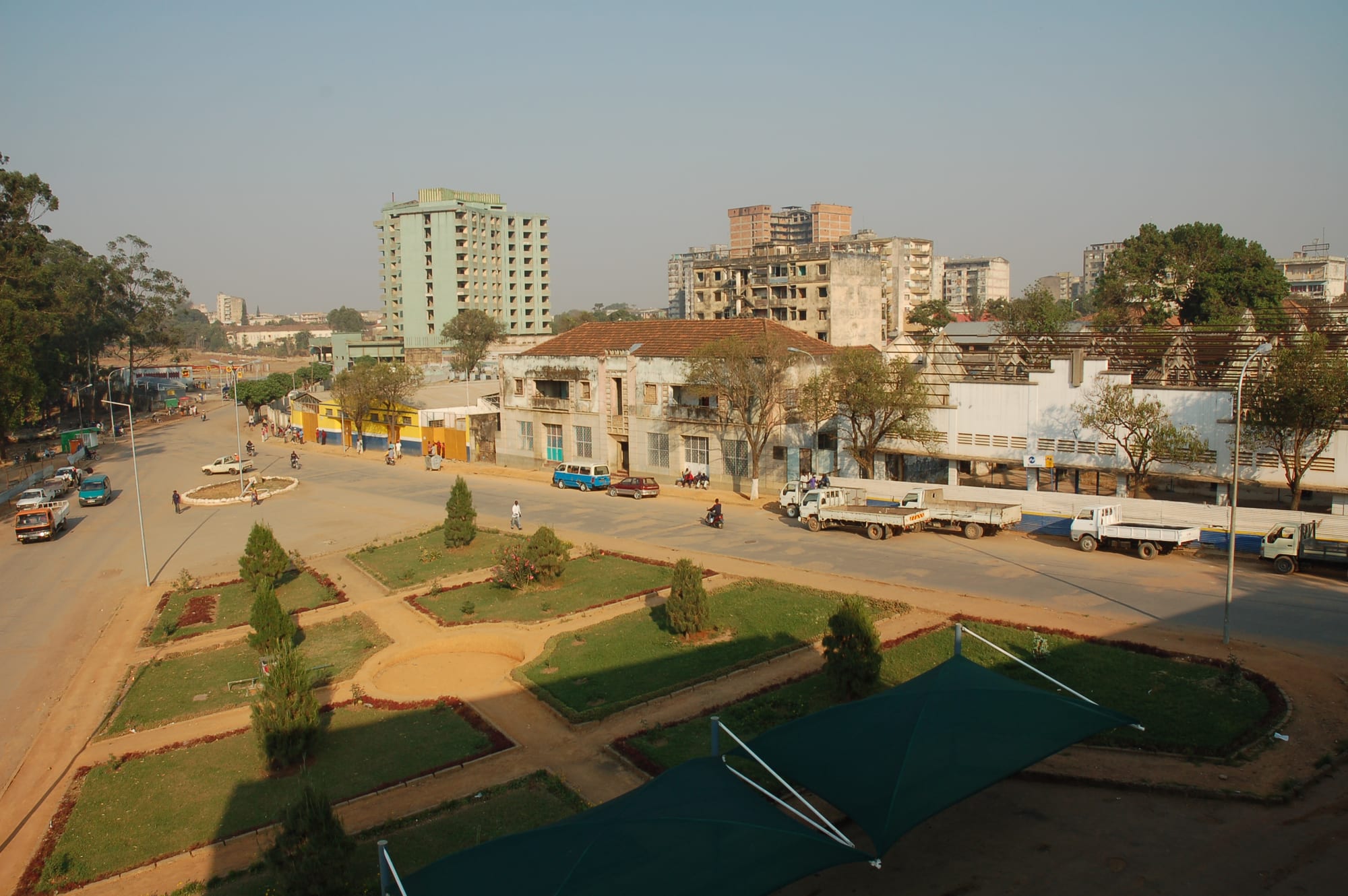
The Cidade Alta is flat, gridded and pleasant to walk, with generous pavements and shade from the avenue trees; the commercial centre is a few minutes away on foot. Distances are longer than they look because the avenues are so wide, and the outer bairros, built over the hills, are spread out and unlit at night.
🛡️ Safety
Huambo is calmer than Luanda and violent crime against visitors is uncommon, though petty theft occurs in the markets and around the bus and railway stations. The province was among the most heavily mined in the country during the war; large areas have been cleared, but some rural land away from used tracks still carries risk.
Crime is the main concern, especially in Luanda: street robbery, carjacking, and theft are common, and visitors are advised not to walk after dark or display valuables. Stay on used roads and paths in the countryside, never walk into uncleared bush, and avoid night driving on the highways. Check current official travel advice before travelling.
🌦️ Climate
Temperate rather than tropical, because of the altitude of about 1,700 metres. There is one long rainy season from about October to April and a dry season from May to September with warm days and very cold nights. Southern-hemisphere seasons apply, so summer falls in December to February.
- Summer
- the rainy season, around 22–27°C by day, with heavy afternoon storms and green countryside
- Winter
- dry and sunny, around 22–25°C by day but close to freezing on some nights, with dust and smoke haze
🤝 Local Customs
This is Ovimbundu country and Umbundu is spoken everywhere alongside Portuguese; a greeting in Umbundu is appreciated. Elders are greeted first and addressed formally, and traditional chiefs still hold ceremonial authority. Churches, both Catholic and Protestant, are central to social life, and dress for them is modest. Tipping is not expected.
Ask before photographing people, and do not photograph the airport, military sites or government buildings, where photography is prohibited.
💳 Common Payment Methods
The currency is the Angolan kwanza (AOA). Huambo runs on cash: markets, taxis, buses and small restaurants take nothing else, and only larger hotels accept cards. There are banks and cash machines in the centre, but it is wise to arrive with enough kwanza for a few days.