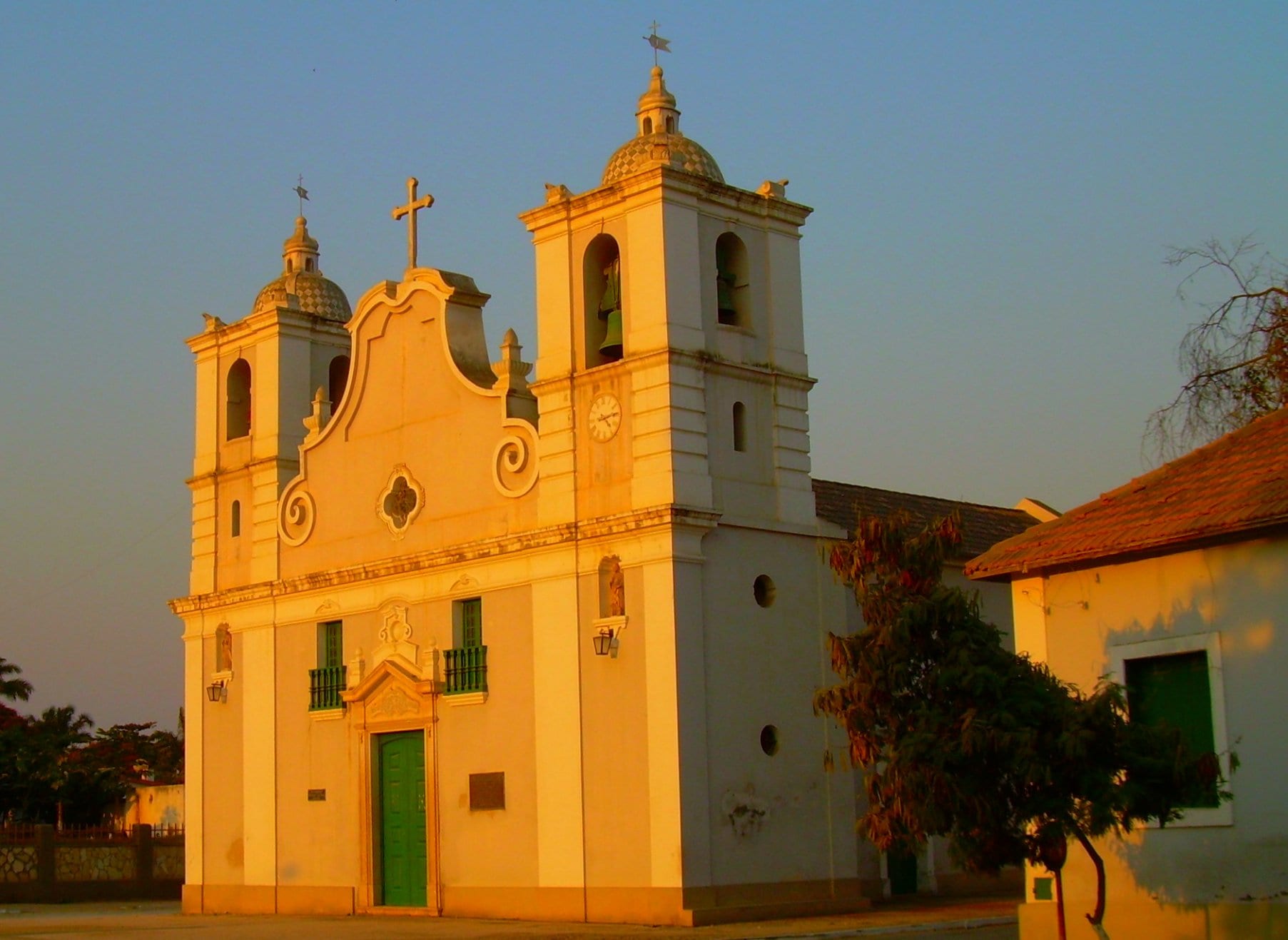
A white colonial church with two bell towers and a curved gable, glowing in warm evening light under a clear sky

Angola

Benguela & the Central Highlands

An old Portuguese colonial church in Benguela, lit by the evening sun. (F H Mira / Wikimedia Commons · CC BY-SA 2.0)

The Atlantic ports of Benguela and Lobito and the high plateau behind them — Huambo, Kuito and the Bié highlands where the Cuanza river rises — plus the two Cuanza provinces to the north. This is Angola's most populous belt, the Ovimbundu heartland and one of the parts of the country worst hit by the civil war.

Explore Benguela & the Central Highlands

History

The central highlands are the homeland of the Ovimbundu, whose kingdoms, among them Bailundo and Bié, had taken shape by the 18th century. By the 1800s Ovimbundu caravans were among the great long-distance traders of central Africa, carrying goods between the coast and the far interior. Portugal founded Benguela in 1617 as a base for the slave trade, and for two centuries the port shipped captives across the Atlantic. North of the highlands, the Portuguese fort at Massangano on the Cuanza river guarded the route inland from Luanda.

Colonial conquest of the plateau came late: Bailundo rose against the Portuguese in 1902, and only the Benguela Railway, built from Lobito from 1903 and completed to the Congo border in 1929, opened the interior to settlers. Lobito grew into Angola's main port for copper from Katanga, and Huambo, founded in 1912 and renamed Nova Lisboa, was planned as a future capital.

The Ovimbundu highlands became UNITA's heartland in the independence war and the civil war. Huambo and Kuito suffered some of the worst fighting in 1993, when both cities were besieged and largely destroyed, and the countryside was sown with landmines; Princess Diana's 1997 visit to an Angolan minefield drew world attention to the problem. Since 2002 the railway has been rebuilt with Chinese finance, and Lobito is now at the centre of international plans to export copper from Zambia and DR Congo.

Culture & Customs

The Ovimbundu are Angola's largest ethnic group, and Umbundu is the country's most widely spoken African language, heard everywhere on the plateau and in the coastal cities. Traditional kings and chiefs still hold ceremonial authority, and the Bailundo kingdom retains a royal court.

Protestant missions, especially Congregationalist ones from North America, were active on the plateau from the late 19th century and educated much of the local elite, so Protestant churches are unusually strong here alongside Catholicism. Village life follows the farming calendar, with harvest celebrations and a strong emphasis on elders, funerals and family obligations.

Benguela has its own coastal identity, proud of its old port town, its seafood and its carnival, and it shares a busy coastal conurbation with neighbouring Lobito. Music from semba to kuduro is as popular here as in Luanda, and the highlands also keep older Umbundu songs and dances.

Daily Life

This is Angola's most populous region after Luanda. Huambo, the third-largest city in the country, has several hundred thousand people, and Benguela and Lobito together form a large coastal conurbation. Kuito, Sumbe, capital of Cuanza-Sul, and N'dalatando, capital of Cuanza-Norte, are smaller regional centres.

On the plateau most families farm maize, beans, potatoes and vegetables on small plots, and Huambo is a centre of universities and trade. The coast lives from the port, the railway, fishing, the Catumbela industrial area and a growing beach-tourism trade. In Cuanza-Sul, the Gabela and Amboim hills once grew much of Angola's coffee, and farms around Waku Kungo produce food for the cities.

Rebuilding still shapes daily life: new roads and housing coexist with bullet-scarred colonial buildings, many rural families live without electricity or piped water, and young people move to the coast in search of work.

Food

On the plateau the staple is funge made from maize, eaten with beans, vegetables and chicken or goat. Beans cooked in palm oil, feijão de óleo de palma, are a common dish, and potatoes and cabbage grown around Huambo feed the region's markets. Kissângua, a lightly fermented maize drink, is associated with the Ovimbundu and is sold in towns and villages.

Benguela and Lobito are seafood towns. Grilled fish, prawns and lobster are served at the beach restaurants of the Restinga and the Baía Azul, and calulu, dried fish stewed with greens, tomato and palm oil, is a household staple. Caldeirada de cabrito, a goat stew served with rice, is a traditional dish for Independence Day on 11 November.

Cuanza-Sul's Amboim and Gabela hills have a long coffee tradition, and the coast has sugar cane grown in the Catumbela valley. Fruit such as mangoes, bananas and pineapples comes from the warmer valleys.

Attractions & Natural Wonders

Benguela keeps some of Angola's best-preserved colonial streets, with low pastel buildings, old churches and the Praia Morena along its seafront; the Baía Azul, a sheltered bay with a sandy beach, lies a short drive south. Lobito, half an hour north, spreads around its bay, with the Restinga's beaches and seafood restaurants, the port and the terminus of the Benguela Railway, and the old fort at Catumbela stands on the river between the two cities.

Inland, Huambo's Cidade Alta has broad avenues, colonial public buildings and the Jardim da Cultura, while Mount Moco, Angola's highest mountain at about 2,600 metres, rises to the west of the city. Further east, Kuito has been rebuilt after the war and sits on the Bié plateau, a high, rolling country of grassland and woodland where the Cuanza river rises before flowing north and west to the Atlantic.

The Cuanza provinces add green hills and history: the Amboim and Gabela coffee country in Cuanza-Sul, the coast at Sumbe and Porto Amboim, and in Cuanza-Norte the Cambambe dam on the Cuanza and the old Portuguese fort of Massangano, where the Lucala meets the Cuanza.

Cities in Benguela & the Central Highlands

Planning basics

Budget

The region is noticeably cheaper than Luanda. Benguela and Lobito have a range of hotels and seaside guesthouses, and Huambo has good-value accommodation for a city of its size. Kuito and the Cuanza provinces have fewer options, mostly simple local hotels. Transport is affordable on the train and long-distance buses.

Daily Budget Midrange
USD 100–220 (good hotel, seafood restaurants, a car and driver for day trips)
Daily Budget Shoestring
USD 45–80 (guesthouse, local restaurants, buses and the Benguela Railway)

Carry kwanza (AOA) in cash for the highlands and smaller towns, where cards are rarely accepted.

Safety

The coastal cities are among Angola's more relaxed, though petty theft and night-time robbery occur in Benguela and Lobito. The highlands of Huambo and Bié were among the most heavily mined parts of the country; large areas have been cleared, but some rural land still carries risk. Road accidents on the long highways are a serious hazard.

Stay on used roads and paths in the countryside, avoid night driving, and keep valuables out of sight in the cities. Check current official travel advice before travelling.

Climate

The coast is dry and mild, cooled by the Benguela current, with little rain around Benguela and Lobito. The plateau around Huambo and Kuito, at roughly 1,700 metres, is a different world: temperate, with a long rainy season from about October to April, and a dry season with cold nights and occasional frost. The Cuanza provinces are greener and warmer.

Summer
rainy season on the plateau, around 22–27°C with afternoon storms; hot and dry on the coast
Winter
dry and sunny on the plateau, warm by day but near freezing on some nights; grey and mild on the coast

Transportation

Catumbela airport, between Benguela and Lobito, and Huambo's airport have domestic flights to Luanda. The rebuilt Benguela Railway runs from Lobito through Benguela, Huambo and Kuito towards the eastern border, and paved highways link the coast, the plateau and Luanda. Buses and candongueiros cover the main towns; rural roads are rough.

The drive from Luanda to Benguela along the coast takes most of a day; flying saves time.

Best Time to Visit

May to September suits the highlands, with dry roads and clear views, though nights are cold. The coast can be visited all year; beach weather is best from about November to April, when the sea is warmer and the cacimbo mists have lifted.