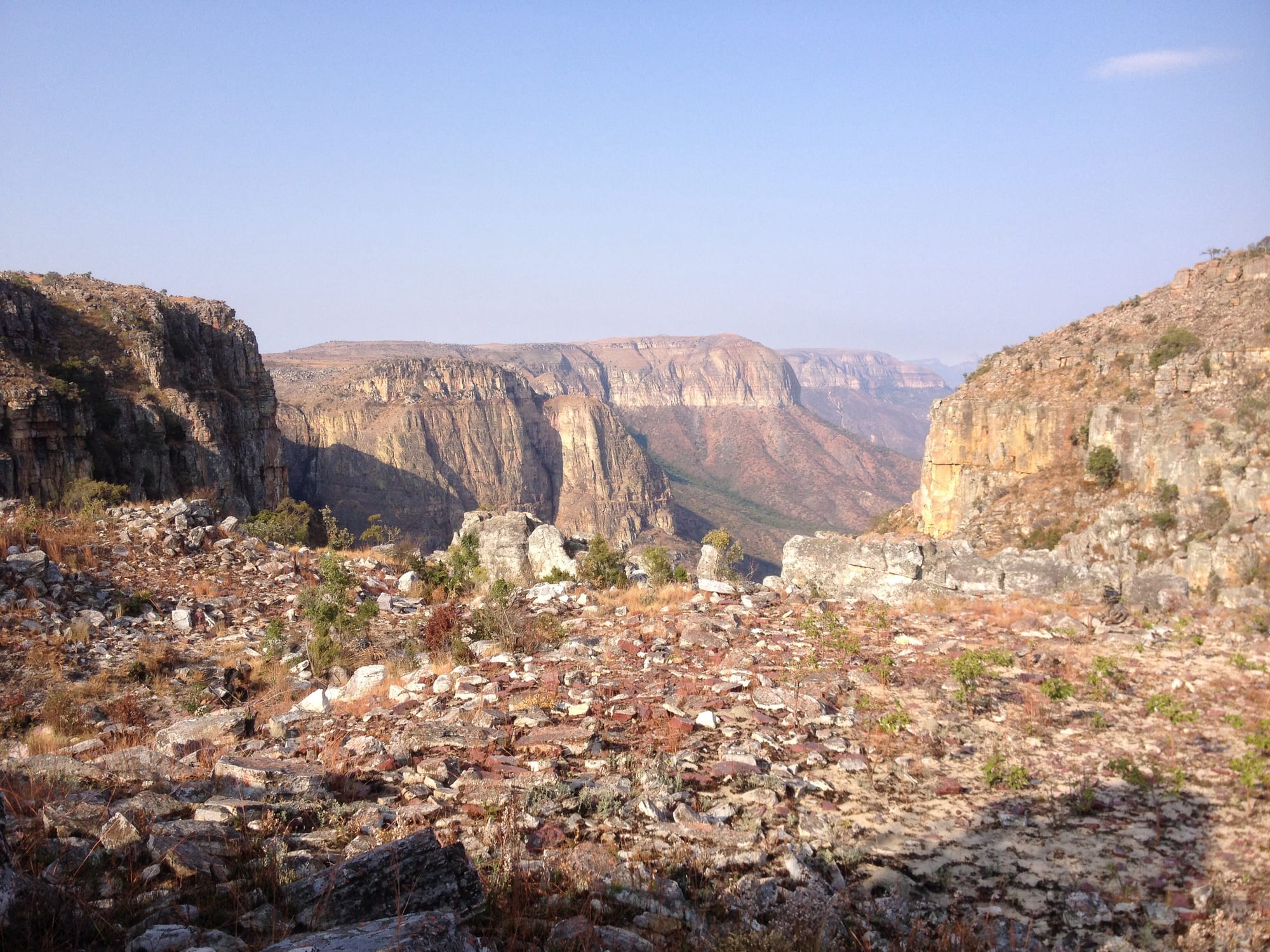
A rocky plateau edge looking out between sandstone cliffs into a deep canyon and hazy escarpments beyond

Angola

Lubango, Namibe & the South

The Tundavala Gap, a break in the escarpment on the edge of the Huíla plateau near Lubango. (tim kubacki / Wikimedia Commons · CC BY 2.0)

Angola's vast south and south-east, from the cool Huíla plateau around Lubango down the escarpment to Namibe's desert coast, across the cattle country of Cunene to the Namibian border, and east through the remote savannas and wetlands of Cuando Cubango and Moxico, where the civil war's last battles were fought.

Explore Lubango, Namibe & the South

History

The south was home to pastoral and farming peoples long before the Portuguese: the Nyaneka-Nkhumbi of the Huíla plateau, the Ovambo kingdoms along the Cunene, of which the Kwanyama were the largest, and Herero-speaking herders in the dry south-west. Portugal founded Moçâmedes on the coast in 1840, and in the 1880s settlers from Madeira arrived at Lubango, while a group of Afrikaner trekkers, the Dorsland Trekkers, settled on the nearby Humpata plateau.

The Kwanyama resisted colonial rule into the 20th century; their king Mandume ya Ndemufayo fought the Portuguese, died in battle against South African forces in 1917, and is honoured as a national hero in Angola and Namibia. The east, where Chokwe, Luvale and Mbunda peoples lived, was barely administered until the Benguela Railway reached Luena, and the sandy plain of the far south-east is still known as the "lands at the end of the world".

The south-east was central to the civil war. UNITA was founded in Moxico in 1966 and later built its headquarters at Jamba in Cuando Cubango, supported by South Africa. The battle of Cuito Cuanavale in 1987–88, between Angolan and Cuban forces on one side and UNITA and South African troops on the other, was one of the largest in Africa since the Second World War and helped bring about the independence of Namibia. The war ended after Jonas Savimbi was killed in Moxico in February 2002. In the 2024 reorganisation, Moxico and Cuando Cubango were each split into two provinces, with new capitals at Cazombo and Mavinga.

Culture & Customs

The south keeps some of Angola's most visible traditional cultures. The Mwila women of the Huíla countryside are known for their distinctive hairstyles and adornments, while the Mucubal and Himba herders of Namibe and Cunene wear leather, beads and ochre and move cattle between seasonal pastures. Cattle are the measure of wealth and the centre of marriage and inheritance.

Lubango has a strong Portuguese and Madeiran past, and the Cristo Rei statue above the city is its best-known landmark. In Cunene most people are Kwanyama Ovambo, sharing language and family ties with northern Namibia. In the east, Chokwe, Luvale and Mbunda communities keep masked dance traditions linked to boys' initiation.

Daily Life

Lubango is the south's largest city, with several hundred thousand people, universities, hospitals and industry. Moçâmedes, Namibe's capital and port, lives from fishing, trade and a small tourist sector, and Tombua further south is a fishing town. Ondjiva in Cunene thrives on cross-border trade with Namibia, while Menongue and Luena are the main towns of the south-east.

Rural families farm maize, millet and sorghum on the plateau and keep cattle in the dry south, where recurring droughts make farming and herding precarious.

In the south-east, the economy is still recovering from war and mine contamination. Demining teams remain one of the most visible activities, and conservation projects in the Okavango headwaters and the Kavango-Zambezi transfrontier conservation area offer a future in tourism.

Food

Southern cooking is plainer and more pastoral than that of the north. Funge here is often made from maize or from massambala, sorghum, and in the dry south millet and sorghum porridges are eaten with soured milk, vegetables or meat. Beef and goat are more common than elsewhere in Angola, grilled at roadside stalls or cooked in stews.

The Namibe coast is famous for its fish: sardines, horse mackerel and other catches are salted and sun-dried in Moçâmedes and Tombua, and dried fish from the south is sold in markets all over the country. Fresh grilled fish and seafood are the staples of the coastal restaurants.

The Huíla plateau grows fruit and vegetables, and farms around Humpata supply the region's markets. Kissângua, a lightly fermented maize drink, is common in towns and villages.

Attractions & Natural Wonders

Lubango is the natural base: a highland city of colonial avenues with the Cristo Rei statue on the hill above. North-west of the city, the Tundavala Gap opens in the edge of the plateau, with views over a drop of more than a kilometre, and to the south-west the Serra da Leba pass zigzags down the escarpment towards Namibe in a series of tight hairpins.

The descent leads to Namibe's desert coast. Moçâmedes has a seafront and colonial buildings, the eroded rock formations and lagoon of the Arco lie to the south, and Iona National Park, covering around 15,000 square kilometres, stretches from gravel plains and mountains to high dunes and the Atlantic, with welwitschia plants, oryx and springbok. Beyond Tombua, the Baía dos Tigres is an abandoned fishing town on an island that was cut off from the mainland by the sea.

The Cunene river runs along the Namibian border, dropping over the Ruacana falls on the Namibian side of the frontier and reaching the sea through the desert at Foz do Cunene. Far to the east, Luena is the gateway to Moxico's floodplains and to Cameia National Park, now in Moxico Leste, and the remote Cuando Cubango savannas, around Menongue, Cuito Cuanavale and the Luengue-Luiana and Longa-Mavinga national parks, hold the rivers that feed the Okavango Delta.

Cities in Lubango, Namibe & the South

Planning basics

Budget

Lubango and Moçâmedes, the city of Namibe, have a reasonable range of hotels at lower prices than Luanda. Costs rise sharply for trips into the desert and the south-east: Iona and the Cuando Cubango wilderness need a four-wheel-drive vehicle, a guide and full supplies, and there is little accommodation beyond a few lodges and camps.

Daily Budget Midrange
USD 150–350 (good hotel, car and driver, a guided 4x4 trip into the desert)
Daily Budget Shoestring
USD 45–80 (guesthouse in Lubango or Moçâmedes, local food, buses)

Carry kwanza (AOA) in cash and enough fuel and water for any trip beyond the main towns.

Safety

Lubango and Moçâmedes are generally calmer than Luanda, though petty crime occurs. The greater hazards are remoteness and the war's legacy: Cuando Cubango and Moxico were among the most heavily mined provinces in the country, and some areas are still being cleared. Breakdowns in the desert or the bush can leave travellers far from help.

Stay on used roads and tracks in Cuando Cubango and Moxico, never walk into uncleared bush, and carry spare water and fuel. Check current official travel advice before travelling.

Climate

Lubango sits at around 1,800 metres, so it is mild year-round, with cold nights in the dry season. The Namibe coast is true desert, kept cool and often misty by the Benguela current. Cunene is hot and dry, while Cuando Cubango and Moxico have a single rainy season from about November to April that floods the rivers and turns tracks to mud.

Summer
the rainy season inland, around 25–32°C with storms; warm and dry on the Namibe coast
Winter
dry and sunny, around 20–25°C by day on the plateau with cold nights; cool and misty on the coast

Transportation

Lubango, Moçâmedes, Ondjiva, Menongue and Luena have airports with domestic flights to Luanda. The Moçâmedes railway links the coast with Lubango and Menongue, and the Benguela Railway passes through Luena. Paved highways connect Lubango with Namibe and the Namibian border, but the south-east is served by long, poor roads, and Iona needs a sturdy four-wheel-drive vehicle.

Travel into Iona or the south-east with an experienced guide and a second vehicle if possible.

Best Time to Visit

May to October is the best time for most of the region, with dry roads and clear views from Tundavala and the Serra da Leba. The desert coast can be visited all year, but inland trips to Cunene, Cuando Cubango and Moxico are far easier in the dry season, when wildlife gathers near water and the tracks are passable.