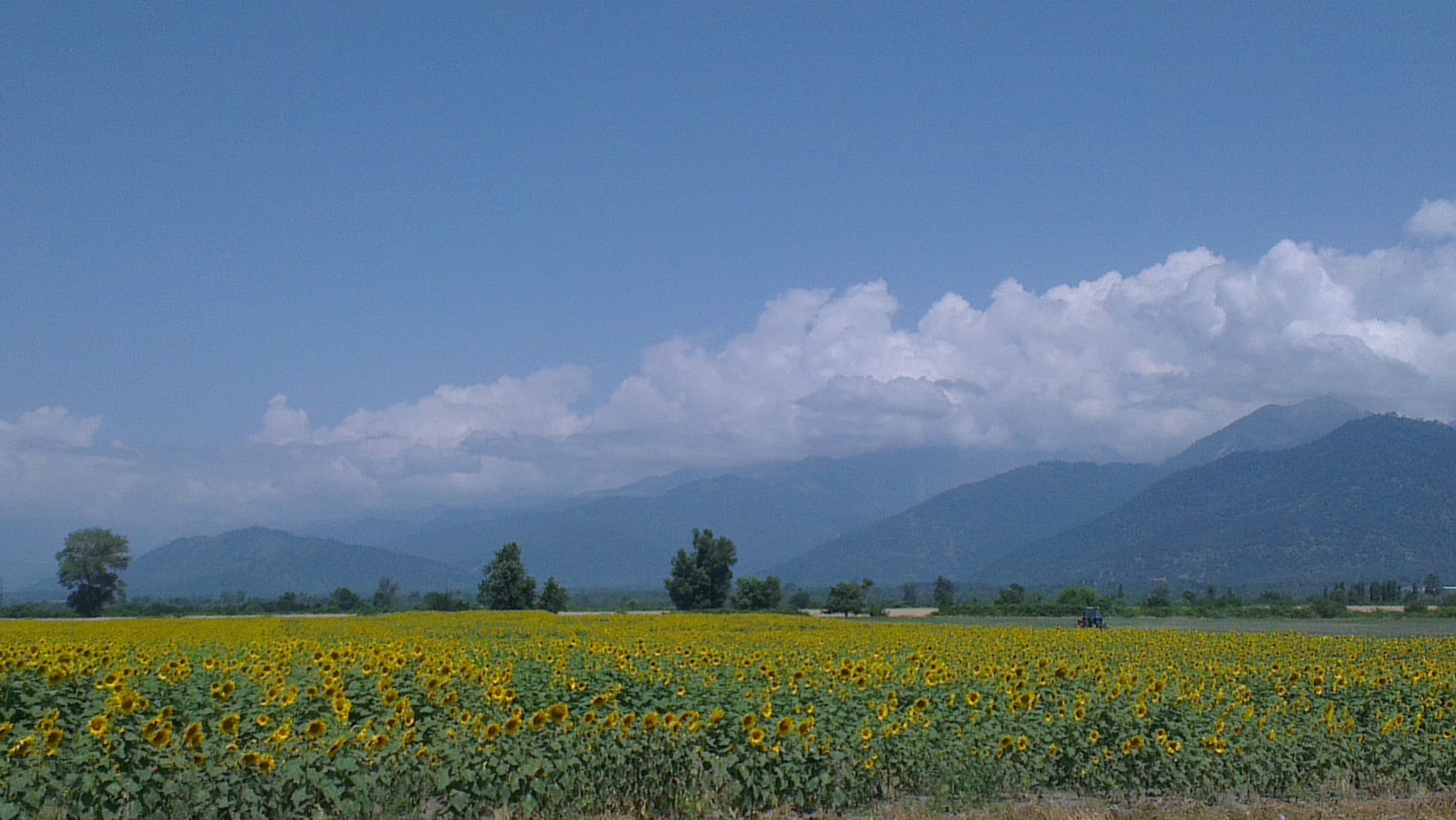
A field of sunflowers in front of a line of trees, with the wooded and hazy ridges of the Greater Caucasus rising behind

Sheki, Gabala & the Northwest, Azerbaijan

Qabala

Sunflower fields on the plain below the Greater Caucasus at Qabala. (Emil Azər / Wikimedia Commons · CC BY-SA 4.0)

A small town in the forested foothills of the Greater Caucasus in north-western Azerbaijan, named after the ancient capital of Caucasian Albania whose ruins lie on the plain nearby. Rebuilt since the 2000s as the country's main mountain resort, it has hotels, a cable car onto the ridge above, lakes and waterfalls in the woods, and hazelnut orchards all around.

Neighbourhoods

  • The town centre
    • First-time visitors
    • Local life
    • Close to public transport

    A compact grid of low buildings, shops, a market and a park, rebuilt and tidied over the past two decades. It is where the bus station, the everyday restaurants and the cheaper guesthouses are, and it is small enough to cross on foot.

    Open in Maps
  • The resort belt above the town
    • Hotels and resorts
    • Families
    • Skiing

    The wooded slopes north of the centre, where the large hotels, the cable-car base and the mountain resort stand among beech forest. Prices are the highest in the district, and the area fills with visitors from Baku and the Gulf in summer and at New Year.

    Open in Maps
  • The lakes and the orchard villages
    • Quiet and residential
    • Walking
    • Picnics

    Beyond the town the plain and the lower slopes are covered in hazelnut orchards and villages, with lakes and picnic places in the forest. It is quiet, rural and best reached by car.

    Open in Maps

Things to do

Mountains, lakes and forest

  • Tufandagattraction

    The mountain resort a few kilometres from the town, with a cable car up the wooded slopes, ski runs, a hotel and an entertainment centre for children.

    Open in Maps

Short trips from the town

  • Gabala International Airporttransit hub

    The district's airport on the plain south of the town, opened in 2011 and used by domestic and seasonal flights.

    Open in Maps
  • Nijattraction

    A large village in the district that is the main home of the Udi, a small Christian people with their own language and church.

    Open in Maps
  • Shakiattraction

    The old silk town west along the foothill road, with a UNESCO-listed historic centre, a painted khans' palace and caravanserais.

    Open in Maps
  • Oghuzattraction

    A quiet foothill town between Qabala and Shaki, with forest and mountain valleys behind it.

    Open in Maps
  • İlisuattraction

    A stone village in a mountain valley in the Qakh district, once the seat of the Elisu Sultanate, with a state nature reserve in the mountains behind it.

    Open in Maps

Seasonal events

  • The hazelnut harvestlate summer

    The district's orchards are picked in August and September, and the roads fill with sacks, sorting yards and roadside sellers.

  • NovruzMarch

    The spring new year, marked with bonfires, sweets and visits between households across the district.

  • The ski seasonDecember to March

    Snow on the slopes above the town brings skiers and New Year holidaymakers from Baku to the mountain resort.

Eat and drink

Long-standing places and food districts in Qabala. Hours, ratings and directions come from your maps app, always current.

Qabala classics

  • Kebab houses of the resort roadrestaurant

    Grilled lamb, chicken and river trout, served with flatbread, herbs and pickles, in the garden restaurants along the road between the town and the hotels.

    Open in Maps
  • Tea gardens in the forestcafe

    Wooden pavilions set among the beech woods where tea is brought in pear-shaped glasses with jam, a standard afternoon outing here.

    Open in Maps

Markets and food streets

  • The town marketmarket

    Hazelnuts by the sack, walnuts, chestnuts, persimmons, honey, sheep's cheese and jars of preserves, alongside bread baked on curved iron sheets.

    Open in Maps
  • Roadside hazelnut and honey stallsmarket

    Stands along the foothill road selling the district's nuts, dried fruit, mountain honey and jams, busiest through the late summer and autumn.

    Open in Maps

Experience Qabala

History

Qabala carries one of the oldest names in Azerbaijan. The ancient city of Gabala, some way out on the plain from the modern town, was the capital of Caucasian Albania, the kingdom that ruled much of the country before the Arab conquests, and it is recorded by classical writers as an important place in the first centuries of the common era. Its earthworks, ruined walls and the remains of its main gate mark a site occupied for well over a thousand years, through Albanian, Sasanian and later Muslim rule, before it declined and was abandoned.

The settlement that became the modern town developed separately in the foothills and was known for a long period as Kutkashen, a district centre of orchards, forest and grazing under Russian and then Soviet administration. It was renamed Qabala in 1991, reviving the ancient name. Hazelnuts, timber and livestock supported the district, and a large Soviet radar station built nearby in the 1980s, leased afterwards by Russia, closed in 2012.

From the 2000s the town was rebuilt as Azerbaijan's main mountain resort. Hotels, an airport, a stadium and a cable car onto the ridge above appeared within a decade, an international music festival was founded in 2009, and the plain below the town was planted with new orchards. The result is a small administrative town with a resort economy attached to it, and a population that swells several times over in the holiday seasons.

Culture & Customs

The district's character comes from its mixture. Azerbaijani villages of the foothills sit alongside Nij, the principal village of the Udi, a small Christian people who speak a language descended from that of Caucasian Albania and keep their own church; the presence of the ancient capital nearby gives that history a physical form. Sunni Islam is more common in the northwest than in the south and east of the country, and religious variety is unremarkable here.

Everyday customs are those of the region: tea offered before conversation, guests fed at length and pressed to eat more, elders greeted first, weddings that take over a street for a day. The forest is part of social life — families drive out to picnic beside rivers and lakes at weekends, and tea gardens under the trees are a standard destination rather than a tourist novelty.

The resort has added another layer. The Gabala International Music Festival brought classical musicians to the town each summer from 2009 to 2018, the football club gave a small district town a place in the national league, and hotels employ people from across the region. Villagers and resort workers live in close contact, and locals tend to describe the town by what it was before the building began as much as by what it is now. Hazelnut growing remains the thread that runs through family life in the villages.

Daily Life

Qabala itself is a small town, while the surrounding district counts many times its number of people across the villages. The centre holds the administration, the market, schools, the bus station and everyday shops; the hotels and the cable car stand apart in the woods above; and most people live in the orchard villages spread along the plain and the lower slopes.

Hazelnuts dominate the rural economy, grown across the district and sold on for export, with walnuts, chestnuts, fruit, tobacco and livestock alongside them, and processing plants and cold stores near the main road. Tourism is the other employer, in hotels, restaurants, the cable car and driving, and it is seasonal: busy in summer, again at New Year and through the ski months, slow in between. Public-sector work and the airport account for many of the remaining jobs.

Daily rhythm is rural. Mornings start early with the market and the orchards; afternoons are slow, with men in the tea houses; summer evenings fill the parks and the roadside restaurants. Wages are modest and many households depend on money sent from relatives working in Baku or abroad. Water, new building on the slopes and pressure on the forest are the district's recurring arguments, along with the question of what happens in the quiet months between seasons.

Food

Qabala eats from its orchards and its grills. Hazelnuts are everywhere — eaten plain, roasted, crushed into sweets and pastes, and sold by the sack at the market — and walnuts, chestnuts, persimmons and quinces follow the same seasons. Preserves are made from almost everything: cornelian cherry, walnut, quince and figs boiled into mürəbbə, the whole-fruit jam eaten by the spoonful with tea.

Grilled meat is the standard meal out. Lamb, chicken and river trout are cooked over charcoal and brought with lavash, the thin flatbread baked on a curved iron sheet, sumac, herbs and pickles. Sadj, a dish of meat and vegetables fried at the table on an iron plate, is common in the restaurants along the resort road. Home cooking runs to dolma of vine or cabbage leaves, dovğa, a warm yoghurt soup with herbs, qutab filled with greens or pumpkin, and plov on occasions.

Dairy comes down from the summer pastures: fresh curd cheese, thick yoghurt, butter and matured sheep's cheese. Mountain honey is a local speciality, sold at roadside stalls with the nuts. Piti and the layered nut halva of Shaki, an hour and a half west, appear on menus here too. Meals end with strong black tea in pear-shaped armudu glasses, taken with jam or a lump of sugar rather than milk.

Planning tools

Budget

Qabala is the most expensive place in the northwest, because its hotels are built for weekenders from Baku and visitors from the Gulf. Guesthouses in the town and in the villages are far cheaper than the resort hotels above it, and food in the town's kebab houses and market costs little. Prices climb in July and August, at New Year and in the ski season.

Daily Budget Midrange
USD 70–140 (resort or good hotel, restaurant meals, a car with driver to the lakes and villages)
Daily Budget Shoestring
USD 30–50 (guesthouse in the town, canteen and kebab-house meals, buses and shared taxis)

Book resort rooms well ahead for summer weekends and the New Year holidays, and carry cash for village stalls, taxis and picnic places.

Best Time to Visit

May to June and September to October are the most comfortable months, with green or turning forest, the waterfalls running and the hotels quieter. July and August are warm and busy with holidaymakers. December to March brings snow and the ski season on the slopes above, along with heavy demand over the New Year.

Suggested Number of Days

The town and the slopes above it fill a day or two comfortably. Three or four allow the lakes, the ancient site, the nearby villages and a run west along the foothills. Winter visits tend to be longer, since the point is the snow rather than the sights.

First Visit
1–2 days
With Surroundings
3–4 days

Transportation

Buses and shared taxis link Qabala with Baku and with Shaki and the towns to the west, arriving at the station in the town centre. Taxis are the normal way to reach the hotels, the cable car and the lakes, and many visitors drive or hire a car with a driver, since the sights are scattered across the district and village roads are rough in places.

Agree taxi fares before setting off, and allow for slow going on unsurfaced roads to the waterfalls and upper villages after rain.

Airport & Station Connections

Qabala lies roughly 220 kilometres from Baku, about three and a half to four hours by road, with buses and shared taxis through the day, and Azerbaijan Railways runs a train on the Baku–Qabala route. The town has an international airport on the plain to the south, used by seasonal and domestic flights. Shaki is about an hour and a half west along the foothill road.

Walkability

The centre is small and flat enough to walk end to end in twenty minutes, with pavements along the main streets and a park in the middle. Almost everything visitors come for — the cable car, the hotels, the lakes, the ancient site — is several kilometres out, so walking is for the town itself and for the forest paths, not for getting between sights.

Safety

Qabala is a calm resort town with little crime. The risks are those of the mountains and the forest: changeable weather, slippery paths near the waterfalls, flash floods in the river beds after heavy rain, and bears and other wildlife in the reserves. Winter driving on the resort road needs care.

Keep out of dry river beds in stormy weather, stay on marked paths in the forest, use registered instructors and marked pistes on the slopes, and check conditions before driving up in snow. Check current official travel advice before travelling.

Climate

Wetter and greener than most of Azerbaijan, with the mountains catching the rain. Summers are warm on the plain and cooler in the forest, autumn is long and colourful, and winters are cool in the town with reliable snow on the slopes above.

Summer
warm, generally around 25–32°C by day in the town, several degrees cooler in the woods, with afternoon thunderstorms
Winter
cool and damp in the town, mostly around 0–8°C by day, with snow lying on the higher slopes

Local Customs

Manners follow the pattern of the region: tea before business, food pressed on guests, elders greeted first. The resort area is used to visitors and relaxed about dress, but the villages and the district's mosques are conservative, and shoulders and knees should be covered there. The district mixes Muslim Azerbaijani villages with the Christian Udi of Nij, and both are treated with the same courtesy.

Permission should be asked before photographing people, villages or inside places of worship, shoes removed where the host removes them, and at least one glass of tea accepted.

Common Payment Methods

The currency is the Azerbaijani manat. Hotels, the cable car and larger restaurants take cards, but the market, village stalls, picnic places and taxi drivers expect cash. ATMs are in the town centre; there are few in the villages, so money should be drawn before heading out for the day.