💰 Budget
Independent budgeting has little meaning in Shusha at present, because visits are arranged through approved operators who set the price of transport, accommodation and guiding. Within the region generally, food and simple rooms cost far less than in Baku, while the long drive from Ganja or Baku and the permission process are the real expenses.
- Daily Budget Midrange
- USD 65–130 (good regional hotel, restaurant meals, a car with driver for the mountain roads)
- Daily Budget Shoestring
- USD 25–45 (simple room and canteen meals at regional prices, where independent travel is possible)
Costs for Karabakh are quoted as a package by the organiser rather than paid locally, and cash is needed for anything outside it.
📅 Best Time to Visit
Late spring and early autumn. May and June bring wild flowers to the plateau and the mildest weather; September and October are clear and cool, with autumn colour in the gorges. Summer is pleasant at this altitude while the plain below is baking. Winter is cold and snowy, and the mountain roads can be difficult.
⏳ Suggested Number of Days
The town is small and a single day covers what is open, though the pace is set by the organised trips that most visitors join. Two or three days allow time for the wider uplands and the drive in and out, which is long in either direction.
- First Visit
- 1 day
- With Surroundings
- 2–3 days
🚆 Transportation
There is no ordinary public transport for visitors into the area. Travel is by road, on new highways built from the plain, usually in a vehicle provided by the organiser, with an airport at Fuzuli serving the region. Within the town distances are short, and the streets are narrow, steep and often obstructed by building work.
Journeys are arranged in advance rather than improvised locally, and routes and stops are set by the guide.
🛬 Airport & Station Connections
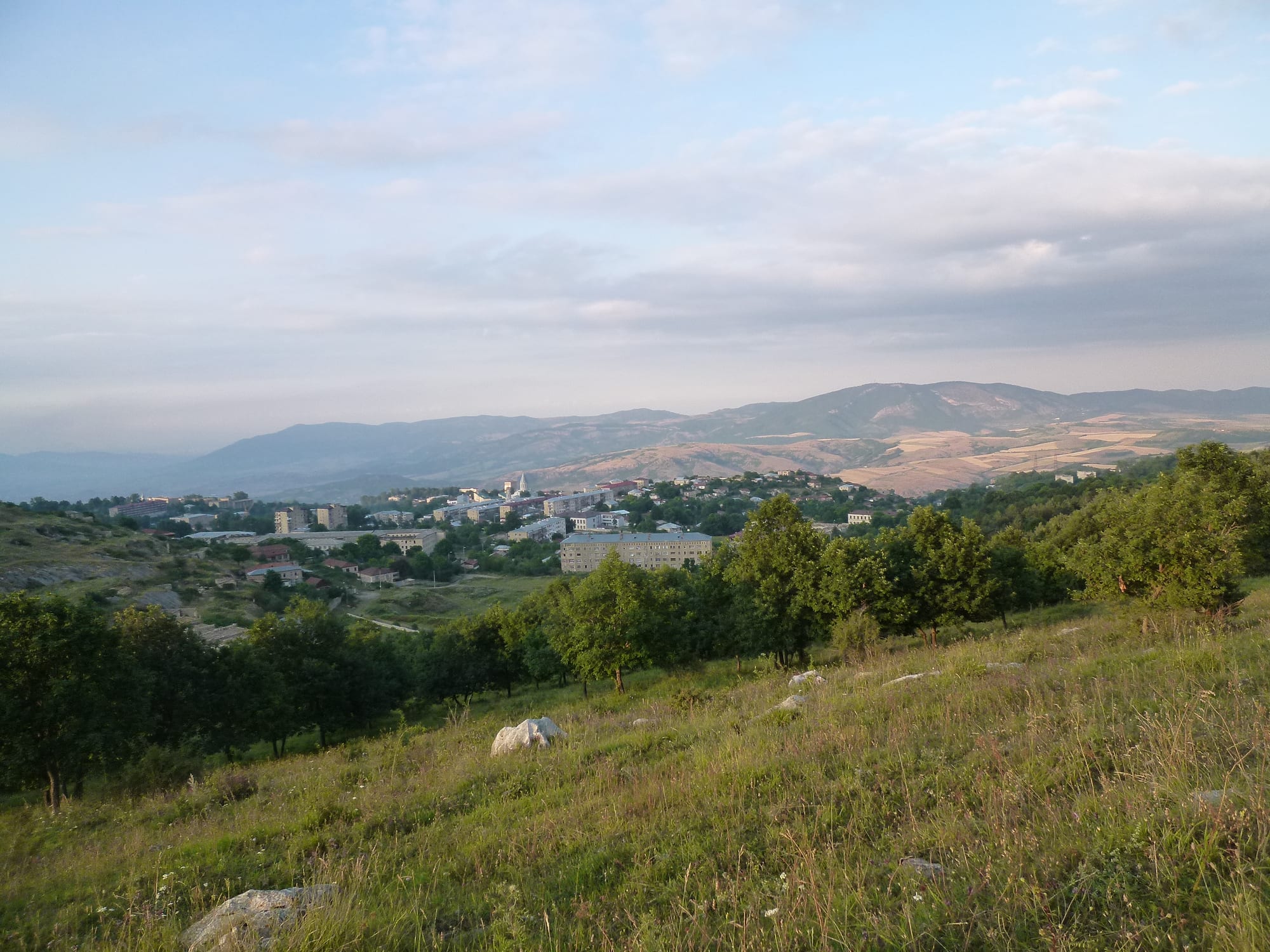
Shusha lies in the Karabakh uplands, roughly 300 kilometres west of Baku and about 150 kilometres south-east of Ganja by road, and the approach climbs steeply from the plain. Entry to the district requires official permission and is normally granted for organised trips; the regional airport at Fuzuli and new highways have shortened the journey considerably.
🚶 Walkability
The town itself is compact and can be crossed on foot in half an hour, but the ground is steep, the surfaces are broken, and large parts of it are active construction sites that are fenced off. Movement is in practice guided, and wandering off the streets and marked paths is not safe because of unexploded ordnance in the surrounding countryside.
🛡️ Safety
The Karabakh uplands are among the most heavily mined areas of the former Soviet Union, clearance is still in progress, and troops are stationed in the region. Access is controlled, building sites are everywhere in the town, and the border area is militarised. The conflict is a highly sensitive subject, and photography of military and security sites is unwise.
Enter the Karabakh districts only with official permission and a guide, never leave paved roads or marked paths, and avoid photographing soldiers, checkpoints or installations. Check current official travel advice before travelling.
🌦️ Climate
A mountain climate at around 1,500 metres, much cooler and wetter than the Kura plain below. Summers are mild and thundery, spring is late and green, autumn is clear, and winter brings frost, snow and cloud that can sit on the plateau for days.
- Summer
- mild for the region — daytime temperatures usually 20–27°C, with cool nights and afternoon thunderstorms
- Winter
- cold and snowy — often around or below 0°C by day, with snow lying for long spells
🤝 Local Customs
The town holds a particular emotional weight in Azerbaijan as a symbol of cultural heritage and of displacement, and visitors are expected to treat it with corresponding seriousness. Hospitality is warm, tea is offered constantly, and elders are greeted first. Mosques and churches require modest dress, covered shoulders and knees, hair covered for women, and shoes removed where indicated.
Ask before photographing residents or workers, avoid arguing about the conflict or the status of religious buildings, and follow a guide's instructions about where it is safe to walk.
💳 Common Payment Methods
The currency is the Azerbaijani manat. Card facilities and ATMs are scarce in the Karabakh districts, where much of the infrastructure is still being rebuilt, so cash brought from Baku or Ganja is essential. Most trip costs are settled with the organiser in advance.