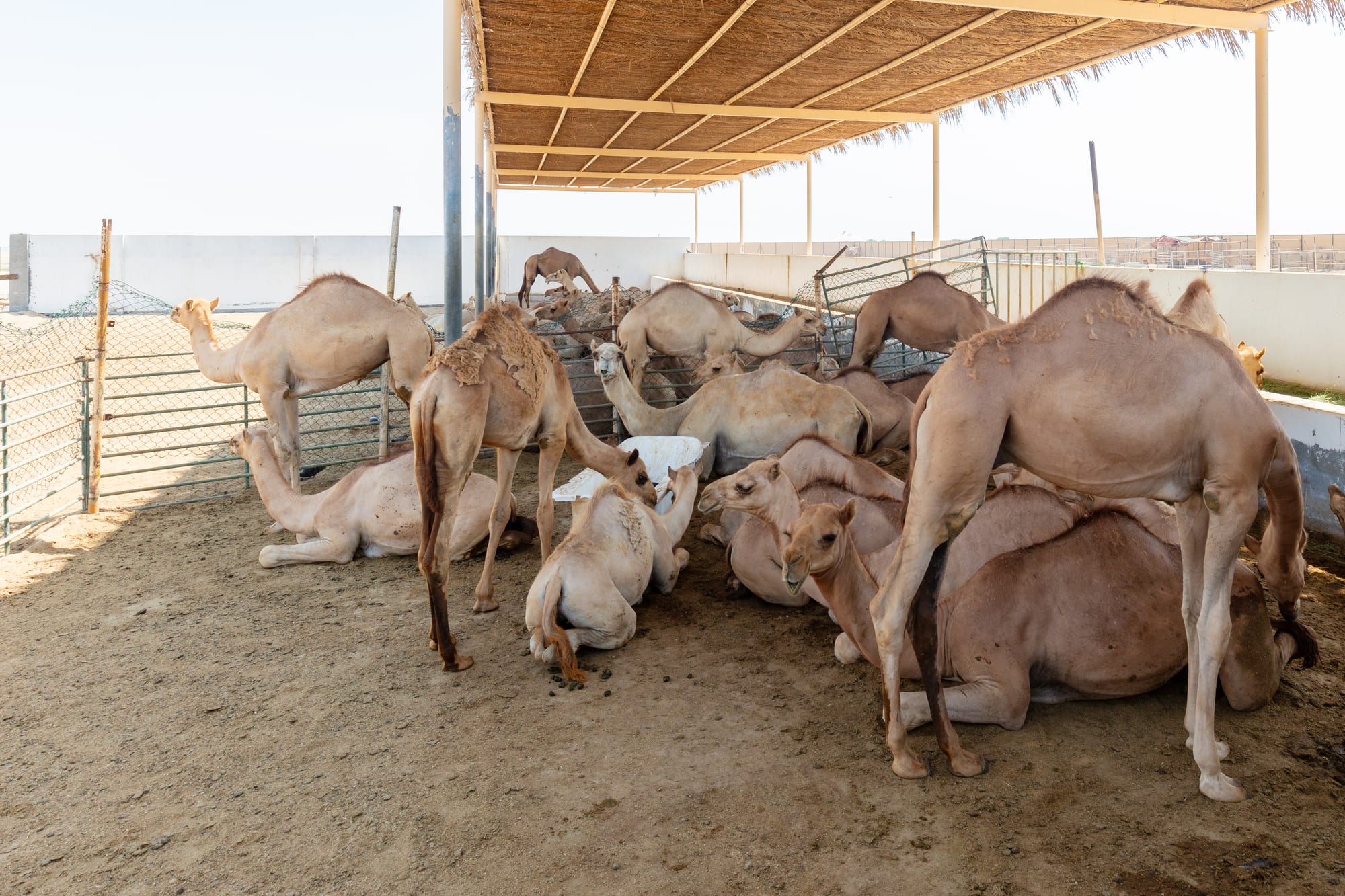
Camels standing and resting on sand under a long palm-thatched shade roof behind metal railings at a farm in Zallaq

Bahrain

Zallaq

Camels under shade at the camel farm at Zallaq, on Bahrain's west coast. (Diego Delso / Wikimedia Commons · CC BY-SA 4.0)

A settlement on the low west coast of Bahrain, facing the shallow gulf towards Saudi Arabia. Once a fishing and camel-herding village on an empty shore, it became the island's resort strip from the 1980s, with beach hotels and spas strung along the sea road, and it now serves as the nearest base to the Al Areen wildlife reserve and the motor-racing circuit at Sakhir.

Neighbourhoods

  • The seafront strip
    • Beaches
    • Hotels
    • Quiet and residential

    The line of beach hotels, spas and private beach clubs along the coast road, separated by stretches of open shore and low villas. There is no town centre as such: almost everything faces the water, and the sea here is shallow and warm. The stretch the village is known for is Jazaer Beach, also called Zallaq Beach.

    Open in Maps
  • Al Areen
    • Families
    • Wildlife
    • Quiet and residential

    The inland side of Zallaq, named after the wildlife reserve that occupies much of it. Around the park are the Lost Paradise of Dilmun water park, resort compounds and open desert, with few shops and little street life.

    Open in Maps
  • Sakhir
    • Motor sport
    • Events

    The desert district inland to the south-east, taken up by the international racing circuit, an exhibition ground, royal property and open scrub. It is quiet for most of the year and busy for a handful of major events.

    Open in Maps

Things to do

Parks and wildlife

  • Al Areen Wildlife Parkpark

    Bahrain's only protected area on land, established in 1976 and now also known as the Mohamed bin Zayed Nature Reserve, a reserve and breeding centre for Arabian oryx, gazelle, Nubian ibex and other Arabian and African species, its animals reached by tour bus from the main entrance.

    Open in Maps

Motor sport and the desert

  • Bahrain International Circuitattraction

    The motor-racing venue at Sakhir, about 3 km inland, opened in 2004, with six separate tracks including a test oval and a drag strip out in the desert.

    Open in Maps
  • Sakhir Palacelandmark

    A royal palace in the desert north-east of Zallaq, built in either 1870 or 1901 depending on the source and once the ruler's residence, now used for important state occasions and seen from the road rather than entered.

    Open in Maps

Short trips from the coast

  • Tree of Lifelandmark

    A lone mesquite reckoned to be more than four hundred years old, standing in open desert about 12 km east with no obvious source of water.

    Open in Maps
  • Qal'at al-Bahrainlandmark

    The Bahrain Fort on the north coast, a UNESCO World Heritage Site of 2005 built on the tell of the ancient Dilmun capital, with a museum beside it.

    Open in Maps
  • Bahrain National Museummuseum

    On the Manama waterfront about 24 km north-east, the oldest national museum in the Gulf, covering Dilmun archaeology, the pearl trade and traditional life.

    Open in Maps
  • Al Fateh Grand Mosquelandmark

    One of the largest mosques in the country, in Manama, open to non-Muslim visitors with guides who explain Islam and Bahraini custom.

    Open in Maps
  • Dilmun Burial Moundslandmark

    Fields of low prehistoric burial mounds, the best known at A'ali north-east of Zallaq, several of them inscribed as a UNESCO World Heritage Site.

    Open in Maps
  • Riffa Fortlandmark

    A fort first built in the early eighteenth century and rebuilt in 1812 by Sheikh Salman bin Ahmed Al Fateh, standing on a cliff above the valley between East and West Riffa, about 11 km east.

    Open in Maps

Seasonal events

  • Bahrain Grand Prixspring

    The Formula One race at the Sakhir circuit, held since 2004, which fills the country's hotels when it takes place; the 2026 running was cancelled in Bahrain because of the war with Iran and rehoused in Malaysia.

  • Bahrain International AirshowNovember, in alternate years

    A flying display and trade show at the Sakhir airbase beside the circuit, with military and civil aircraft.

  • Ramadan and Eid al-Fitrthe ninth Islamic month and the days after it

    Daytime eating and drinking in public stop and hotel restaurants adjust their hours; the beaches and resorts fill in the evenings and over the Eid holiday.

Eat and drink

Long-standing places and food districts in Zallaq. Hours, ratings and directions come from your maps app, always current.

Zallaq classics

  • Gulf seafood grillsrestaurant

    Hamour, safi and local prawns, grilled whole or stewed with tomato and tamarind, are the standard of the coast road's restaurants, usually served with spiced rice and flatbread.

    Open in Maps
  • Resort restaurants and beach clubsrestaurant

    The hotels hold most of the area's eating and almost all of its licensed bars, covering Bahraini, Lebanese, Indian and international menus, with terraces facing the water.

    Open in Maps

Nearby food

  • Riffa restaurantsneighborhood

    The nearest large town inland, with cafeterias, grill houses, bakeries and shopping-centre food courts serving machboos, shawarma and South Asian cooking.

    Open in Maps
  • Karak tea cafeteriascafe

    Roadside cafeterias along the highways sell strong, milky, cardamom-scented karak tea and simple sandwiches to drivers at any hour.

    Open in Maps

Experience Zallaq

History

Zallaq belonged to Bahrain's empty side. While the pearling towns grew on the north and east coasts facing the oyster beds and the trade routes, the west shore looked across shallow water towards the Arabian mainland and held only scattered fishing families, date gardens and grazing land. Camels and goats were herded on the scrub behind the beach, and the village lived off small boats working the shallows.

The interior changed first. Oil was struck at Jebel Dukhan in 1932, the first strike on the Arabian side of the Gulf, and the southern desert filled with wells, pipelines, company land and, later, military and royal property, much of it closed to the public. A wildlife reserve was established at Al Areen in 1976 to breed Arabian oryx and other species that had been hunted almost to extinction in the peninsula.

The coast itself was developed from the 1980s onwards, as Bahrain built beach hotels and spas for Gulf visitors and for the weekend traffic that began crossing the King Fahd Causeway after it opened in 1986. Sakhir, the desert inland, received the country's motor-racing circuit in 2004, and with it Formula One, an exhibition centre and an airshow, which turned a thinly populated corner of the island into the site of its largest international events. The strip of resorts, the reserve and the circuit have grown together into the island's main leisure district outside the capital.

Culture & Customs

This is the quiet, conservative side of Bahrain, and the contrast between the resorts and the surrounding countryside is part of its character. Inside the hotel compounds the rules are those of an international beach resort; outside them are farms, camel pens, date palms and villages where dress is modest, the call to prayer sets the rhythm of the day and alcohol is neither sold nor drunk.

Camels remain a visible part of local life, kept in shaded pens along the coast road and bred for racing and for status as much as for milk or meat. Falconry, horse breeding and desert camping in the cooler months are the traditional pastimes of this part of the island, and Bahraini families come out from the towns at weekends to picnic on the public beaches and in the desert.

Motor sport has given the area a second identity. The Sakhir circuit made Bahrain a fixture on the Formula One calendar from 2004, and race weekends fill the hotels, though the 2026 Grand Prix was cancelled in Bahrain because of the war with Iran and moved to Malaysia. Visitors are expected to dress and behave modestly away from hotel beaches, and to treat religion and the ruling family with respect.

Daily Life

Few people live in Zallaq itself compared with the crowded north of the island: this is a thinly settled coast of villas, farms and resort compounds in the Southern Governorate, the largest of Bahrain's four governorates by area but home to a small share of its population. Much of the surrounding desert is closed — oil field, military installations and royal estates — so settlement is squeezed between the shore and the highways.

Work is concentrated in hospitality and in the leisure attractions: hotels, spas, the wildlife park, the water park and the circuit, with agriculture, camel keeping and fishing continuing alongside. Many staff commute from Riffa, Hamad Town and the villages inland, and a large share are migrant workers from South Asia and the Philippines.

The week turns on Bahraini and Saudi weekends. From Thursday afternoon the coast road fills with cars from the causeway and from Manama, beaches and restaurants are busy, and hotel rates rise; by Sunday the area is quiet again. In summer almost all activity moves to the evening, and the beaches are used after dark.

Food

Eating at Zallaq means the sea and the hotels. The Gulf catch landed along this coast — hamour, which is grouper, safi, or rabbitfish, and local prawns — is grilled whole over charcoal or cooked into a sour tomato-and-tamarind stew, and served with machboos, the spiced rice with fish or meat that is Bahrain's national dish. Flatbread comes from a tannour, a clay oven whose hot wall the dough is slapped against.

The resorts supply the rest: Lebanese mezze, Indian and Iranian kitchens, international buffets and the licensed bars and terraces that are hard to find outside hotels in this part of the island. Shisha lounges are common along the coast. Inland, the cafeterias and grill houses of Riffa and the villages serve the everyday food of Bahrain — shawarma, biryani, chicken and rice — at a fraction of resort prices.

Sweets and drinks follow the national pattern. Halwa Bahraini, a dense, chewy, saffron-and-rosewater paste studded with nuts, is sold in boxes as a gift; dates appear with cardamom coffee whenever guests arrive; and karak tea, boiled strong with milk, sugar and cardamom, is the everyday drink of the roadside cafeterias that serve drivers on the desert highways.

Planning tools

Budget

Zallaq is a resort coast, so accommodation is the cost that matters: beach hotels and spas are the main option and there is little cheap lodging. Eating mostly happens in those hotels, which raises the daily figure compared with Manama. A hire car is close to essential, though fuel is cheap. Rates climb steeply around large events at Sakhir.

Daily Budget Midrange
USD 150–300 (beach hotel, resort restaurants, car hire, entry to the wildlife park)
Daily Budget Shoestring
USD 70–110 (simple room inland, cafeteria food, shared taxis, public beach)

Weekends, Thursday and Friday nights above all, are the busiest and dearest; midweek rates on the coast are usually much lower.

Best Time to Visit

November to March, when the sea and the desert are both comfortable and the big events at Sakhir take place. From May to September temperatures of 40°C and high humidity restrict outdoor time to early morning and evening, though the hotel pools stay usable. Ramadan changes restaurant hours across the country.

Suggested Number of Days

A day or two covers the coast and the wildlife park. Three or four make sense for anyone using Zallaq as a base for the rest of the island, which is small enough to cross in an hour. Event weekends need longer stays booked well ahead.

First Visit
1–2 days
With Surroundings
3–4 days

Transportation

There is no rail and only a limited bus service, so a hire car or ride-hailing app is the practical way to get about. Roads are wide, fast and quiet, and the drive to Manama takes roughly half an hour outside peak times. Resorts often run their own shuttles, and taxis are easy to arrange through hotels but scarce on the street.

Traffic is fast and assertive, and desert roads have long unlit stretches; fuel is cheap and distances are short, so a rental car is usually the cheapest way to see the island.

Airport & Station Connections

Bahrain International Airport is on Muharraq island about 40 km away by road, roughly forty minutes by road across the capital, and is the hub of Gulf Air. Drivers from Saudi Arabia arrive on the 25 km King Fahd Causeway, which lands on the west coast north of Zallaq and puts the resorts within half an hour of the border.

Walkability

Low. The settlement is strung along a coast road with long gaps between hotels, few pavements and little shade, and the wildlife park and circuit are kilometres inland. Walking is for the beach and the hotel grounds; for anything else a car is needed. Summer heat rules out long walks outdoors between late morning and evening.

Safety

Crime is very low and the resort coast is quiet. Two wider caveats apply. The first is regional: since February 2026 the United States and Israel have been at war with Iran, Iranian missile and drone strikes have hit targets in Bahrain causing material damage and civilian casualties, and Bahrain has taken part in strikes on Iran; the war is ongoing. The second is political: occasional unrest and clashes between protesters and police flare in Shia villages nearer the capital, away from this coast, particularly around the Ashura period and political anniversaries. Sea conditions are calm, but the shallow water heats to bath temperature in summer and jellyfish appear at times.

Avoid demonstrations and village flashpoints, don't photograph protests or security forces, and take the summer heat seriously. Check current official travel advice before travelling.

Climate

Hot desert, tempered slightly on this shore by sea breezes. Rain falls only in small amounts between December and March. The shamal wind from the north-west raises dust and can churn the shallow water for a day or two at a time.

Summer
May to October is extreme — daytime highs of 40°C and above, high humidity, and sea temperatures that give little relief
Winter
December to February is mild at about 15–20°C, pleasant by day and cool after dark on the coast

Local Customs

Beachwear belongs on hotel beaches and around pools; away from them, clothing covering shoulders and knees is expected, and local families on public beaches swim dressed. Alcohol is served in licensed hotels and resort restaurants but is not sold in ordinary shops. Greetings are unhurried and hospitality is offered readily.

Ask before photographing people, especially families on public beaches, and never photograph military sites or security forces. During Ramadan do not eat, drink or smoke in public in daylight.

Common Payment Methods

The currency is the Bahraini dinar, pegged to the US dollar and divided into 1,000 fils. Hotels, resorts and the parks take cards and contactless payment, and ATMs are found at the larger hotels and in nearby towns. A little cash is useful for taxis and roadside cafeterias.