💰 Budget
Trebinje costs a fraction of Dubrovnik, half an hour away, and most of what makes a visit — the Old Town, the bridge, the market, the river beach and the hill walks — is free. Rooms, grills, coffee and local wine are cheap; the main extras are wine tastings, taxis across the border and a hire car for the monasteries and the Popovo Polje.
- Daily Budget Midrange
- USD 80–140 (good guesthouse or hotel, restaurant meals with local wine, a winery tasting, a hire car or taxis)
- Daily Budget Shoestring
- USD 40–65 (hostel or guesthouse, ćevapi and bakery food, market fruit, buses)
Pay in convertible marks: euros are taken in some places but at a poor rate.
📅 Best Time to Visit
April to June and September to October, when days are warm but not fierce. July and August are hot and dry, eased by swimming in the river and the August music festival. Winters are mild and wet in the valley.
⏳ Suggested Number of Days
The town itself is small and a day or two is enough. Allow three or four days to add the monasteries, the wineries and the Popovo Polje, or to use Trebinje as a quiet, cheaper base for the coast. A car shortens the time needed for the surroundings.
- First Visit
- 1–2 days
- With Surroundings
- 3–4 days
🚆 Transportation
Trebinje is small and best explored on foot, and bicycles can be hired in town. Buses run to Dubrovnik, Herceg Novi and Mostar and daily to Sarajevo, Podgorica, Kotor and Belgrade, though services to Dubrovnik are few despite the short distance. The monasteries outside town, the wineries and the Popovo Polje are far easier by car or taxi.
Carry a passport: Croatia and Montenegro are both a short drive away, and summer border queues can be slow.
🛬 Airport & Station Connections
The nearest airport is Dubrovnik's, across the Croatian border about 30 kilometres away — around half an hour by taxi. Tivat Airport in Montenegro is about 60 kilometres away and Podgorica about 125. Most visitors arrive by road from Dubrovnik, Herceg Novi or Mostar.
🚶 Walkability
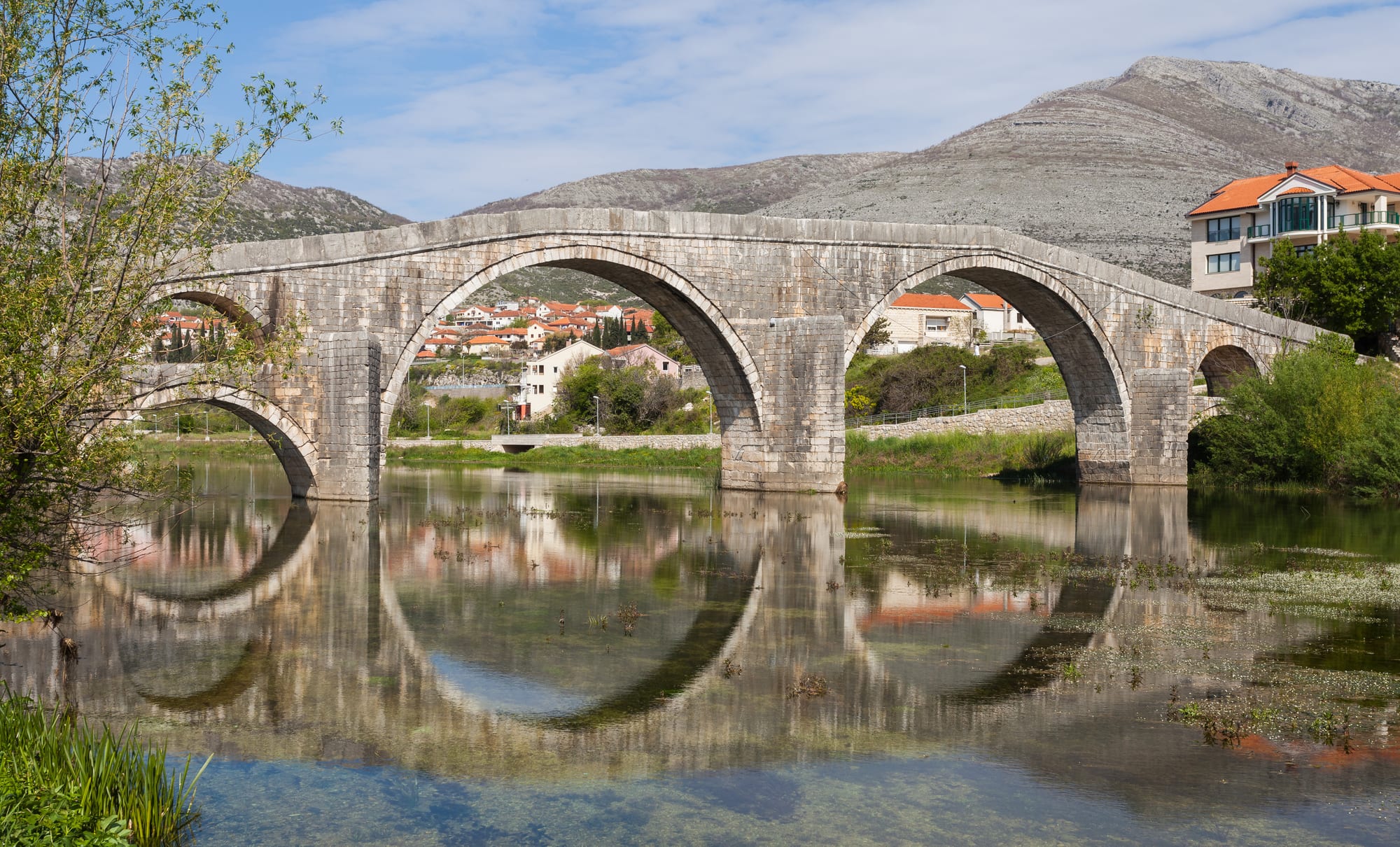
Very walkable. The Old Town, the square, the main street, the river beach and the Arslanagić Bridge, about a kilometre north of the centre along the river, all lie within an easy stroll. The climbs to Crkvina hill and the hill forts are steep and hot in summer.
🛡️ Safety
Everyday crime is low and violent crime against tourists is rare; the main nuisances are pickpocketing in Sarajevo's tourist crowds and taxi overcharging — use marked, metered cabs or an app. Trebinje itself is a quiet town. Landmines remain in parts of the countryside, and the horned viper, which is venomous, is native to the country.
Keep to marked paths in the hills, carry water in summer, and let locals raise the subject of the war. Check current official travel advice before travelling.
🌦️ Climate
A humid subtropical climate with heavy rain, typical of the southern Adriatic coast, with long sunny summers — the town calls itself the city of the sun and plane trees.
- Summer
- hot and dry — in the lower valleys from Mostar to Trebinje days of 32–40°C
- Winter
- mild and wet in the valleys, around 3–12°C
🤝 Local Customs
Trebinje is a Serb Orthodox town, and Serbian is written in both the Cyrillic and the Latin alphabets. Coffee is a long, slow ritual taken on a café terrace, and the morning market is a social occasion as much as a shop. Dress modestly in the monasteries and the mosque.
Let locals raise the subject of the war rather than probing, and treat churches, monasteries and memorials with obvious care.
💳 Common Payment Methods
The currency is the convertible mark (KM, BAM), pegged to the euro. Cards are widely accepted in hotels and larger restaurants, but cash is needed for the market, small grills, buses and many cafés. Euros are sometimes accepted, at a poor rate.