History
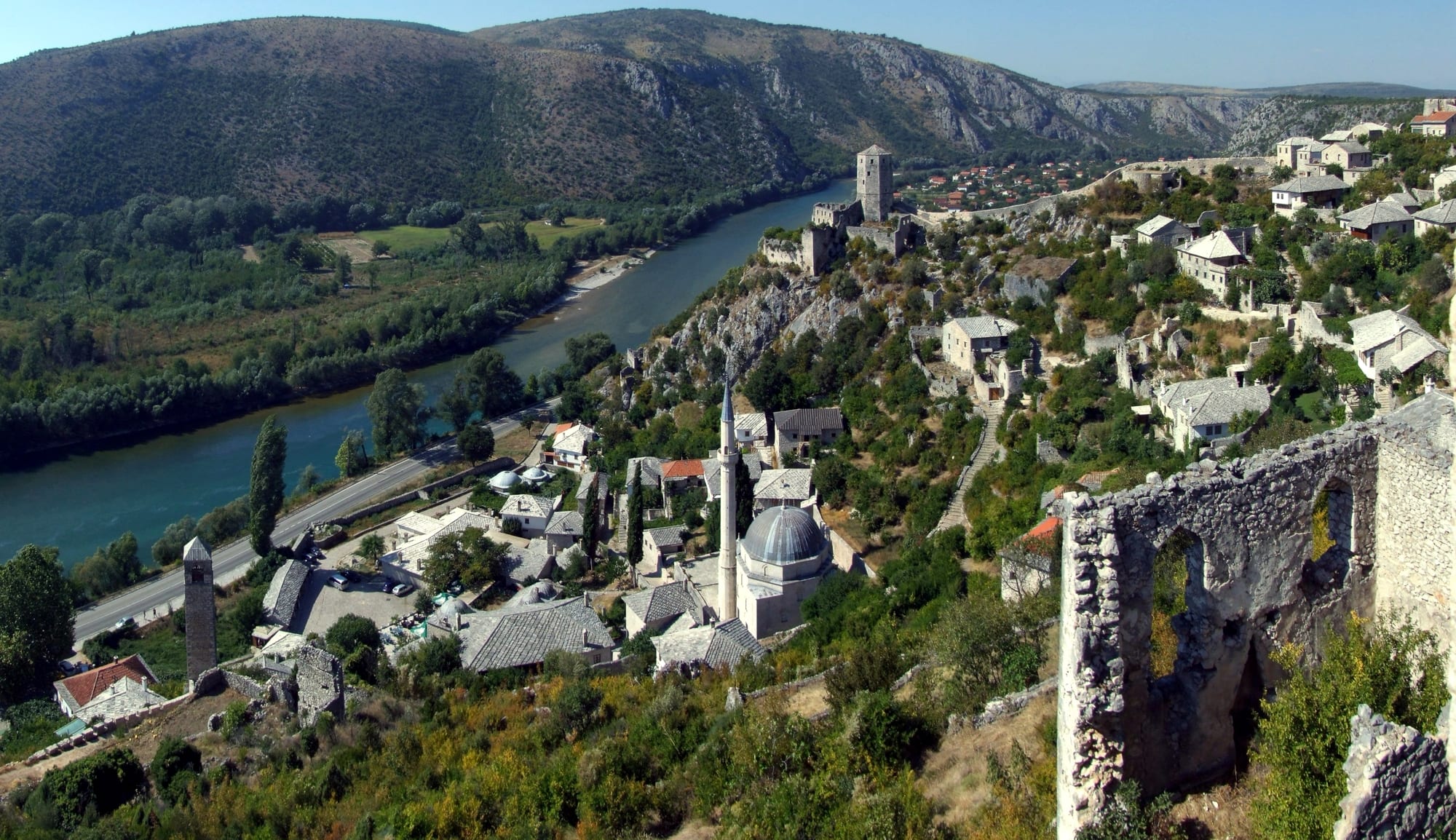
Illyrian tribes held these hills before Rome: the Daorsi built the megalithic walls of Daorson above Stolac, and a Roman estate stands at Mogorjelo near Čapljina. In the Middle Ages the land was called Hum, a borderland of Serbian and then Bosnian rulers, whose nobles left thousands of carved stećci tombstones. The present name dates from 1448, when the magnate Stjepan Vukčić Kosača, whose stronghold stands above the Buna spring at Blagaj, styled himself herceg, from the German Herzog, duke. The Ottomans took Počitelj in 1471 and completed the conquest of the duchy in 1482.
Mostar grew up around a river crossing and takes its name from the mostari, the bridge keepers. Suleiman the Magnificent ordered a stone bridge, and Hayruddin, a pupil of Sinan, completed it in 1566. A peasant revolt that began near Nevesinje in 1875 set off the crisis that ended Ottoman rule, and Austria-Hungary, arriving in 1878, built the Neretva railway and promoted vineyards and tobacco. The country's strip of coast at Neum dates from 1699, when Dubrovnik ceded it to the Ottomans as a buffer against Venice.
The 20th century was violent here. In 1941 Ustasha units massacred Serb villagers and threw many into limestone pits, and Chetnik reprisals followed. In March 1943 Tito's partisans, carrying some 4,000 wounded, escaped encirclement across the Neretva at Jablanica, and in May 1944 German paratroopers almost captured Tito in his cave at Drvar. In 1992 Mostar was shelled by Serb forces; in 1993–94 Croat and Bosniak forces fought each other for it across the Bulevar, and Croat tank fire brought down the Stari Most on 9 November 1993. The bridge reopened in 2004, rebuilt in the original stone, but the city remains divided; six leaders of the wartime Croat statelet of Herzeg-Bosnia had their convictions upheld at The Hague in 2017.