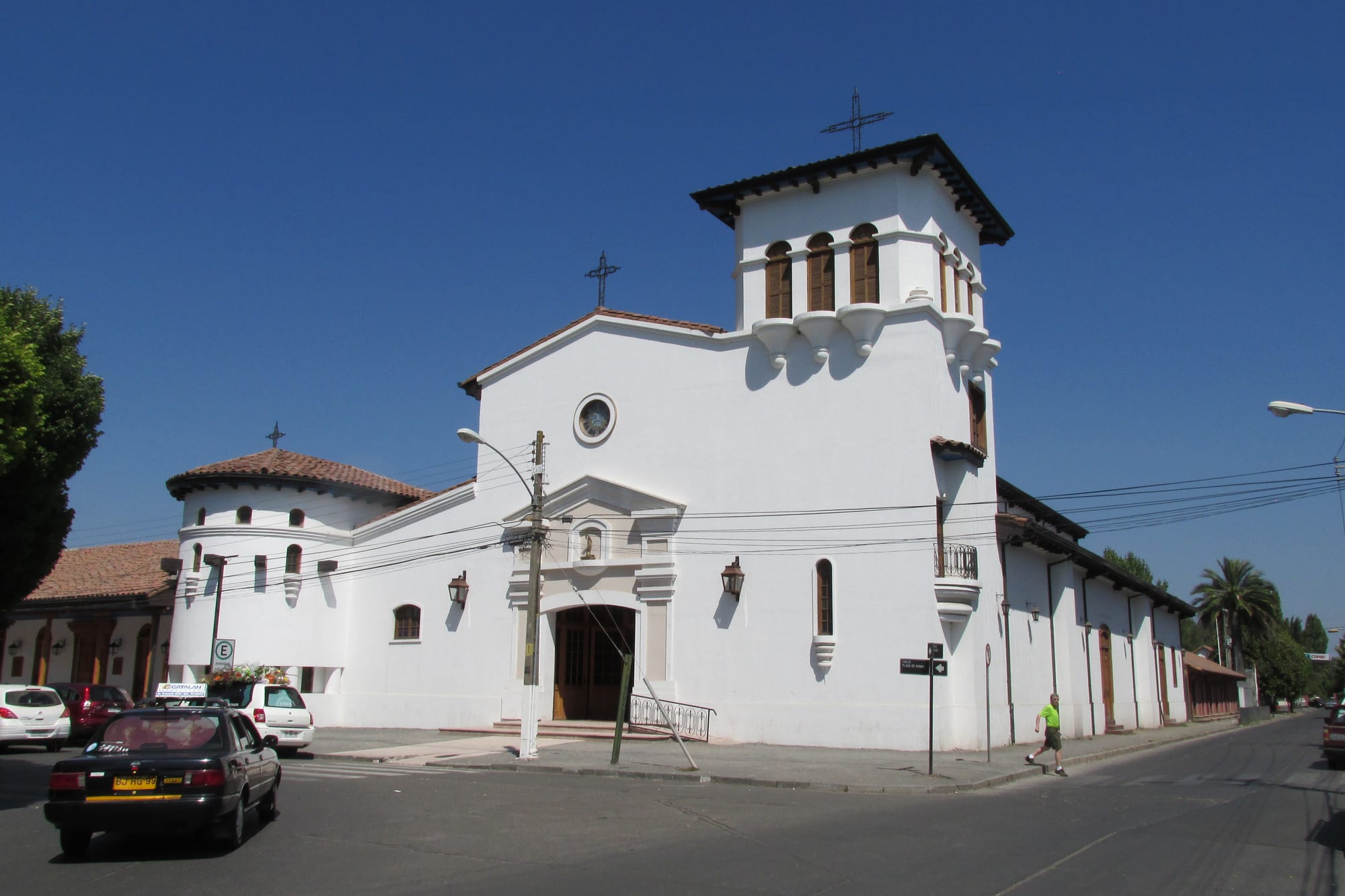
A white colonial-style church with a square bell tower and red tiled roofs on a street corner under a deep blue sky

The Central Valley & Wine Country, Chile

Santa Cruz

The parish church of Santa Cruz, on the town's Plaza de Armas. (Marco Antonio Correa Flores / Wikimedia Commons · CC BY-SA 4.0)

A small farming town in the Colchagua valley, about 150 kilometres south of Santiago, that grew up around a wooden cross at a colonial crossroads. Long a place of haciendas, wheat and huaso traditions, it is now the hub of the Colchagua wine route, with a plaza of colonial-style buildings, a large private museum and vineyards on every side.

Neighbourhoods

  • The Plaza de Armas and the centre
    • First-time visitors
    • Historic district
    • Best for food

    The heart of town, where the parish church, the 1970 carillon clock tower with its tourist information centre and the Santa Cruz Hotel stand around the plaza. The hotel and the town's casino are built in the style of the region's colonial houses.

    Open in Maps
  • Apalta
    • Wineries
    • Countryside

    A village and valley of vineyard slopes north-east of the town, home to some of the best-known red-wine estates of Colchagua, including the vines of Lapostolle's Clos Apalta.

    Open in Maps
  • Paniahue and the rural commune
    • Quiet and residential
    • Countryside

    Paniahue, on the edge of town, was the end of the old wine-train route; beyond it the commune's villages, such as Isla de Yáquil, sit among irrigated fields, orchards and vineyards along the Tinguiririca.

    Open in Maps

Things to do

In town

  • Colchagua Museummuseum

    A large private museum opened in 1995 by the local businessman Carlos Cardoen, with collections from pre-Columbian times through the colony and independence, a railway section with a locomotive, a hall of vintage cars and a room on the 2010 rescue of the 33 miners.

    Open in Maps
  • Plaza de Armas and the carillonlandmark

    The town's main square, with the parish church and a clock tower built in 1970 that now serves as an interactive tourist information centre.

    Open in Maps

Wineries of the Colchagua valley

  • Viña Viu Manentattraction

    A family winery founded by a Catalan immigrant and established in Colchagua in 1966 on the San Carlos de Cunaco hacienda, whose main grapes include Malbec, Syrah, Carmenère and Cabernet Sauvignon.

    Open in Maps
  • Viña Lapostolleattraction

    A winery founded in 1994 by Alexandra Marnier-Lapostolle, of the family behind Grand Marnier, and Cyril de Bournet; its Clos Apalta blend has scored 100 points from the critic James Suckling for several vintages.

    Open in Maps
  • Apaltaattraction

    The small valley north-east of town whose slopes grow some of Colchagua's best-known red wines.

    Open in Maps

Short trips from the town

  • Lololattraction

    A neighbouring commune whose old hacienda, about 25 kilometres away, offers horseback visits to its manor houses with country lunches and Colchagua wines.

    Open in Maps

Seasonal events

  • Fiesta de la Vendimia de Colchaguafirst weekend of March

    The valley's harvest festival in and around the Plaza de Armas, with harvest queens chosen, traditional activities, food and craft stalls and tastings from the main wineries; it draws thousands of visitors.

  • Fiestas Patriasaround 18 September

    The national independence holidays, celebrated in the countryside with fondas, cueca dancing and rodeo.

Eat and drink

Long-standing places and food districts in Santa Cruz. Hours, ratings and directions come from your maps app, always current.

Santa Cruz classics

  • Club Unión Socialrestaurant

    A restaurant in a restored mansion with a terrace.

    Open in Maps
  • Winery restaurants of the valleyrestaurant

    Many of the valley's wineries serve lunch with their own wines.

    Open in Maps

Food districts

  • Around the Plaza de Armasneighborhood

    The streets around the square hold the town's cafés and restaurants, and the plaza fills with food and wine stalls during the harvest festival.

    Open in Maps

Experience Santa Cruz

History

Before the Spanish arrived, the Colchagua valley was home to Picunche farmers, people of Mapudungun speech whom the Inca called Promaucaes because they had never been brought under the empire. There seems to have been an Indigenous village called Unco where the town now stands. After the conquest, Pedro de Valdivia granted the lands of Colchagua, with their 1,500 inhabitants, in encomienda to Inés Suárez in 1544, and by 1659 a hacienda called Santa Cruz de Unco appears in the will of its owner, Francisco Donoso Pajuelo.

The town was never formally founded. At some unrecorded date in colonial times a wooden cross was raised where the roads to the coast met, as a place of shelter and rest for travellers, and houses and shops gradually grew up along the roads leading out from it. That is why Santa Cruz has a street-shaped plan rather than a chessboard grid. The village took its name from its province: Santa Cruz de Colchagua after 1826, Santa Cruz de Curicó after 1865. The commune was created on 22 December 1891, and in 1904 the town became the head of a department of its own. Landowning families such as the Errázuriz and the Eguiguren dominated local life well into the 20th century.

The earthquake of 27 February 2010 struck the town hard; the Colchagua Museum lost about 60 per cent of its collections to damage and stayed closed for eight months. Over the last two decades rural and wine tourism has become a major source of income.

Culture & Customs

Santa Cruz sees itself as a place where the traditions of the Chilean countryside live on, in its wine, its food and in rodeo, the national sport of the huasos, the horsemen of the central estates. The valley's horsemen ride in short jackets, flat-brimmed hats and woven chamantos, and rodeo arenas and fondas are part of every big holiday. In the 1960s the town's spring festival, the Fiesta de la Primavera, became widely known.

Wine now shapes the town's identity. On the first weekend of March the Fiesta de la Vendimia fills the Plaza de Armas with stalls of food, crafts and wine from the main estates; harvest queens are chosen, and thousands of visitors come for the weekend.

The Colchagua Museum, opened in 1995 by Carlos Cardoen, a businessman born in the town, is a large private museum run by his foundation, with pre-Columbian, colonial and independence collections, vintage cars, a locomotive, and a hall on the rescue of the 33 miners at the San José mine in 2010. A steam-hauled wine train once ran on the old branch line between San Fernando and Paniahue, but it no longer runs.

Daily Life

About 41,500 people lived in the commune according to a 2021 estimate by the National Statistics Institute, around 60 per cent of them in the town and the rest in villages such as Isla de Yáquil, Paniahue and Villa Alegre. The town sits at about 155 metres above sea level on the plains of the Tinguiririca and Chimbarongo rivers.

Farming has always been the base of the economy — wheat, tomatoes and wine were the town's first products, and maize and wine-making are its strongest sectors today. The grape harvest from late summer into autumn brings seasonal workers into the vineyards and cellars, and the wineries, the museum, the casino and hotels employ many more. Tourism has grown steadily since the wine route was organised, and visitors from Santiago and abroad are part of everyday life on the plaza.

Life keeps the rhythm of a country town: a long lunch, a quiet afternoon and an evening on the square. Yamil Ethit is the mayor.

Food

Colchagua cooking is the country kitchen of central Chile. Summer brings pastel de choclo, a pie of sweet ground corn over a meat filling; humitas, sweetcorn paste steamed in corn husks; and porotos granados, fresh beans stewed with corn and squash. They are served with pebre or chancho en piedra, a tomato and chilli salsa ground in a stone mortar. Empanadas de pino and grilled meat on Sundays and holidays complete the picture, and mote con huesillo, a cold drink of dried peaches in syrup with husked wheat, is sold at roadside stands in summer.

Wine is the great local product. Colchagua is best known for full-bodied red wines — Malbec, Cabernet Sauvignon, Carmenère and Syrah — and the Apalta slopes north-east of town produce some of the country's most celebrated bottles. Pipeño, a young, rustic wine traditionally made from the País grape, remains the everyday drink of the countryside.

Many wineries serve long lunches with their own wines, and the harvest festival in March fills the plaza with food stalls offering country dishes, empanadas and the valley's wines.

Planning tools

Budget

Santa Cruz itself is an ordinary country town with modest prices, but the wine route is priced for foreign visitors: winery tours, tastings, lunches at the estates and lodges in the vineyards add up quickly, and touring the valley needs a car, a driver or an organised tour.

Daily Budget Midrange
USD 95–190 (hotel or wine lodge, two tastings, a winery lunch, a hire car or driver)
Daily Budget Shoestring
USD 35–65 (guesthouse or residencial, set-menu lunches, local buses)

Book winery visits ahead, and arrange a driver rather than driving after several tastings.

Best Time to Visit

March and April are the harvest months, when the town holds its Fiesta de la Vendimia and the vines turn colour. Spring, from October to December, is green and mild. January and February are hot and dry and the busiest time for holidays, and winter is cool and wet, with most of the year's rain.

Suggested Number of Days

One or two days are enough for the town, its museum and a couple of wineries. Three or four allow a slower pace through the valley and the neighbouring countryside, and suit anyone combining the wine country with the coast.

First Visit
1–2 days
With Surroundings
3–4 days

Transportation

Santa Cruz is small enough to cross on foot, but the wineries are spread over the valley along country roads, so a hire car, a driver or a winery tour is the practical way to visit them. Buses link the town with San Fernando and Santiago.

Hire a car in Santiago if planning several wineries over several days, and plan the route between estates in advance.

Airport & Station Connections

The town is about 150 kilometres south of Santiago and about 45 kilometres south-west of San Fernando, the nearest town on the main railway line. Trains run from Santiago's Estación Central to San Fernando, and buses continue to Santa Cruz. Santiago's Arturo Merino Benítez International Airport, in Pudahuel, is the nearest international airport.

Walkability

The centre is compact and flat, and the plaza, church, museum and restaurants are all within a few minutes' walk. The town grew along its old roads rather than on a grid, so streets run in long lines out of the centre. Wineries beyond the edge of town are not walkable.

Safety

Chile is one of the safer countries in South America, but petty and opportunistic crime has risen, especially in Santiago and Valparaíso — pickpocketing, bag-snatching, phone theft, and distraction scams in tourist areas, markets, and on transport. The valley towns and wine country are generally calm. The main risks are driving after tastings, summer wildfires and earthquakes.

Do not drive after tastings, follow fire warnings in summer, and know what to do in an earthquake. Check current official travel advice before travelling.

Climate

A temperate Mediterranean climate with a long dry season. Average annual temperatures are 13–15°C; rain falls mainly from May to August, about 600–700 millimetres a year. Summer runs from December to February.

Summer
hot and dry, with days that pass 30°C
Winter
mild and wet, with frost possible in the valley; the annual average is only 13–15°C

Local Customs

A tip of about 10 per cent is expected in restaurants when service has been satisfactory. Colchagua takes its country traditions seriously: huasos in flat-brimmed hats and woven chamantos appear at rodeos and fiestas, and cueca is danced at every celebration. Dress is casual, a little smarter for winery dinners.

Spit or pour away at tastings if driving, and greet staff at wineries and small shops before asking for anything.

Common Payment Methods

The currency is the Chilean peso (CLP). Cards are accepted at wineries, hotels and most restaurants; cash is useful for buses, small shops and festival stalls. There are ATMs in the centre, which charge fees.